
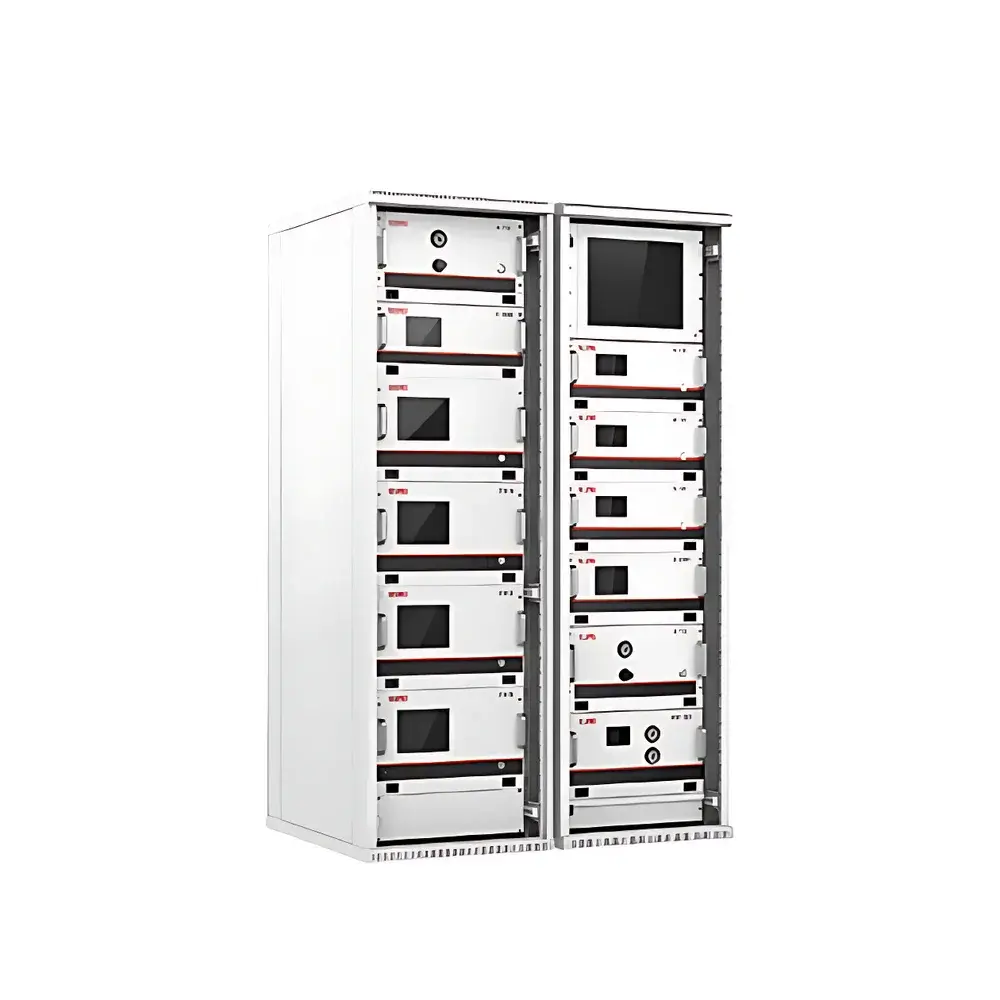
EXPEC 2000 Online Odor-8 Monitoring System (Online GC)
| Brand | EXPEC / Puyu Technology |
|---|---|
| Origin | Zhejiang, China |
| Manufacturer Type | Authorized Distributor |
| Regional Category | Domestic (China) |
| Model | EXPEC 2000 |
| Instrument Type | Online Gas Chromatograph |
| Detection Methods | UV Fluorescence (H₂S), Chemiluminescence (NH₃), GC-NPD (methylamine, dimethylamine, trimethylamine), GC-FPD (methanethiol, methyl sulfide, carbon disulfide, dimethyl disulfide), GC-FID (styrene) |
| Detection Limit | As low as 0.1 ppb for selected compounds |
| Cabinet Format | 19-inch standard rack-mount enclosure |
| Compliance | Aligned with GB 14554–2018 (Draft Revision), HJ 1227–2021, and related Chinese environmental monitoring standards |
Overview
The EXPEC 2000 Online Odor-8 Monitoring System is a fully integrated, rack-mounted gas chromatography (GC)-based analytical platform engineered for continuous, unattended measurement of the eight priority odor-causing compounds specified in China’s national regulatory framework—including hydrogen sulfide (H₂S), ammonia (NH₃), methylamine, dimethylamine, trimethylamine, methanethiol, methyl sulfide, carbon disulfide, dimethyl disulfide, and styrene. Unlike conventional laboratory GC systems, the EXPEC 2000 implements a multi-detector architecture optimized for real-time ambient air analysis: UV fluorescence detection for H₂S, chemiluminescence for NH₃, nitrogen-phosphorus detection (GC-NPD) for aliphatic amines, flame photometric detection (GC-FPD) for sulfur-containing organics, and flame ionization detection (GC-FID) for styrene. This hybrid detector strategy ensures compound-specific selectivity, minimizes interferences from complex matrix backgrounds (e.g., industrial stack effluents or urban ambient air), and delivers quantitative performance traceable to national reference methods. The system is designed for permanent installation at fence-line monitoring points in chemical parks, petrochemical facilities, wastewater treatment plants, and municipal waste handling sites—supporting both compliance-driven emissions reporting and proactive odor event investigation.
Key Features
- Rack-integrated architecture compliant with 19-inch EIA-310-D mechanical standards, enabling seamless integration into existing environmental monitoring shelters or control room cabinets.
- Multi-channel GC configuration with independently temperature-controlled columns and detectors, allowing concurrent analysis of all eight target analytes without cross-contamination or method switching delays.
- Automated calibration sequence with zero-air and certified multi-gas standards (NIST-traceable where applicable), executed on user-defined intervals (e.g., every 6 or 12 hours) to maintain long-term measurement stability.
- Embedded Linux-based controller with local data buffering (≥30 days of 1-minute resolution data) and dual Ethernet ports for redundant network connectivity.
- Power-fail recovery protocol: automatic system reinitialization, column bake-out resumption, and resume-from-interrupt analysis upon grid restoration—no manual intervention required.
- Remote diagnostics and firmware updates via secure TLS 1.2–encrypted HTTP(S) interface, compatible with industry-standard SCADA and EMS platforms.
Sample Compatibility & Compliance
The EXPEC 2000 draws ambient or duct-sampled air through a heated stainless-steel sampling line (maintained at 60 °C to prevent condensation and adsorption losses), followed by particulate filtration (0.3 µm PTFE) and moisture removal via Nafion™ membrane dryer. Sample introduction employs programmable split/splitless injection with cold trap preconcentration for sub-ppb sensitivity. All analytical methods are aligned with the technical requirements of GB 14554–2018 (Draft), HJ 1227–2021 (“Technical Specification for Online Monitoring of Odorous Pollutants”), and HJ 75–2017 (for CEMS integration). While not certified to EU EN 15267 or U.S. EPA PS-15, the system meets the functional equivalency criteria for fixed-source and ambient odor monitoring under China’s Ministry of Ecology and Environment (MEE) guidelines. Data integrity is ensured through audit-trail logging of all instrument events, calibration actions, and parameter changes—supporting GLP-aligned operational documentation.
Software & Data Management
The embedded monitoring software provides ISO/IEC 17025–informed data handling: raw chromatograms, peak integration parameters, calibration curves, and QC flagging (e.g., retention time drift > ±0.15 min, response factor deviation > ±15%) are stored with timestamped metadata. Export formats include CSV (for Excel and statistical packages), XML (for interoperability with national environmental information platforms), and PDF reports compliant with MEE Form No. 12. Role-based access control (administrator, operator, viewer) enforces separation of duties; all user logins and critical actions are logged with IP address and session duration. Optional OPC UA server module enables real-time data streaming to central DCS or cloud-based environmental dashboards.
Applications
- Fence-line monitoring at chemical industrial parks to detect fugitive emissions and trigger early-warning alerts based on odor concentration thresholds (OUm derived from measured concentrations).
- Continuous emission monitoring (CEM) at wastewater treatment plant headworks, sludge dewatering units, and anaerobic digesters.
- Source apportionment studies using temporal correlation analysis across multiple EXPEC 2000 nodes deployed in a sensor grid configuration.
- Regulatory submission support for Environmental Impact Assessments (EIAs) and annual pollutant discharge declarations under China’s Pollutant Discharge Permit System.
- Method validation and reference measurement in academic research on atmospheric sulfur/nitrogen chemistry and odorant receptor modeling.
FAQ
What regulatory standards does the EXPEC 2000 directly support?
It implements analytical protocols referenced in GB 14554–2018 (Draft), HJ 1227–2021, and HJ 75–2017 for odorant quantification and CEMS integration.
Can the system operate without on-site technician intervention?
Yes—designed for unattended operation with automated calibration, power-loss recovery, remote diagnostics, and predictive maintenance alerts.
Is data export compatible with national environmental monitoring platforms?
Yes—supports CSV, XML (MEE-compliant schema), and PDF report generation with digital signature capability.
What sample flow rate and pressure range is supported?
Standard configuration accepts 0.5–2.0 L/min at ambient pressure ±10 kPa; optional mass flow controller available for pressurized duct sampling.
How is method traceability maintained?
All calibrations use certified gas standards with valid certificates of analysis; retention times and response factors are logged with uncertainty estimates per ISO/IEC 17025 Clause 7.7.



