
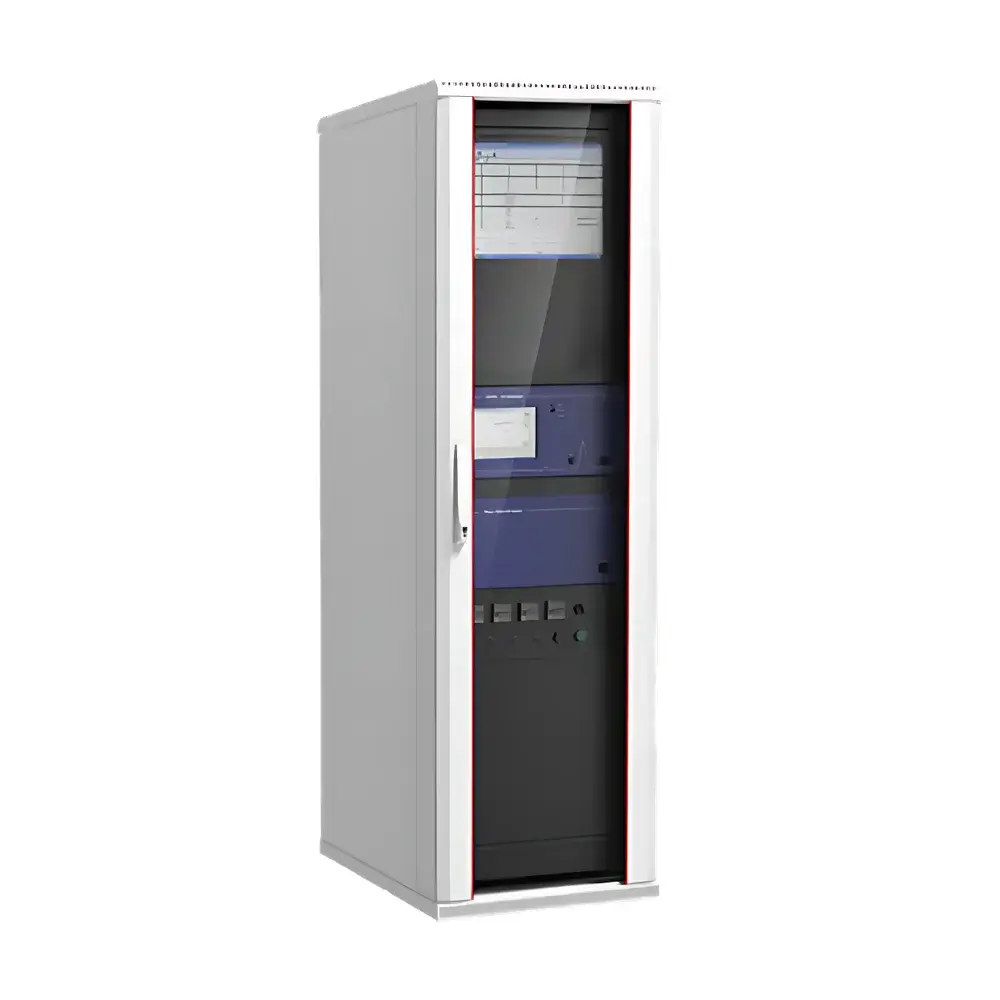
EXPEC 2000 On-site VOCs Boundary Monitoring System (Online Gas Chromatograph)
| Brand | EXPEC / Superspec |
|---|---|
| Origin | Zhejiang, China |
| Manufacturer Type | Authorized Distributor |
| Regional Classification | Domestic (China) |
| Model | EXPEC 2000 |
| Instrument Type | Online Gas Chromatograph |
| Detection Configurability | FID, MSD, or PID Detectors |
| Target Analytes | Methane / NMHC, BTEX, Methanol, Acetone, and >100 Volatile Organic Compounds |
| Sampling Line Material | Stainless Steel or PTFE Low-Adsorption Tubing |
| Software Interface | Localized Chinese GUI with Audit-Trail-Capable Control Platform |
| Footprint | ≥1 m² (Modular Cabinet Design, Indoor/Outdoor Deployment Options) |
| Compliance | GB/T 38394–2019, HJ 1012–2018, HJ 759–2015 |
Overview
The EXPEC 2000 On-site VOCs Boundary Monitoring System is a purpose-engineered online gas chromatograph designed for continuous, unattended measurement of volatile organic compounds (VOCs) at industrial facility perimeters. Operating on the principle of capillary gas chromatography coupled with flame ionization detection (FID), mass spectrometric detection (MSD), or photoionization detection (PID), the system delivers time-resolved speciation and quantification of regulated and priority pollutants—including methane/non-methane hydrocarbons (NMHC), benzene-toluene-ethylbenzene-xylene (BTEX), oxygenated VOCs (e.g., methanol, acetone), and odor-active compounds. Its modular architecture enables rapid deployment in boundary monitoring networks across chemical parks, petrochemical complexes, and municipal ambient air quality stations. The system adheres to core Chinese environmental monitoring standards—specifically GB/T 38394–2019 (VOCs monitoring technical guidelines), HJ 1012–2018 (online ambient air VOCs monitoring specifications), and HJ 759–2015 (ambient air VOCs analytical method)—ensuring regulatory alignment for compliance reporting and source attribution.
Key Features
- Modular, cabinet-based design supporting indoor or outdoor installation with IP55-rated enclosures for harsh site conditions
- Configurable detector options: high-sensitivity FID for total hydrocarbon quantification; quadrupole MSD for compound identification and trace-level screening; PID for real-time aromatic and halogenated VOC response
- Low-adsorption sampling train utilizing electropolished stainless steel or PTFE-lined tubing to minimize analyte loss, especially for polar and reactive VOCs (e.g., aldehydes, organic acids)
- Integrated thermal desorption–cold trap–GC–detector workflow enabling sub-ppbv detection limits for key markers under standard operating conditions
- Automated calibration sequence with multi-point standard gas delivery (zero, span, and multi-level calibrants) compliant with HJ 1012–2018 QA/QC protocols
- Robust environmental control: temperature-stabilized GC oven (±0.1 °C), heated transfer lines (up to 180 °C), and humidity-resistant sample conditioning to ensure reproducibility across seasonal variations
Sample Compatibility & Compliance
The EXPEC 2000 accommodates gaseous samples from ambient air, stack effluents (with appropriate dilution and filtration), and ducted boundary air streams. Sample introduction employs programmable timed sampling cycles (15–60 min intervals) with dual-stage particulate and moisture removal (heated filter + Nafion dryer). All hardware and software workflows support GLP-aligned data integrity: electronic signatures, audit trails, calibration history logging, and user-access-level controls. While not pre-certified to EPA TO-15 or EN 14662, the system’s method performance—retention time stability (<0.02 min RSD), peak area repeatability (<3% RSD), and linear dynamic range (10⁴)—meets foundational requirements for regulatory-grade monitoring when operated per HJ-compliant SOPs. Data output conforms to XML-based formats compatible with national environmental information platforms (e.g., CNEMC data ingestion protocols).
Software & Data Management
The proprietary EXPEC Control Suite provides a Windows-based, localized interface optimized for Chinese laboratory and field operators. Core functions include real-time chromatogram visualization, automated peak integration using retention time locking, customizable alert thresholds (exceedance notifications via email/SMS), and scheduled report generation (hourly/daily summaries in PDF/Excel). All raw chromatographic data, method parameters, calibration logs, and maintenance records are stored locally with optional encrypted cloud backup. The software supports 21 CFR Part 11–style audit trail functionality—including immutable timestamps, operator ID tagging, and change history—for facilities operating under GMP or ISO/IEC 17025 frameworks. Remote diagnostics and firmware updates are enabled via secure TLS-encrypted VPN channels.
Applications
- Industrial fence-line monitoring: Continuous NMHC and BTEX tracking at chemical manufacturing sites to verify emission control efficiency and support LDAR programs
- Petrochemical complex boundary surveillance: Multi-point VOC mapping for plume dispersion modeling and incident response coordination
- Municipal ambient air quality assessment: Supplemental VOC speciation in urban receptor zones to inform ozone precursor analysis and health risk evaluation
- Toxic and odorant compound screening: Quantitative monitoring of hydrogen sulfide, mercaptans, aldehydes, and chlorinated solvents in nuisance complaint investigations
- Regulatory compliance reporting: Automated submission of validated hourly concentration data to provincial ecological environment departments per HJ 1012–2018 Annex D requirements
FAQ
What detection limits can be achieved for benzene using the FID configuration?
Typical method detection limits (MDL) for benzene are ≤0.1 ppbv under standard 30-min sampling and preconcentration conditions, verified per HJ 759–2015 validation procedures.
Is the system capable of unattended operation for extended periods?
Yes—designed for 30-day autonomous operation with integrated consumables monitoring (trap saturation, carrier gas pressure, detector status) and remote alarm escalation.
Can the EXPEC 2000 be integrated into existing SCADA or EMS platforms?
It supports Modbus TCP and OPC UA protocols for bidirectional data exchange, enabling seamless integration with central environmental management systems.
Does the software meet data integrity requirements for regulatory audits?
All data handling complies with ALCOA+ principles (Attributable, Legible, Contemporaneous, Original, Accurate, Complete, Consistent, Enduring, Available); full audit trail export is available in CSV format.
What maintenance intervals are recommended for routine operation?
Preventive maintenance is scheduled every 90 days, including GC column bake-out, detector cleaning, leak verification, and calibration verification—documented via built-in maintenance log templates.




