
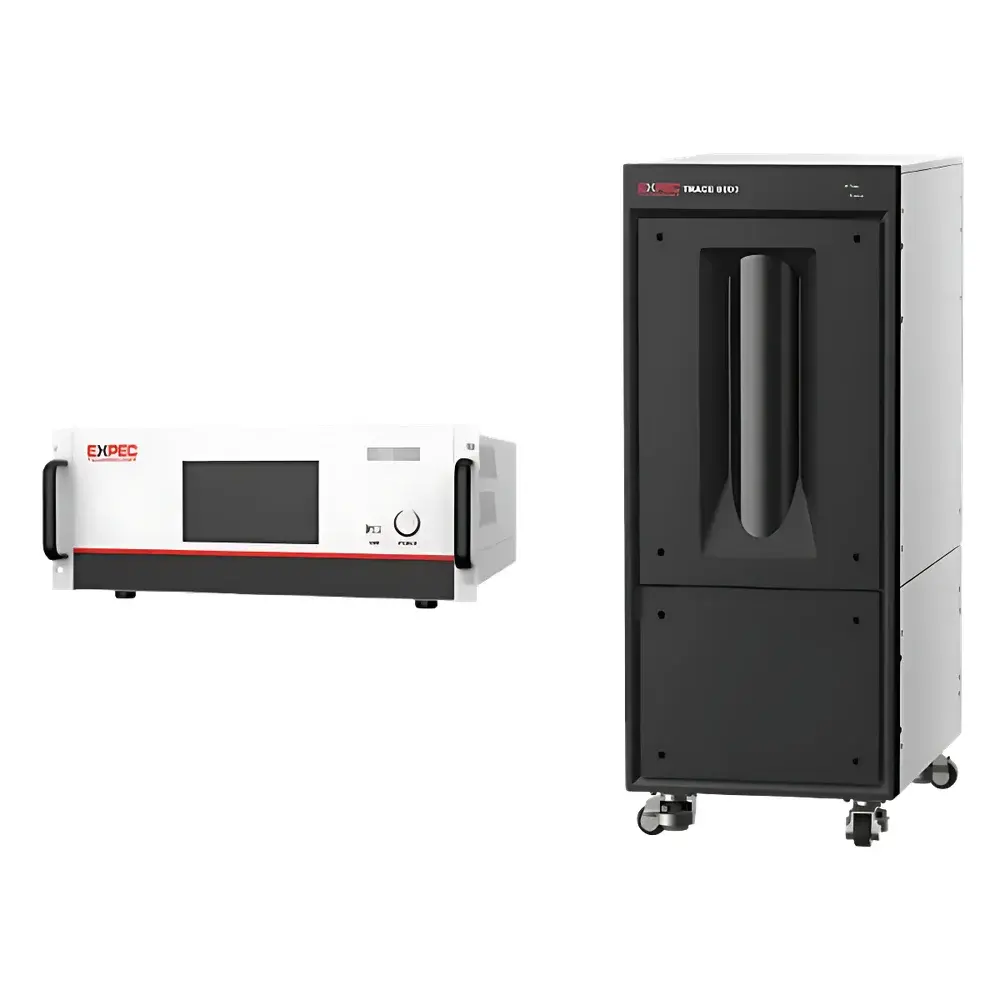
EXPEC 2610 Continuous Atmospheric Reactivity Monitoring System
| Brand | EXPEC (Puyu Technology) |
|---|---|
| Origin | Zhejiang, China |
| Model | EXPEC 2610 |
| Measurement Principle | Comparative Reactivity Method (CRM) |
| Output Parameter | Total OH Reactivity (K<sub>OH</sub>, s<sup>−1</sup>) |
| Core Function | Quantification of VOC-driven atmospheric oxidative capacity |
| Compliance Context | Designed for ambient air quality monitoring networks aligned with China’s HJ 1255–2022 and international CRM best practices |
| Software Interface | Ethernet-enabled data acquisition with timestamped KOH time series export (CSV/NetCDF) |
Overview
The EXPEC 2610 Continuous Atmospheric Reactivity Monitoring System is an engineered solution for real-time quantification of total hydroxyl radical reactivity (KOH) in ambient air. It operates on the well-established Comparative Reactivity Method (CRM), a standardized indirect technique endorsed by the European Monitoring and Evaluation Programme (EMEP) and widely adopted in atmospheric chemistry research. Rather than attempting direct OH detection—a technically challenging and instrumentally unstable approach—the EXPEC 2610 introduces a controlled, traceable reference compound (typically pyrrole or propane) into a laminar-flow reaction chamber where ambient air is continuously sampled. The decay rate of the reference compound—measured via proton-transfer-reaction time-of-flight mass spectrometry (PTR-TOF-MS)—is compared against its decay in synthetic zero air to derive KOH with high temporal resolution (1–5 min averaging). This value represents the summed pseudo-first-order loss rate of OH radicals due to all reactive trace gases present, predominantly volatile organic compounds (VOCs), but also including CO, CH4, and inorganic species such as SO2 and H2S. As OH is the primary atmospheric oxidant governing tropospheric cleansing and ozone formation, KOH serves as a direct metric of ambient oxidative capacity and photochemical aging potential.
Key Features
- CRM-based architecture optimized for integration with commercial PTR-TOF-MS systems—eliminates calibration drift associated with OH chemiluminescence or laser-induced fluorescence methods;
- Robust performance under elevated NOx conditions (up to 100 ppb): proprietary reaction tube design minimizes HO2 interference by suppressing O3-HO2 conversion pathways, enabling reliable KOH measurement in urban and industrial boundary layer environments;
- Dual-channel sampling configuration supports simultaneous background-zero and ambient-air measurements, ensuring continuous baseline correction without manual intervention;
- Temperature- and pressure-compensated flow control (±0.5% accuracy) maintains stoichiometric consistency across diurnal and seasonal ambient variations;
- Modular hardware layout facilitates field deployment in mobile laboratories, rooftop monitoring stations, or fixed-site air quality observatories;
- Pre-installed firmware includes automated QC flagging for humidity-induced quenching, reference compound depletion, and flow instability events.
Sample Compatibility & Compliance
The EXPEC 2610 accepts standard 1/4″ OD PFA or SilcoNert®-treated stainless-steel inlet lines compatible with EPA TO-15 and EU Air Quality Directive Annex VII sampling protocols. It interfaces seamlessly with PTR-TOF instruments from IONICON, TOFWERK, and other vendors supporting analog voltage output or RS-232/RS-485 telemetry. Data outputs comply with ISO 20977:2021 (Ambient air—Requirements for automated measuring systems) metadata conventions. While not certified under U.S. EPA Reference or Equivalent Method designations, the system adheres to the operational principles outlined in ASTM D6348–22 (Standard Practice for Determination of Gaseous Compounds by Multicomponent Gas Chromatography) and supports GLP-aligned audit trails when paired with compliant data loggers.
Software & Data Management
The embedded controller runs a Linux-based real-time OS with dual-mode operation: standalone logging (internal SD card, 32 GB) or networked streaming (TCP/IP or Modbus TCP). The EXPEC DataHub software (v3.2+) provides time-synchronized visualization of KOH, reference compound signal intensity, zero-air subtraction residuals, and auxiliary meteorological parameters (T, RH, P). All raw and processed datasets are exportable in CF-compliant NetCDF-4 format, enabling direct ingestion into atmospheric modeling frameworks such as CMAQ or WRF-Chem. Audit logs record operator actions, calibration events, and firmware updates in accordance with 21 CFR Part 11–compatible timestamping and user authentication protocols.
Applications
- Quantitative assessment of regional atmospheric oxidation capacity for source apportionment of secondary organic aerosol (SOA) precursors;
- Operational input for photolysis rate forecasting in ozone episode prediction models;
- Evaluation of VOC speciation gaps: discrepancy between measured KOH and modeled KOH (using GC-MS/FID-derived speciated VOC data) indicates missing high-reactivity compounds (e.g., unsaturated aldehydes, sesquiterpenes);
- Long-term trend analysis of oxidative stress in megacities undergoing VOC mitigation policies;
- Validation of satellite-derived OH proxy products (e.g., from TROPOMI formaldehyde columns) at surface level;
- Support for health-relevant exposure studies linking oxidative potential of ambient air to respiratory biomarkers.
FAQ
What is the minimum detectable KOH value and typical precision?
The system achieves a limit of detection (3σ) of 0.5 s−1 for 5-minute averages under typical urban background conditions (RH < 60%, T = 25°C), with relative standard deviation < 8% across repeated zero-air challenges.
Can the EXPEC 2610 operate unattended for extended periods?
Yes—field deployments exceeding 30 days have been validated with bi-weekly reference compound refills and monthly zero-air cylinder replacement; onboard diagnostics alert users to flow anomalies or signal saturation.
Is external PTR-TOF hardware included with the system?
No—the EXPEC 2610 is a dedicated CRM reactor module and requires integration with a third-party PTR-TOF-MS platform; compatibility documentation and interface cables are provided.
How is humidity interference mitigated during measurement?
The reaction chamber incorporates Nafion®-based drying upstream of the sampling manifold, maintaining sample dew point below −20°C; software applies empirically derived RH-dependent correction coefficients based on intercomparison campaigns conducted at the Chinese Academy of Environmental Sciences.
Does the system support remote firmware updates?
Yes—secure SSH-based updates are supported over VPN-configured Ethernet connections; all update packages are cryptographically signed and version-locked to prevent unauthorized modification.







