
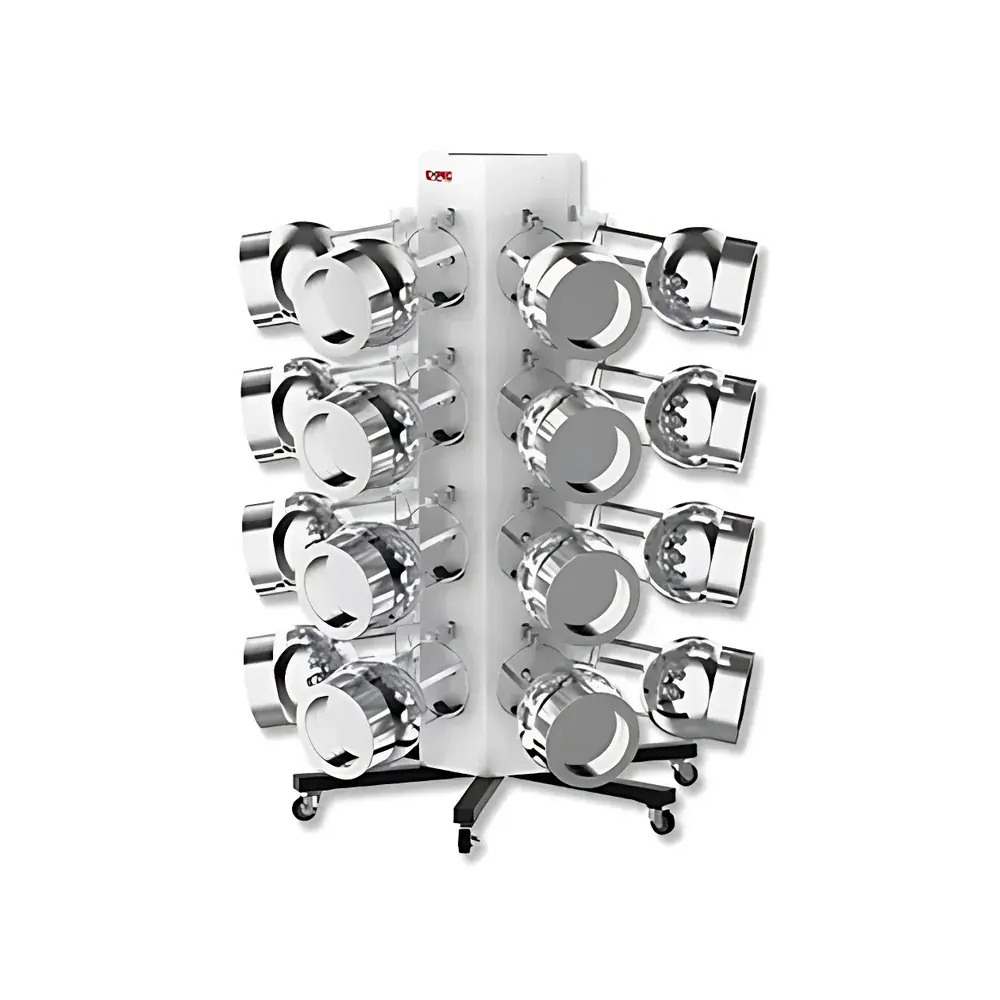
EXPEC 272 SUMMA Canister Auto-Sampler
| Brand | EXPEC (Furui Technology) |
|---|---|
| Origin | Zhejiang, China |
| Model | EXPEC 272 |
| Sample Capacity | 16 positions standard, expandable to 48 positions (3 × 16) |
| Sample Types | Electropolished SUMMA canisters (6–30 L), gas sampling bags (Tedlar®, FlexFoil®), and crimp-top or screw-cap sampling vials |
| Flow Path | Fully inertized (SilcoNert®/Sulfinert®-treated stainless steel), heated to 110 °C ± 5 °C |
| Automation Functions | Automated leak check (pressure decay method), flow path purge & bake-out, sequence-based auto-injection |
| Compliance | Designed for EPA Method TO-14A, TO-15A, ASTM D6196, and ISO 16017-1 workflows |
Overview
The EXPEC 272 SUMMA Canister Auto-Sampler is an engineered solution for high-throughput, trace-level volatile organic compound (VOC) analysis in ambient air, indoor air, and occupational hygiene applications. It operates on the principle of pressurized, quantitative transfer of gaseous samples from inert SUMMA canisters, flexible gas bags, or sealed vials into a cryogenically focused pre-concentrator—typically the EXPEC Pre-series atmospheric pre-concentrators (e.g., Pre-2000 or Pre-3000). The system employs a pressure-driven sampling mechanism with precise pneumatic control, eliminating reliance on carrier gas flow for sample introduction and ensuring stoichiometric transfer integrity. All fluidic pathways—from inlet valve manifolds to transfer lines and focusing traps—are constructed from electropolished 316 stainless steel and chemically passivated using SilcoNert® or Sulfinert® technology to minimize surface adsorption, catalytic decomposition, and memory effects. Integrated active heating (110 °C ± 5 °C) prevents condensation of semi-volatiles and maintains vapor-phase stability throughout the transfer process.
Key Features
- Modular 16-position sample carousel with standardized SUMMA canister mounting fixtures; supports 6 L, 11 L, and 30 L canisters without adapter kits
- Scalable architecture: Up to three independent EXPEC 272 units may be synchronized via Ethernet-controlled master-slave protocol, enabling 48-sample unattended operation
- Automated integrity verification: Real-time pressure decay testing (per EPA TO-15A Appendix B) prior to each injection, with configurable pass/fail thresholds and audit-trail logging
- Self-cleaning protocol: Programmable high-purity nitrogen purge followed by thermal bake-out (up to 150 °C) between samples to eliminate carryover of C2–C12 hydrocarbons and polar VOCs
- Heated, inert transport lines (1/8″ OD SS, SilcoNert®-coated) maintained at constant temperature to prevent fractionation during transfer
- Embedded industrial PLC with RS-485 and Ethernet (TCP/IP) interfaces for integration into LIMS and centralized laboratory automation systems
Sample Compatibility & Compliance
The EXPEC 272 accommodates a broad range of regulated and research-grade sampling media: EPA-certified electroplated SUMMA canisters (with integrated pressure relief valves), ASTM-compliant Tedlar® and FlexFoil® gas sampling bags (1–10 L), and 22-mL or 40-mL crimp-sealed glass vials with PTFE-lined septa. Its design adheres to the mechanical and procedural requirements of U.S. EPA Methods TO-14A and TO-15A for ambient air VOC analysis, as well as ASTM D6196 for site assessment and ISO 16017-1 for indoor air quality monitoring. The system supports full 21 CFR Part 11 compliance when paired with EXPEC’s validated software suite—including electronic signatures, user access controls, and immutable audit trails for all run parameters, leak test results, and maintenance logs.
Software & Data Management
Control and method sequencing are executed through EXPEC’s proprietary AutoSampler Control Software (ASC v3.2+), a Windows-based application supporting IEC 62443-aligned security protocols. Users define multi-step methods—including equilibration time, pressurization setpoints, transfer duration, and post-injection purge cycles—with sub-second timing resolution. All operational data—including real-time pressure transducer readings, heater status, valve actuation timestamps, and leak test outcomes—are timestamped and stored in SQLite databases with optional export to CSV or direct SQL server push. The software generates PDF-formatted run reports compliant with GLP documentation standards and integrates seamlessly with third-party chromatography data systems (CDS) via ASCII or Agilent ChemStation-compatible .M methods.
Applications
The EXPEC 272 serves laboratories engaged in regulatory environmental monitoring (e.g., NAAQS compliance, landfill perimeter monitoring), emergency response (HAZWOPER field deployments), occupational exposure assessment (NIOSH Method 2549), public health surveillance (indoor VOC profiling in schools/hospitals), and academic research on atmospheric chemistry kinetics. Its low blank performance (98.5% for C3–C8 alkanes), and compatibility with both single- and multi-stage pre-concentrators make it suitable for detection limits down to low-pptv levels across GC-MS/FID platforms. Routine use includes urban air toxics surveys, fugitive emission quantification, and method validation studies under ISO/IEC 17025-accredited quality systems.
FAQ
Does the EXPEC 272 support unattended overnight operation?
Yes—when configured with a synchronized Pre-series pre-concentrator and GC-MS system, the EXPEC 272 enables fully automated 24-hour batch runs with built-in failure recovery logic.
Can it handle humid or particulate-laden samples?
It is recommended to install an inline Nafion® dryer and 0.2-µm particulate filter upstream of the auto-sampler inlet for high-humidity or dusty environments.
Is firmware upgrade capability available remotely?
Firmware updates are delivered via secure HTTPS download and installed through the ASC software interface, with version rollback and checksum verification.
What maintenance intervals are specified for the inertized valves and seals?
Electropolished stainless-steel solenoid valves require inspection every 6 months; SilcoNert®-coated surfaces are rated for ≥10,000 injections under TO-15A conditions before re-passivation is advised.
How is calibration traceability maintained?
Each unit ships with a NIST-traceable pressure calibration certificate; users perform daily system suitability checks using certified permeation tubes or dynamic dilution standards per EPA guidance.



