
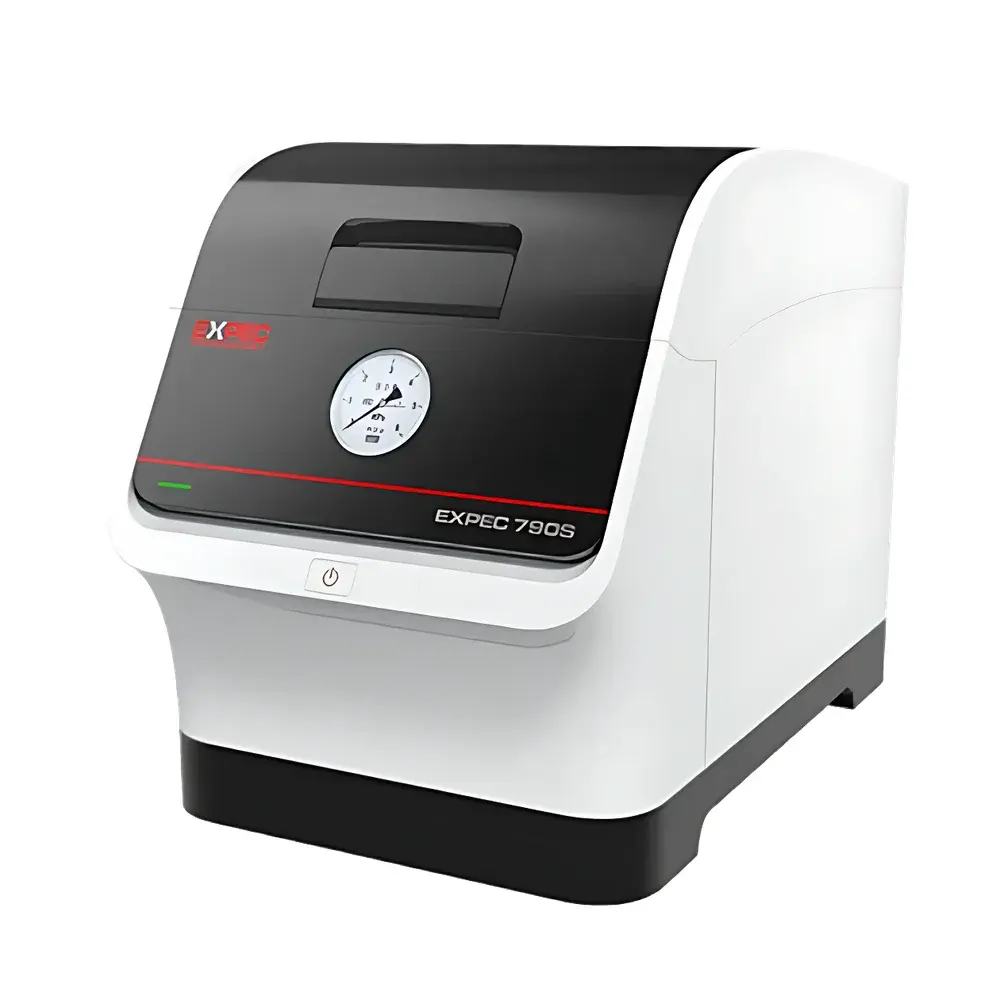
EXPEC 790S Super Microwave Digestion System
| Brand | EXPEC |
|---|---|
| Origin | Zhejiang, China |
| Manufacturer Type | Authorized Distributor |
| Country of Origin | China |
| Model | EXPEC 790S |
| Pricing | Available Upon Request |
Overview
The EXPEC 790S Super Microwave Digestion System is a high-performance, single-cavity microwave-assisted sample digestion platform engineered for trace metal analysis and inorganic sample preparation in regulated laboratory environments. It operates on the principle of controlled microwave energy absorption by polar molecules (e.g., HNO₃, HCl, HF) within sealed vessels, enabling rapid, uniform heating under precisely regulated temperature and pressure conditions. Unlike conventional multi-cavity or rotor-based systems, the EXPEC 790S employs a monolithic reaction chamber architecture—ensuring all samples experience identical thermal and pressure profiles throughout the digestion cycle. This design eliminates inter-vessel thermal gradients and pressure differentials, directly supporting analytical reproducibility required for ISO/IEC 17025-accredited testing laboratories and GLP-compliant workflows.
Key Features
- Single-chamber digestion architecture ensuring uniform temperature and pressure across all sample vessels (6-, 8-, 18-, or 24-position configurations available)
- Programmable pre-pressurization function to suppress violent boiling during ramp-up, minimizing risk of sample splashing, cross-contamination, and vessel failure
- Dual-phase stainless steel pressure vessel rated to 30 MPa maximum operating pressure, integrated with redundant safety interlocks including door position sensors, pressure relief valves, and real-time cavity pressure monitoring
- Low-acid digestion protocol: compatible with 2–3 mL acid volumes per sample; eliminates post-digestion acid removal (no “acid evaporation” step), enabling direct dilution and instrumental analysis (e.g., ICP-OES, ICP-MS)
- Multi-material vessel compatibility: supports TFM-lined PFA, borosilicate glass, and fused quartz digestion tubes—reducing consumable cost while maintaining chemical inertness for aggressive matrices
- Integrated tablet-based control interface with Wi-Fi connectivity for remote status monitoring, method execution, and real-time parameter logging
- One-touch operation with preloaded, customizable digestion methods optimized for pharmaceutical excipients, soil, polymer composites, biological tissues, and siliceous geological samples
Sample Compatibility & Compliance
The EXPEC 790S accommodates diverse sample types—including cosmetics, pharmaceuticals, environmental solids (soils, sediments, sludges), foodstuffs, petrochemical catalysts, and mineral ores—without requiring matrix-specific hardware modifications. Its programmable pre-pressurization and extended high-temperature capability (up to 300 °C) enable complete decomposition of recalcitrant organic matrices such as polyethylene, carbon fibers, and silica-rich plant tissues. The system complies with core regulatory expectations for sample preparation instrumentation: it supports audit-trail generation (user login, method parameters, run timestamps, pressure/temperature logs), aligns with USP and EPA Method 3052 requirements for trace metal digestion, and facilitates adherence to ISO 17294-2 (water quality – ICP-MS determination) and ISO 11885 (water quality – metals by ICP-OES) through consistent, low-blank digestion performance.
Software & Data Management
The embedded control software provides full method development, execution, and data capture functionality via an Android-based tablet interface. All digestion runs are automatically timestamped and associated with operator ID, method name, vessel configuration, and real-time pressure/temperature curves. Export options include CSV and PDF reports compliant with internal QA documentation standards. While not natively 21 CFR Part 11-certified, the system supports integration into validated LIMS or ELN environments via standard network protocols (HTTP/HTTPS, FTP), enabling electronic record retention and review per FDA and EMA guidance on computerized system validation.
Applications
- Routine heavy metal analysis (Pb, Cd, As, Hg, Cr) in cosmetics and topical formulations per EU Cosmetics Regulation (EC No. 1223/2009)
- Residual catalyst quantification in API synthesis intermediates using ICP-MS
- Total digestible phosphorus and trace elements in animal feed per AOAC 985.23 and ISO 6497
- Leachable metals screening from medical device polymers (ISO 10993-12)
- Geochemical mapping of rare earth elements (REEs) in rock and sediment samples via high-pressure, high-temperature digestion
- Environmental compliance testing for RoHS and WEEE directives in electronics recycling streams
FAQ
Does the EXPEC 790S support automated acid addition?
No—the system does not include integrated liquid handling; acid addition is performed manually prior to vessel loading.
Is the pressure vessel certified to ASME BPVC Section VIII standards?
The dual-phase stainless steel cavity is designed and tested to withstand 30 MPa static pressure, but formal ASME certification is not provided by the manufacturer.
Can digestion methods be exported and shared between instruments?
Yes—method files (.exp) can be transferred via USB or network share and loaded onto other EXPEC 790S units running the same firmware version.
What is the maximum recommended operating temperature for quartz vessels?
Fused quartz vessels are rated for continuous use up to 260 °C; exceeding this may compromise mechanical integrity and thermal stability.
Does the system meet GLP documentation requirements?
It generates essential operational records (time, temp, pressure, user ID); full GLP compliance depends on site-specific validation, SOPs, and integration with a qualified data management system.



