
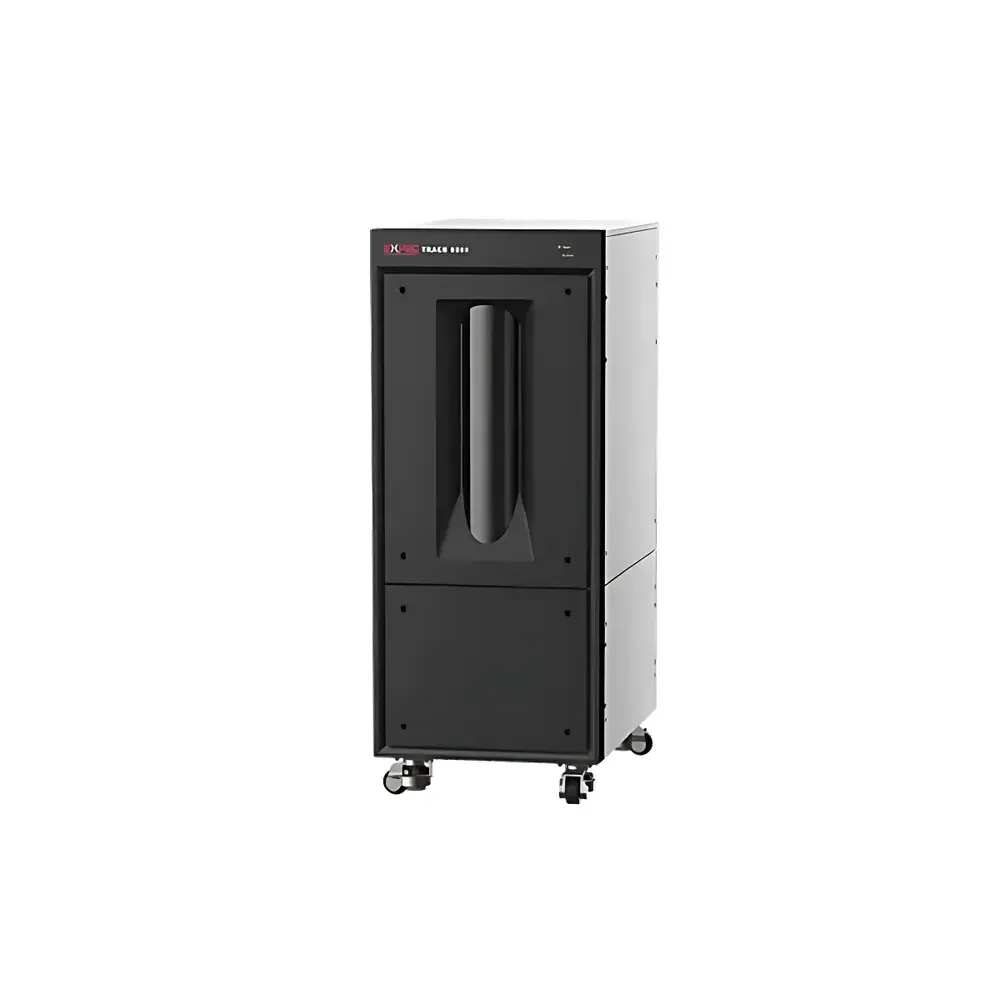
EXPEC TRACE 8000 Chemical Ionization Time-of-Flight Mass Spectrometer
| Brand | EXPEC |
|---|---|
| Origin | Zhejiang, China |
| Manufacturer Type | Original Equipment Manufacturer (OEM) |
| Domestic Product Classification | Yes |
| Model | TRACE 8000 |
| Pricing | Available Upon Request |
Overview
The EXPEC TRACE 8000 Chemical Ionization Time-of-Flight Mass Spectrometer (CI-TOFMS) is an advanced analytical platform engineered for real-time, high-resolution molecular characterization of volatile and semi-volatile organic compounds (VOCs and SVOCs). It integrates a custom-designed chemical ionization (CI) source—featuring a stable glow-discharge ionization mechanism—with a reflectron-equipped orthogonal time-of-flight (o-TOF) mass analyzer. This architecture enables soft, controllable ionization with minimal fragmentation, preserving molecular ion integrity while delivering sub-microsecond spectral acquisition rates and mass resolution (m/Δm) exceeding 4,000 (FWHM) across the full mass range (1–500 Th). The instrument operates on the fundamental principle of ion generation via reagent ion–analyte proton transfer or charge exchange reactions, followed by precise time-resolved ion flight measurement in a field-free drift region. Its design prioritizes robustness for continuous operation in unattended environments, including mobile laboratories and fixed-site monitoring stations.
Key Features
- Glow-discharge chemical ionization source with rapid reagent ion switching (H3O+, O2+, NO+)—enabling selective, low-energy ionization tailored to analyte functional groups (e.g., aldehydes, ketones, amines, halogenated hydrocarbons, BTEX, aliphatic/aromatic hydrocarbons)
- High-transmission ion optics incorporating a high-voltage ion funnel and electrostatic lens system—optimized for >70% ion transmission efficiency from source to detector
- Orthogonal acceleration TOF architecture with reflectron correction—ensuring mass accuracy < 3 ppm (internal calibration) and high mass stability over extended acquisition periods
- Microsecond-scale transient response (< 100 µs per spectrum)—supporting real-time tracking of dynamic processes such as emission plume evolution, breath-by-breath exhalation profiling, and semiconductor cleanroom AMC fluctuations
- Modular vacuum system with dual-stage turbomolecular pumping—achieving base pressure < 5 × 10⁻⁷ mbar and enabling rapid pump-down after sample introduction
Sample Compatibility & Compliance
The TRACE 8000 accepts gaseous samples directly via heated transfer lines (up to 200 °C), compatible with standard ambient air, canister-collected VOCs, thermal desorption units (TDU), and gas chromatography (GC) interfaces (with optional GC-TOFMS configuration). It supports quantitative analysis using internal standard calibration and meets essential regulatory data integrity requirements: full audit trail logging, user-access controls, electronic signature support, and compliance-ready documentation aligned with GLP and ISO/IEC 17025 laboratory accreditation frameworks. While not pre-certified for specific FDA 21 CFR Part 11 implementation, its software architecture provides the foundational capabilities required for validation in regulated environments—including secure data storage, version-controlled method files, and immutable raw data archiving.
Software & Data Management
Control and data processing are managed through EXPEC’s proprietary MassHunter-compatible software suite, featuring real-time spectral visualization, automated peak deconvolution, library-assisted identification (NIST/EPA/Custom libraries), and time-series concentration mapping. All raw data (.raw) and processed results (.csv, .pdf) are stored in vendor-neutral formats. The system supports direct integration with SCADA platforms and LIMS via OPC UA and RESTful API protocols. Data security protocols include AES-256 encryption for archived datasets and role-based access control (RBAC) for multi-user laboratory deployments.
Applications
- Mobile atmospheric monitoring: Real-time VOC speciation and source apportionment during fence-line surveys, industrial park patrols, and emergency response scenarios
- Semiconductor manufacturing: Continuous monitoring of airborne molecular contaminants (AMCs)—including amines, acids, condensables—in cleanrooms and tool exhaust streams
- Food science: In-situ headspace analysis of flavor volatiles during fermentation, roasting, and packaging development
- Materials safety screening: Rapid identification of leachable organics from polymers, adhesives, and composite materials
- Clinical research: High-dynamic-range exhaled breath analysis for biomarker discovery (e.g., acetone, isoprene, aldehydes) without preconcentration
- Petrochemical process monitoring: On-line detection of trace impurities and reaction intermediates in catalytic reforming and cracking units
FAQ
What ionization modes does the TRACE 8000 support?
It supports H3O+, O2+, and NO+ chemical ionization via programmable reagent gas delivery and glow-discharge control.
Is the instrument suitable for unattended long-term operation?
Yes—designed for 24/7 operation with automated calibration checks, thermal management redundancy, and remote diagnostics capability.
Can it interface with gas chromatography systems?
Yes, optional GC coupling is available with dedicated transfer interface and synchronized acquisition firmware.
What is the typical mass accuracy under routine operation?
Mass accuracy remains ≤ 3 ppm (RMS) over 24-hour periods when using internal calibrants and temperature-stabilized electronics.
Does the system comply with ISO 14644 cleanroom monitoring standards?
While not certified per se, its sensitivity, reproducibility, and real-time reporting functionality align with ISO 14644-2 Annex C requirements for particle and molecular contaminant monitoring in Class 1–5 environments.





