
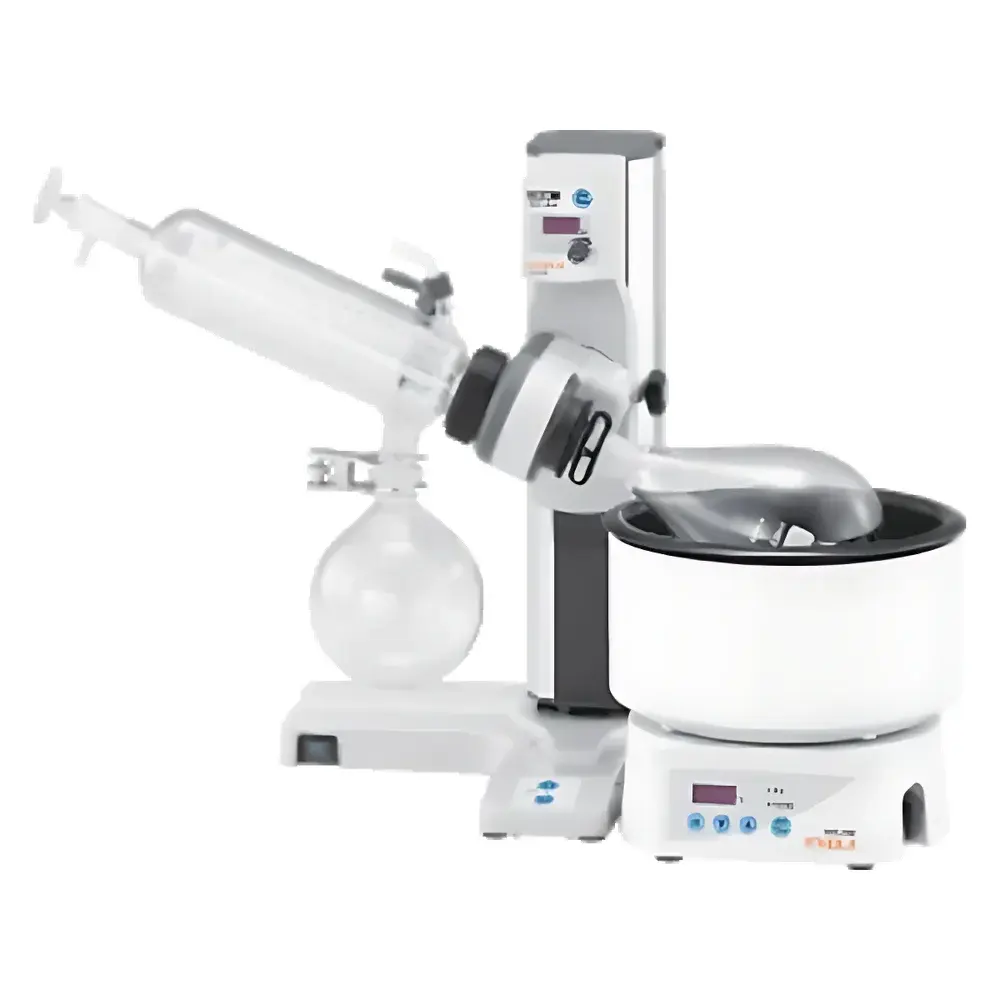
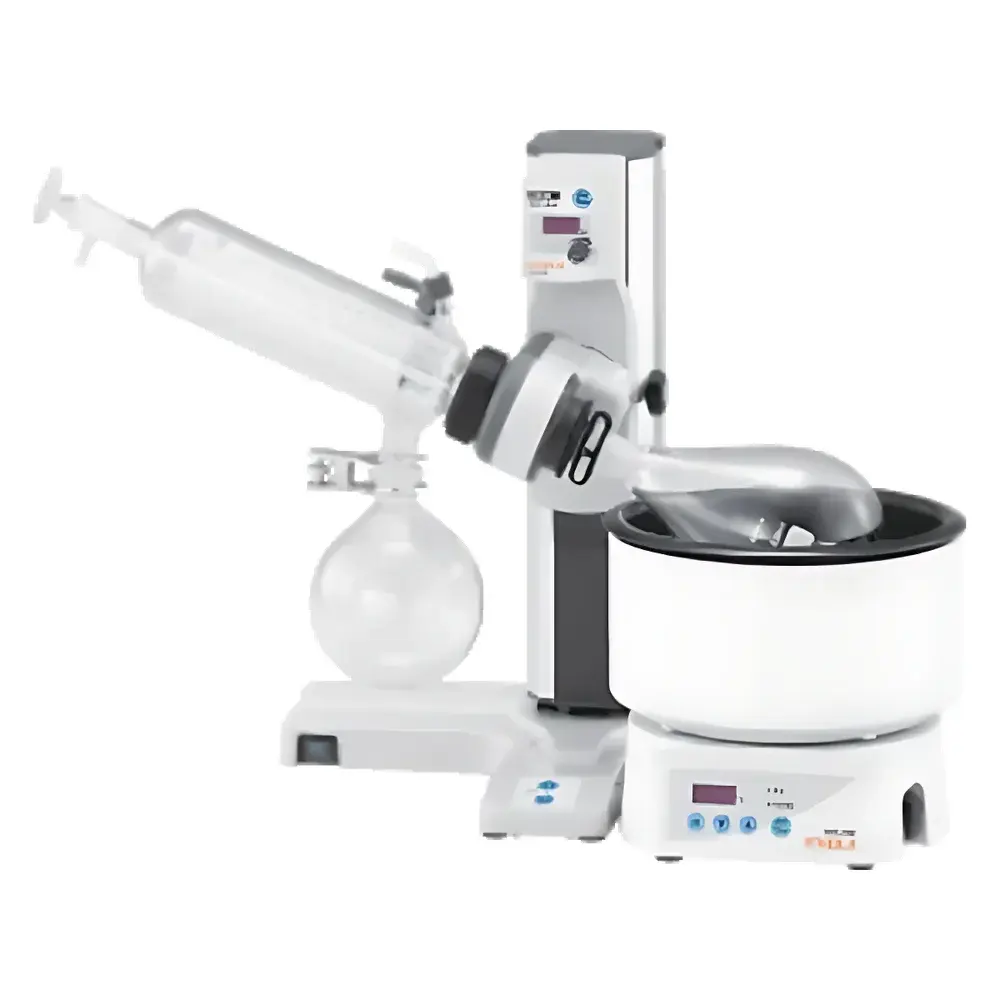
EYELA N-1210BS-WB Rotary Evaporator
| Brand | EYELA |
|---|---|
| Origin | Japan |
| Model | N-1210BS-WB |
| Bath Temperature Range | Room Temp. to 180 °C (±1.5 °C in water, ±3 °C in oil) |
| Rotational Speed Range | 5–280 rpm |
| Evaporation Rate (Water) | Up to 25 mL/min |
| Bath Capacity | ~5.4 L |
| Bath Dimensions (ID) | 240 mm × 120 mm H |
| Bath Material | Aluminum with PTFE Coating |
| Heating Power | 1 kW |
| Vertical Travel | Motorized lift 110 mm + manual extension 130 mm |
| Condenser Type | Tilted dual-spiral coil |
| Flask Capacity | 1–3 L (evaporating), 1 L (receiving) |
| Vacuum Seal | PTFE sealing gasket |
| Cooling Water Inlet/Outlet | Ø10 mm |
| Power Supply | AC 220 V, 5.5 A, 1.2 kVA, 50 Hz |
| Operating Ambient | 5–35 °C |
| Dimensions (W×D×H) | 729 × 433 × 520 mm (750 mm with lift extended) |
| Weight | 18 kg |
Overview
The EYELA N-1210BS-WB Rotary Evaporator is a precision-engineered laboratory instrument designed for efficient, reproducible solvent removal and sample concentration under reduced pressure. Based on the fundamental principle of rotary evaporation—where rotation increases surface area, vacuum lowers boiling points, and controlled bath heating drives gentle phase transition—the N-1210BS-WB integrates thermal, mechanical, and vacuum management systems into a single robust platform. Its dual-mode heating bath (water or oil compatible), wide temperature range (up to 180 °C), and fine-tuned rotational control (5–280 rpm) enable consistent performance across diverse solvents—from low-boiling diethyl ether to high-boiling dimethyl sulfoxide. The system adheres to core engineering standards for laboratory-scale purification equipment, supporting routine workflows in synthetic chemistry, natural product isolation, pharmaceutical development, and quality control laboratories where trace solvent residue, thermal degradation, and operator safety are critical concerns.
Key Features
- Tilted dual-spiral condenser geometry enhances condensation efficiency across broad volatility ranges, minimizing vapor bypass and maximizing recovery yield for both volatile and semi-volatile compounds.
- Motorized vertical lift (110 mm travel) with manual fine-adjustment extension (130 mm) ensures precise positioning of the evaporation flask relative to the bath, accommodating variable flask sizes and enabling safe integration with explosion-proof balls or auxiliary cold traps.
- PTFE-coated aluminum heating bath (5.4 L capacity, 1 kW power) delivers uniform thermal distribution and corrosion resistance; temperature stability is maintained within ±1.5 °C (in water) or ±3 °C (in oil) across its full operating range (room temperature to 180 °C).
- Integrated fail-safe mechanism automatically raises the evaporation flask to its highest position during power interruption, preventing uncontrolled thermal exposure and potential sample decomposition or bumping.
- Front-mounted motorized lift controls allow operation inside fume hoods with minimal sash opening—reducing cross-contamination risk and maintaining containment integrity per OSHA and ISO 15190 laboratory safety guidelines.
- High-performance PTFE vacuum sealing gasket ensures long-term leak integrity and chemical compatibility with aggressive solvents including halogenated hydrocarbons, strong acids, and bases.
Sample Compatibility & Compliance
The N-1210BS-WB accommodates standard ground-glass jointed glassware (1–3 L evaporation flasks, 1 L receiving flasks) and supports optional BSF-series resin-film-coated components for enhanced corrosion resistance and optical clarity during real-time process monitoring. It complies with general electrical safety requirements per IEC 61010-1 and is suitable for use in GLP-compliant environments when integrated with validated vacuum controllers (e.g., NVC-3000) and audit-trail-capable data loggers. While the unit itself does not include built-in 21 CFR Part 11 compliance features, its analog/digital I/O interface enables external integration with LIMS or electronic lab notebook (ELN) systems for traceable parameter recording—supporting regulatory expectations in pharmaceutical QC/QA and contract research settings.
Software & Data Management
The N-1210BS-WB operates as a standalone instrument with local digital display and rotary knob-based parameter input. For automated process control, it interfaces via dedicated communication cable and NVC signal control unit with the EYELA NVC-3000 Vacuum Controller. This integration permits programmable vacuum ramping, coordinated activation of auxiliary devices (e.g., recirculating chillers, oil baths, vacuum pumps), and synchronized endpoint detection based on pressure or temperature thresholds. When deployed with third-party SCADA or LabVIEW-based acquisition systems, time-stamped operational logs—including bath temperature, rotation speed, lift position, and vacuum setpoint—can be archived for retrospective analysis and audit readiness.
Applications
- Concentration of reaction mixtures following organic synthesis or catalytic transformations.
- Removal of residual solvents from APIs and intermediates in accordance with ICH Q3C guidelines.
- Extraction and fractionation of botanical extracts, essential oils, and lipid fractions under mild thermal conditions.
- Preparative purification of heat-sensitive biomolecules, including peptides and oligonucleotides, where rapid solvent stripping minimizes racemization or hydrolysis.
- Standardized sample preparation for subsequent analytical techniques such as GC-MS, HPLC, and NMR spectroscopy.
FAQ
What is the maximum recommended bath temperature for continuous operation?
The heating bath is rated for sustained use up to 180 °C using silicone oil or other high-temperature heat transfer fluids; water should not exceed 100 °C.
Can the N-1210BS-WB be used with corrosive solvents such as concentrated HCl or trifluoroacetic acid?
Yes—when equipped with the optional BSF-series PTFE-laminated glassware and the standard PTFE vacuum seal, the system maintains integrity against most common organic and inorganic corrosives.
Is the motorized lift function programmable or only manually triggered?
Lift movement is manually initiated via front-panel buttons; no onboard programmability exists, but external automation is achievable through NVC-3000 controller integration.
Does the unit include vacuum regulation capability?
No—vacuum control requires the separately purchased NVC-3000 Vacuum Controller and associated interface hardware.
What cooling water specifications are required for optimal condenser performance?
A recirculating chiller delivering water at ≤10 °C and ≥1.5 L/min flow rate through Ø10 mm tubing is recommended for full condensation efficiency across the entire solvent volatility spectrum.



