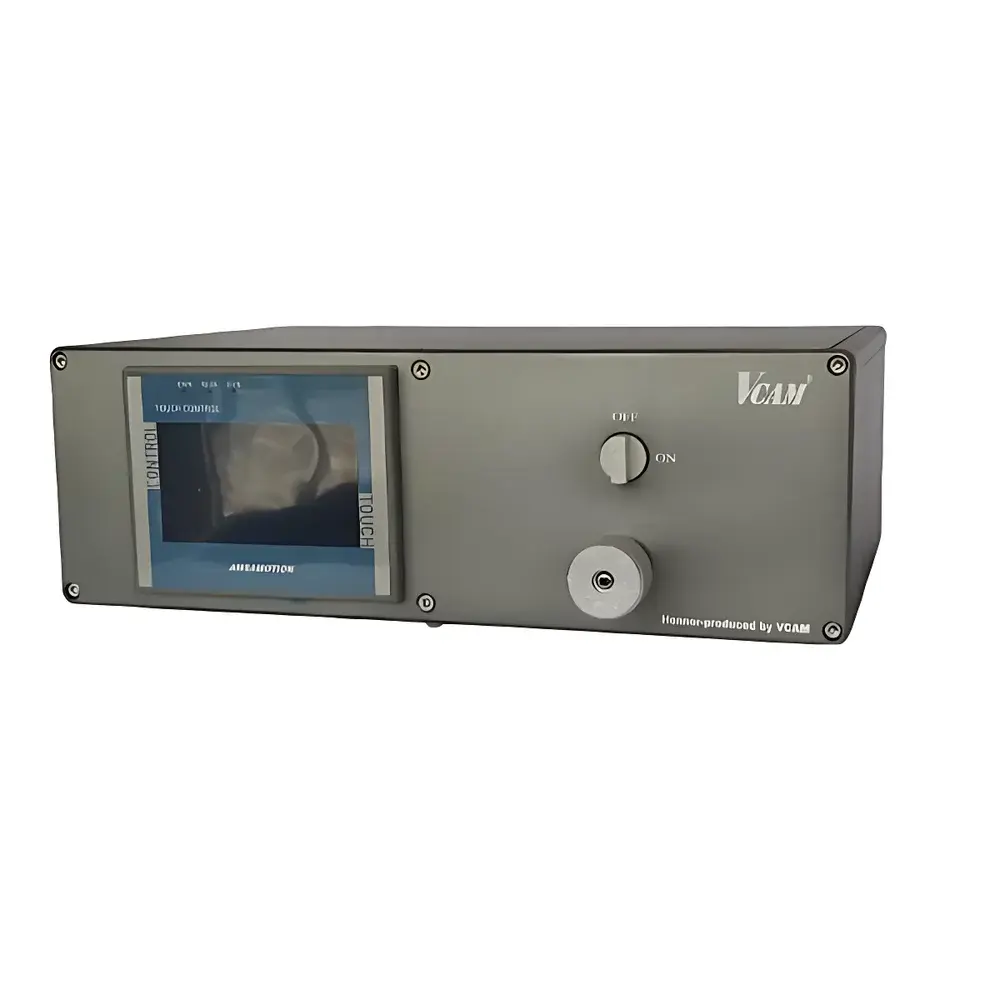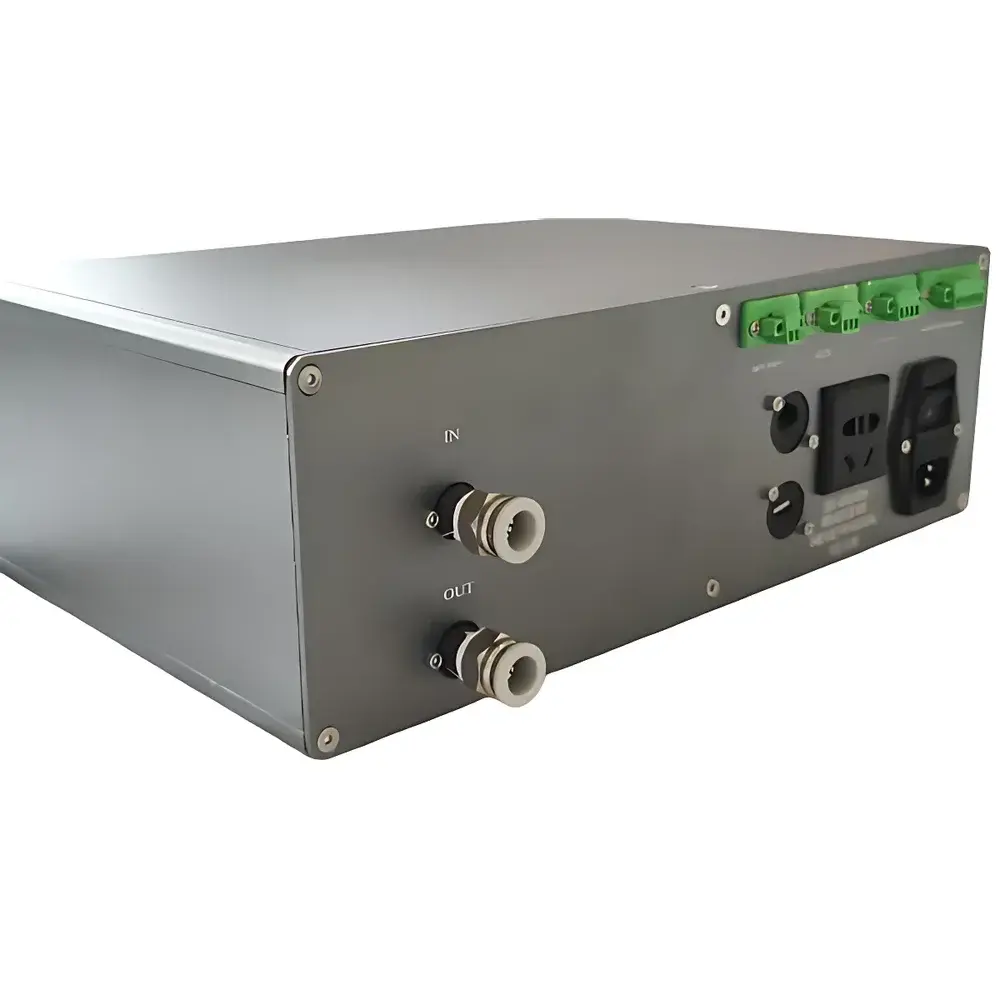
EyeTech Online Particle Size and Shape Analyzer
| Origin | Imported |
|---|---|
| Manufacturer Type | Authorized Distributor |
| Model | EyeTech Online Particle Size and Shape Analyzer |
| Pricing | Available Upon Request |
Overview
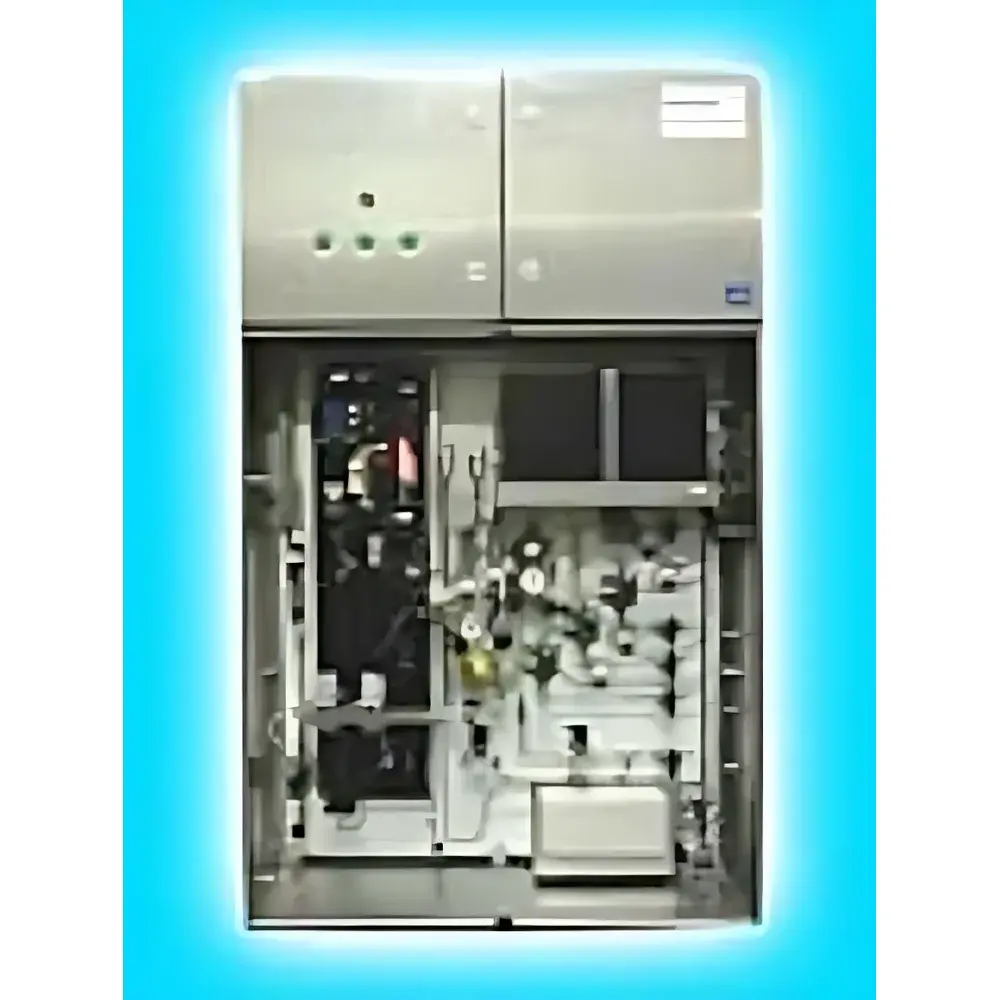
The EyeTech Online Particle Size and Shape Analyzer is an industrial-grade, real-time in-line measurement system engineered for simultaneous particle size distribution (PSD) and dynamic particle shape characterization across a broad operational range of 2 µm to 3600 µm (3.6 mm). Unlike conventional offline or benchtop analyzers, the EyeTech system employs dual-channel, orthogonal measurement architecture—integrating time-of-transit (T.O.T.) laser diffraction with high-resolution video imaging—to deliver correlated, metrologically traceable data under continuous process conditions. Its design adheres to fundamental principles of light scattering physics and digital image analysis, enabling robust quantification of both spherical and highly irregular particles—including fibrous, flaky, and elongated morphologies—without reliance on empirical calibration curves. The system is purpose-built for harsh industrial environments: rated IP65 for dust ingress protection, validated for continuous operation at ambient humidity up to 95% RH (non-condensing), and structurally reinforced to maintain optical alignment under mechanical vibration typical of conveyor belts, mixers, and pneumatic transfer lines.
Key Features
- True in-line operation via process bypass loop—sample flows through quartz or sapphire flow cell and returns to main stream or discharges externally
- Dual-channel architecture: T.O.T.-based laser channel for rapid, high-reproducibility size distribution; high-frame-rate CMOS imaging channel for real-time shape descriptors (aspect ratio, circularity, convexity, Feret diameter, length-to-width ratio, convex hull area)
- Zero-calibration requirement: measurement traceability established via geometric optics and pixel-scale referencing, eliminating drift-related recalibration cycles
- Remote operation and diagnostics via Ethernet/IP or Modbus TCP—fully compatible with DCS/SCADA integration and PLC-triggered measurement sequences
- Integrated alarm logic: configurable thresholds for D10/D50/D90 shifts, shape index deviations, or flow cell fouling detection (via real-time transparency monitoring)
- Mechanically isolated optical housing with vibration-damping mounts and monolithic 303/316 stainless steel construction
- High-pressure & high-temperature flow cell: rated to 20 bar and 250 °C; compatible with steam sterilization and CIP/SIP protocols
- Wide dynamic concentration range: supports particle number densities up to 10⁹ particles/cm³ without signal saturation or multiple-scattering artifacts
Sample Compatibility & Compliance
The EyeTech analyzer accommodates dry powders, slurries, emulsions, and molten materials—provided the carrier medium exhibits sufficient optical transmission at 650 nm (laser) and visible spectrum (imaging). It complies with ISO 13320:2020 (laser diffraction) and ISO 13322-2:2013 (image analysis) for particle characterization methodology. For regulated industries, the system supports audit-ready data logging aligned with FDA 21 CFR Part 11 requirements—including electronic signatures, immutable timestamped records, and full operator action traceability. Optional GMP/GLP-compliant software modules provide IQ/OQ documentation templates and deviation management workflows. All wetted parts meet USP Class VI biocompatibility standards; sapphire flow cells conform to ASTM F798 for optical clarity and thermal shock resistance.
Software & Data Management
The proprietary EyeTech Control Suite runs on Windows-based industrial PCs and delivers synchronized visualization of size histograms, shape scatter plots, trend charts (e.g., D50 vs. time), and annotated particle galleries. Raw image frames and T.O.T. pulse trains are stored losslessly in HDF5 format for post-acquisition reprocessing. Data export supports CSV, XML, and OPC UA—enabling seamless ingestion into MES platforms (e.g., Siemens Opcenter, Rockwell FactoryTalk) or statistical process control (SPC) engines. Batch reporting includes automated PDF generation with metadata embedding (instrument ID, calibration status, environmental logs). Firmware updates are delivered via secure HTTPS with cryptographic signature verification.
Applications
- Cement & mineral processing: real-time monitoring of clinker grinding efficiency and slag morphology evolution
- Pharmaceutical granulation: tracking agglomerate growth kinetics and binder distribution uniformity during fluid-bed drying
- Food & feed extrusion: detecting die wear via changes in pellet aspect ratio and surface roughness indices
- Chemical catalysis: correlating catalyst particle sphericity with reactor pressure drop and bed fluidization stability
- Recycled plastics sorting: distinguishing PET flakes from PVC contaminants using convexity and edge sharpness metrics
- Battery electrode slurry QC: verifying graphite particle dispersion state and detecting metallic dendrite fragments
FAQ
Can the EyeTech system operate continuously in explosive atmospheres?
Yes—ATEX Zone 22 and IECEx certification options are available with purged enclosure variants and intrinsically safe imaging illumination.
Is sample preparation required prior to in-line measurement?
No—system is designed for direct insertion into process streams; optional dilution or sonication modules may be integrated for highly concentrated or agglomerated feeds.
How frequently must the flow cell be cleaned?
Cleaning interval depends on feed material abrasiveness and fouling tendency; typical maintenance cycles range from 8–72 hours, with automated ultrasonic cleaning kits available as add-ons.
Does the system support multi-point installation across a single production line?
Yes—up to 8 independent EyeTech units can be networked and centrally managed via the EyeTech Supervisor Server, enabling cross-location comparative analytics.
What validation documentation is provided with delivery?
Each unit ships with Factory Acceptance Test (FAT) report, optical path verification certificate, and NIST-traceable dimensional reference standard kit for on-site performance qualification (PQ).