
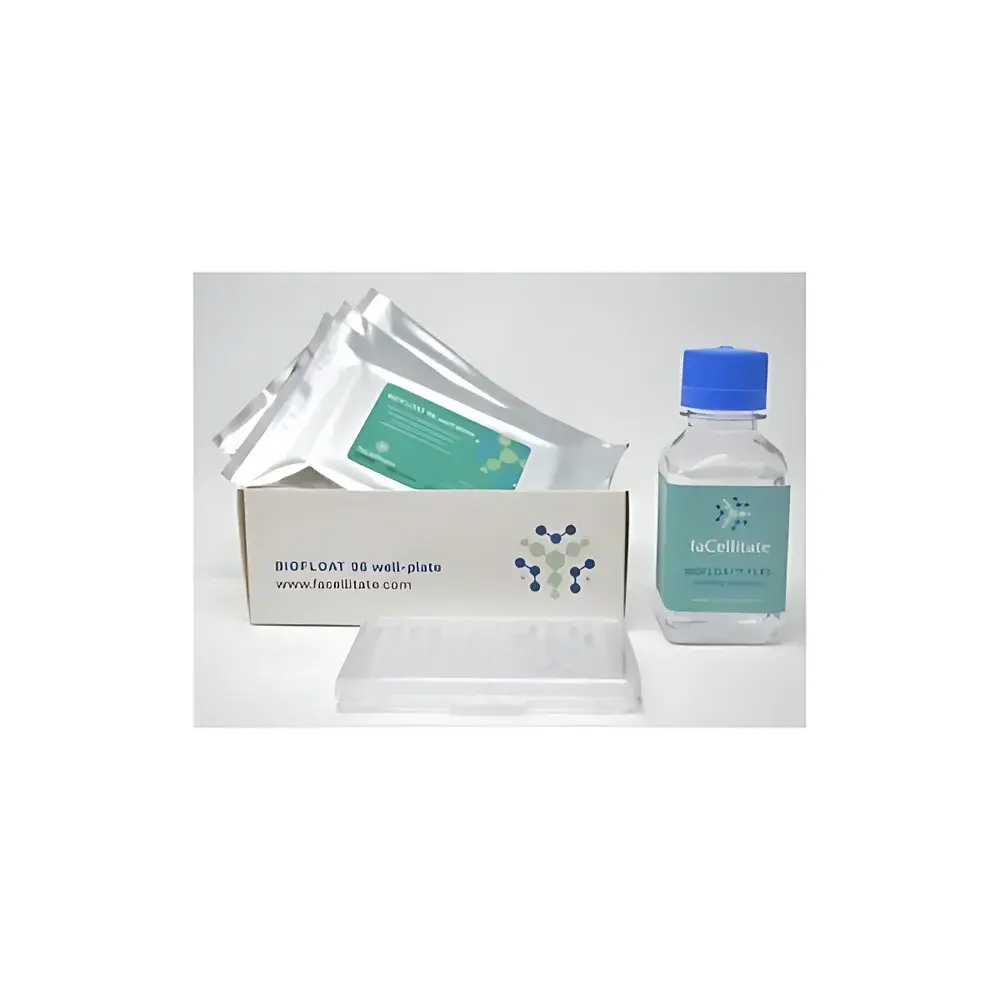
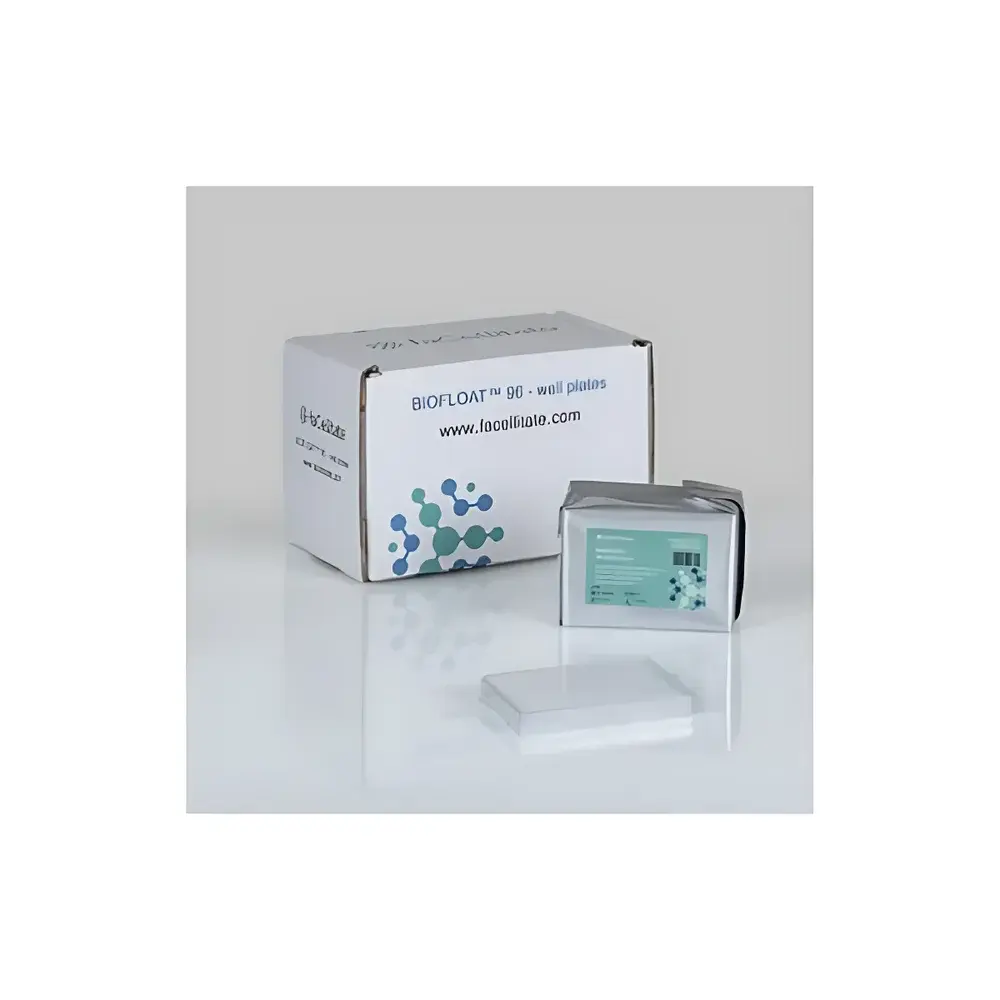
FaCellitate BIOFLOAT™ 96 Well 3D Cell Culture Plate with Flexible Coating Solution
| Brand | FaCellitate |
|---|---|
| Origin | Germany |
| Manufacturer Type | Authorized Distributor |
| Origin Category | Imported |
| Model | BIOFLOAT™ 96 3D |
| Detection Parameter | Total Cell Density |
| Instrument Type | Fully Automated |
| Detection Channels | Multi-channel |
| Sample Capacity | 12 samples per run |
| Sample Volume | 423 µL per well |
| Throughput | 230 wells/hour |
| Functional Modules | 32 integrated assay protocols |
Overview
The FaCellitate BIOFLOAT™ 96 Well 3D Cell Culture Plate is a precision-engineered platform for reproducible, scaffold-free spheroid formation in high-throughput biomedical research. Unlike conventional 2D monolayer cultures, BIOFLOAT™ leverages ultra-low attachment (ULA) surface chemistry to enable spontaneous self-assembly of adherent cells into physiologically relevant 3D spheroids—mimicking key aspects of tissue architecture, cell–cell signaling, and microenvironmental gradients observed in vivo. The system operates on the principle of controlled surface energy modulation: a proprietary polymer coating forms a homogeneous, inert interface on standard polystyrene microplates via physical adsorption and molecular self-organization. This eliminates nonspecific protein adsorption and prevents focal adhesion complex formation, thereby directing cells toward intercellular aggregation rather than substrate adhesion. Designed for integration with automated liquid handlers and imaging platforms, the BIOFLOAT™ 96 system supports quantitative analysis of total cell density—a critical metric for viability assessment, drug response profiling, and metabolic activity normalization in 3D models.
Key Features
- Ultra-uniform ULA surface engineered for single-spheroid-per-well formation with >95% consistency across all 96 wells
- Durable, scratch-resistant polymer coating resistant to ethanol, DMSO, and common assay buffers (pH 5–9)
- Coating solution compatible with standard TC-treated and non-treated polystyrene, cyclic olefin copolymer (COC), and glass-bottom plates—no geometric or optical property alteration
- Validated performance with primary human hepatocytes, iPSC-derived neural progenitors, MCF-7, HeLa, and A549 lines under serum-containing and serum-free conditions
- No enzymatic detachment or mechanical harvesting required—spheroids remain intact for downstream RNA extraction, immunostaining, or live-cell imaging
- Compatible with endpoint and kinetic assays including ATP-based viability, caspase-3/7 activation, and hypoxia-sensitive probes (e.g., pimonidazole)
Sample Compatibility & Compliance
BIOFLOAT™ 96 supports diverse sample types including primary isolates, immortalized lines, co-cultures (e.g., tumor–stroma), and patient-derived organoid fragments. Each well accommodates 423 µL of culture medium, enabling stable nutrient diffusion and waste clearance over 7–14 day incubations. The plate meets ISO 5725-2:2019 accuracy and precision requirements for biological assay reproducibility. Surface certification includes USP <85> endotoxin testing (<0.03 EU/mL), ISO 10993-5 cytotoxicity validation, and ASTM F2150-22 compatibility with automated cell counters and confocal microscopes. All lots undergo batch-to-batch QC per GLP-aligned documentation standards, including contact angle measurement (≥92° water), XPS surface composition verification, and sterility testing (ISO 11737-1).
Software & Data Management
While the BIOFLOAT™ plate itself is a consumable, its integration into automated workflows follows FAIR data principles. When used with compatible readers (e.g., Celigo, Incucyte, or PerkinElmer EnVision), raw image stacks and density metrics are exported in standardized .tiff/.csv formats compliant with MIAME and MIAPE metadata schemas. The 32 preconfigured functional modules support automated spheroid segmentation, circularity scoring, diameter distribution analysis, and total cell density quantification using validated machine-learning algorithms trained on >12,000 manually annotated spheroids. Audit trails comply with FDA 21 CFR Part 11 when deployed on validated LIMS or ELN systems, ensuring traceability from plate lot number to final density report.
Applications
- Oncology: Generation of tumor spheroids for chemosensitivity screening, immune-oncology co-cultures (e.g., PBMC–tumor), and hypoxia-driven gene expression studies
- Stem Cell Biology: Directed differentiation of mesenchymal and neural stem cells within size-controlled aggregates to modulate Wnt/Notch signaling gradients
- Toxicology: Hepatotoxicity assessment using primary human hepatocyte spheroids—maintaining CYP450 activity for >10 days without extracellular matrix supplementation
- Drug Development: PK/PD modeling of nanoparticle penetration, antibody–drug conjugate internalization, and bystander effect quantification in heterogeneous spheroids
- Regenerative Medicine: Pre-vascularized spheroid assembly for bioprinting bioinks and endothelial–pericyte interaction studies
FAQ
Can BIOFLOAT™ coating be applied to custom plate geometries?
Yes—the flexible coating solution is formulated for dip-coating, spin-coating, or pipette-assisted surface modification of non-porous substrates up to 1536-well format.
Is sterilization required before use?
All plates are gamma-irradiated (25 kGy) and supplied in certified sterile packaging; no additional sterilization is necessary.
How does BIOFLOAT™ compare to agarose or methylcellulose-based methods?
Unlike hydrogel-based approaches, BIOFLOAT™ eliminates matrix interference with receptor–ligand binding, enables direct medium exchange, and avoids batch variability associated with natural polymers.
What is the shelf life of coated plates?
Unopened plates retain full functionality for 24 months at 15–25°C; post-opening, use within 30 days under ambient dry storage.
Are there protocol templates available for specific cell types?
FaCellitate provides application notes—including seeding density optimization, media formulations, and imaging parameters—for 47 validated cell models, accessible via secure customer portal with institutional login.




