
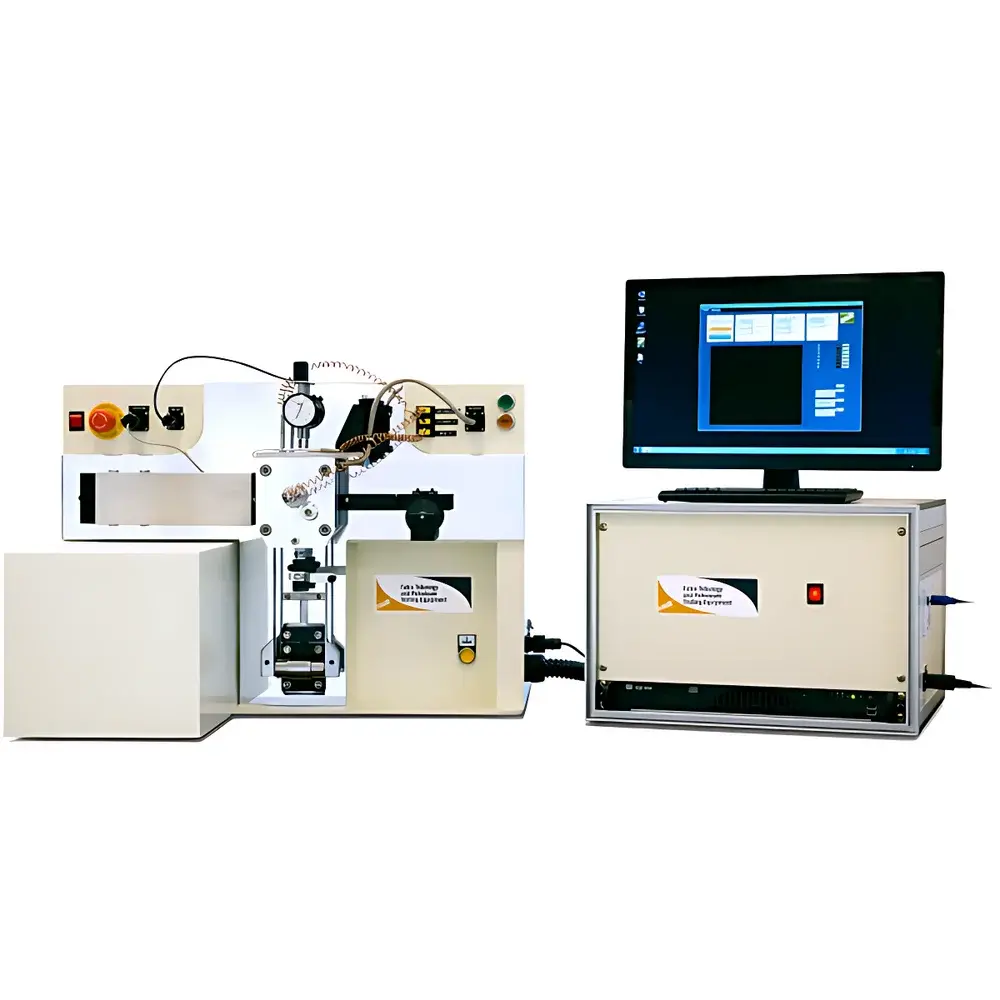
Falex 001-001-331 Block-on-Ring Tribometer
| Brand | Falex |
|---|---|
| Origin | USA |
| Model | 001-001-331 |
| Test Type | Friction and Wear |
| Load Capacity (Standard) | 805 lbf |
| Load Capacity (Optional) | 1300 lbf |
| Speed Range | Programmable RPM Control |
| Temperature Range (Standard Chamber) | Ambient to 200 °C |
| Temperature Range (Pressurized Chamber, Optional) | Ambient to 250 °C |
| Sub-ambient Testing | Available with External Chiller |
| Friction Force Measurement Range (Standard) | 0–250 lbf |
| Friction Force Measurement Range (Optional Low-Load Sensor) | 0–25 lbf |
| Compliant Standards | ASTM D2714, D2981, D3704, D2509, D2782, G77 |
| Test Geometries | Block-on-Ring, Conforming Block-on-Ring, Timken Canted Cylinder, Chip-on-Ring, Ball-on-Ring |
Overview
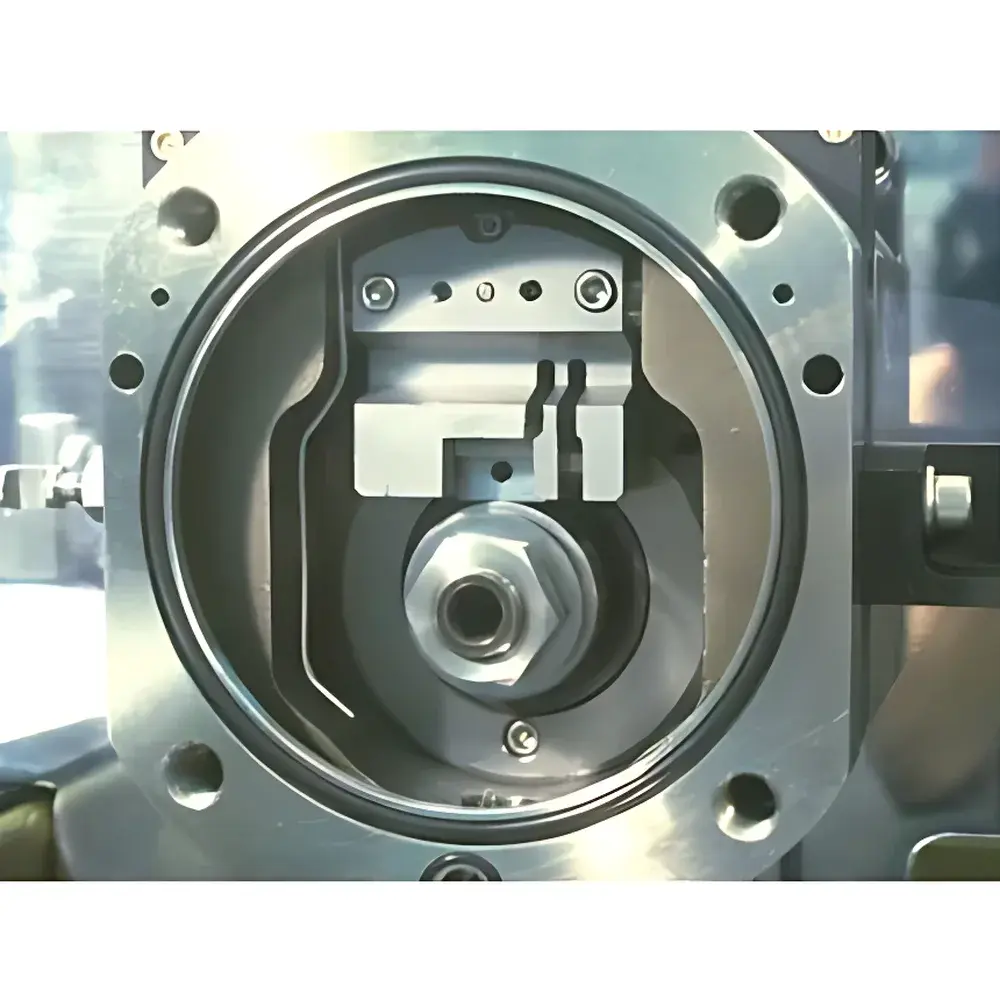
The Falex 001-001-331 Block-on-Ring Tribometer is a precision-engineered, computer-controlled tribological testing system designed for rigorous evaluation of frictional behavior and wear resistance in lubricants, greases, and solid lubricating materials under controlled mechanical and thermal conditions. Based on the standardized block-on-ring geometry—where a stationary rectangular block is loaded against a rotating ring—the instrument applies well-defined normal loads and sliding velocities to generate reproducible boundary, mixed, or elastohydrodynamic lubrication regimes. Its architecture adheres to fundamental tribometry principles grounded in Coulomb friction modeling and Archard wear theory, enabling quantitative correlation between material response and operational parameters such as load, speed, temperature, and duration. The system is widely deployed in R&D laboratories, OEM lubricant formulation centers, and third-party certification facilities where method traceability to ASTM and national standards (e.g., GB/T) is mandatory for regulatory submission or quality assurance documentation.
Key Features
- Programmable multi-parameter control: Independent real-time adjustment of rotational speed (RPM), applied load, test duration (time or cycle count), and thermal setpoint via intuitive Windows-based software interface.
- Dual-range high-fidelity friction force transduction: Standard 0–250 lbf load cell with optional ultra-sensitive 0–25 lbf sensor for low-load regime characterization (e.g., thin-film lubrication, micro-scale contacts).
- Modular thermal management: Integrated heating chamber supports ambient-to-200 °C operation; pressurized chamber option extends upper limit to 250 °C; external chiller integration enables sub-ambient testing down to –20 °C (dependent on coolant specification).
- Configurable test geometries: Interchangeable fixtures support ASTM-aligned configurations including standard Block-on-Ring, Conforming Block-on-Ring, Timken Canted Cylinder, Chip-on-Ring, and Ball-on-Ring—facilitating cross-method validation and application-specific simulation.
- Robust mechanical design: Precision-ground main shaft, hardened bearing assembly, and vibration-damped base ensure long-term dimensional stability and measurement repeatability across extended test sequences.
Sample Compatibility & Compliance
The Falex 001-001-331 accommodates metallic, polymeric, ceramic, and composite specimens conforming to ASTM D2714 (ring dimensions: 1.25″ OD × 0.75″ ID × 0.5″ W; block: 0.5″ × 0.5″ × 0.75″). Lubricant samples include mineral oils, synthetic esters, PAOs, grease formulations, and additive packages in bulk or thin-film states. All test protocols are fully traceable to ASTM D2981 (wear scar measurement), D3704 (load-carrying capacity), D2509 (grease consistency under shear), D2782 (friction coefficient determination), and G77 (pin-on-disk variant reference). Equivalent GB/T methods—including GB/T 12583 (lubricant wear resistance) and GB/T 3498 (grease dropping point)—are supported through parameter mapping and fixture calibration. System documentation complies with GLP audit requirements, and raw data files retain full metadata (timestamp, operator ID, environmental logs) for FDA 21 CFR Part 11–aligned electronic records.
Software & Data Management
The proprietary Falex Control Suite provides synchronized acquisition of friction torque, normal load, rotational speed, surface temperature (via embedded thermocouples), and elapsed time at user-defined sampling intervals (down to 10 Hz). Real-time plots display dynamic friction coefficient (μ = Ff/Fn) evolution, wear rate trends, and thermal drift compensation. Post-test analysis tools include wear scar dimension quantification (optical image import), statistical summary (mean μ, standard deviation, wear volume estimation), and export to CSV, Excel, or XML for LIMS integration. Audit trails record all parameter changes, calibration events, and user logins—ensuring compliance with ISO/IEC 17025 and internal QA procedures.
Applications
- Formulation screening of anti-wear (AW) and extreme pressure (EP) additives in engine oils and gear lubricants.
- Comparative wear resistance assessment of bio-based lubricants versus conventional hydrocarbon blends.
- Thermal stability profiling of greases under high-temperature, high-load conditions simulating bearing or chassis applications.
- Validation of solid lubricant coatings (e.g., MoS2, DLC) on aerospace alloys per MIL-PRF-81322 or SAE AS1234.
- Supporting ASTM-compliant reporting for OEM supplier qualification dossiers and API licensing submissions.
FAQ
Which ASTM standards does the Falex 001-001-331 directly support?
ASTM D2714, D2981, D3704, D2509, D2782, and G77—with dedicated test templates and report generation modules pre-configured for each method.
Can the system operate under inert atmosphere or elevated pressure?
Yes—optional pressurized test chambers support nitrogen-purged environments up to 100 psi and temperatures up to 250 °C, enabling oxidation resistance studies.
Is remote monitoring or automated reporting available?
The Control Suite supports OPC UA connectivity for SCADA integration and scheduled PDF/Excel report generation with digital signature fields compliant with 21 CFR Part 11.
What maintenance intervals are recommended for long-term calibration stability?
Annual verification of load cell linearity, thermal sensor accuracy, and encoder resolution is advised; NIST-traceable calibration certificates are provided with each service visit.
Does the system support custom test sequences beyond ASTM protocols?
Yes—users can define multi-stage profiles with variable ramp rates, dwell periods, and conditional triggers (e.g., terminate test if μ exceeds threshold), stored as reusable .fpx protocol files.






