
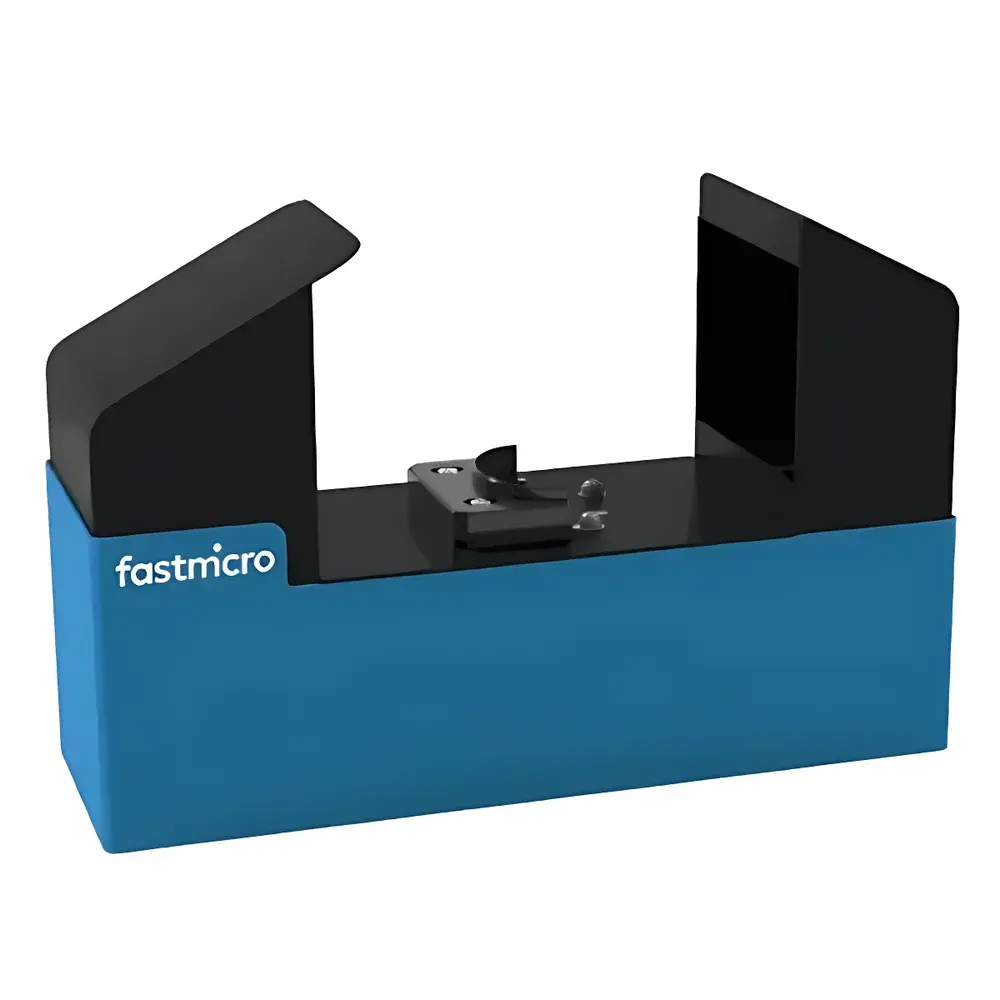
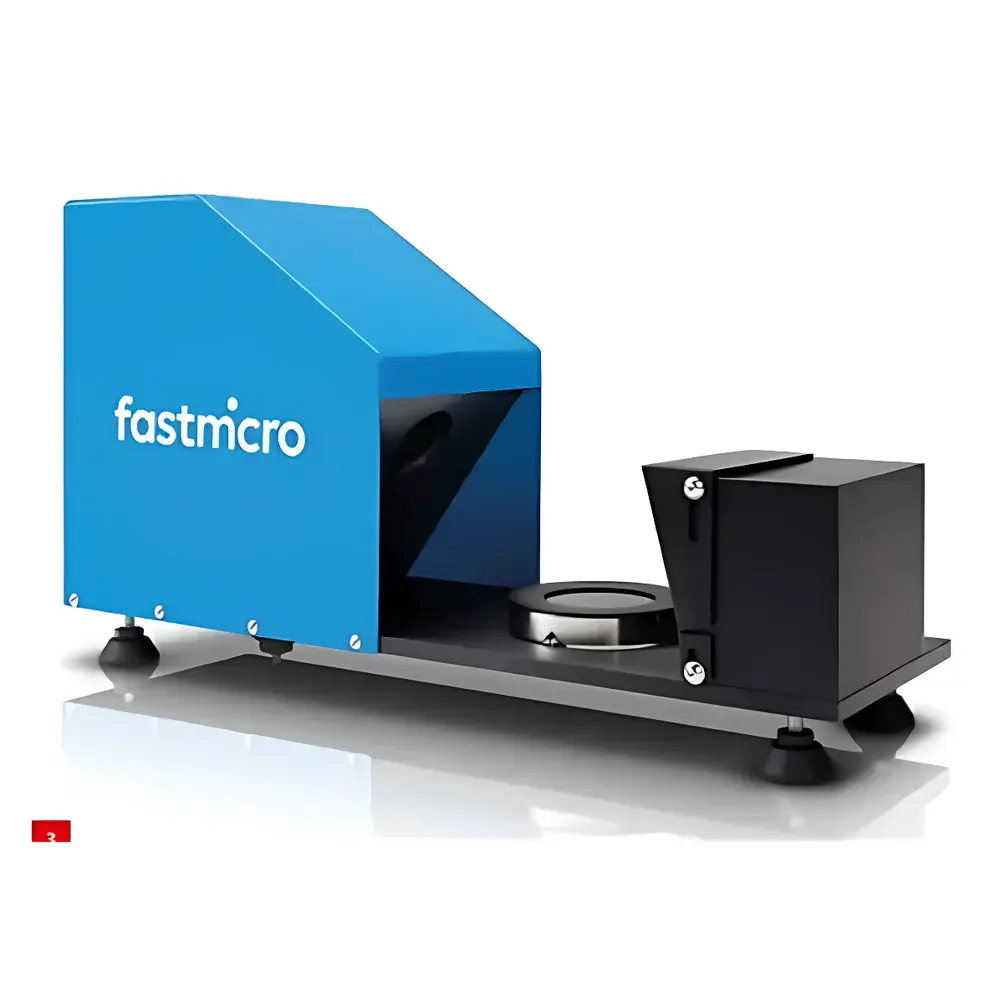
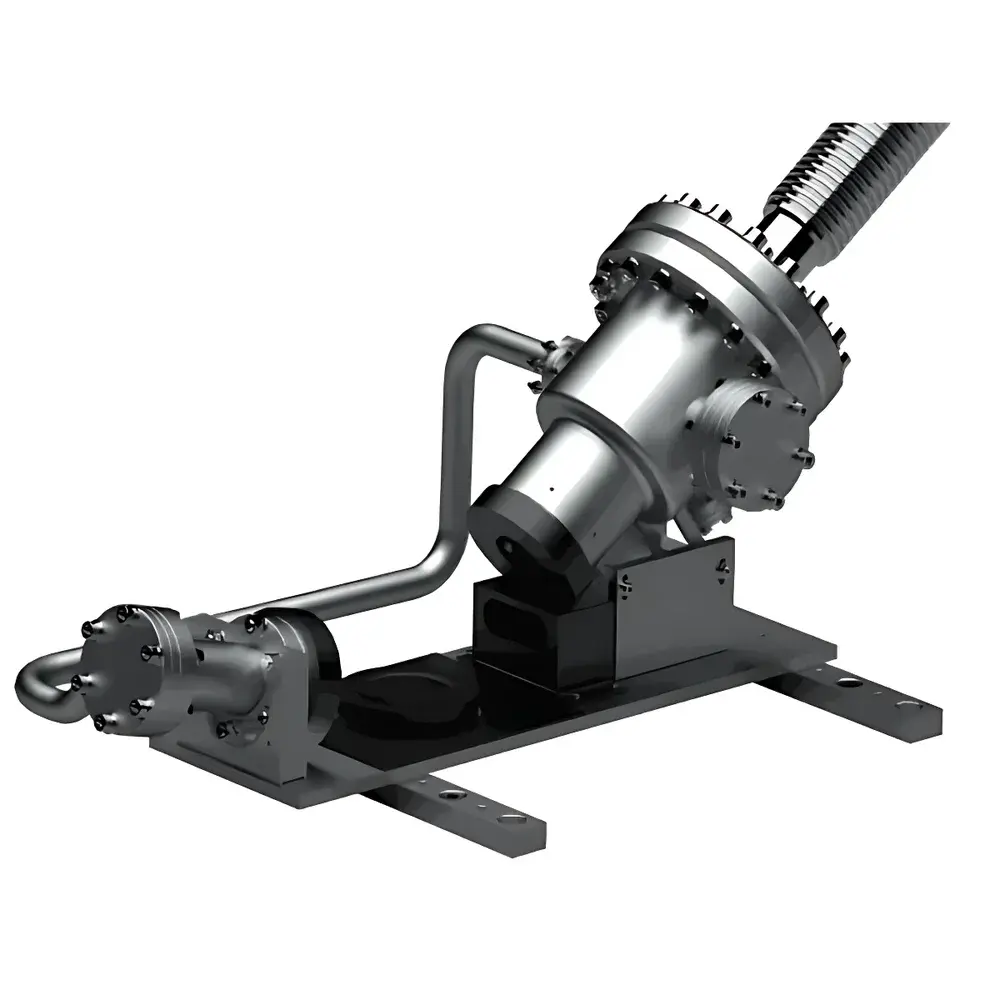

Fastmicro FM-PS-PFS-V02 Gravitational Sedimentation Particle Scanner for Cleanroom Surface Contamination Monitoring
| Brand | Fastmicro |
|---|---|
| Origin | Netherlands |
| Model | FM-PS-PFS-V02 |
| Measurement Principle | Dark-field Mie scattering |
| Measurement Range | 0.5–150 µm |
| Repeatability | ≥90% |
| Measurement Interval | ≤10 s per scan |
| Field of View (FOV) | Ø25 mm (on 50 mm replaceable substrate) |
| Environmental Operation | Ambient pressure and vacuum-compatible |
| Compliance | ISO 14644-9, ISO 14644-17 |
| Output Formats | KLARF, Excel, PDF (ISO-compliant qualification reports) |
| Software | Integrated real-time analysis with annotated imaging and 3D signal profiling |
Overview
The Fastmicro FM-PS-PFS-V02 Gravitational Sedimentation Particle Scanner is a purpose-engineered optical metrology system designed for quantitative, real-time monitoring of particle deposition on critical surfaces in controlled environments—including cleanrooms, semiconductor fabrication tools, EUV lithography chambers, and high-purity manufacturing workstations. Unlike airborne particle counters that sample only gaseous phase contaminants, this instrument directly quantifies gravitationally settled particulates—those that have migrated from suspension and adhered to functional surfaces where they pose actual risk to process yield and device reliability. Its core measurement principle relies on dark-field Mie scattering: incident collimated illumination at oblique incidence excites sub-wavelength to micron-scale particles resting on a calibrated substrate, generating high-contrast scattered signals captured by a high-resolution monochrome CMOS sensor. The system computes particle count, spatial coordinates (x, y), equivalent spherical diameter (ESD), and temporal accumulation rate—all traceable to ISO 14644-17 (Cleanrooms and associated controlled environments — Part 17: Assessment of particle deposition rate on surfaces) and aligned with ISO 14644-9 (Classification of surface cleanliness by particle concentration).
Key Features
- Sub-second acquisition cycle: Full-field scanning completed in ≤10 seconds per measurement, enabling high-temporal-resolution tracking of deposition kinetics.
- High-sensitivity detection threshold: Capable of resolving isolated particles down to 0.5 µm ESD under both ambient and vacuum conditions (≤10⁻³ mbar), verified via NIST-traceable polystyrene latex (PSL) standards.
- Surface-centric metrology: Scans a defined 25 mm diameter field-of-view on a user-replaceable 50 mm substrate—compatible with silicon wafers, quartz plates, or stainless-steel coupons.
- Vacuum-rated mechanical architecture: Sealed optical head with feedthrough-compatible mounting enables integration into load locks, cluster tools, and vacuum process chambers without compromising optical alignment stability.
- Automated drift compensation: Real-time stage position feedback and image registration algorithms correct for thermal expansion and mechanical drift during extended monitoring campaigns.
- ISO-compliant reporting engine: Generates auditable PDF qualification reports containing pass/fail status against user-defined deposition rate thresholds, fully compliant with ISO 14644-9 Annex D and ISO 14644-17 Clause 8.
Sample Compatibility & Compliance
The FM-PS-PFS-V02 accepts flat, non-reflective or anti-reflective coated substrates up to 50 mm in diameter and 10 mm thick. It is validated for use with standard semiconductor-grade silicon wafers (bare, oxide, nitride), fused silica optics, and electropolished stainless-steel witness plates. All measurement protocols adhere to ISO/IEC 17025 requirements for calibration traceability, with factory verification performed using certified PSL reference materials (NIST SRM 1963, 1979). The system supports GLP/GMP-aligned operation through optional audit trail logging (21 CFR Part 11 compliant when deployed with Fastmicro’s SecureLog™ software module), ensuring data integrity for regulated pharmaceutical or medical device manufacturing environments.
Software & Data Management
The embedded Fastmicro ScanSuite v3.2 software provides a unified interface for acquisition control, real-time visualization, and post-processing analytics. Key capabilities include: dynamic overlay of particle maps onto substrate images; incremental count delta analysis across configurable time windows (e.g., per-minute, per-hour); export of raw coordinate lists and size distributions in KLARF 2.0 format for integration with fab-wide yield management systems (YMS); batch generation of Excel-compatible summary tables with binned size intervals (e.g., 0.5–1.0 µm, 1.0–5.0 µm, etc.); and automated PDF report generation including metadata (operator ID, timestamp, environmental conditions, calibration certificate ID). Data files are stored in vendor-neutral HDF5 format with embedded checksums and SHA-256 hash validation.
Applications
- Semiconductor front-end process control: Monitoring particle fallout in photolithography steppers, etch and deposition tool load ports, and FOUP/SMIF interface zones.
- EUV source chamber health assessment: Quantifying debris deposition rates on collector mirrors and intermediate focus optics during extended exposure cycles.
- Advanced packaging cleanroom qualification: Validating surface cleanliness of bumping, RDL, and TSV processing areas prior to wafer bonding.
- Biopharmaceutical isolator validation: Measuring residual particle settlement on glove ports, transfer hatches, and filling line components after decontamination cycles.
- Research on particle transport physics: Studying gravitational settling velocity profiles, Brownian coagulation effects, and electrostatic adhesion forces under controlled humidity and pressure gradients.
FAQ
How does the FM-PS-PFS-V02 differ from conventional airborne particle counters?
It measures deposited—not suspended—particles on surfaces, providing direct insight into contamination impact on process-critical interfaces.
Can the system operate inside a vacuum chamber without modification?
Yes—the optical head is rated for continuous operation at pressures down to 1×10⁻³ mbar and features CF-35 vacuum flange compatibility.
Is calibration required before each use?
No; factory calibration is stable for 12 months under normal operating conditions. Annual recalibration is recommended and traceable to NIST standards.
Does the software support integration with MES or SCADA platforms?
Yes—via RESTful API and OPC UA protocol support, enabling bidirectional data exchange with factory automation infrastructure.
What substrate materials are supported for routine monitoring?
Silicon wafers (any orientation, thickness ≥200 µm), fused silica, borosilicate glass, and electropolished 316L stainless steel—each with documented reflectivity and scattering response profiles.



