
Fengjin FJ-GMSYT1-2 Steel-and-Wood Laboratory Workbench
| Brand | Fengjin Laboratory Equipment |
|---|---|
| Origin | Shanghai, China |
| Model | FJ-GMSYT1-2 |
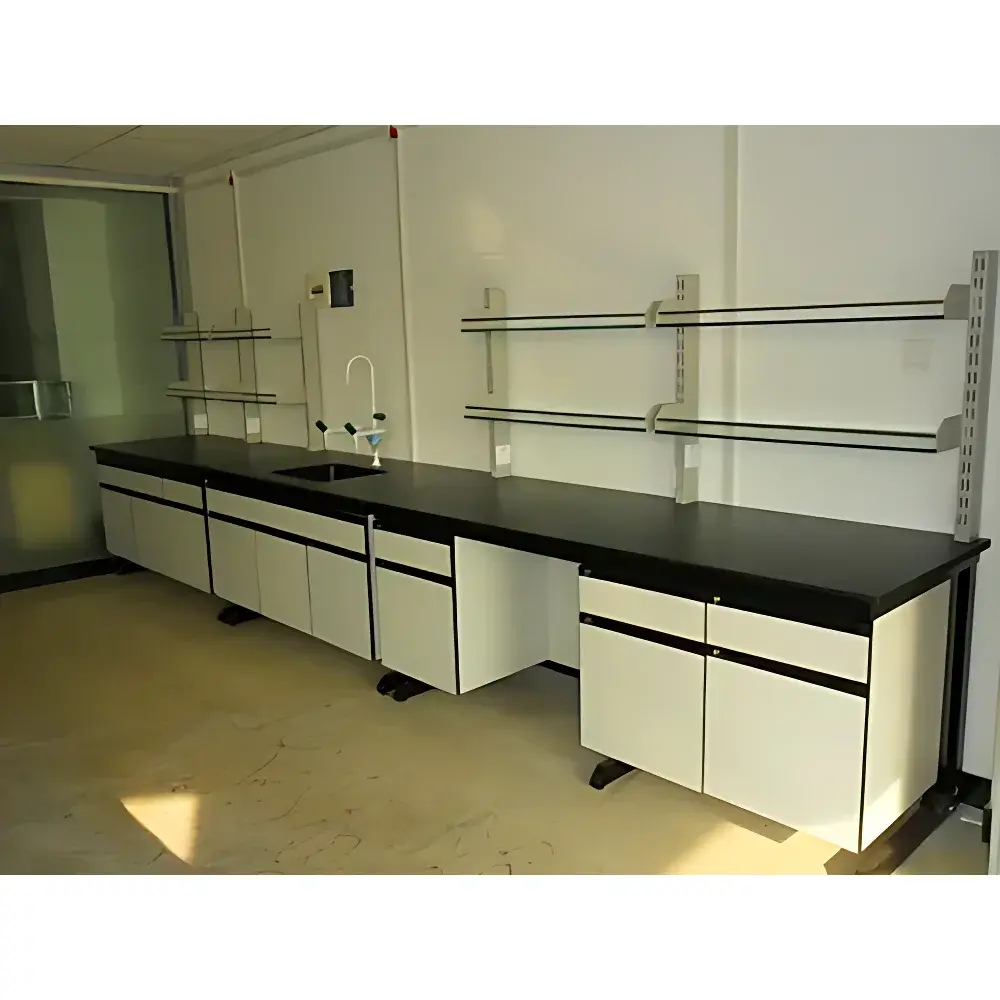
| Construction | Single-Sided Workbench |
| Frame Material | 60×40 mm Epoxy-Coated Steel Tube (1.2 mm wall thickness) |
| Cabinet Material | 18 mm E1-grade Particleboard with Melamine Laminate |
| Drawer System | Three-Section DTC Slides (≥25 kg load capacity, 50,000-cycle durability) |
| Door Hinges | DTC Heavy-Duty Hinges (≥110° opening angle, 80,000-cycle lifespan) |
| Surface Coating | Electrostatic Epoxy Powder Coating (≥50 µm ±5%) |
| Adjustable Feet | M10 Zinc-Plated Leveling Feet (≥10 mm height adjustment) |
| Load Capacity | 250 kg (uniformly distributed, tabletop deformation ≤0.3 mm) |
| Back Panel | Removable Access Panel for Utility Routing |
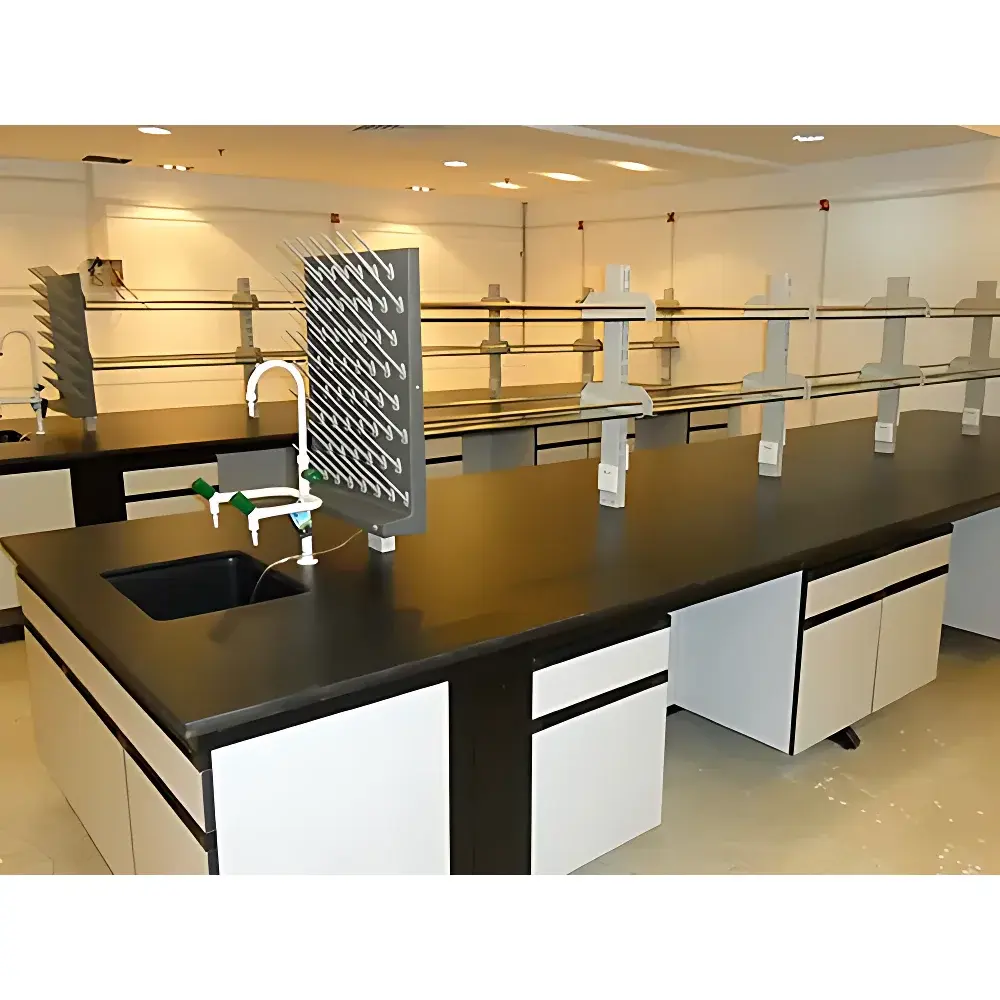
| Reagent Shelf Posts | 100×40 mm Epoxy-Coated Steel Tubes with Cable Management Channels and Adjustable Mounting Holes |
| Shelf Material | 10 mm Tempered Glass with Stainless Steel Front Guard |
| Electrical Outlets | CCC-Certified 220 V Universal Sockets Integrated into Vertical Posts or Raceways |
Overview
The Fengjin FJ-GMSYT1-2 Steel-and-Wood Laboratory Workbench is a structurally engineered single-sided work surface designed for sustained operational integrity in general-purpose and teaching laboratories. Its hybrid architecture integrates cold-rolled steel framing with E1-grade particleboard cabinetry—balancing mechanical rigidity, chemical resistance, and cost-effective scalability. The bench employs a bottom-supported load-bearing configuration, where the C-section steel frame (60 × 40 mm, 1.2 mm wall thickness) bears vertical loads directly, minimizing torsional stress on the countertop substrate. All structural steel components undergo electrostatic epoxy powder coating to a minimum thickness of 50 µm (±5%), ensuring uniform coverage and validated resistance to dilute acids, alkalis, and thermal cycling up to 80 °C—critical for environments handling routine reagents and cleaning agents. The work surface supports up to 250 kg of uniformly distributed static load with deflection limited to ≤0.3 mm per meter span, meeting ISO 7173:2021 requirements for laboratory furniture dimensional stability under service conditions.
Key Features
- Structural frame fabricated from precision-welded 60 × 40 mm rectangular steel tubing, coated with corrosion-resistant epoxy resin via electrostatic application and thermal curing.
- Cabinets constructed from 18 mm E1-grade particleboard compliant with EN 312-2:2010, surfaced with abrasion-resistant melamine laminate (EN 438-2:2016 Class 31).
- Removable rear access panels facilitate safe routing and maintenance of electrical conduits, gas lines, and vacuum tubing without disassembly of fixed components.
- Drawers equipped with DTC-certified three-section telescopic slides rated for ≥25 kg dynamic load and validated through 50,000-cycle endurance testing per EN 15338:2019.
- Hinges conform to EN 1154:2019 standards—DTC heavy-duty soft-close units delivering ≥110° opening arc and ≥80,000 operational cycles without performance degradation.
- Adjustable leveling feet (M10 zinc-plated threaded studs) provide ≥10 mm vertical compensation across uneven floor substrates, supporting ISO 14001-aligned installation protocols.
- Reagent shelf system features 100 × 40 mm epoxy-coated uprights with integrated cable management channels and standardized 25 mm pitch adjustment holes for modular layer positioning.
Sample Compatibility & Compliance
The FJ-GMSYT1-2 is intended for non-sterile, non-pressurized applications involving standard analytical, preparative, and instructional workflows. It complies with GB/T 3325–2017 (Chinese National Standard for Metal Laboratory Furniture), EN 1729-2:2016 (Ergonomic Requirements for Educational Furniture), and meets fire-retardant classification B1 per GB 8624–2012. Cabinet door panels utilize 18 mm fire-rated laminated board (UL 94 V-0 equivalent). Electrical integration adheres to CCC certification requirements (GB 2099.1–2008 and GB 1002–2008), with all sockets installed within enclosed vertical raceways to prevent accidental contact and support IP2X ingress protection.
Software & Data Management
This is a passive mechanical laboratory workstation with no embedded electronics, firmware, or data acquisition capabilities. Integration with laboratory information management systems (LIMS) or electronic lab notebooks (ELN) occurs exclusively at the facility infrastructure level—via standardized conduit pathways, pre-routed low-voltage raceways, and designated mounting points for external instrumentation. No software licensing, cybersecurity protocols, or audit trail functionality apply, consistent with ISO/IEC 17025:2017 Clause 6.4.2 requirements for non-automated equipment.
Applications
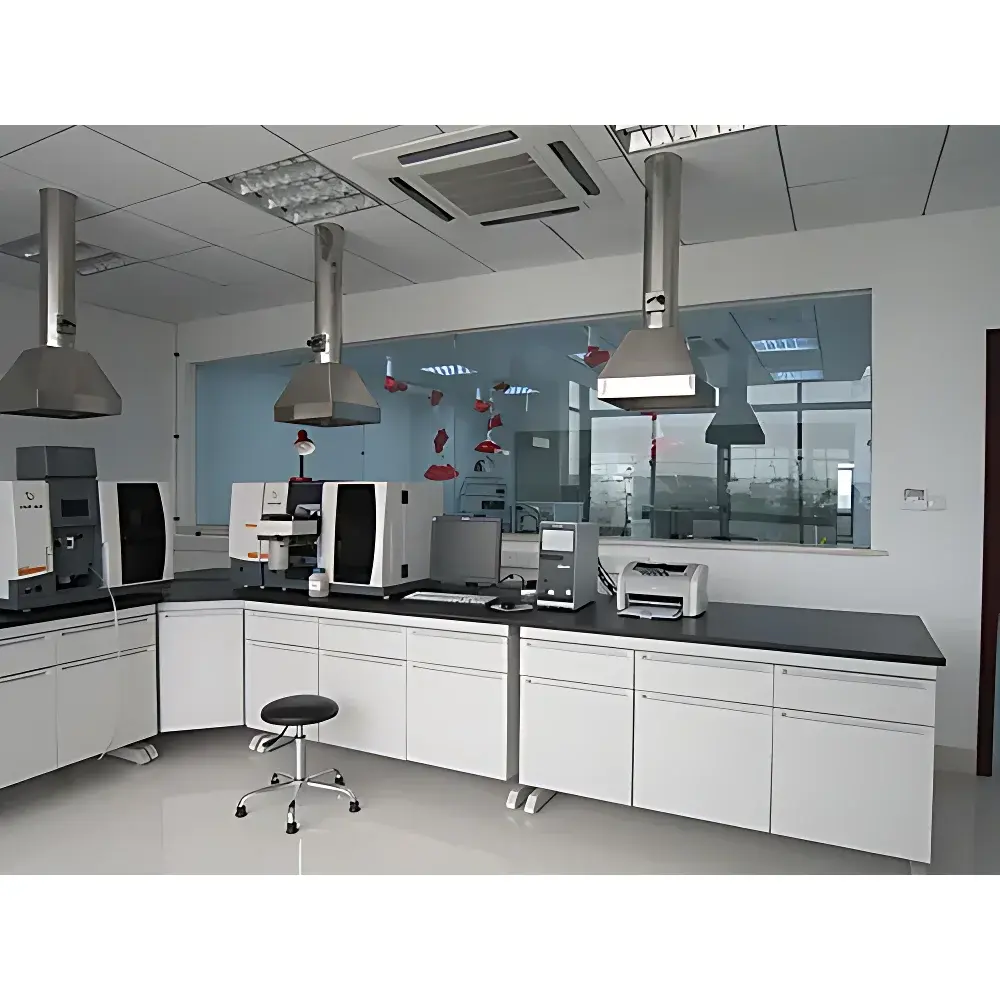
The FJ-GMSYT1-2 serves as a foundational platform across academic teaching labs, QC/QA departments in pharmaceutical and food manufacturing, environmental testing facilities, and vocational training centers. Typical use cases include benchtop titration setups, sample preparation stations, glassware staging areas, and modular instrumentation mounts for pH meters, balances, and spectrophotometers. Its single-sided layout optimizes wall-mounted utility distribution (gas, vacuum, compressed air), while the removable back panel enables rapid adaptation to evolving workflow configurations without structural modification.
FAQ
What is the maximum permissible point load on the tabletop?
Point loads must not exceed 50 kg applied over an area ≤100 cm²; continuous distributed loading remains limited to 250 kg/m².
Can the reagent shelf be retrofitted with gas outlets or USB-C charging modules?
Yes—vertical posts incorporate standardized 25 mm pitch holes and internal raceway channels compatible with OEM and third-party utility modules certified to GB/T 2099.1 and IEC 60309 specifications.
Is the epoxy coating resistant to acetone or chloroform exposure?
The coating provides short-term resistance (≤5 min contact) to common organic solvents; prolonged exposure requires localized chemical-resistant overlays or secondary containment.
Does the workbench meet seismic anchoring requirements for high-risk zones?
The frame includes pre-drilled anchor bolt patterns (M10) aligned with GB 50011–2010 seismic anchorage guidelines; certified seismic restraints must be specified separately per site-specific hazard classification.
Are replacement parts such as drawer slides or hinges available through authorized channels?
Yes—DTC-specified components are supplied with full traceability documentation and comply with EN 15338:2019 interchangeability standards.



