
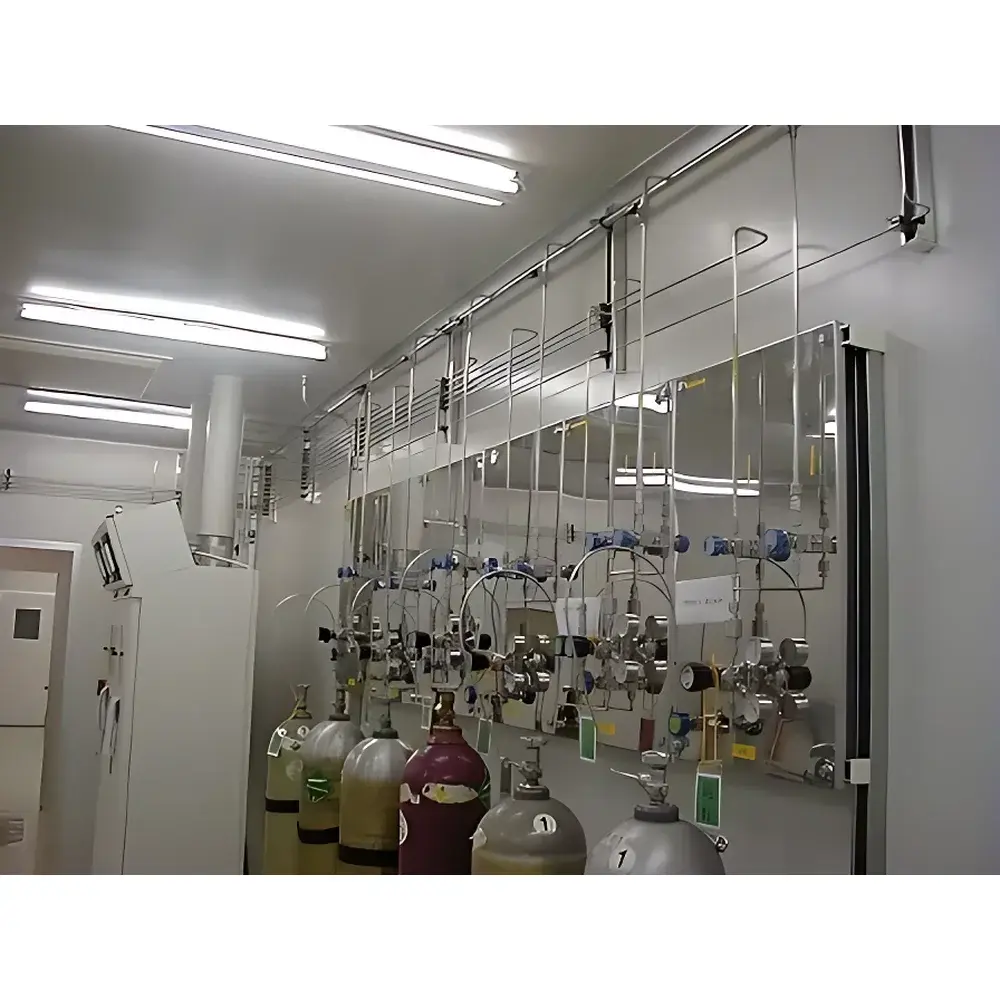
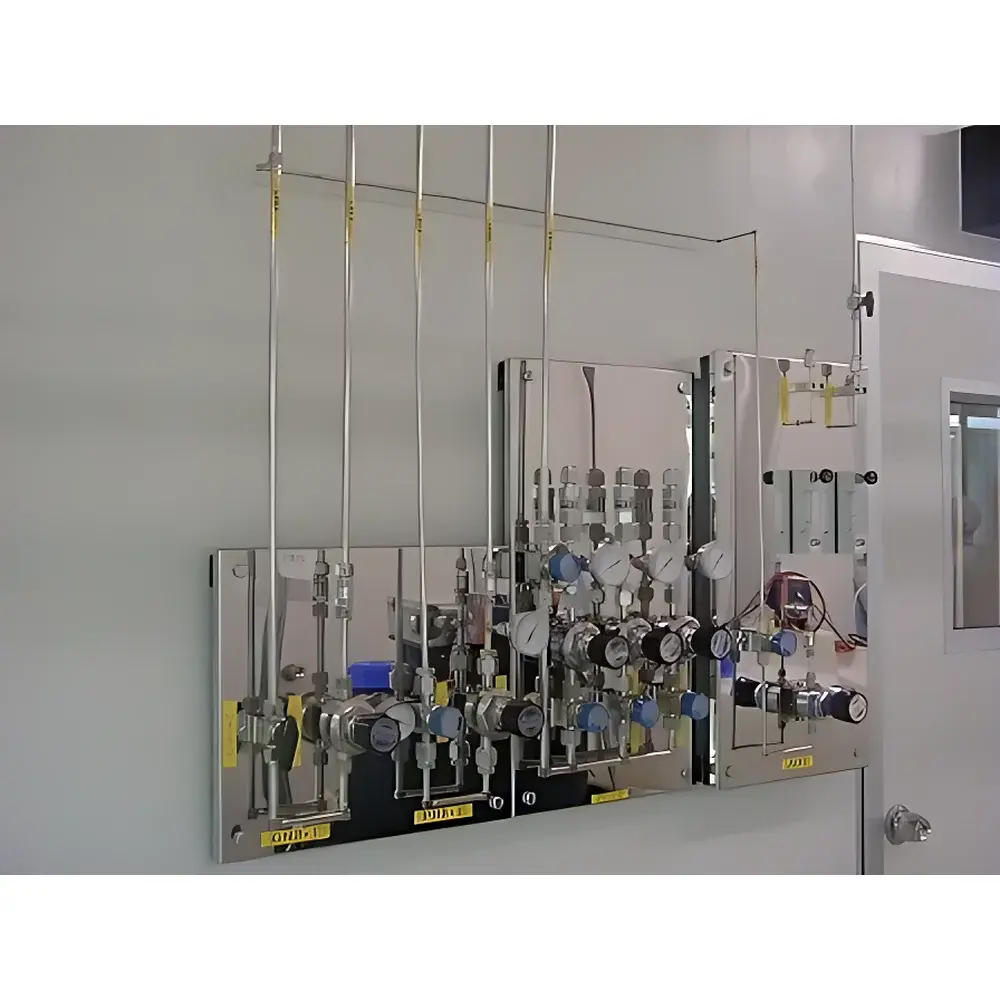
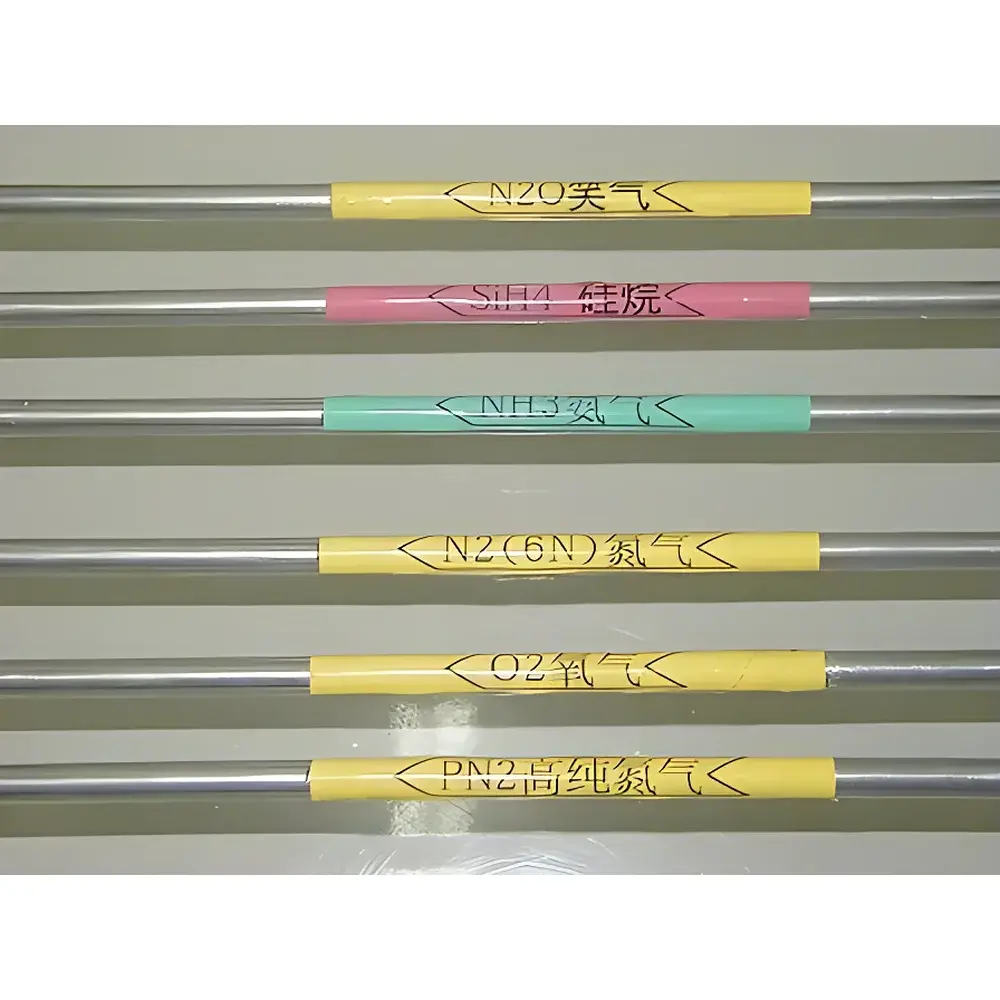
Fengjin FJ-GXXT1 Central Laboratory Gas Supply System
| Brand | Fengjin Laboratory Equipment |
|---|---|
| Origin | Shanghai, China |
| Manufacturer Type | Authorized Distributor |
| Country of Origin | China |
| Model | FJ-GXXT1 |
| Price | USD 1,380 (FOB Shanghai) |
Overview
The Fengjin FJ-GXXT1 Central Laboratory Gas Supply System is an engineered infrastructure solution designed for safe, reliable, and code-compliant distribution of compressed gases—including oxygen, nitrogen, hydrogen, acetylene, compressed air, and vacuum—within research laboratories, analytical testing facilities, and quality control environments. Based on principles of industrial gas pipeline engineering and laboratory safety standards, the system integrates pressure-regulated delivery, material-compatible piping (stainless steel 316L or high-purity copper per application), leak-tight manifold assemblies, and fail-safe shutoff mechanisms. It supports maximum operating pressures up to 0.8 MPa (8 bar), aligning with national design guidelines for low- to medium-pressure laboratory gas networks. The architecture prioritizes separation of incompatible gases, electrostatic dissipation, condensate management, and structural isolation from electrical conduits—ensuring operational integrity under ISO/IEC 17025, GLP, and OSHA 1910.102–106 regulatory frameworks.
Key Features
- Modular, standard-unit-based layout compatible with modular lab planning and future expansion
- Pressure-rated stainless steel 316L or oxygen-cleaned copper piping (per gas type and purity class)
- Dedicated venting and purging provisions: vent stacks elevated ≥2 m above roof level within lightning protection zones; sampling and purge ports integrated into H₂ and C₂H₂ lines
- Static-dissipative grounding system compliant with GB 50169 and NFPA 56 requirements for flammable gases
- Thermal and mechanical isolation: gas lines routed through pre-installed fire-rated sleeves when penetrating walls/floors; sleeve-to-pipe annuli sealed with non-combustible mineral fiber insulation
- Graded installation: dry-gas lines installed horizontally; wet-gas lines sloped ≥0.3% toward liquid traps or coalescing filters
- Spatial segregation per hazard class: minimum 500 mm parallel separation between H₂/C₂H₂ and other combustibles; vertical stacking hierarchy enforced (H₂/C₂H₂ topmost; O₂ above inert gases; all above electrical conduits)
- Ventilation redundancy: dedicated shafts and technical layers housing flammable gas lines equipped with 1–3 air changes per hour (ACH) mechanical exhaust
Sample Compatibility & Compliance
The FJ-GXXT1 system accommodates gaseous media across three hazard categories: oxidizers (O₂), inert/non-reactive (N₂, compressed air), and flammables (H₂, C₂H₂, coal gas). All materials meet ASTM B88 (copper tube), ASTM A269 (SS316L tubing), and CGA G-4.1 oxygen service cleanliness specifications. Installation adheres to GB 50352–2019 (Code for Design of Civil Buildings), GB 50030–2013 (Oxygen Station Design Code), and JGJ 91–2019 (Laboratory Building Design Standard). Critical safety interfaces—including emergency shutoff valves, pressure relief devices, and zone-specific gas detectors—are configurable to satisfy local fire codes and institutional EHS policies.
Software & Data Management
While the FJ-GXXT1 is a hard-piped infrastructure system without embedded firmware, its design enables seamless integration with third-party laboratory monitoring platforms. Pressure transducers (0–1.0 MPa range, ±0.25% FS accuracy), flow meters, and gas-specific sensors can be interfaced via 4–20 mA or Modbus RTU outputs to centralized SCADA or LIMS systems. Audit trails for maintenance logs, pressure calibration records, and leak-test certifications support FDA 21 CFR Part 11–compliant documentation when paired with validated electronic record software. All commissioning documentation—including as-built drawings, hydrotest reports, and material traceability certificates—is delivered in English and conforms to ISO 9001:2015 quality management requirements.
Applications
The system serves core functions in analytical chemistry labs (ICP-MS, GC-MS carrier gas supply), pharmaceutical QC suites (USP <1058> instrument gas qualification), semiconductor R&D cleanrooms (ultra-high-purity N₂ blanket gas), and university teaching laboratories (safe H₂ delivery for catalysis experiments). It eliminates cylinder handling risks, reduces gas downtime, and ensures consistent dew point and particulate control—particularly critical for FTIR spectroscopy, laser ablation, and electron microscopy applications requiring stable, low-hydrocarbon air or zero-grade nitrogen.
FAQ
Is the FJ-GXXT1 certified to international standards such as ISO or EN?
The system complies with Chinese national standards (GB series) aligned with ISO/IEC technical content; CE marking is not applicable as it is a fixed installation—not a CE-directive product. Certification to EN 13445 or PED requires site-specific pressure equipment assessment.
Can this system support ultra-high-purity gases (e.g., 99.999% N₂)?
Yes—when configured with electropolished SS316L tubing, orbital welds, and VCR fittings, the system meets Class 1 cleanliness per SEMI F57 for UHP applications.
What ventilation rate is required for gas pipe shafts containing hydrogen?
Minimum 1 ACH, up to 3 ACH depending on calculated worst-case leak scenario; design must follow NFPA 56 Annex B or GB 50160 calculations.
Are pressure regulators included in the base configuration?
No—regulators are selected and installed per gas type, pressure tier, and end-use requirement (e.g., diaphragm-type for H₂, dual-stage for O₂); they are specified separately in project BOQs.
Does Fengjin provide installation supervision or commissioning support?
Yes—on-site technical supervision, hydrostatic testing oversight, helium leak detection verification, and as-built documentation handover are available as optional engineering services.



