
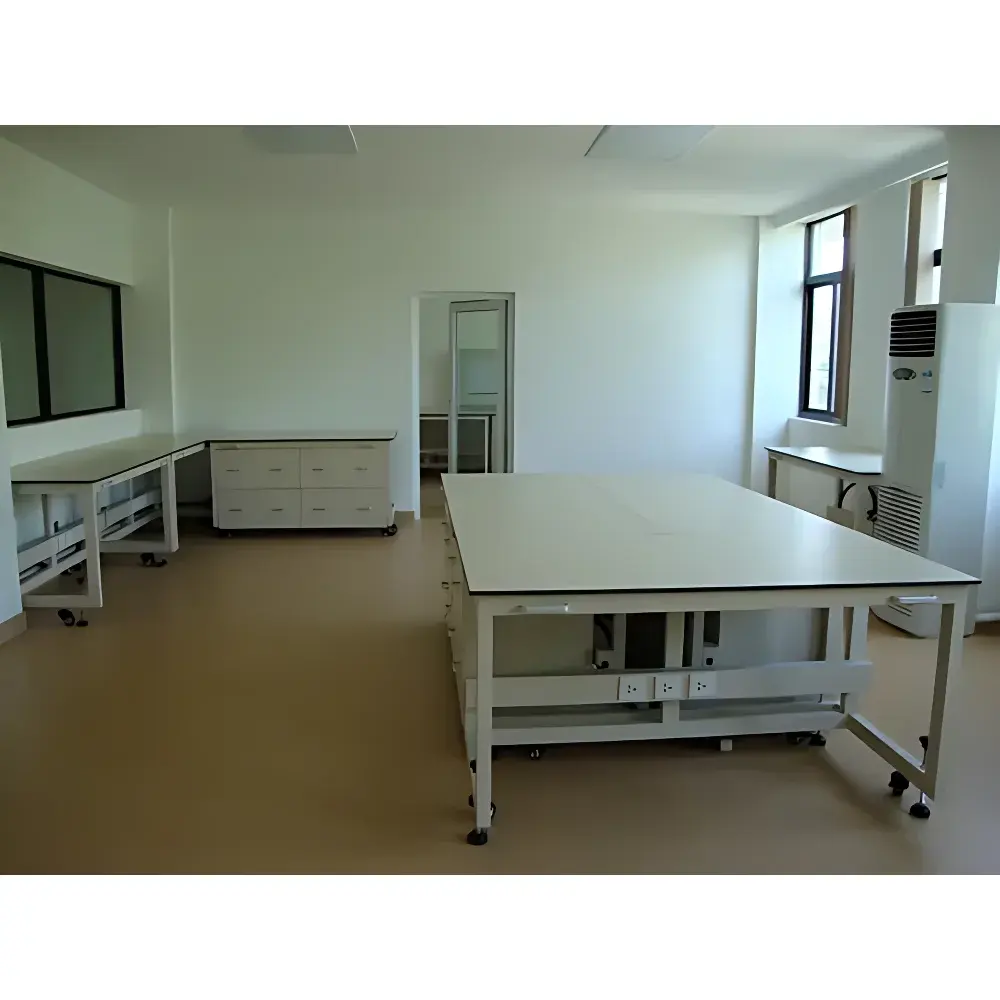
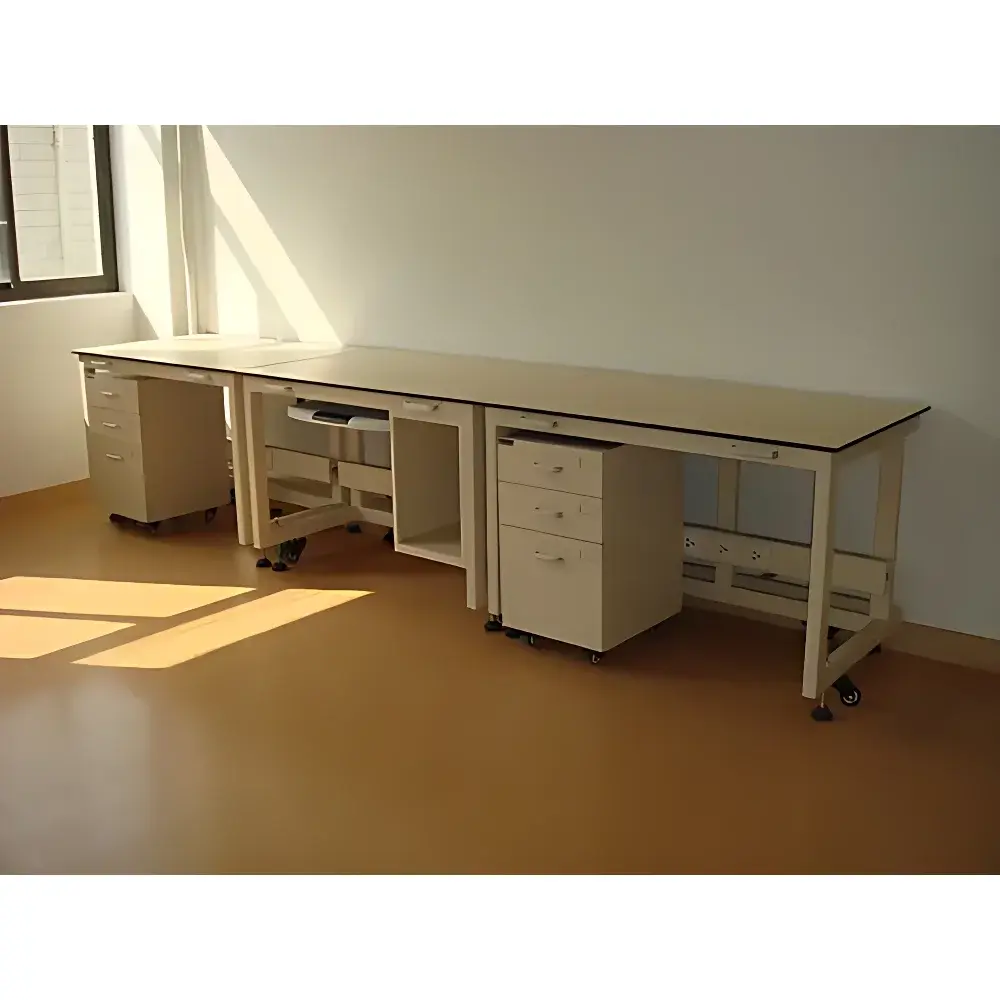
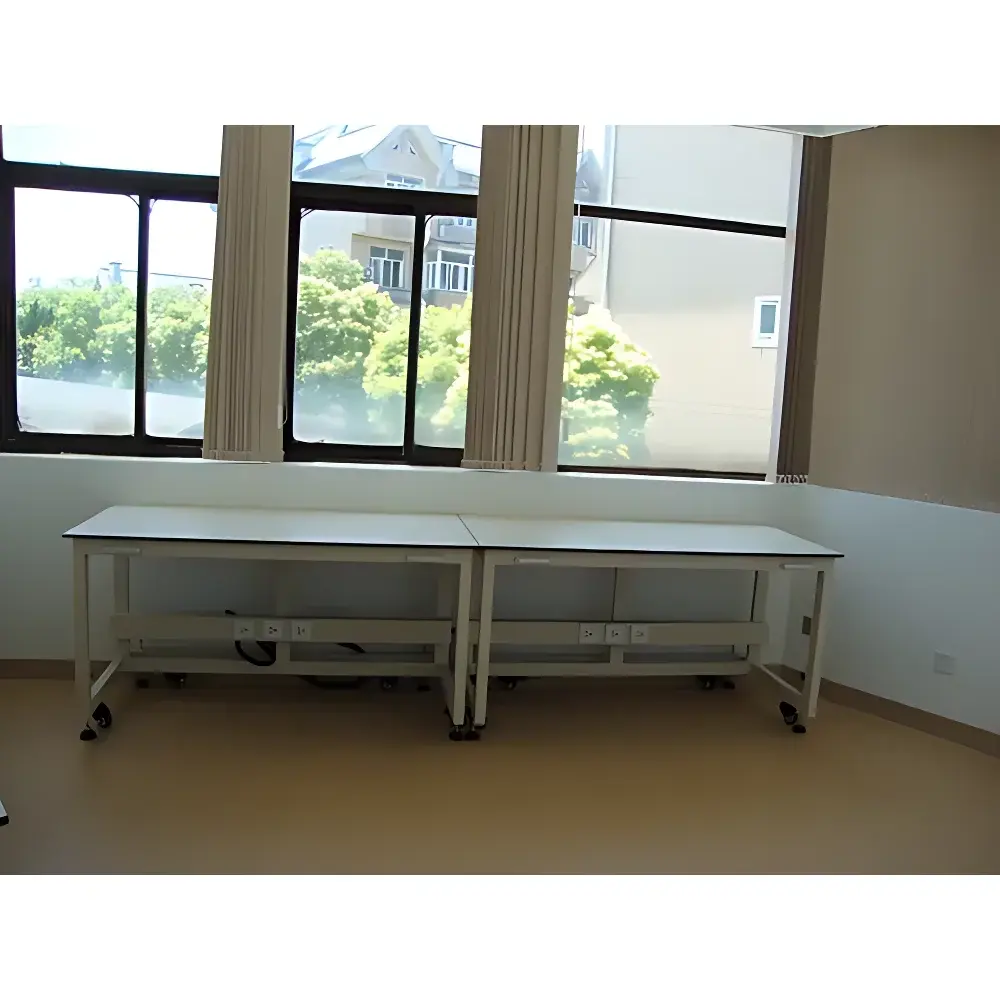
Fengjin FJ-QGSYT19 Mobile All-Steel Laboratory Workbench
| Brand | Fengjin Laboratory Equipment |
|---|---|
| Origin | Shanghai, China |
| Manufacturer Type | Authorized Distributor |
| Country of Origin | China |
| Model | FJ-QGSYT19 |
| Price | USD 405 (converted at 1 USD = ¥7.05) |
| Construction | All-steel frame with casters |
| Configuration | Single-sided workbench |
| Dimensions (L×W×H) | Custom-length × 750 mm × 800 mm (standard height) |
Overview
The Fengjin FJ-QGSYT19 Mobile All-Steel Laboratory Workbench is an engineered solution for dynamic laboratory environments requiring spatial adaptability without compromising structural integrity or chemical resistance. Designed according to ISO 7250-1:2017 (anthropometric principles) and aligned with ANSI/BIFMA X5.9-2022 standards for laboratory furniture stability and load-bearing performance, this workbench employs a rigid welded steel chassis fabricated from 40×60×1.5 mm galvanized rectangular tubing. Its mobility is enabled by four heavy-duty dual-wheel casters—two fixed, two swivel with central locking mechanisms—rated for continuous static loads up to 150 kg per unit. The workbench operates on a modular philosophy: it integrates seamlessly with fixed casework while maintaining independent functionality, supporting both seated (800 mm height) and standing (850 mm height) ergonomic postures as defined in EN 527-1:2017.
Key Features
- All-steel construction: Frame and cabinet body formed from 1.2 mm cold-rolled or galvanized steel sheets, electrostatically coated with ≥50 μm (±5%) epoxy resin powder (curing temperature: 180–200°C), delivering Class C3 corrosion resistance per ISO 12944-2.
- Modular cabinet system: Independent, tool-free assembly; adjustable steel shelving supported by four-layer steel shelf clips (30 kg capacity per shelf); optional suspended or floor-mounted configurations.
- Acoustic and functional door design: 1.0 mm steel door panels with double-layer damping structure; hinge options include DTC, Hettich, or Häfele 110°/175° soft-close mechanisms (stainless steel 304, 2.0 mm thickness, 255° opening angle).
- Service-integrated rear panel: Removable rear access panel enables unobstructed routing and maintenance of utility conduits (electrical, gas, water) without disassembly—compliant with NFPA 45-2022 requirements for laboratory utility segregation.
- Precision leveling system: High-strength ABS adjustable glides with stainless steel threaded rods and rubber bases; height adjustment range 0–30 mm; slip-resistant, vibration-dampening, and acid-resistant per ASTM D4169 performance criteria.
- Seamless surface integration: Countertop joints bonded with certified phenolic or epoxy-based adhesives; seam width ≤2 mm; perimeter edge radius ≥2 mm; integrated 3 mm-deep drip groove beneath front and side edges per ISO 15223-1:2021 surface drainage guidelines.
Sample Compatibility & Compliance
The FJ-QGSYT19 accommodates diverse countertop materials selected for application-specific performance: Trespa TopLab® (13–25 mm), ChemTec® phenolic (12.7–25 mm), epoxy resin (15–25 mm), vitreous ceramic (26–33 mm), stainless steel (1.5 mm), or tempered glass (12 mm). Each surface meets ASTM C1373 (ceramic abrasion), ISO 11843-2 (chemical resistance), and EN 438-2 (high-pressure laminate) requirements. Cabinet finishes comply with ISO 20468:2018 (powder coating adhesion and durability), while structural welds conform to ISO 5817-B quality class. The unit satisfies GLP facility layout flexibility requirements and supports FDA 21 CFR Part 11–aligned documentation workflows when integrated with digital lab asset management systems.
Software & Data Management
While the FJ-QGSYT19 is a mechanical, non-instrumented workbench, its design incorporates traceability-ready features for regulated environments: serialized QR-coded identification plates affixed to each unit’s frame (ISO/IEC 15424 compliant); CAD-integrated BIM object libraries (Revit 2022+ compatible); and configurable asset tagging fields in laboratory infrastructure CMMS platforms (e.g., IBM Maximo, Fiix). Optional IoT-enabled caster modules (sold separately) provide real-time location tracking via Bluetooth 5.0 LE and integrate with indoor positioning systems for audit trail generation—supporting ISO/IEC 17025:2017 clause 6.4.4 (equipment monitoring).
Applications
This mobile workbench serves as a primary platform in analytical chemistry labs (HPLC, GC sample prep zones), biosafety level 2 (BSL-2) cell culture support areas, QA/QC testing suites for pharmaceutical excipients, and university teaching laboratories where reconfigurable benchtop topology is mandated by curriculum cycles. Its corrosion-resistant architecture makes it suitable for wet chemistry stations handling acids, bases, and organic solvents. In clinical diagnostics labs, it functions as a staging area adjacent to automated analyzers (e.g., Roche cobas®, Siemens Atellica®), enabling rapid repositioning during instrument validation or preventive maintenance events. The 1500 mm depth variant is specified for central island configurations accommodating dual-user collaboration under ISO/IEC 17025:2017 clause 6.4.1 (environmental condition control).
FAQ
What certifications does the FJ-QGSYT19 hold for laboratory use?
It conforms to ISO 7250-1 (ergonomics), ISO 12944-2 (corrosion protection), EN 527-1 (workbench stability), and NFPA 45-2022 (utility routing). Third-party test reports are available upon request.
Can the workbench be anchored to the floor for seismic compliance?
Yes—pre-drilled anchor points are integrated into the base frame; seismic anchoring kits meeting ASCE 7-22 Category IV requirements are available as accessories.
Is the epoxy powder coating resistant to 98% sulfuric acid exposure?
The coating withstands intermittent contact with 98% H₂SO₄ for ≤15 minutes per ISO 2812-3; prolonged immersion requires ceramic or stainless steel countertop overlays.
What is the maximum distributed load capacity of the tabletop?
Uniformly distributed load: 120 kg/m² (EN 1728:2012 Class 4); point load tolerance: 50 kg at any single location without permanent deformation.
Are replacement casters available with conductive wheels for ESD-sensitive environments?
Yes—optional 10⁶–10⁹ Ω carbon-loaded polyurethane casters compliant with ANSI/ESD S20.20 are offered with custom order lead times.



