
Fengjin FJ-SYSGXXT1 Central Gas Supply System for Laboratories
| Brand | Fengjin Laboratory Equipment |
|---|---|
| Origin | Shanghai, China |
| Manufacturer Type | Authorized Distributor |
| Product Category | Domestic |
| Model | FJ-SYSGXXT1 |
| Price | USD 840 (converted at ~¥5850 @ 7.0) |
Overview
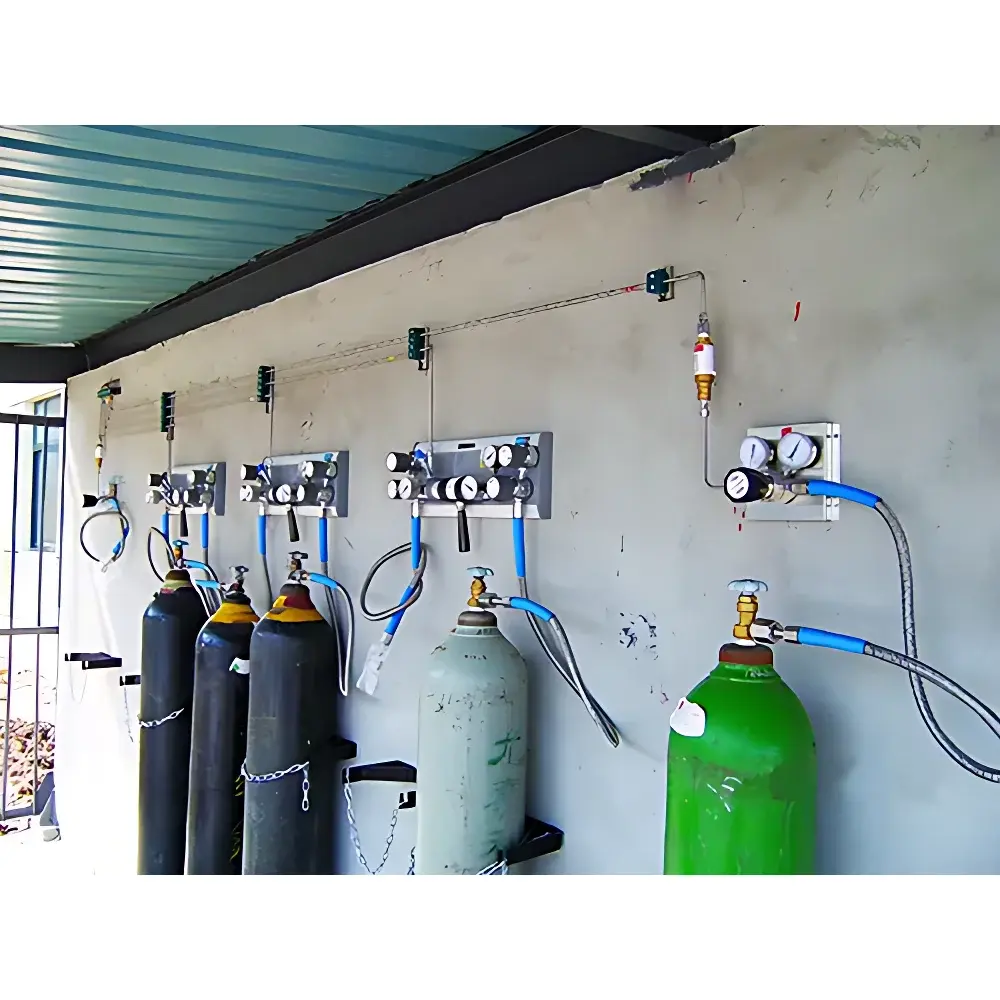
The Fengjin FJ-SYSGXXT1 Central Gas Supply System is an engineered infrastructure solution designed to deliver high-purity, pressure-stable, and contamination-controlled gases to analytical instrumentation across modern laboratory environments. Built upon core principles of gas dynamics, material compatibility, and intrinsic safety engineering, the system employs a dual-stage pressure regulation architecture—primary reduction in the dedicated gas cylinder room and secondary reduction at point-of-use terminals—to maintain consistent delivery pressure (±0.5 psi) and flow stability under variable demand conditions. It supports concurrent distribution of non-flammable (N₂, CO₂), inert (Ar, He), flammable (H₂, CO), oxidizing (O₂), and toxic (Cl₂, F₂) gases—each routed through segregated, material-qualified pathways meeting ASTM B861 (SS316L seamless tubing) and ISO 8573-1 Class 1 purity requirements. The system integrates passive and active safety layers—including explosion-proof electrical components, real-time gas leak detection with audible/visual alarms, structural blast mitigation (explosion-relief windows, reinforced doors), and static-dissipative grounding—ensuring full compliance with NFPA 55, CGA P-1, and local fire code mandates for hazardous gas storage and distribution.
Key Features
- Stainless steel 316L BA-grade tubing (Ra < 0.4 µm surface finish) for all high-purity gas lines, welded using fully automated orbital TIG welding with internal argon purging to achieve helium leak rates ≤1 × 10⁻⁹ scc/s.
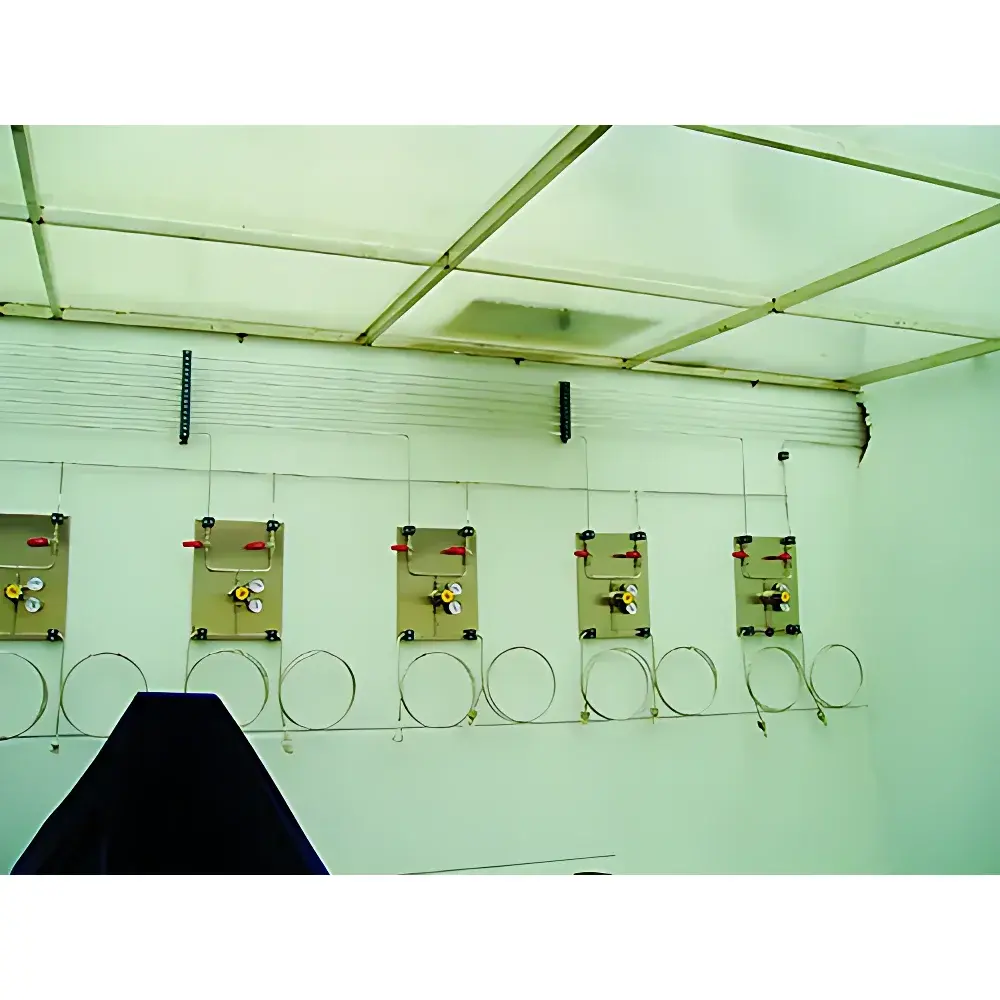
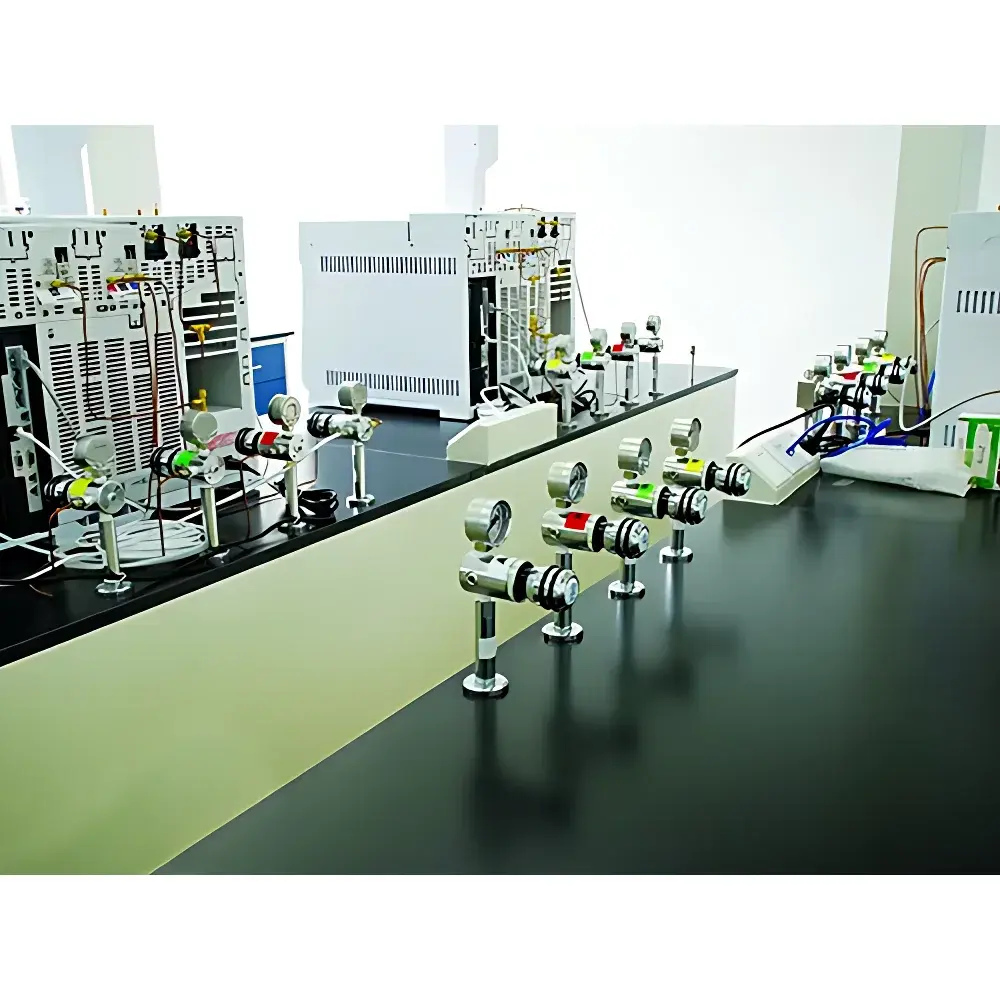
- Dual-stage regulation: Primary stainless steel panel-mounted regulators with sintered metal inlet filters (0.5 µm) and integrated purge valves; secondary wall-mounted terminal units featuring precision diaphragm regulators, digital pressure gauges, emergency shutoff solenoids, and gas-specific labeling per ISO 7225.
- Cylinder room engineering: Seismically anchored aluminum gas cylinder racks with anti-tip chains; SS316L flexible high-pressure hoses (with integrated safety cables) connecting cylinders to regulators via ISO 5172-compliant fittings; segregated storage zones for flammable, oxidizing, and inert gases per NFPA 55 Chapter 7.
- Gas line routing: Structured conduit support system using fire-rated aluminum channel brackets spaced at ≤1 m intervals; all penetrations sealed with non-combustible mineral wool; minimum bend radius maintained using calibrated tube benders to prevent kinking or wall thinning.
- System validation protocol: Triple high-flow purging with 5.0-grade nitrogen (99.999% purity) prior to commissioning; hydrostatic and pneumatic pressure testing at 1.5× working pressure; final integrity verification via helium mass spectrometry and dew point analysis (≤−40°C).
Sample Compatibility & Compliance
The FJ-SYSGXXT1 accommodates standard laboratory gas cylinders (e.g., CGA-350 for N₂, CGA-330 for H₂, CGA-590 for O₂) and interfaces directly with GC, GC-MS, ICP-MS, SEM-EDS, and laser ablation systems requiring stable inlet pressures between 30–100 psi. All wetted materials—including tubing, fittings, regulators, and valves—are certified to USP Class VI and FDA 21 CFR Part 11-compatible audit trail logging when paired with optional digital control modules. The system design conforms to ISO/IEC 17025:2017 requirements for calibration traceability of pressure and flow parameters, and supports GLP/GMP operational documentation through standardized logbook templates and as-built piping & instrumentation diagrams (P&IDs).
Software & Data Management
While the base FJ-SYSGXXT1 is a hardwired pneumatic system, optional integration modules enable connection to building management systems (BMS) via Modbus RTU or BACnet MS/TP protocols. An add-on gas monitoring unit provides real-time visualization of line pressure, cumulative gas consumption, and alarm status (leak, overpressure, low cylinder) on a web-accessible dashboard compliant with W3C WCAG 2.1 AA standards. Audit logs—including regulator calibration dates, purge event timestamps, and leak test records—are stored locally on encrypted SD cards and exportable in CSV/PDF formats for regulatory submission. All firmware updates undergo SHA-256 signature verification prior to installation.
Applications
This central supply system serves high-throughput analytical laboratories in pharmaceutical QC/QA, semiconductor metrology, environmental testing, and academic research facilities where reproducibility depends on uninterrupted gas quality. Typical deployment scenarios include: (1) Multi-instrument nitrogen blanketing for LC-MS and TOF-SIMS; (2) Ultra-high-purity helium carrier gas networks for sub-ppq VOC analysis; (3) Segregated hydrogen supply lines with post-weld hydrogen embrittlement screening for fuel cell R&D; (4) Oxygen-enriched breathing air loops for controlled atmosphere chambers; and (5) Chlorine/corrosive gas distribution with Hastelloy C-276-lined secondary manifolds for corrosion studies.
FAQ
What certifications does the FJ-SYSGXXT1 system meet?
It complies with NFPA 55 (2023 Edition), CGA G-1.1 (Compressed Gas Cylinder Handling), ASTM B861 (Seamless SS316L Tubing), and ISO 8573-1:2010 Class 1 for particulate, water, and oil content in compressed gases.
Can the system support ultra-high-purity applications (e.g., 6.0-grade gases)?
Yes—when specified during design, optional electropolished SS316L tubing (Ra ≤ 0.25 µm), VCR® face-seal fittings, and in-line 0.1 µm coalescing filters can be integrated to meet ISO 8573-1 Class 0 requirements.
Is on-site commissioning and operator training included?
Standard delivery includes factory-certified installation supervision, third-party helium leak certification, and a 4-hour hands-on training session covering daily operation, leak response procedures, and maintenance scheduling.
How is gas cross-contamination prevented during multi-gas installations?
Through physical segregation: independent tubing runs, color-coded labeling per ISO 7225, dedicated manifold zones, and pressure differential monitoring between adjacent gas circuits to detect early-stage barrier failure.
What is the typical lead time for custom configurations?
Standard FJ-SYSGXXT1 systems ship within 6–8 weeks from order confirmation; engineered variants involving exotic alloys or integrated BMS interfaces require 12–14 weeks for fabrication and FAT (Factory Acceptance Testing).



