
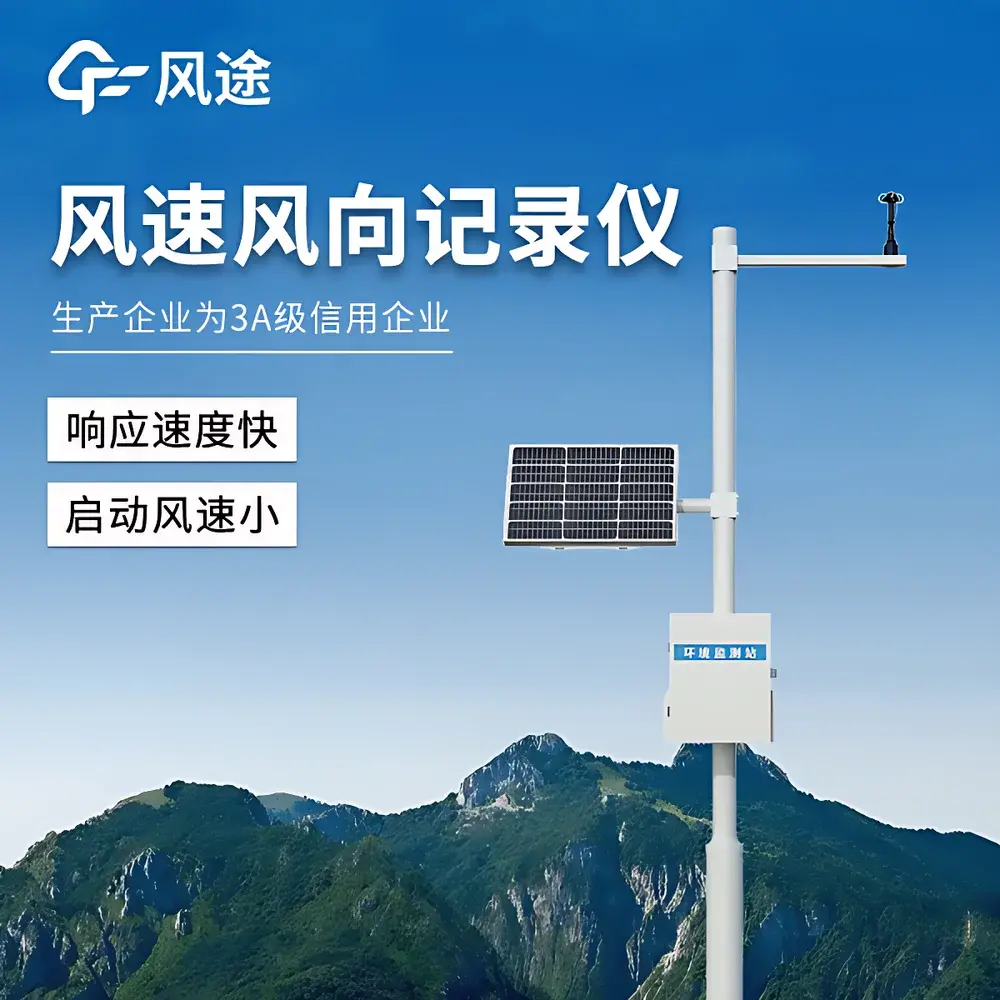
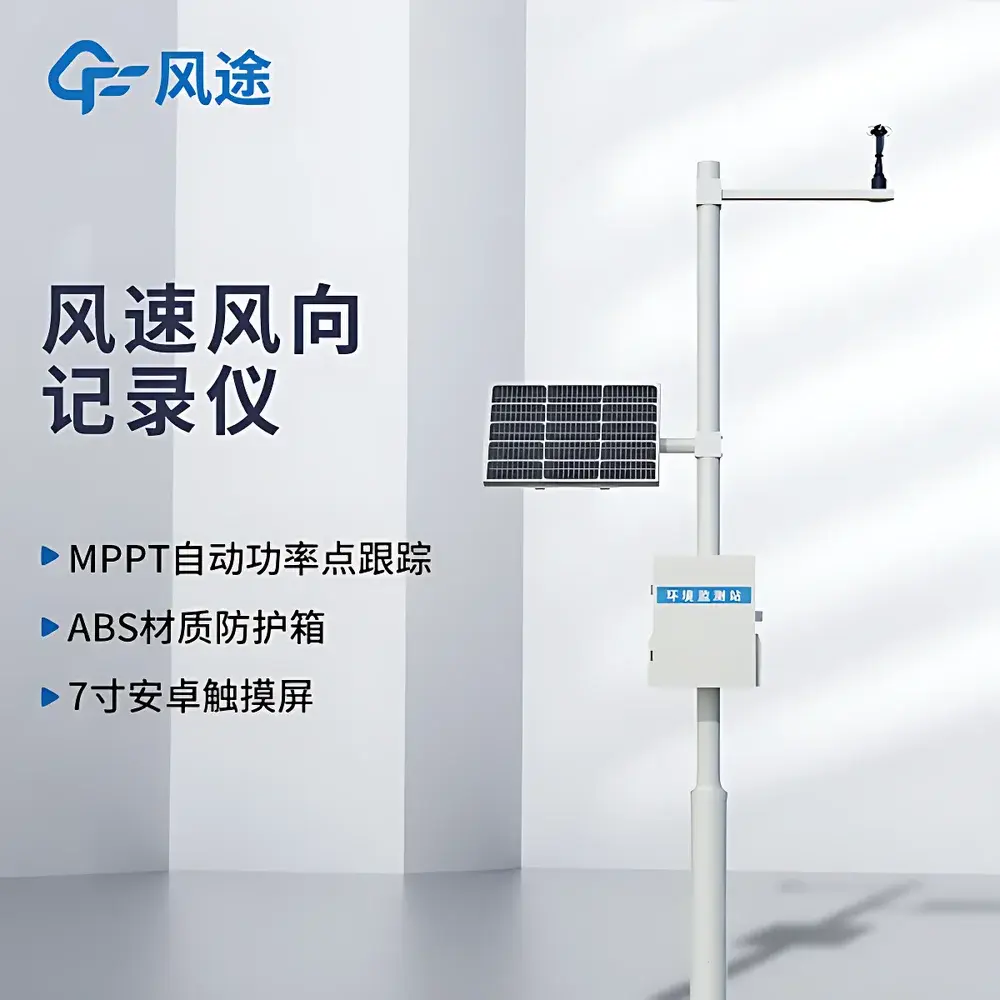
Fengtu FT-QC2 Mechanical Anemometer and Wind Vane Data Logger
| Brand | Fengtu |
|---|---|
| Origin | Shandong, China |
| Manufacturer Type | Authorized Distributor |
| Country of Origin | China |
| Model | FT-QC2 |
| Price | USD 570 (FOB) |
Overview
The Fengtu FT-QC2 Mechanical Anemometer and Wind Vane Data Logger is a field-deployable, solar-powered environmental monitoring station engineered for long-term, unattended wind speed and wind direction observation under diverse outdoor conditions. It operates on classical mechanical principles: a three-cup anemometer measures wind speed via rotational kinetics—where cup angular velocity is linearly proportional to horizontal wind velocity—and a balanced vane-type wind direction sensor determines azimuthal orientation through aerodynamic torque equilibrium. These analog transducers feed calibrated analog-to-digital signals into an integrated low-power data acquisition unit. Designed for meteorological continuity and regulatory-grade traceability, the FT-QC2 complies with fundamental measurement standards referenced in WMO Guide to Instruments and Observing Methods (WMO-No. 8) and supports alignment with ISO/IEC 17025-accredited calibration practices through its National Meteorological Metrology Station calibration certificate.
Key Features
- Ultra-low-power data logger: quiescent current < 1 mA, enabling multi-month operation on battery alone
- Multi-mode communication: factory-configured GPRS cellular uplink; optional Bluetooth 4.2 (for local configuration), RS-485 Modbus RTU (for sensor expansion), and Ethernet (via optional module)
- 7-inch Android-based human-machine interface (HMI): 1024 × 600 RGB LCD, quad-core Cortex-A7 processor, 512 MB RAM / 4 GB eMMC storage (expandable)
- MPPT solar charge controller (150 W max input): improves photovoltaic energy harvest efficiency by ≥20% compared to PWM controllers under partial shading or variable irradiance
- Robust mechanical construction: 3-meter carbon steel mast with flanged two-section assembly; IP66-rated stainless-steel enclosure (304 grade) for corrosion resistance in coastal, industrial, and agricultural environments
- Configurable threshold alerts: SMS notifications triggered upon user-defined exceedance of wind speed, wind direction variability, or auxiliary parameter limits (e.g., temperature, PM2.5)
- Modular sensor integration: GX-12-4P standardized connectors support plug-and-play deployment of third-party Modbus-compatible environmental sensors (temperature, humidity, pressure, radiation, soil parameters, gas analyzers)
Sample Compatibility & Compliance
The FT-QC2 accommodates standard mechanical anemometers and wind vanes conforming to IEC 61000-4 electromagnetic immunity requirements and mechanical mounting specifications per ISO 12217-1 (small craft stability). Its sensor suite—including optional integrated probes for air temperature (−40 to +80 °C), relative humidity (0–100% RH), atmospheric pressure (300–1100 hPa), and particulate matter (PM2.5/PM10)—meets accuracy tolerances aligned with EN 12341 (ambient air quality — PM measurement) and ASTM D6245 (indoor air quality sampling). All factory-calibrated sensors carry traceable documentation per ISO/IEC 17025, and the system’s firmware architecture supports audit trails required for GLP-compliant field studies. The device itself holds certifications for ISO 9001 (Quality Management), ISO 14001 (Environmental Management), and OHSAS 18001 (Occupational Health and Safety).
Software & Data Management
Data handling spans three interoperable layers: (1) Local PC software (Windows-based) accepts JSON-formatted serial or Modbus RTU inputs, enables protocol customization, script-driven post-processing (JavaScript engine embedded), and configurable storage intervals (1–1000 minutes). (2) Android mobile application supports Bluetooth pairing, background data ingestion during device sleep, QR-code-assisted Modbus sensor registration, and export-ready CSV/PDF reporting with time-series visualization. (3) Cloud platform (SaaS architecture) provides browser-accessible dashboards (no client install), real-time telemetry mapping via GIS overlay, HJ-212 protocol compliance for Chinese environmental regulatory reporting, HTTP/TCP data forwarding, and role-based multi-user access control. All platforms implement timestamped metadata logging, change history tracking, and cryptographic integrity checks—supporting FDA 21 CFR Part 11 electronic record requirements when deployed in validated environments.
Applications
The FT-QC2 serves as a foundational node in distributed environmental monitoring networks across civil infrastructure (crane-mounted wind safety systems on construction sites), maritime operations (port weather stations, vessel mooring risk assessment), ecological research (forest canopy turbulence profiling, coastal dune dynamics), precision agriculture (microclimate zoning, frost warning), aviation ground support (runway crosswind analysis), and STEM education (field-based atmospheric science curricula). Its modularity permits hybrid deployments—for instance, coupling with ultrasonic anemometers for turbulence intensity calculation or integrating with NO₂/SO₂ electrochemical sensors for urban air quality trend analysis.
FAQ
Is the FT-QC2 suitable for marine environments?
Yes—the stainless-steel enclosure, IP66 ingress protection, and salt-spray-resistant coating meet IEC 60068-2-52 testing requirements for coastal deployment.
Can the device operate without solar power?
Yes—it functions on internal lead-acid battery (20 Ah standard); runtime depends on sampling interval and sensor load, typically 7–14 days at 10-minute intervals with no solar input.
Does the cloud platform support custom API integration?
Yes—RESTful API endpoints are available for authenticated HTTP POST/GET requests, enabling integration with SCADA systems or enterprise IoT middleware.
What is the calibration validity period?
Factory calibration is valid for 12 months under normal operating conditions; annual recalibration against NIST-traceable references is recommended for metrological continuity.
Are firmware updates delivered over-the-air?
Yes—GPRS-connected units receive signed firmware patches via secure HTTPS channel; update logs and rollback capability are retained in system memory.







