
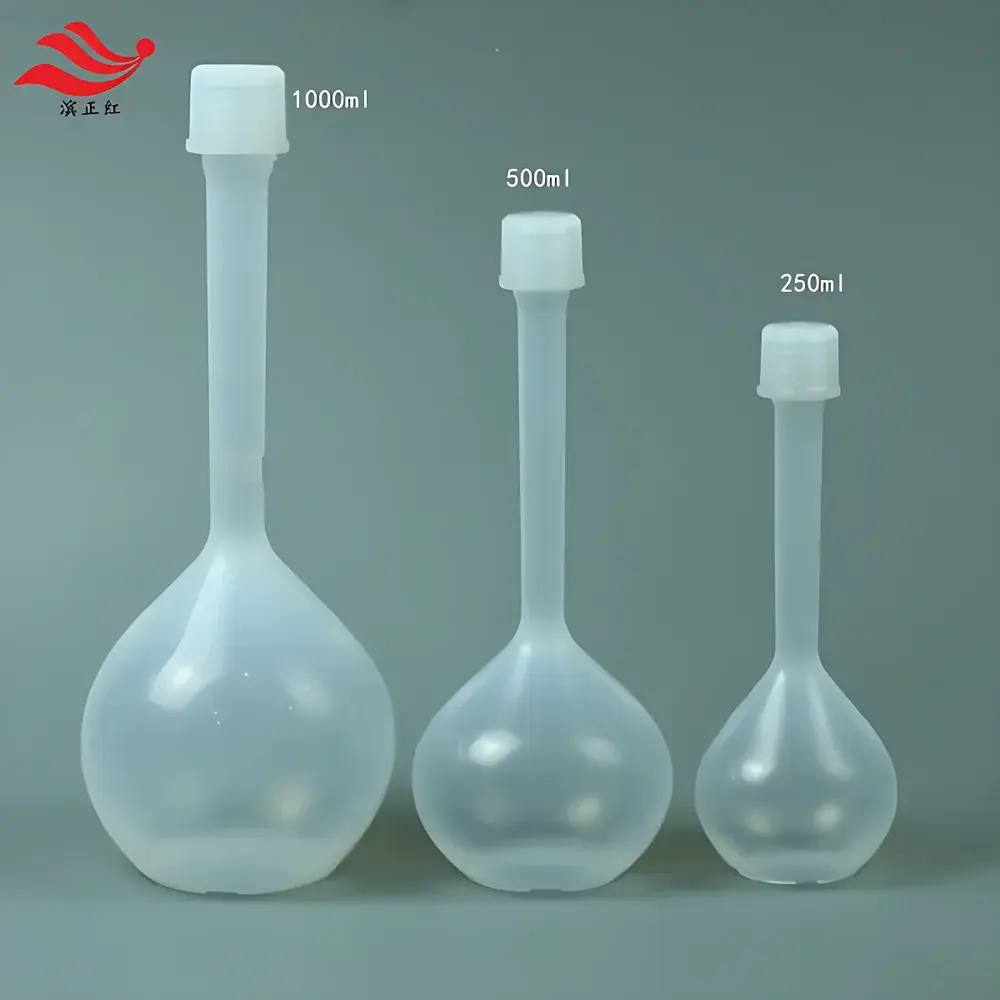
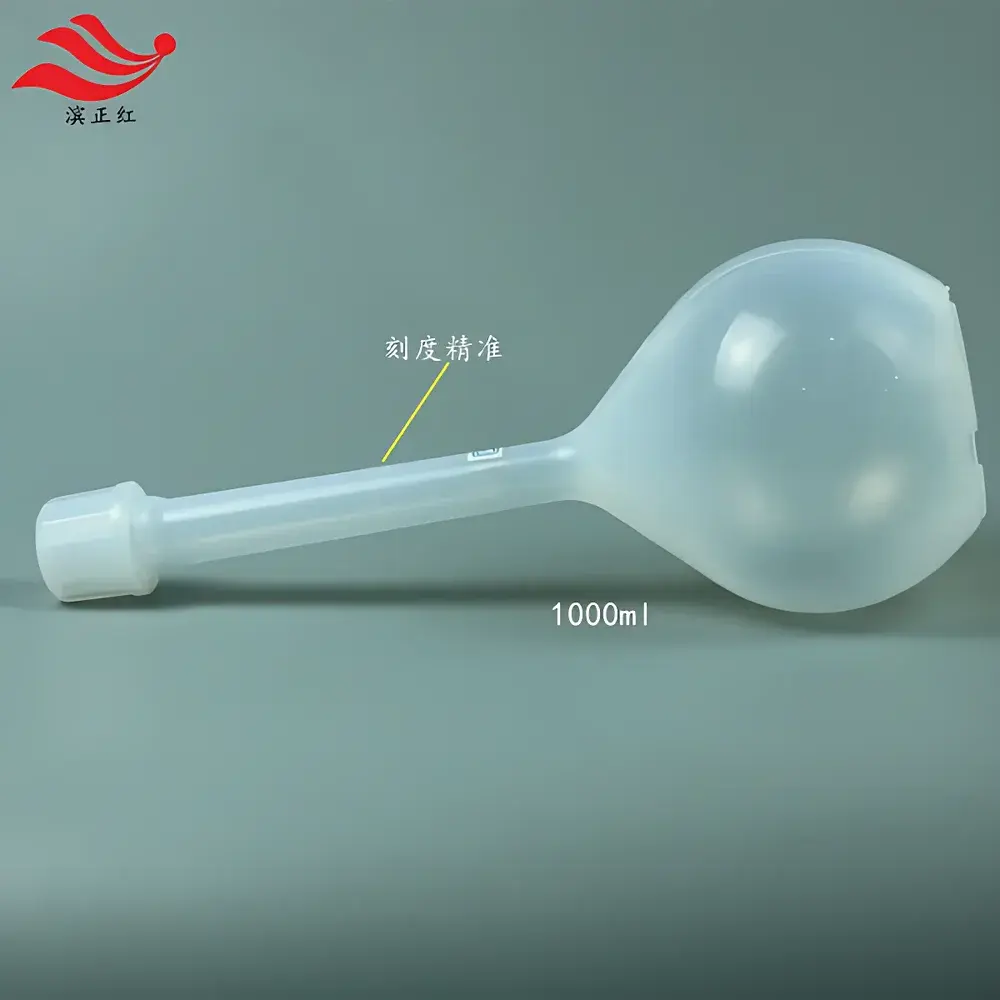
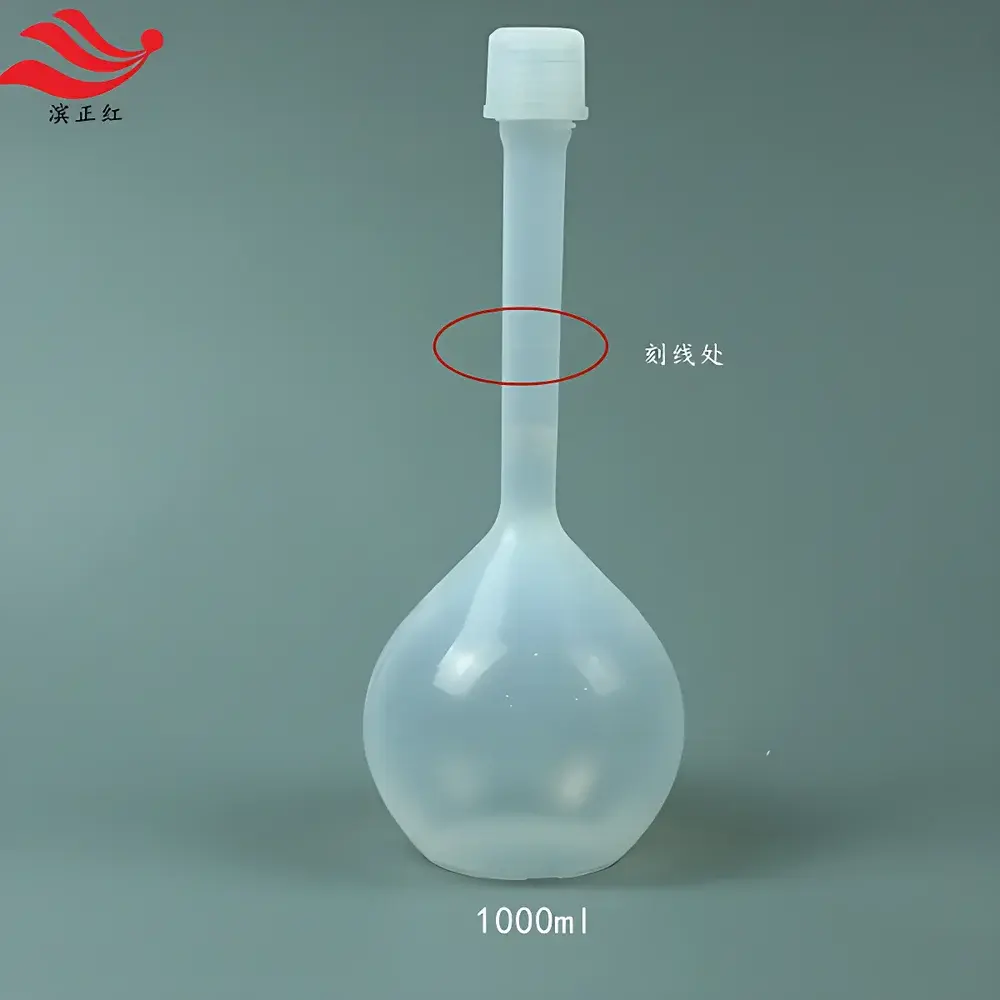
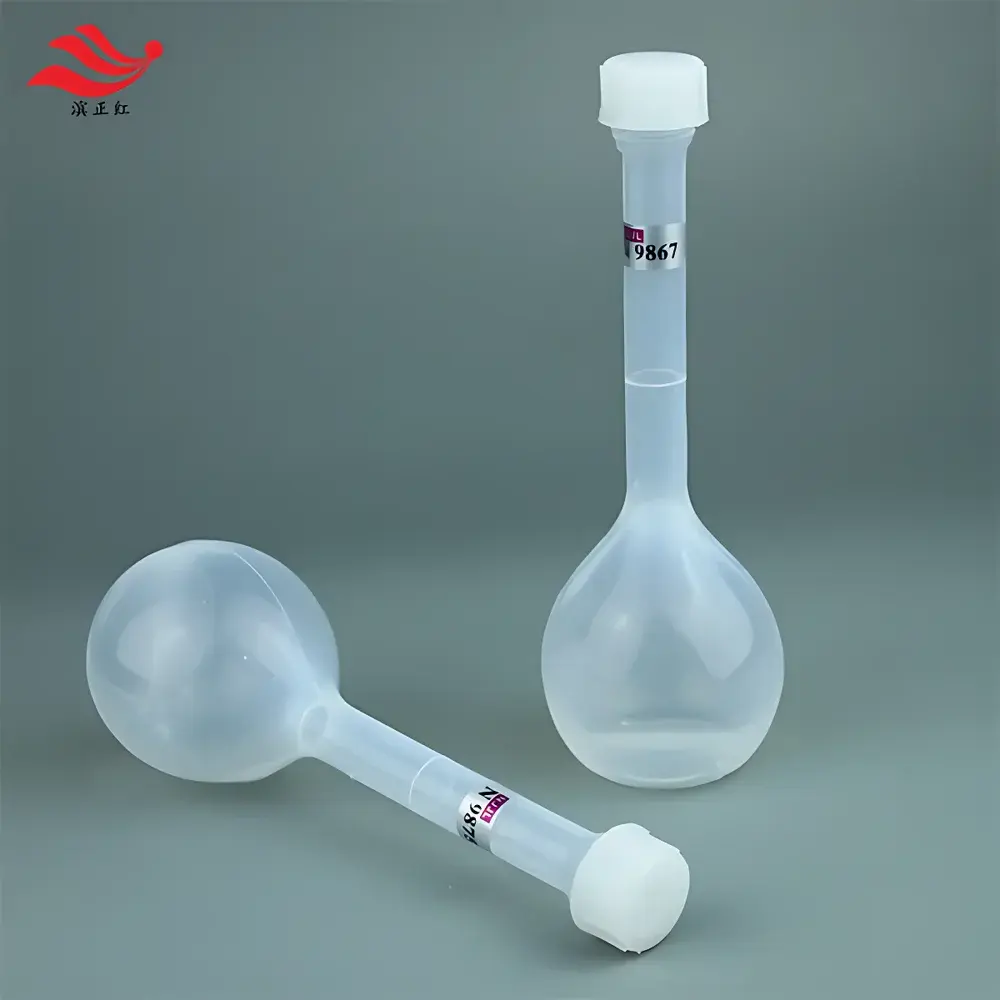
FEP Volumetric Flask, Acid- and Alkali-Resistant, 100 mL, Clear, Class A
| Brand | Binzhenghong |
|---|---|
| Origin | Jiangsu, China |
| Manufacturer Type | Direct Producer |
| Product Origin | Domestic (China) |
| Capacity Range | 10 mL to 1000 mL |
| Calibration Class | Class A |
| Material | Fluorinated Ethylene Propylene (FEP) |
| Color | Transparent (Colorless) |
| Graduation Accuracy | ±0.08 mL (for 100 mL flask, per ISO 1042 / GB/T 12806–2011) |
Overview
The Binzhenghong FEP Volumetric Flask (100 mL, Class A) is a high-purity, chemically inert laboratory volumetric device engineered for precise liquid volume delivery and preparation of standard solutions in aggressive chemical environments. Constructed entirely from fluorinated ethylene propylene (FEP), this flask exhibits exceptional resistance to concentrated mineral acids (e.g., HNO₃, H₂SO₄, HCl), strong alkalis (e.g., NaOH, KOH), oxidizing agents (e.g., H₂O₂, KMnO₄), and organic solvents—outperforming traditional borosilicate glass and polypropylene alternatives where halogenated or fluorinated reagents are employed. Its transparent, colorless body enables unobstructed meniscus observation under standard lighting conditions, while the etched, permanent graduation mark complies with ISO 1042:2020 and GB/T 12806–2011 for Class A volumetric accuracy (±0.08 mL tolerance at 20 °C for the 100 mL capacity). Designed for use in trace metal analysis, semiconductor wafer cleaning validation, pharmaceutical excipient dissolution testing, and environmental sample preservation, this flask eliminates leachable ion contamination and thermal deformation risks associated with glass or lower-grade polymers.
Key Features
- FEP monolithic construction ensures zero extractables and ultra-low ion leaching (<0.1 ng/mL for Na⁺, K⁺, Ca²⁺, Cl⁻, SO₄²⁻ per USP testing protocols)
- Class A calibration certified per ISO 1042:2020 and GB/T 12806–2011, verified at 20 °C in controlled metrology environment
- Chemical resistance validated against 48-hour exposure to 65% HNO₃, 37% HCl, 98% H₂SO₄, and 50% NaOH at ambient temperature (no swelling, haze, or dimensional change)
- Thermal stability from –200 °C to +205 °C; suitable for cold storage, steam sterilization (autoclave-compatible up to 121 °C, 20 min), and mild heating applications
- Optically clear surface with laser-etched, non-fading graduation line—no ink or paint that could degrade or contaminate samples
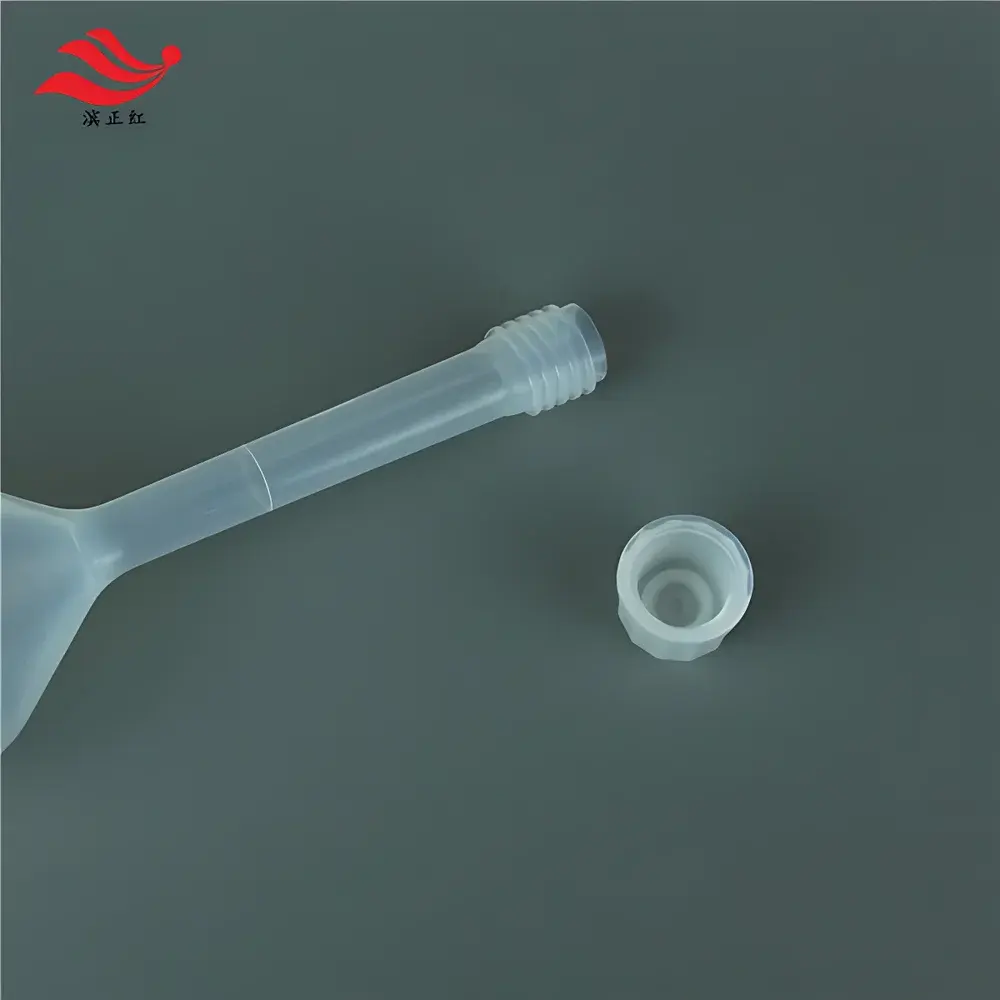
- Wide-mouth design (33 mm neck ID) facilitates easy filling, rinsing, and residue-free transfer of viscous or particulate-containing solutions
Sample Compatibility & Compliance
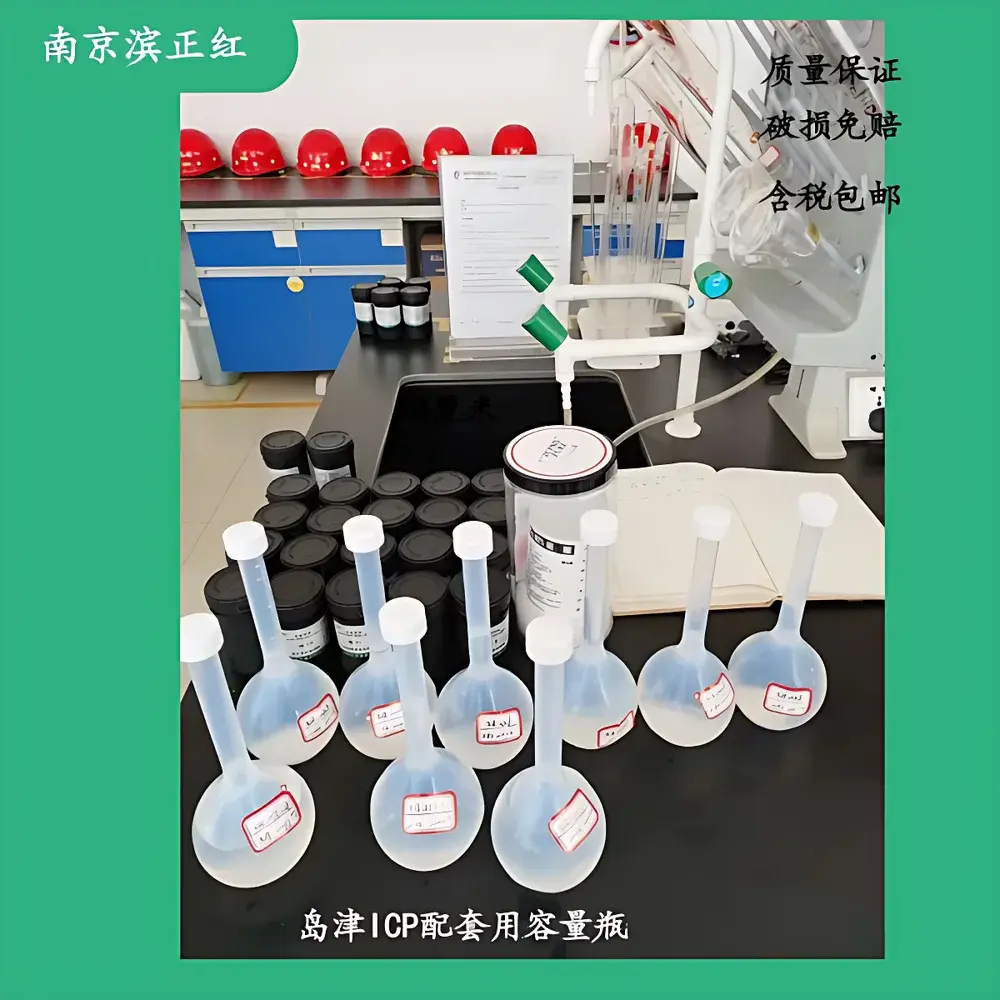
This FEP volumetric flask is routinely deployed in analytical workflows requiring stringent material compatibility: ICP-MS and ICP-OES sample preparation for ultratrace elemental analysis; HF-based etching solution standardization in microelectronics QA/QC labs; alkaline peroxide digestions for biomass characterization; and EPA Method 200.7/200.8 compliant water testing where glass interference (e.g., boron, sodium) must be eliminated. It meets ISO/IEC 17025:2017 requirements for reference material handling and supports GLP-compliant documentation when used with traceable calibration records. While not individually certified to FDA 21 CFR Part 11, its inertness and batch traceability support integration into regulated GMP environments when paired with validated SOPs and electronic lab notebook (ELN) entries.
Software & Data Management
As a passive volumetric tool, the flask does not incorporate embedded electronics or firmware. However, its Class A certification enables direct linkage to laboratory quality management systems (QMS) via digital calibration certificates (PDF/A-1b compliant), QR-coded batch identifiers, and LIMS-integrated inventory tracking. Each production lot undergoes full metrological verification, with raw data—including temperature-controlled gravimetric fill tests, uncertainty budgets (k=2), and material lot traceability—available upon request for audit readiness. Binzhenghong provides optional calibration documentation packages aligned with ISO/IEC 17025 Clause 6.4 and ASTM E29-23 rounding conventions.
Applications
- Preparation of certified reference materials (CRMs) for multi-element calibration curves in trace metal analysis
- Dilution of high-concentration stock standards for LC-MS/MS method development in clinical toxicology
- Standardization of TMAH (tetramethylammonium hydroxide) solutions used in photomask cleaning validation
- Storage and transport of acidified environmental water samples (EPA 1631, 200.8) without borosilicate-induced bias
- Formulation of fluoride-containing electrolytes for battery R&D where glass dissolution compromises conductivity measurements
FAQ
Is this flask autoclavable?
Yes—fully compatible with standard autoclaving cycles (121 °C, 15–20 psi, 15–20 min) without deformation or loss of calibration integrity.
Does it meet USP requirements for plastic containers?
Yes—FEP resin used conforms to USP Category 1 polymer specifications, including extractables profiling and infrared identity verification.
Can it be used for volumetric analysis involving hydrofluoric acid (HF)?
Yes—FEP demonstrates superior resistance to HF compared to PTFE or glass; however, prolonged exposure (>72 h) to >40% HF at elevated temperatures requires case-specific validation.
What is the shelf life and storage recommendation?
Indefinite under ambient, dry, dark conditions; avoid mechanical abrasion and UV exposure beyond 1000 hours to preserve surface clarity and graduation legibility.
Are individual calibration certificates provided?
Class A flasks are supplied with batch-level calibration reports; individual unit certification is available as an optional service with additional lead time and documentation.



