Firstmark GCD-SE Series Spring-Loaded Displacement Sensor
| Brand | — |
|---|---|
| Origin | Germany |
| Manufacturer Type | Authorized Distributor |
| Origin Category | Imported |
| Model | GCD_SE Series |
| Pricing | Upon Request |
Overview
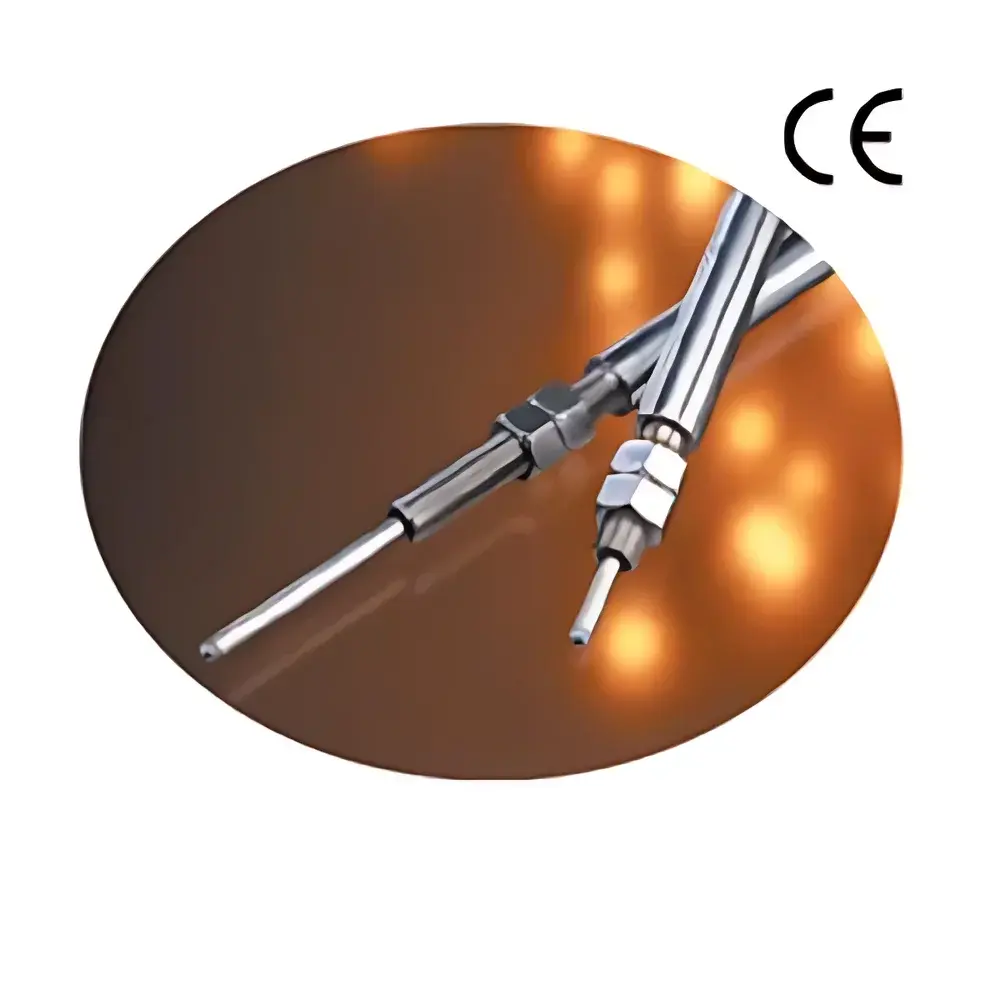
The Firstmark GCD-SE Series is a high-reliability, spring-loaded linear displacement sensor engineered for precision geometric measurement in demanding industrial environments. Based on the principle of variable reluctance or differential transformer (LVDT-like) transduction—optimized via internal carrier-frequency modulation and synchronous demodulation—the GCD-SE delivers stable analog output proportional to axial probe displacement. Its robust mechanical architecture integrates a fully welded, hermetically sealed housing with an integrated pneumatic seal, enabling operation in wet, abrasive, or coolant-laden conditions typical of grinding, turning, milling, and honing processes. Designed for integration into automated inspection systems, portable gauging fixtures, and in-process metrology stations, the sensor operates across a wide ambient temperature range (–20 °C to +85 °C) without significant zero drift or sensitivity variation.
Key Features
- Fully welded, hermetically sealed stainless steel housing compliant with IP67 and ISO 20623 for ingress protection against dust and temporary immersion
- Pneumatic sealing compatible with wet-grinding coolants, emulsions, and machining fluids—prevents internal contamination and extends service life
- Spring-loaded probe mechanism with five standard unidirectional measuring ranges: 0–2.54 mm (0.1 in), 0–5.08 mm (0.2 in), 0–12.7 mm (0.5 in), 0–25.4 mm (1.0 in), and 0–50.8 mm (2.0 in)
- Wide DC supply range: 8.5–25.0 VDC (typical), with ultra-low quiescent current (<12 mA) suitable for battery-powered handheld instruments
- Stable analog output options: 0–5 VDC or 1–6 VDC ratiometric, referenced to supply voltage—minimizing sensitivity to power rail fluctuations
- Integrated EMI/ESD/RFI suppression circuitry; CE-marked per EN 61326-1 (EMC) and EN 61000-6-2/-6-3 standards
- Synchronous demodulation architecture providing >60 dB common-mode noise rejection and immunity to 50/60 Hz interference
- Enhanced mechanical load tolerance: probe tip rated for repeated contact forces up to 5 N without hysteresis degradation
Sample Compatibility & Compliance
The GCD-SE series accommodates metallic, ceramic, and polymer workpieces with surface roughness values from Ra 0.1 µm to Ra 6.3 µm. Its hardened tungsten carbide or ruby-tipped probes ensure long-term dimensional stability during repeated contact measurements on hardened steels (up to 62 HRC) and cast iron. The sensor conforms to relevant portions of ISO 10360 (coordinate measuring machine probing systems), ASTM E1155 (linear displacement transducer calibration), and supports GLP/GMP traceability when paired with NIST-traceable calibration certificates. While not intrinsically safe, its low-power design and sealed construction meet requirements for Zone 2 non-hazardous environments per IEC 60079-0.
Software & Data Management
As an analog-output-only device, the GCD-SE requires external signal conditioning and digitization. It interfaces seamlessly with industry-standard data acquisition systems (e.g., National Instruments DAQmx, Keysight U2300A, or Beckhoff EtherCAT terminals) supporting 16-bit or higher resolution ADCs. When integrated into automated quality control workflows, its output can be logged, filtered, and statistically analyzed using compliant software platforms such as Minitab, JMP, or custom LabVIEW applications. For regulated environments, full audit trails—including calibration date, operator ID, environmental conditions, and raw voltage-to-displacement conversion coefficients—can be maintained in alignment with FDA 21 CFR Part 11 requirements through validated SCADA or MES layers.
Applications
- In-process thickness monitoring of rolled sheet metal and extruded profiles
- Runout and concentricity verification of rotating shafts and bearing housings
- Tool wear compensation in CNC lathes and grinding machines
- Portable gap and step-height measurement in aerospace component assembly
- Automated go/no-go inspection of machined features (e.g., slot depth, bore diameter, flange parallelism)
- Calibration reference for coordinate measuring machine (CMM) touch probes and optical comparators
FAQ
What is the recommended mounting configuration for optimal thermal stability?
Mount the sensor using non-conductive, low-thermal-expansion brackets (e.g., PEEK or anodized aluminum) and avoid direct attachment to heat-generating machinery surfaces. Allow ≥10 mm air gap between housing and adjacent hot components.
Can the GCD-SE be used in vacuum environments?
No—its pneumatic seal relies on atmospheric pressure differentials and is not rated for vacuum or pressurized gas applications.
Is field recalibration possible without factory tools?
Zero and span adjustments require a calibrated micrometer stage and multimeter; however, full linearity verification must be performed at an accredited metrology lab per ISO/IEC 17025.
Does the 1–6 VDC output option improve noise immunity over 0–5 VDC?
Yes—the elevated offset reduces susceptibility to ground-loop-induced baseline shifts in electrically noisy plant floors.
What probe tip materials are available for high-wear applications?
Standard tips are tungsten carbide (WC); optional ruby (Al₂O₃) or silicon nitride (Si₃N₄) tips are available for extended life on abrasive ceramics or sapphire surfaces.