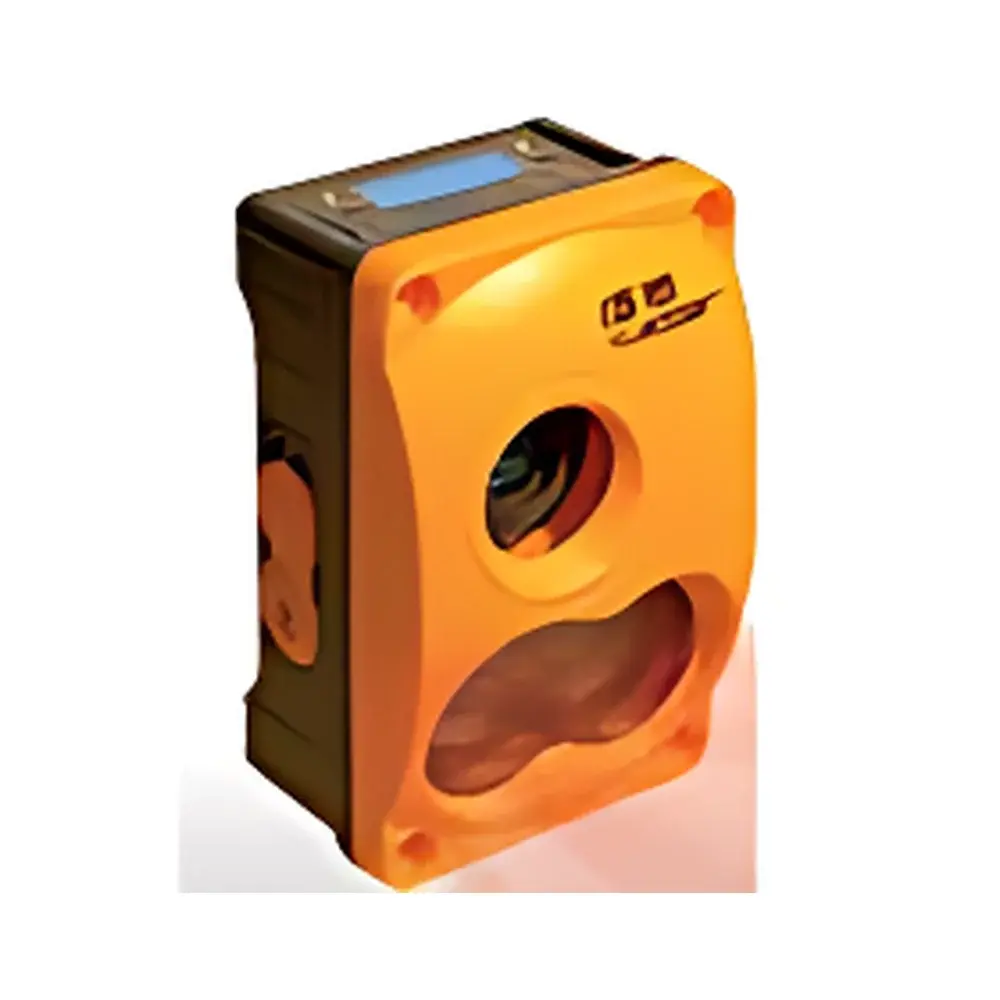
Firstmark LeddarTM IS16 Industrial Distance Sensor
| Brand | Firstmark |
|---|---|
| Origin | Germany |
| Manufacturer Type | Authorized Distributor |
| Origin Category | Imported |
| Model | LeddarTM IS16 |
| Pricing | Upon Request |
| Detection Range | 0–50 m |
| Accuracy | ±5 cm |
| Distance Resolution | 3 cm |
| Data Update Rate | Up to 50 Hz |
| Operating Temperature | −40 °C to +85 °C |
| Beam Angle | Adjustable from 9° to 90° (Standard: 45°) |
| Active Segments | 16 simultaneous |
| Optical Wavelength | 940 nm |
| IP Rating | IP67 |
| Power Consumption | 4 W (typical) |
| Supply Voltage | 24 VDC |
| Output Interfaces | RS-485, USB, 2× PNP/NPN digital outputs, 4–20 mA analog output |
| Housing Dimensions | 134 mm × 83 mm × 69 mm |
| Weight | 480 g |
| Compliance | IEC 62471:2006 (LED Safety), RoHS, CE |
Overview
The Firstmark LeddarTM IS16 Industrial Distance Sensor is a solid-state time-of-flight (ToF) LiDAR sensor engineered for high-reliability geometric distance measurement in demanding industrial environments. Unlike conventional ultrasonic or triangulation-based displacement sensors, the IS16 employs pulsed infrared light at 940 nm and advanced photon-counting signal processing to deliver precise, non-contact ranging across heterogeneous surfaces—including matte, reflective, transparent, and low-reflectivity targets. Its core architecture leverages LeddarTech’s proprietary LED-based ToF technology, which eliminates moving parts and laser diodes while maintaining robust immunity to ambient light, dust, moisture, and vibration. Designed specifically for integration into automated machinery, conveyor monitoring systems, level sensing applications, and safety-critical presence detection setups, the IS16 operates continuously within an extended range of 0–50 meters with ±5 cm absolute accuracy and 3 cm distance resolution—validated under real-world industrial thermal and electromagnetic conditions.
Key Features
- 16 independent, parallel detection segments—enabling spatially resolved ranging and multi-zone analysis without mechanical scanning;
- Configurable field-of-view (FOV) via optical lens options (9° to 90°), with standard 45° beam optimized for balanced coverage and resolution;
- Real-time data acquisition at up to 50 Hz update rate, supporting dynamic object tracking and closed-loop control;
- IP67-rated aluminum housing with integrated thermal management, rated for continuous operation from −40 °C to +85 °C;
- Dual-mode operational flexibility: Presence Detection Mode (with trainable near/far thresholds per zone) and Raw Measurement Mode (full segment-level distance + intensity data over RS-485);
- Industrial-grade I/O interface suite: 2× configurable PNP/NPN digital outputs, 4–20 mA analog output, RS-485 (Modbus RTU compatible), and USB for configuration and diagnostics;
- Onboard LCD display with 4-button HMI panel (optional) for local setup, live status monitoring, and firmware updates;
- Compliance with IEC 62471:2006 for LED photobiological safety and exemption from laser classification requirements—reducing regulatory overhead in OEM integration.
Sample Compatibility & Compliance
The IS16 demonstrates consistent performance across diverse target materials—including black rubber, stainless steel, painted surfaces, water surfaces, and semi-transparent plastics—without requiring surface preparation or retroreflective markers. Its 940 nm wavelength minimizes solar interference and ensures compatibility with ambient lighting conditions typical in factory floors, outdoor material handling yards, and wastewater infrastructure. From a regulatory standpoint, the sensor conforms to CE marking directives (EMC Directive 2014/30/EU and Low Voltage Directive 2014/35/EU), RoHS 2011/65/EU, and meets the photobiological safety requirements of IEC 62471:2006 (Risk Group 0 – exempt). While not inherently certified for SIL or ATEX, its deterministic timing behavior, watchdog timer, and fail-safe output configurations support integration into systems designed for IEC 61508 functional safety compliance when deployed within appropriate system-level architectures.
Software & Data Management
Configuration, calibration, and real-time visualization are supported via LeddarEngine™ PC software (Windows/Linux), which provides intuitive graphical tools for segment masking, threshold tuning, ROI definition, and data logging. All parameter changes are stored in non-volatile memory and persist through power cycles. The RS-485 interface supports Modbus RTU protocol for seamless integration with PLCs (e.g., Siemens S7, Allen-Bradley ControlLogix) and SCADA systems. Firmware updates are performed over USB or RS-485 using signed binary packages, ensuring integrity and traceability. Audit-ready logs—including timestamped configuration changes, error codes, and environmental diagnostics—are accessible via serial command set, facilitating GLP/GMP-aligned documentation workflows where required.
Applications
- Conveyor belt object presence and height profiling in packaging and logistics;
- Bin level monitoring in bulk material storage (cement, grain, plastic pellets);
- Collision avoidance and positioning feedback for AGVs and mobile robots;
- Roll diameter measurement in paper, film, and metal foil production lines;
- Structural gap monitoring in bridge expansion joints and rail track alignment;
- Water level and flow surface profiling in open-channel hydrometry;
- Machine guarding and safety curtain replacement in ISO 13857-compliant zones.
FAQ
Does the IS16 require periodic recalibration?
No—factory calibration is permanently stored in onboard memory. Drift compensation is handled algorithmically using internal temperature and reference signal monitoring. Field verification against known distances is recommended annually for metrological traceability.
Can the IS16 operate underwater or in high-humidity enclosures?
The sensor itself is IP67-rated and withstands temporary submersion, but optical performance degrades significantly when submerged. For underwater use, it must be installed behind a sealed, optically matched viewport with anti-fog coating and thermal equalization.
Is Modbus TCP supported?
No—only Modbus RTU over RS-485 is natively implemented. Gateway devices may be used to bridge to Ethernet-based protocols.
What is the maximum cable length for RS-485 communication?
Up to 1,200 meters at 9.6 kbps; reduced to ~300 meters at 115.2 kbps. Shielded twisted-pair cabling with proper termination is mandatory.
Are custom optical configurations available?
Yes—LeddarTech offers tailored FOV lenses, spectral filters, and mounting brackets under NDA. Contact Firstmark technical sales for OEM quotation and lead time assessment.