Firstmark PCA-375 Series Precision Spring-Return Displacement Sensor
| Brand | — |
|---|---|
| Origin | Germany |
| Manufacturer Type | Authorized Distributor |
| Origin Category | Imported |
| Model | PCA-375 Series |
| Pricing | Available Upon Request |
Overview
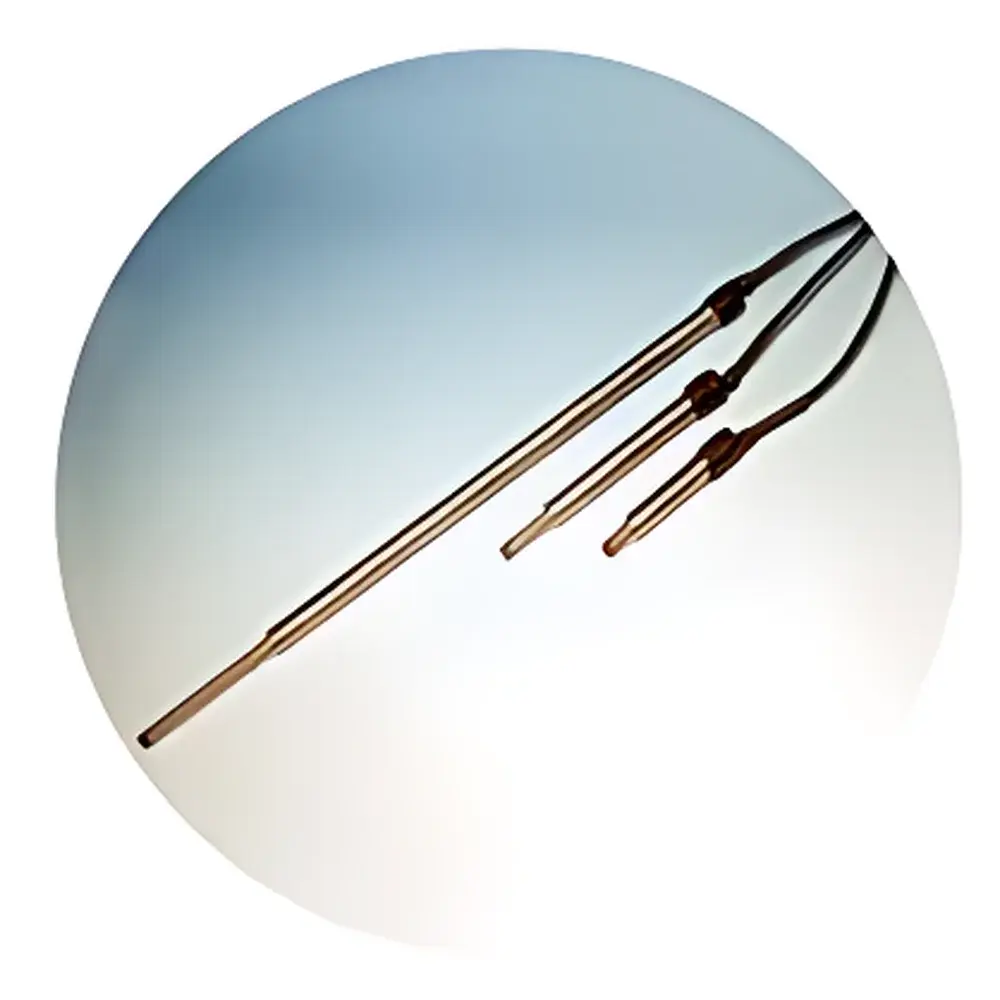
The Firstmark PCA-375 Series Precision Spring-Return Displacement Sensor is an engineered solution for high-reliability linear position measurement in industrial metrology, automated assembly verification, and precision mechanical testing environments. Built upon the proven MHR-series LVDT (Linear Variable Differential Transformer) architecture, the PCA-375 integrates a calibrated return spring mechanism and modified mechanical interface to deliver contact-based, analog displacement output without requiring external biasing or retraction hardware. Unlike standard LVDTs—which rely on external fixtures to maintain core position—the PCA-375’s integrated spring-return design ensures consistent zero-reference repeatability across thermal cycles and mechanical shock events. Its operating principle leverages electromagnetic induction: as the ferromagnetic plunger moves axially within the wound coil assembly, differential voltage output scales linearly with displacement magnitude and polarity, enabling bidirectional measurement from ±0.1 in (±2.54 mm) up to ±1.0 in (±25.4 mm). The sensor is optimized for applications demanding long-term stability, minimal hysteresis, and immunity to electromagnetic interference in factory-floor conditions.
Key Features
- Spring-return plunger mechanism with preloaded, fatigue-resistant stainless-steel helical spring for repeatable zero-reset behavior
- Compact cylindrical housing (standard 0.75 in OD × 2.5 in L) suitable for integration into tight-tolerance jigs and CMM probe mounts
- IP65-rated cable exit with molded polyurethane jacket and integral strain relief—certified against dust ingress and low-pressure water jets
- Self-lubricating sintered bronze bushings and hardened steel piston assembly eliminating need for periodic maintenance or relubrication
- Wide excitation frequency range: 2.5 kHz to 10.0 kHz (nominal 3.0 kHz), compatible with standard LVDT signal conditioners and data acquisition systems
- Industrial-grade interchangeable probe tips—including hemispherical, flat-faced, conical, and threaded variants—conforming to DIN 7157 and ISO 10360-2 tactile probe standards
Sample Compatibility & Compliance
The PCA-375 series is designed for direct-contact measurement of rigid metallic, ceramic, and composite surfaces where surface finish Ra ≤ 3.2 µm is maintained. It supports static and quasi-static displacement monitoring—excluding high-frequency vibration analysis (>500 Hz). All units comply with EN 61000-6-2 (immunity) and EN 61000-6-4 (emission) for industrial environments. Electrical safety conforms to IEC 61010-1 CAT II 300 V. While not intrinsically safe, the sensor may be deployed in non-hazardous zones per ATEX Directive 2014/34/EU when paired with approved isolated signal conditioners. Calibration documentation follows ISO/IEC 17025 traceability via DAkkS-accredited laboratories; optional NIST-traceable calibration certificates are available.
Software & Data Management
The PCA-375 outputs analog AC voltage (typically ±1 V or ±5 V full-scale, configurable), requiring external LVDT signal conditioning. Compatible with industry-standard platforms including National Instruments DAQmx, Keysight PathWave, and Dewesoft X. When integrated into validated QC systems, the sensor supports audit-ready data workflows compliant with FDA 21 CFR Part 11 requirements—provided the host system implements electronic signatures, audit trails, and user access controls. Raw displacement data may be logged at up to 10 kHz sampling rates (dependent on conditioner bandwidth), with timestamping synchronized to system clocks traceable to UTC via NTP or PTP.
Applications
- Automated dimensional inspection of machined shafts, bearing housings, and gear blanks on production lines
- Real-time feedback control in hydraulic/pneumatic actuator stroke verification systems
- Calibration reference in coordinate measuring machine (CMM) probe qualification protocols per ISO 10360-2
- Thermal expansion coefficient measurement in materials science labs using controlled oven chambers
- End-of-line functional testing of snap-fit assemblies, switch actuation force/displacement profiling, and gasket compression validation
FAQ
What is the maximum recommended operating temperature for the PCA-375 series?
The sensor is rated for continuous operation from –20 °C to +85 °C ambient; extended-range variants (–40 °C to +125 °C) are available under custom order.
Can the PCA-375 be used in vacuum environments?
No—standard units contain air-filled internal cavities and non-vacuum-rated potting compounds. Vacuum-compatible versions require hermetic sealing and outgassing-certified materials (consult engineering support).
Is linearity error specified over full scale or temperature-compensated range?
Linearity is specified per ISO 230-2 Annex B as ±0.25% of full-scale output (FSO) at 23 °C ±2 °C, excluding thermal drift effects.
Does Firstmark provide OEM calibration services for volume integrators?
Yes—custom calibration packages including multi-point traceable reports, temperature cycling validation, and fixture-specific mounting compensation are offered under NDA.
How does the spring-return mechanism affect measurement hysteresis?
Hysteresis is limited to ≤0.1% FSO due to low-friction bronze bearings and optimized spring preload geometry—verified per ASTM E2554 statistical process control protocols.