
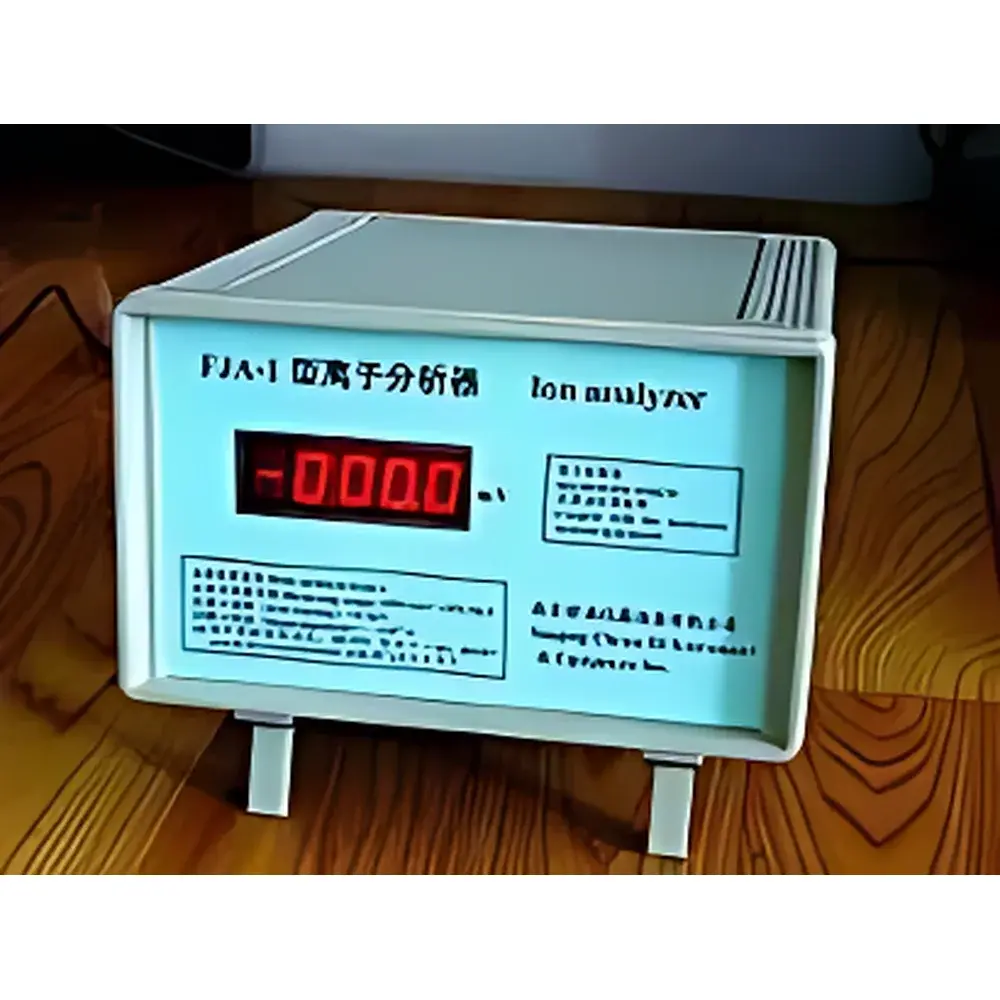
FJA-1 Ion Analyzer
| Origin | Jiangsu, China |
|---|---|
| Manufacturer Type | Distributor |
| Origin Category | Domestic |
| Model | FJA-1 |
| Price Range | USD 700 – 1,400 (est.) |
| Instrument Type | Multifunctional Electrochemical Analyzer |
| Voltage Input Range | ±1999.9 mV |
| Minimum Resolution | 0.1 mV |
| Accuracy | ±0.025% of reading + 2 digits |
| Input Impedance | >10¹² Ω |
| Sampling Rate | 3–10 Hz |
| Interface | RS-232 (USB adapter optional) |
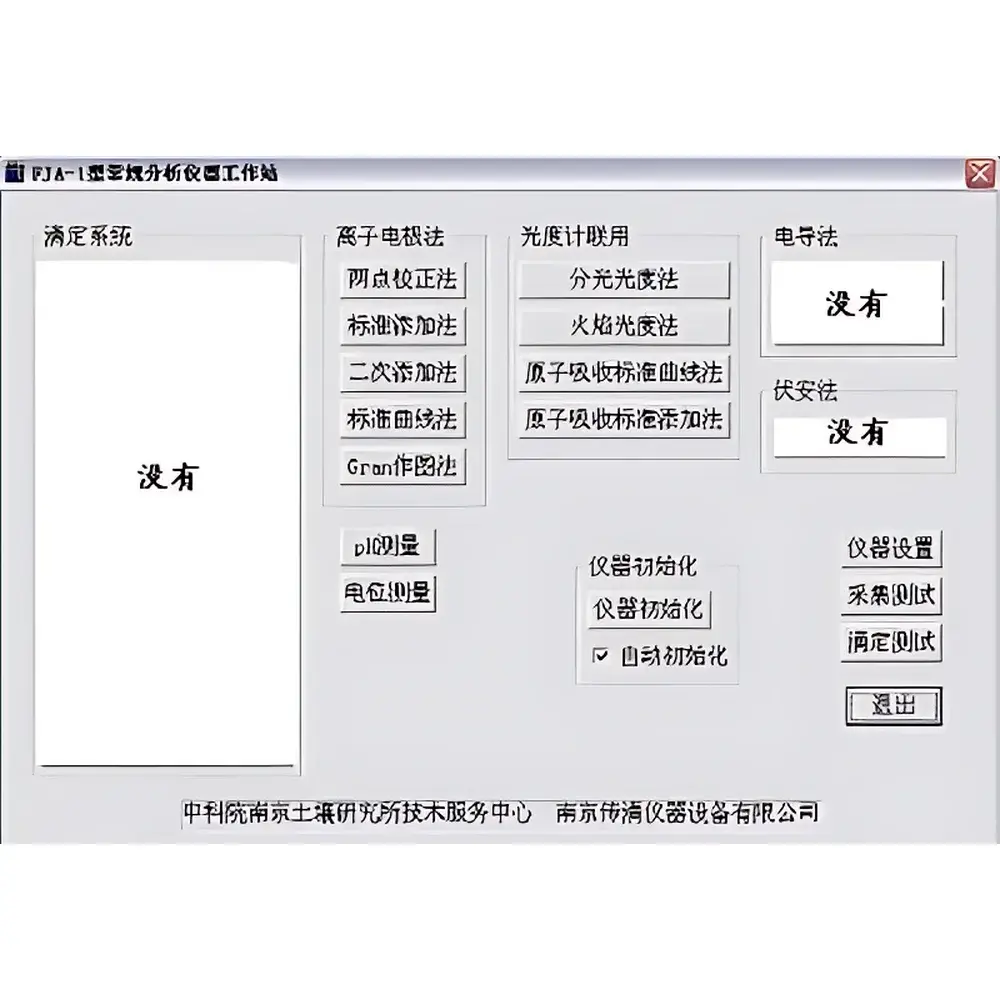
| Software Platform | Windows-based (11 dedicated application modules) |
| Data Storage | ASCII text files with date-stamped naming convention (e.g., “pHr_YYYY_MM_DD.TXT”, “SPS_YYYY_MM_DD.TXT”) |
Overview
The FJA-1 Ion Analyzer is a PC-hosted, multifunctional electrochemical measurement platform engineered for precision potentiometric analysis in routine and research laboratory environments. Unlike standalone benchtop meters, the FJA-1 operates as a modular signal acquisition and processing unit—relying on a high-impedance analog front-end and dual-slope A/D conversion to interface with a wide range of ion-selective electrodes (ISEs), pH electrodes, redox sensors, and other voltage-output transducers. Its core measurement principle is based on high-fidelity DC potential monitoring within the ±1999.9 mV range, with 0.1 mV resolution and traceable accuracy of ±0.025% of reading plus two least-significant digits. Designed for compatibility with standard Windows operating systems (Windows 7 through 11), the instrument leverages host PC resources for real-time visualization, curve fitting, data archival, and report generation—eliminating embedded display limitations while maintaining metrological integrity.
Key Features
- Ultra-high input impedance (>10¹² Ω) ensures minimal loading error when measuring from high-resistance electrochemical sensors, including glass pH electrodes and solid-state ISEs.
- Dual-slope analog-to-digital conversion delivers stable, noise-immune voltage readings under variable environmental conditions.
- Configurable sampling rate (3–10 Hz) supports both rapid kinetic monitoring and high-precision static endpoint measurements.
- RS-232 serial interface as standard; USB connectivity available via certified adapter—ensuring compatibility with modern laptops and industrial PCs.
- Eleven integrated Windows-based application modules enable seamless transition between pH, ion concentration (via calibration curves), redox potential (Eh), and spectrophotometric data processing workflows.
- Automated polarity detection, auto-ranging, and coefficient self-generation reduce operator dependency during calibration and routine operation.
- Date-stamped ASCII file storage (e.g., “pHr_2024_06_15.TXT”) facilitates audit-ready documentation aligned with GLP and ISO/IEC 17025 data integrity requirements.
Sample Compatibility & Compliance
The FJA-1 interfaces directly with commercially available pH electrodes, fluoride, nitrate, calcium, sodium, potassium, and chloride ISEs—provided they conform to standard 0–±2 V output specifications. It also supports legacy flame photometers and UV-Vis spectrophotometers equipped with analog voltage outputs. All hardware components meet CE marking requirements for electromagnetic compatibility (EN 61326-1) and low-voltage safety (EN 61010-1). While the device itself does not carry FDA 21 CFR Part 11 certification, its ASCII-based data export architecture enables integration into validated LIMS or ELN systems where electronic signatures, audit trails, and user access controls are externally managed per GxP guidelines.
Software & Data Management
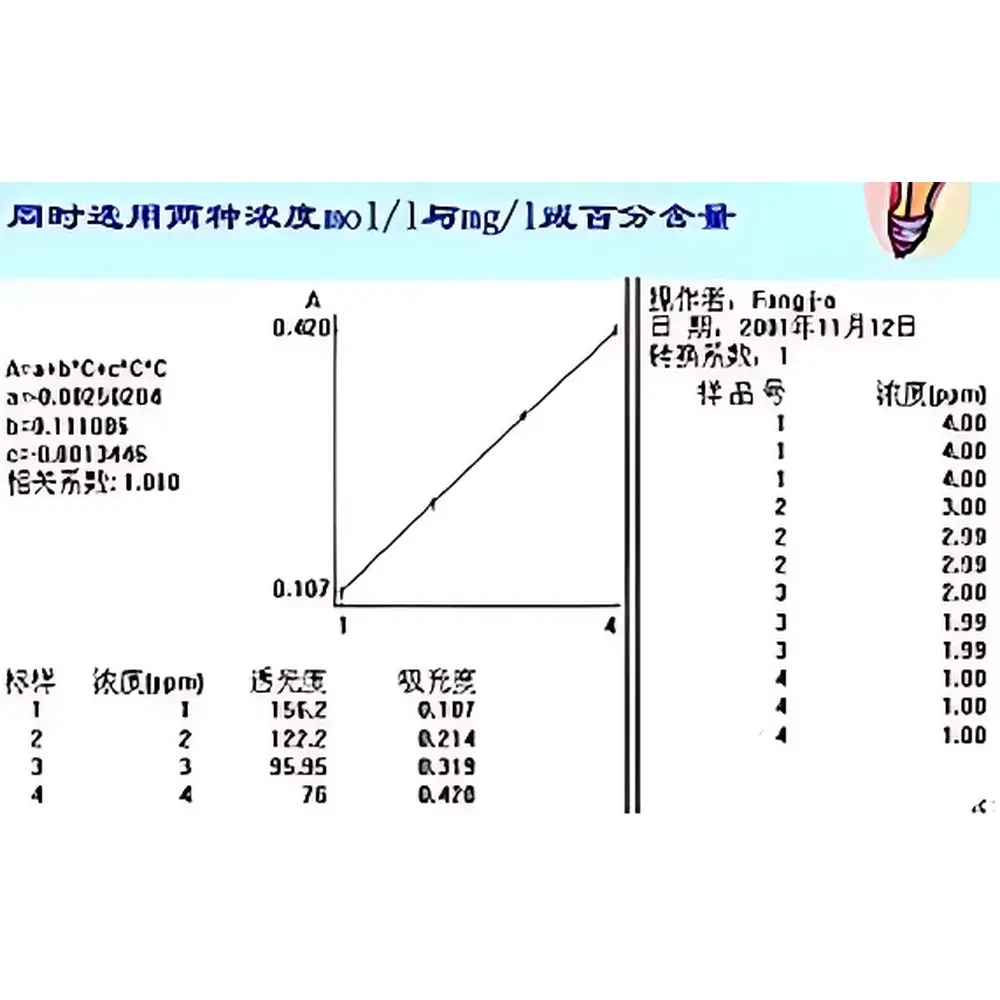
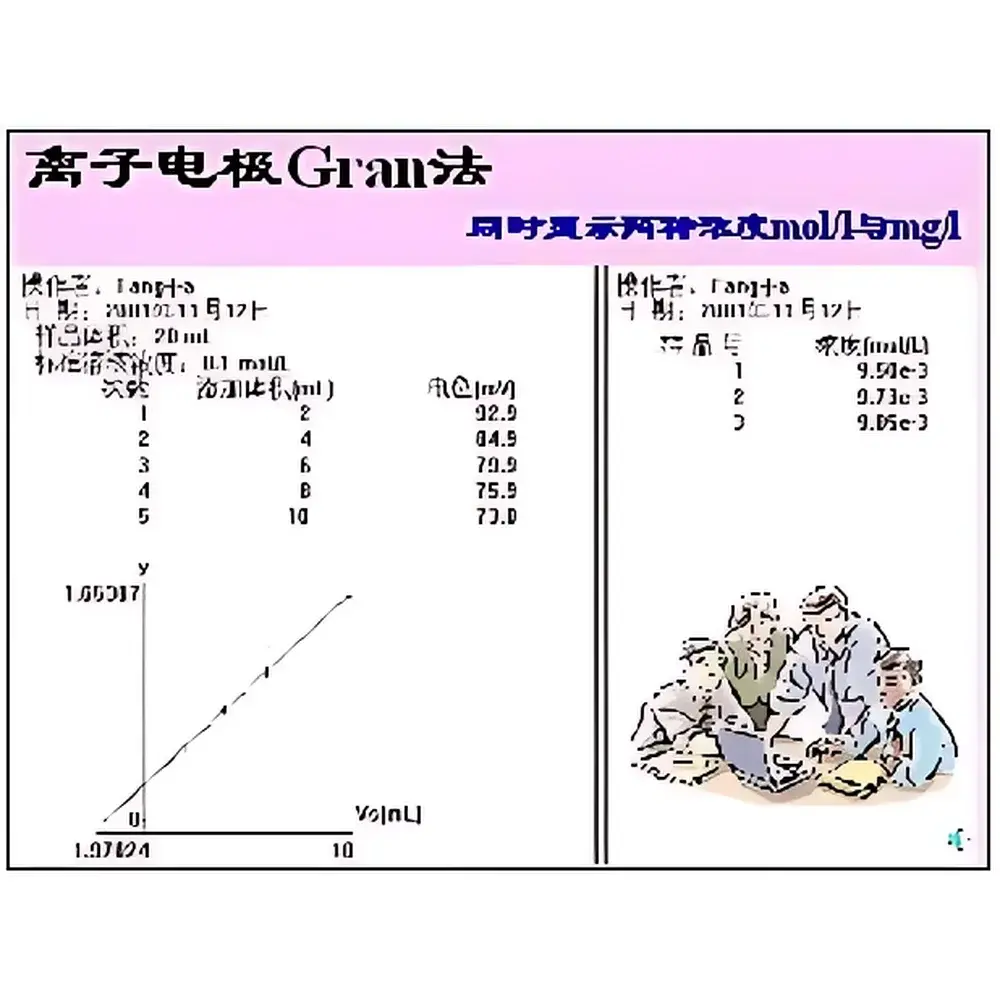
The FJA-1 operates exclusively through its proprietary Windows application suite—distributed as part of the MIA-6 Analytical Workstation ecosystem. Each module provides context-specific calibration wizards, linear/nonlinear regression tools (including 2–5 point standard curve fitting), and customizable reporting templates. Raw voltage data, calculated concentrations, and metadata (operator ID, timestamp, electrode ID, temperature) are stored in plain-text format—ensuring long-term readability and third-party software interoperability (e.g., Excel, Python pandas, MATLAB). File naming conventions follow ISO 8601-compliant structures, and users may define custom save paths and prefixes without modifying executable code—supporting institutional IT policies and data governance frameworks.
Applications
This analyzer serves as a flexible backbone in quality control laboratories across environmental monitoring (e.g., wastewater ion profiling per ASTM D1293 and EPA Method 150.1), pharmaceutical water testing (USP pH and conductivity correlation), agricultural soil extract analysis (NH₄⁺, NO₃⁻, K⁺ quantification), and academic teaching labs conducting fundamental electrochemistry experiments. Its modular design allows deployment alongside atomic absorption spectrometers or UV-Vis instruments for hybrid analytical workflows—where potentiometric endpoint detection complements optical quantification. In field-deployable configurations, it pairs with ruggedized notebooks for on-site groundwater screening or industrial process stream verification.
FAQ
Is the FJA-1 compliant with FDA 21 CFR Part 11?
No—the instrument does not include built-in electronic signature, role-based access control, or audit trail functionality. However, its ASCII output format enables full compliance when integrated into a validated third-party data management system.
Can the FJA-1 measure temperature-compensated pH values?
Yes—when used with a combined pH/temperature electrode or external Pt100 sensor, the software applies Nernst equation corrections using user-defined or auto-detected temperature inputs.
What is the maximum number of calibration points supported per standard curve?
Up to five non-linear calibration points are supported, with least-squares regression and residual error reporting for each fit.
Does the system support real-time data streaming to SCADA or LabVIEW?
Yes—via RS-232 ASCII protocol with configurable baud rate and delimiter syntax; LabVIEW drivers and Modbus TCP wrappers are available from authorized technical partners.
Is firmware upgrade capability included?
Firmware updates are delivered exclusively through the MIA-6 workstation software installer; no field-programmable memory or bootloader interface is exposed to end users.





