Flat Panel Ionization Chamber
| Brand | — |
|---|---|
| Origin | Beijing, China |
| Manufacturer Type | General Distributor |
| Product Origin | Domestic |
| Model | Flat Panel Ionization Chamber |
| Quotation | Upon Request |
| Detector Type | Ventilated Parallel-Plate Ionization Chamber |
| Sensitive Volume | 10 cm³ ±10% or 2.5 cm³ ±10% |
| Sensitive Volume Dimensions | 10 cm³: radius 40 mm, depth 2 mm |
| 2.5 cm³ | radius 20 mm, depth 2 mm |
| Design | Waterproof, ventilated, fully guarded ionization chamber |
| Nominal Operating Voltage | ±400 V (max ±500 V) |
| Leakage Current | ≤ ±10 fA |
| Entrance Window (10 cm³) | 3.35 mm PMMA + 0.02 mm graphite |
| Entrance Window (2.5 cm³) | 1 mm PMMA + 0.02 mm graphite |
| Areal Density of Total Window | 10 cm³: 420 mg/cm² |
| 2.5 cm³ | 140 mg/cm² |
| Long-Term Stability | ≤1% per year |
| Electrical Interface | TNC connector |
Overview
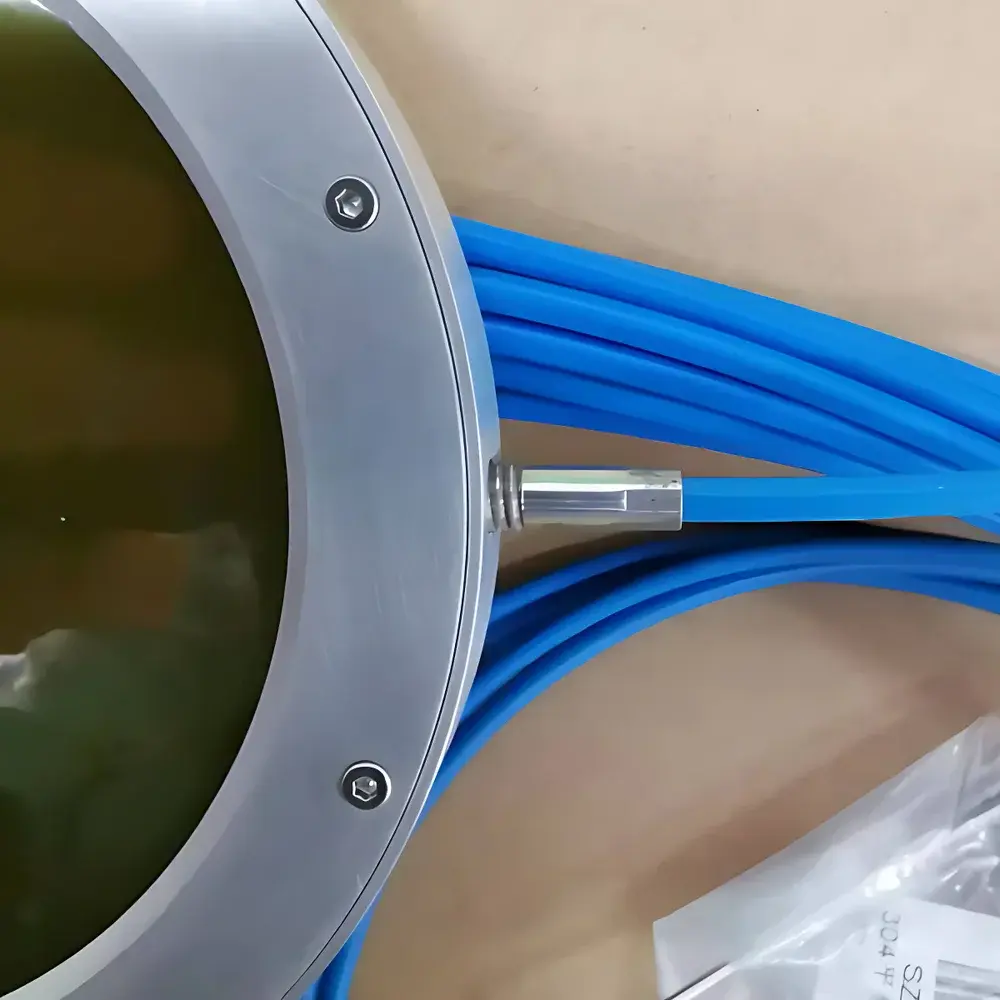
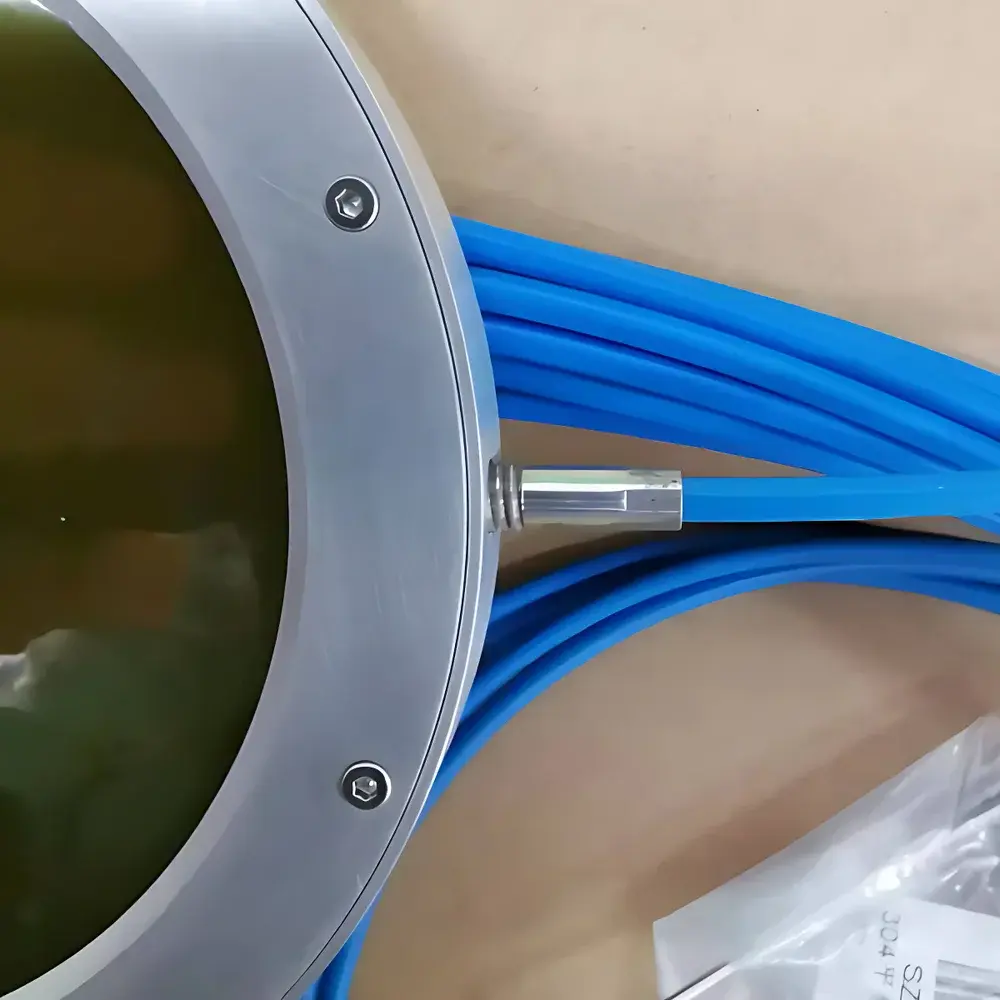
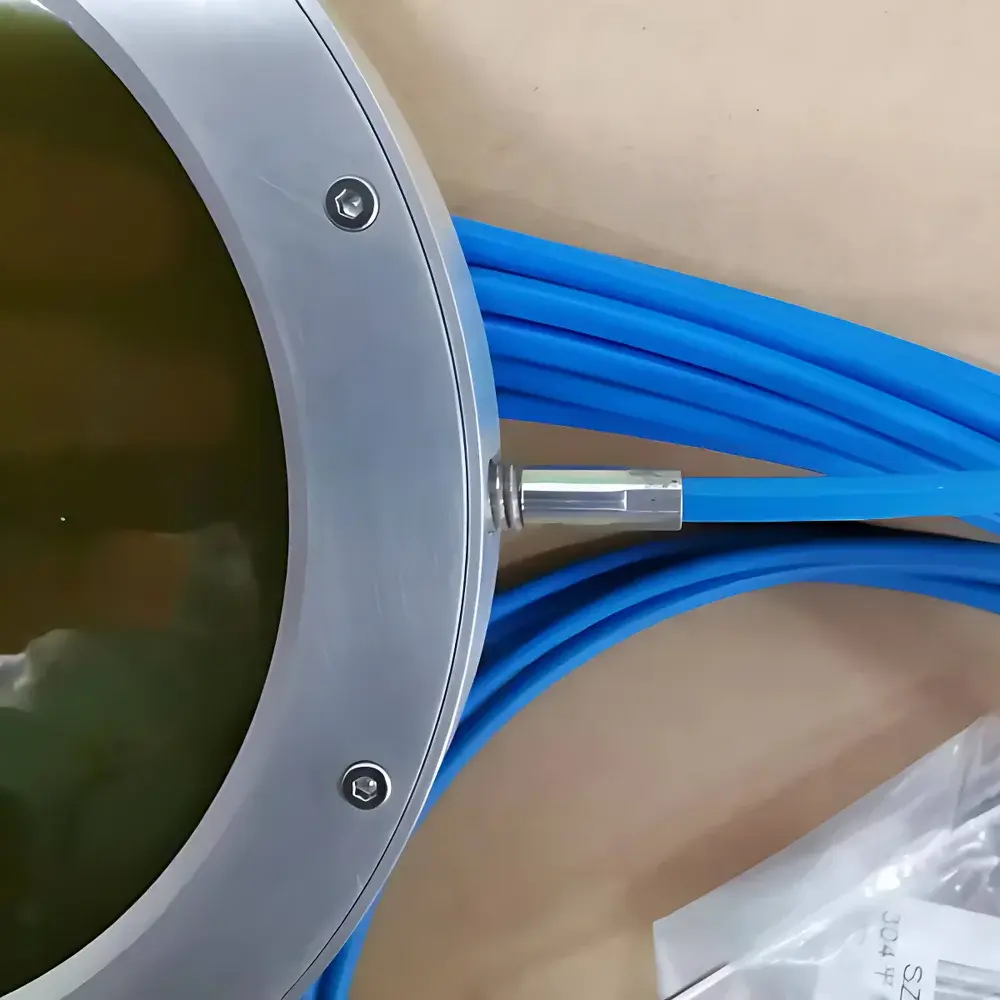
The Flat Panel Ionization Chamber is a precision radiation detection instrument engineered for accurate, real-time measurement of ionizing radiation exposure and dose rate in photon and electron fields. Based on the fundamental principle of gas-filled ionization detection, it operates under atmospheric pressure with controlled ventilation to maintain stable gas composition and humidity equilibrium—ensuring consistent charge collection efficiency across extended operational periods. Its parallel-plate geometry provides uniform electric field distribution and minimal perturbation to incident radiation beams, making it particularly suitable for reference-class dosimetry in radiotherapy beam calibration, linac output verification, and environmental radiation monitoring applications where minimal scatter and high spatial uniformity are critical.
Key Features
- Ventilated parallel-plate design ensures long-term stability of gas gain and charge collection efficiency under ambient atmospheric conditions.
- Two standard sensitive volumes (10 cm³ and 2.5 cm³) optimized for different measurement scenarios: larger volume for low-dose-rate environments requiring enhanced signal-to-noise ratio; smaller volume for higher spatial resolution and reduced volume averaging effects.
- Guarded electrode architecture minimizes leakage current (< ±10 fA) and eliminates edge effects, supporting high-precision current-mode readout with sub-picoampere sensitivity.
- Waterproof, fully shielded mechanical housing meets IP65-level ingress protection requirements for use in clinical vaults, mobile radiography units, and outdoor monitoring stations.
- Low-mass entrance windows composed of PMMA and ultra-thin graphite provide near-tissue equivalence for megavoltage photon beams while maintaining mechanical integrity and reproducible transmission characteristics.
- Standard TNC coaxial interface enables direct integration with electrometers compliant with IEC 61674 and IEC 60731 standards for diagnostic and therapeutic X-ray instrumentation.
Sample Compatibility & Compliance
This ionization chamber is compatible with continuous and pulsed photon beams (60 keV–25 MV) and electron beams (4–22 MeV), provided beam quality and field size fall within the scope defined by TRS-398 and AAPM TG-51 protocols. The chamber’s construction adheres to IEC 60731:2011 (Medical electrical equipment – Dosimeters for X-ray diagnostics) and IEC 61674:2017 (Radiation protection instrumentation – Active personal dosimeters). Its nominal operating voltage (±400 V, up to ±500 V) aligns with common electrometer specifications used in accredited medical physics laboratories. All materials—including PMMA, graphite, stainless steel, and silicone elastomers—are selected for radiological inertness, thermal stability, and compliance with ISO 10993 biocompatibility guidelines where applicable.
Software & Data Management
While the flat panel ionization chamber itself is a passive detector requiring external electrometric readout, it is fully interoperable with industry-standard dosimetry platforms including PTW Unidos, IBA Blue Phantom, and Standard Imaging MAX 4000 series electrometers. These systems support automated data acquisition, energy-dependent correction factor application (e.g., kQ, kTP), and audit-trail-enabled reporting compliant with ISO/IEC 17025 and FDA 21 CFR Part 11 requirements. Calibration certificates issued by national metrology institutes (e.g., NIM Beijing) include traceability to primary standards and uncertainty budgets evaluated per GUM (JCGM 100:2008). Firmware updates and configuration management are handled at the electrometer level, preserving chamber neutrality and long-term measurement integrity.
Applications
- Reference dosimetry for linear accelerator output calibration (output factor, PDD, profile measurements) in accordance with IAEA TRS-398 and AAPM TG-51.
- In-vivo dosimetry during external beam radiotherapy using custom mounting fixtures and real-time current monitoring.
- Environmental radiation surveying in nuclear medicine departments, PET/CT facilities, and industrial radiography sites.
- Beam quality assurance for orthovoltage and superficial X-ray units (50–300 kV) with appropriate filtration corrections.
- Secondary standard transfer between accredited dosimetry laboratories and hospital-based medical physics services.
FAQ
What radiation types is this chamber calibrated for?
It is primarily designed and calibrated for photon beams (X-rays and gamma rays) and electron beams. Calibration coefficients are typically provided for specific reference beam qualities (e.g., 60Co, 6 MV, 10 MV, 6 MeV, 12 MeV) traceable to national standards.
Is temperature and pressure correction required during use?
Yes. As a vented air-filled chamber, atmospheric temperature and pressure must be measured and applied using standard correction factors (kTP) per IAEA TRS-398 or AAPM TG-51 protocols.
Can it be used in pulsed radiation fields?
Yes—provided pulse repetition frequency and duty cycle remain within the electrometer’s specified response bandwidth and recombination losses are corrected using the two-voltage analysis method (IAEA TRS-398 Annex II).
Does the chamber require periodic recalibration?
Annual recalibration is recommended per ISO/IEC 17025 and clinical QA guidelines. Long-term stability performance (≤1% per year) supports extended calibration intervals when supported by documented in-house constancy checks.
What is the expected service life under routine clinical use?
With proper handling, cleaning, and storage (avoiding mechanical shock, solvent exposure, or prolonged high-humidity environments), the chamber typically maintains metrological integrity for ≥10 years—consistent with IEC 61674 lifetime expectations for Class R reference instruments.