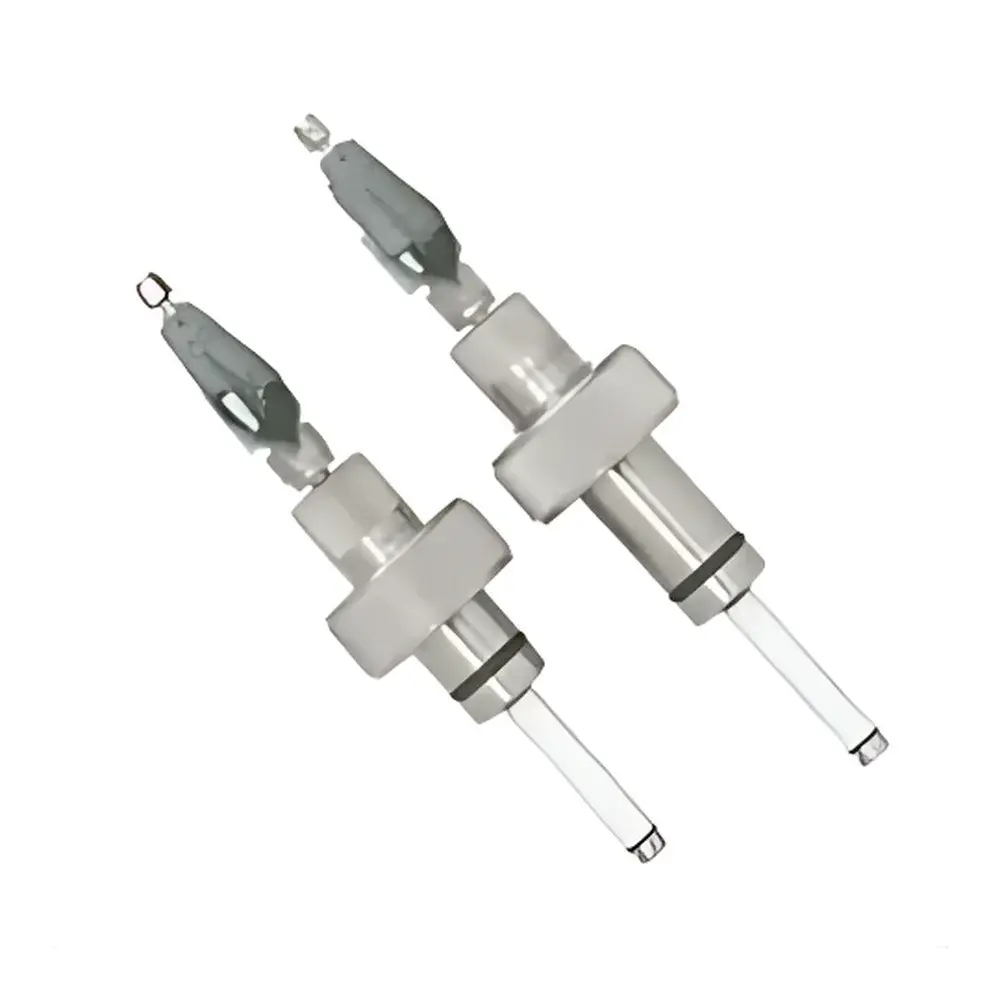
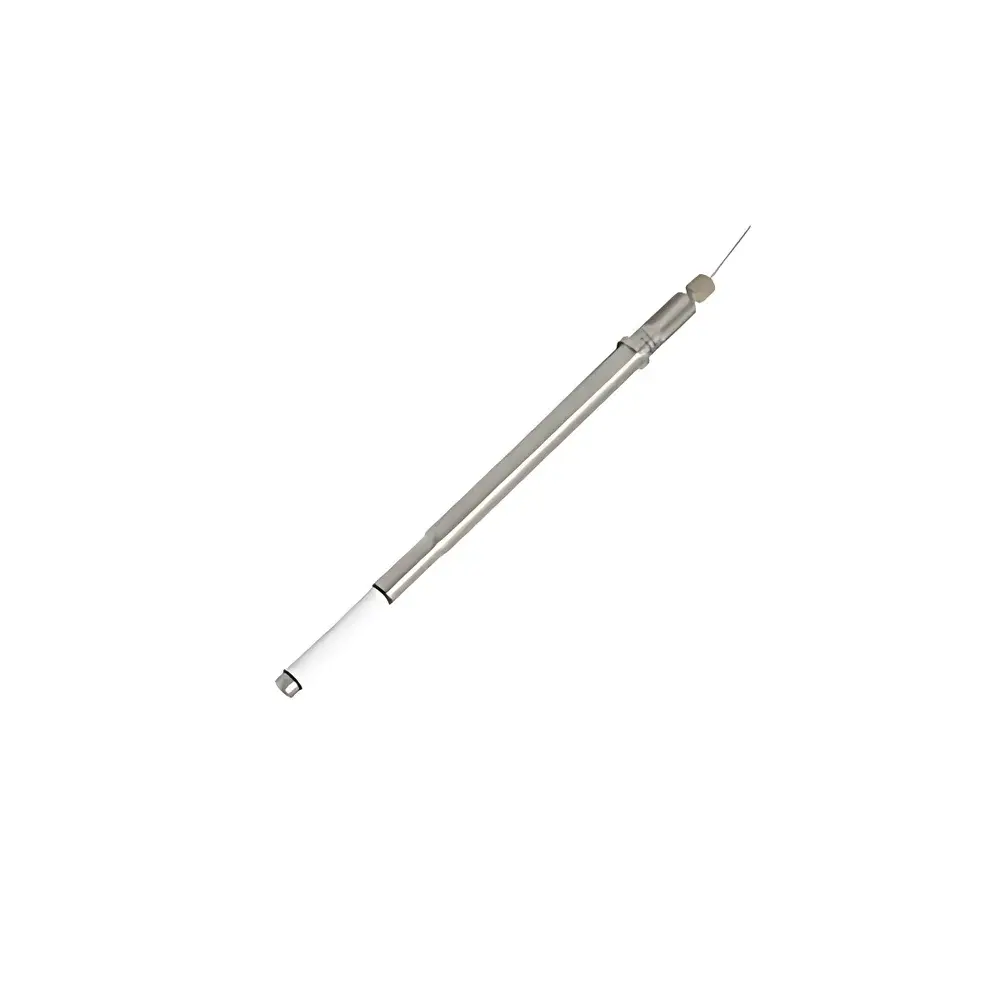
Flownamics FISP Sterile Sampling Probe
| Brand | Flownamics |
|---|---|
| Origin | USA |
| Model | FISP Sterile Sampling Probe |
| Construction | 316 Stainless Steel |
| Membrane Material | Ceramic |
| Standard Pore Size | 0.2 µm |
| Optional Pore Sizes | 0.45, 0.75, 1.0, 5.0, 25.0, 75.0 µm |
| Port Compatibility | D-Series (19 mm & 25 mm side ports), F-Series (8 mm, 12 mm & 19 mm top ports) |
| Immersion Depth Options | 90–410 mm |
| Dead Volume | 0.24–0.44 mL |
Overview
The Flownamics FISP (Flownamics In-Situ Sampling Probe) is an engineered sterile sampling solution designed for bioprocess monitoring and control in upstream biomanufacturing. Based on a robust coaxial flow-through architecture with integrated ceramic membrane filtration, the FISP probe enables continuous, aseptic, cell-free sampling directly from stirred-tank bioreactors, fermenters, and single-use systems without compromising vessel integrity or sterility. Its operation relies on controlled pressure differentials across the membrane—typically driven by reactor headspace pressure or external vacuum—to facilitate laminar permeation of clarified broth while retaining cells, particulates, and microorganisms. This principle ensures representative sample composition, minimizes carryover, and eliminates manual intervention during critical process phases. The probe is validated for use across aerobic and anaerobic microbial cultures (bacteria, yeast, fungi, algae), insect cell lines, and mammalian cell cultures—including high-density perfusion and fed-batch processes—where real-time metabolite, nutrient, or product titer data are essential for PAT (Process Analytical Technology) implementation per ICH Q5, Q8, and FDA guidance.
Key Features
- Material construction: Electropolished 316 stainless steel body with USP Class VI-certified wetted components; fully compliant with ASME BPE surface finish standards (Ra ≤ 0.4 µm).
- Dual-series configuration: D-Series probes optimized for side-port installation on vessels with 19 mm or 25 mm sanitary ports; F-Series probes engineered for top-port mounting (8 mm, 12 mm, 19 mm) with extended immersion depths up to 410 mm.
- Membrane flexibility: Standard 0.2 µm ceramic membrane provides absolute sterile barrier per ISO 13408-1; optional pore sizes (0.45–75.0 µm) support applications ranging from clarified harvest to whole-cell retention or feed stream conditioning.
- Low dead volume design: Internal fluid path geometry limits hold-up volume to 0.24–0.44 mL, reducing lag time between process change and analytical detection and minimizing cleaning-in-place (CIP) rinse volumes.
- Sterility assurance: Fully compatible with steam-in-place (SIP) cycles up to 135°C/30 min (F-Series); validated for repeated autoclaving; Kleenpak™-compatible interface enables rapid, leak-tight connection to Seg-Flow™ sampling manifolds and HPLC/biochemical analyzers.
- GMP-aligned documentation: Supplied with material traceability records, membrane lot-specific validation reports, and optional IQ/OQ protocol templates aligned with FDA 21 CFR Part 11 and EU Annex 11 requirements.
Sample Compatibility & Compliance
The FISP probe supports sampling from stainless steel, glass, and single-use bioreactors (e.g., Sartorius BIOSTAT® STR, Thermo Fisher HyPerforma™, GE Xcellerex™ XDR). It maintains sterility under dynamic pressure conditions (0–2 bar gauge) and temperatures from 4°C to 60°C. All wetted surfaces comply with USP <87> and <88> cytotoxicity and systemic injection testing. The 0.2 µm ceramic membrane is certified to retain ≥99.9999% of Bacillus subtilis spores (ATCC 6633) under worst-case flow conditions, satisfying ISO 13408-1 sterility assurance level (SAL) of 10⁻⁶. The system meets ASTM E2917-22 for verification of aseptic sampling devices and supports GLP/GMP audit readiness through configurable electronic batch records when integrated with Flownamics’ Seg-Flow control software.
Software & Data Management
While the FISP probe itself is a passive hardware component, it is natively interoperable with Flownamics Seg-Flow™ automated sampling platforms. When deployed in such configurations, sampling events, valve actuation logs, pressure transients, and timestamped metadata are captured in accordance with 21 CFR Part 11-compliant audit trails. Raw data exports support CSV, .xlsx, and OPC UA protocols for integration into LIMS (e.g., LabVantage, STARLIMS) and MES environments. Optional digital twin calibration modules allow predictive maintenance scheduling based on cumulative membrane flux decay trends—enabling proactive replacement before integrity loss occurs.
Applications
- Real-time glucose, lactate, ammonium, and amino acid monitoring via online HPLC or enzymatic analyzers.
- Cell culture harvest timing determination using offline viability and titer assays (e.g., Octet®, HPLC-SEC, ELISA).
- Automated feed addition control in perfusion bioreactors using pH- or DO-triggered logic.
- Process characterization studies during tech transfer and scale-up, supporting Quality-by-Design (QbD) frameworks.
- Continuous bioprocessing integration where uninterrupted sampling is required over multi-week campaigns.
- Single-use bag reactor monitoring where traditional dip tubes risk bag puncture or seal failure.
FAQ
Can the FISP probe be used for both sampling and sterile media addition?
Yes—the same probe architecture supports bidirectional flow: outward for sterile sampling and inward for controlled, filtered feed addition, provided appropriate pressure management and directional valving are implemented.
Is membrane integrity testing required before each use?
For GMP operations, pre-use integrity testing (e.g., forward flow or bubble point test per ASTM F838-22) is recommended; however, the ceramic membrane’s mechanical stability permits extended use without daily revalidation under validated cycle conditions.
How does the FISP probe minimize biofilm formation?
Its smooth electropolished surface, absence of crevices or O-rings in the flow path, and compatibility with aggressive CIP chemistries (e.g., NaOH 0.5–1.0 M at 60°C) ensure effective removal of organic fouling and biofilm residues.
Are custom port adapters available for non-standard bioreactor fittings?
Yes—Flownamics offers engineering support for bespoke mechanical interfaces, including PG13.5, Tri-Clamp® 1.5″, and SMS 25 mm variants, with full dimensional and material certification documentation.
Does the probe require operator training for installation?
No—modular design and standardized torque specifications enable repeatable, tool-assisted installation by qualified technicians without specialized procedural training; full SOPs and video guides are provided with purchase.