
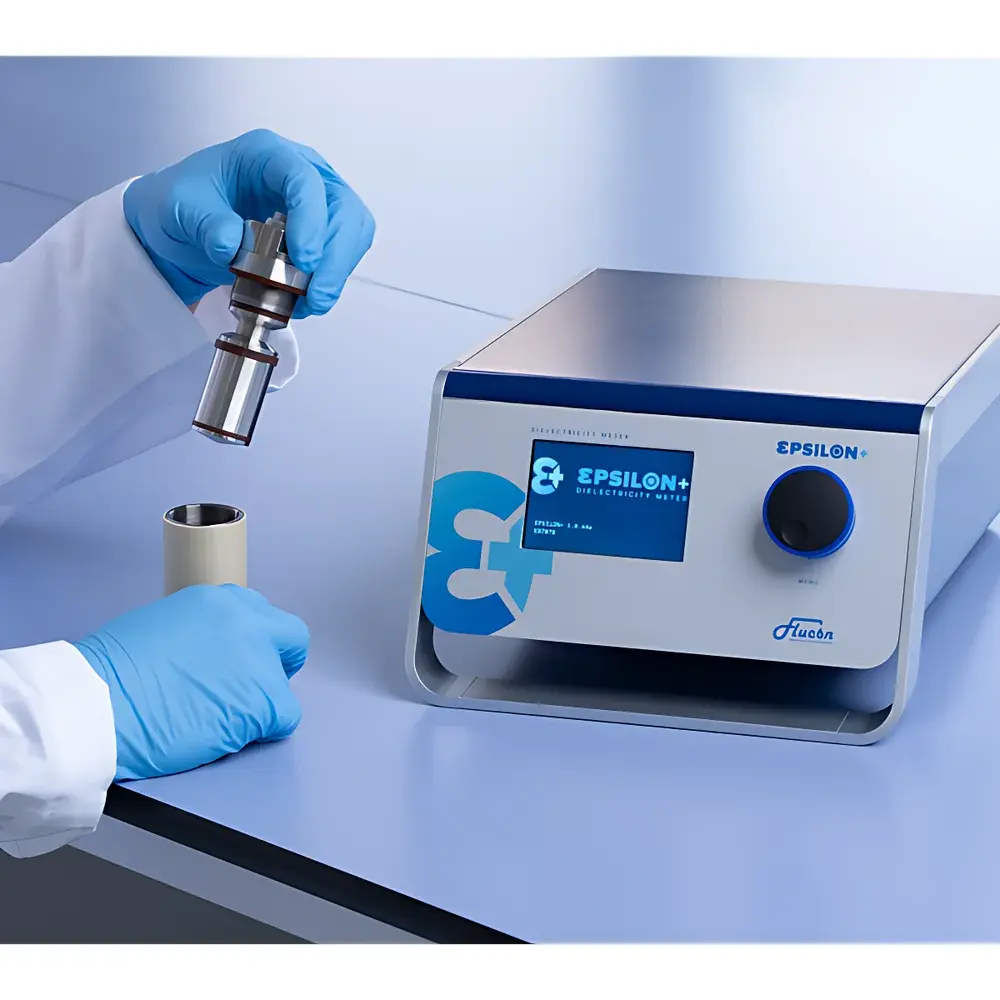
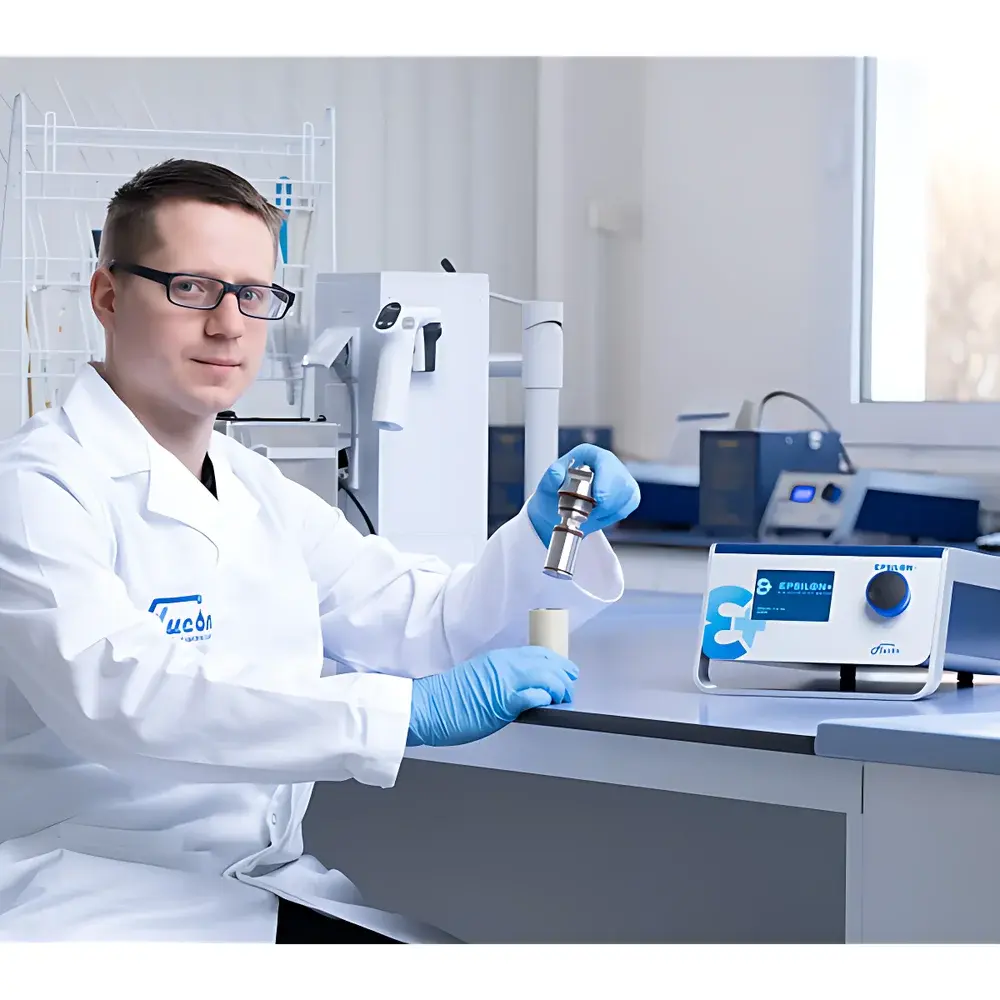
Flucon LAMBDA Thermal Conductivity Analyzer (Hot Wire Method)
| Brand | Flucon / flucon fluid control GmbH |
|---|---|
| Origin | Germany |
| Manufacturer Type | Authorized Distributor |
| Origin Category | Imported |
| Model | LAMBDA |
| Instrument Type | Hot Wire Method |
| Continuous Sample Capacity | Multiple samples |
| Test Environment | High-Temperature Operation |
| Thermal Conductivity Range | 10–2000 W/(m·K) |
| Accuracy | ±0.1% of reading |
| Dimensions (L×W×H) | 370 × 235 × 150 mm |
| Repeatability | 98–99% |
| Operating Temperature Range | −50 to +300 °C |
| Sample Forms | Liquids, colloids, powders |
| Compliance | ASTM D7896-19 |
Overview
The Flucon LAMBDA Thermal Conductivity Analyzer is a precision-engineered hot wire method instrument designed for the accurate and rapid determination of thermal conductivity (λ) in homogeneous and heterogeneous fluid-phase materials—including liquids, colloidal dispersions, and fine powders. Based on the transient hot wire technique, the system measures the rate of temperature rise in a thin metallic wire immersed in the sample after a controlled step input of electrical power. This principle enables direct calculation of λ from the time-dependent thermal response, independent of natural convection effects—making it especially suitable for low-viscosity fluids and thermally stable suspensions where conventional guarded-hot-plate or laser-flash methods are impractical. The LAMBDA operates across an extended temperature range (−50 °C to +300 °C) under ambient or pressurized conditions (up to 35 bar), supporting both static and dynamic thermal profiling protocols required in advanced fluid formulation, heat transfer fluid development, and nanofluid characterization.
Key Features
- Transient hot wire measurement principle compliant with ASTM D7896-19 for thermal conductivity of liquids and colloids
- Wide thermal conductivity range: 10–2000 W/(m·K), accommodating both highly insulating media (e.g., silicone oils) and conductive nanofluids
- High repeatability (98–99%) and accuracy (±0.1% of reading) validated against NIST-traceable reference standards
- Compact benchtop design (370 × 235 × 150 mm) optimized for integration into QC labs, R&D facilities, and pilot-scale process environments
- Minimal sample requirement: only 40 mL standard volume; down to 10 mL for specialized configurations using micro-volume cells
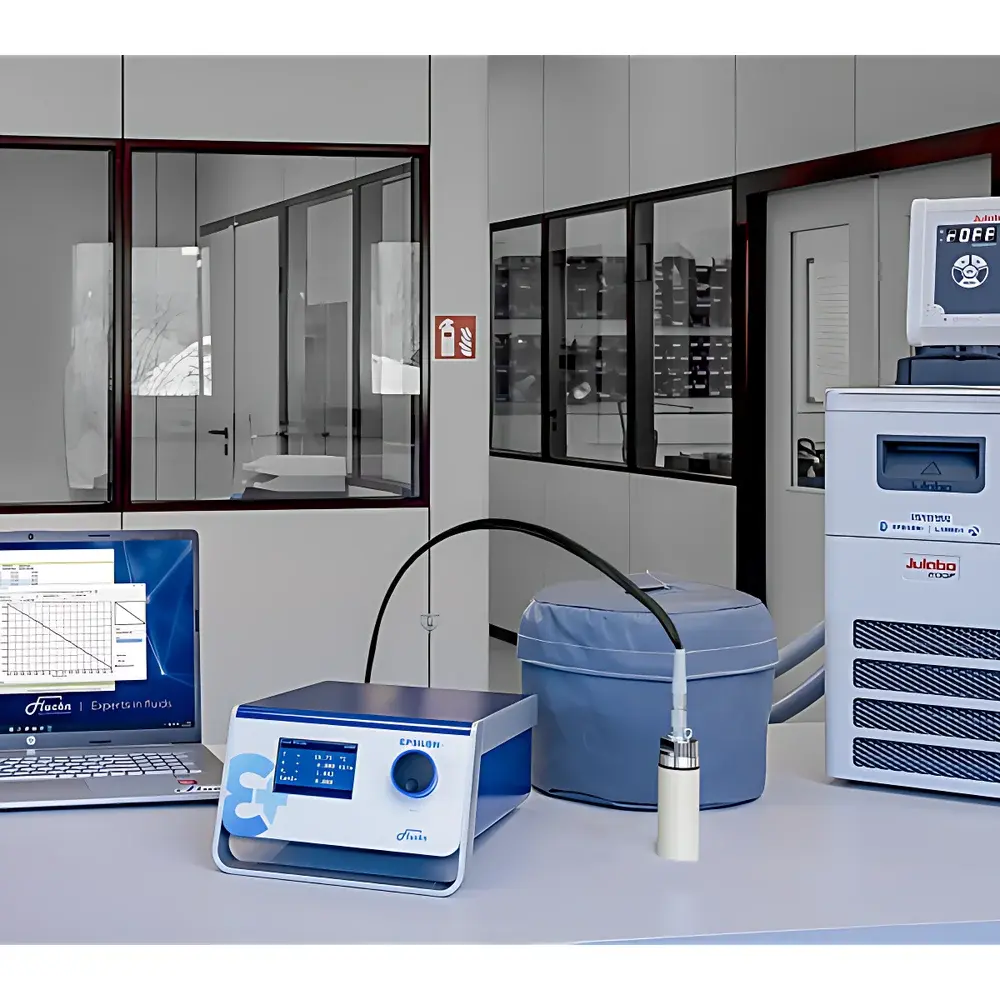
- Integrated temperature control with optional external thermostatic bath support for precise isothermal or ramped testing
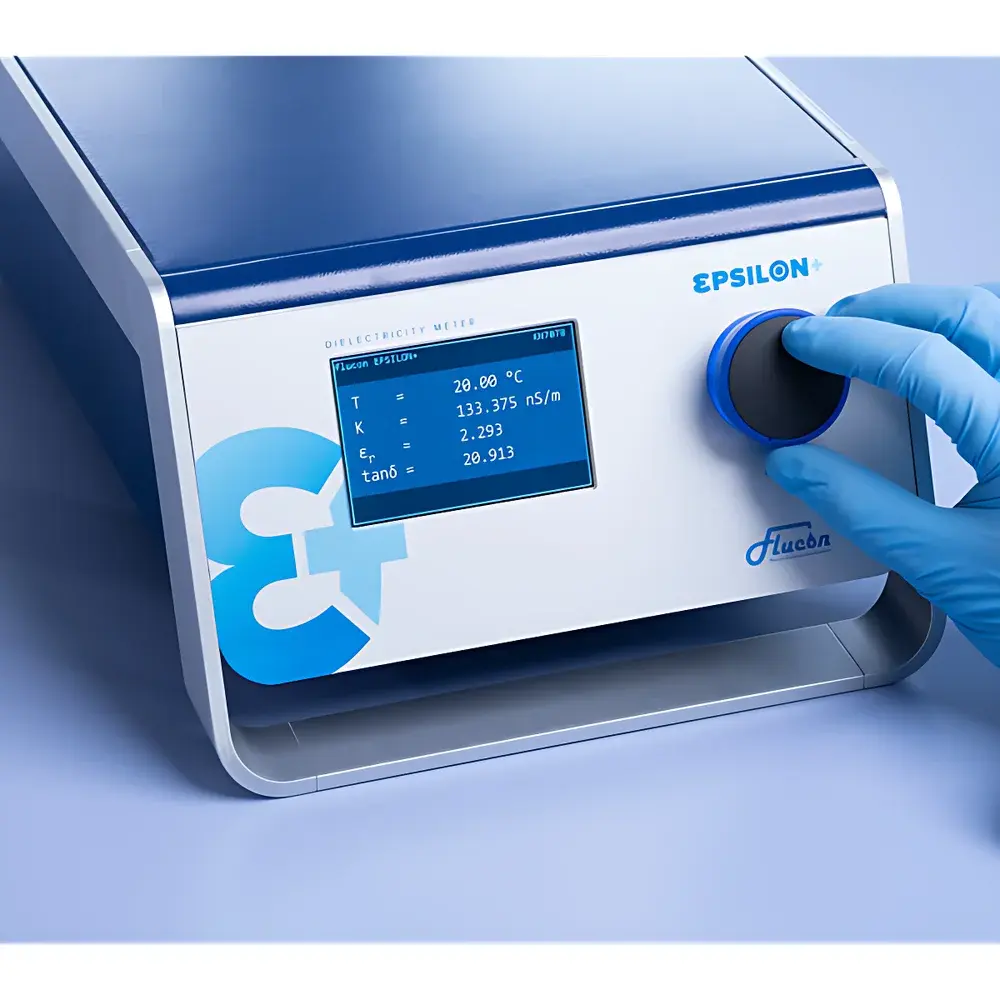
- Real-time dual-parameter output: simultaneous display and logging of thermal conductivity (λ) and sample temperature at user-defined intervals (~30 s)
Sample Compatibility & Compliance
The LAMBDA analyzer is validated for use with Newtonian and non-Newtonian liquids, stable colloidal systems (e.g., metal oxide nanofluids, polymer dispersions), and dry or lightly agglomerated powders—provided particle size distribution remains within the effective diffusion length of the hot wire sensor during measurement. It excludes strongly electrically conductive or corrosive media unless housed in chemically resistant sample cells (e.g., Hastelloy or sapphire-lined vessels). All measurements adhere to ASTM D7896-19, which specifies procedural requirements for hot wire-based thermal conductivity determination in fluids, including calibration traceability, probe immersion depth, power pulse duration, and data acquisition window selection. The system supports GLP-compliant operation through audit-trail-enabled software (see Software & Data Management), and its mechanical and electrical architecture conforms to IEC 61010-1 for laboratory equipment safety.
Software & Data Management
The LAMBDA is operated via Flucon’s proprietary LAMBDA Control Suite—a Windows-based application supporting real-time monitoring, automated test sequencing, and post-acquisition curve fitting using the standard logarithmic slope method per ASTM D7896-19. Raw voltage vs. time datasets are stored in HDF5 format with embedded metadata (timestamp, operator ID, calibration certificate ID, environmental conditions). The software provides built-in tools for outlier detection, baseline correction, and uncertainty propagation based on ISO/IEC Guide 98-3 (GUM). Export options include CSV, PDF reports, and XML for LIMS integration. For regulated environments, optional 21 CFR Part 11 compliance packages are available, featuring electronic signatures, role-based access control, and immutable audit logs covering all parameter changes, calibration events, and result approvals.
Applications
- Thermal characterization of heat transfer fluids (HTFs) used in concentrated solar power (CSP) and industrial waste-heat recovery systems
- Development and quality control of dielectric coolants for EV battery thermal management and high-power electronics
- Structure–property correlation studies in nanofluids, where λ enhancement is evaluated as a function of nanoparticle loading, surface functionalization, and dispersion stability
- Temperature-dependent λ mapping of lubricants, hydraulic fluids, and transformer oils across service-relevant ranges (−40 °C to +150 °C)
- Validation of computational fluid dynamics (CFD) input parameters for multiphase flow simulations involving phase-change materials (PCMs) and slurries
- Supporting ASTM E2584 and ISO 22007-2 interlaboratory comparison programs for thermal property metrology
FAQ
What sample preparation is required prior to measurement?
Samples must be degassed (if volatile or air-sensitive) and homogenized prior to loading. No filtration or dilution is necessary unless particulates exceed 5 µm in diameter—larger particles may interfere with wire thermal boundary layer development.
Can the LAMBDA measure gases or aerogels?
No—the hot wire method is not applicable to low-density gases or highly porous solids due to insufficient thermal coupling and dominant edge effects. The system is strictly validated for condensed-phase materials with thermal diffusivity ≥ 1 × 10⁻⁸ m²/s.
Is pressure control integrated into the base system?
The standard LAMBDA configuration operates at ambient pressure. Optional high-pressure cells (0–35 bar) are available as add-on modules with compatible thermostats and safety interlocks.
How is calibration performed and how often is it recommended?
Calibration uses certified reference liquids (e.g., distilled water, toluene, ethylene glycol) traceable to NIST SRM 1451a/b. Initial factory calibration is valid for 12 months; annual recalibration is recommended, or after any mechanical impact, sensor replacement, or significant environmental shift.
Does the system support unattended batch testing?
Yes—via programmable temperature ramps and auto-triggered measurement sequences, up to 99 sample profiles can be queued and executed without operator intervention, with email/SNMP alerts upon completion or error detection.



