Fluid Void Fraction Monitor B/S POP by A2 Photonic Sensors
| Brand | A2 Photonic Sensors |
|---|---|
| Origin | France |
| Manufacturer Type | Authorized Distributor |
| Origin Category | Imported |
| Model | B/S POP |
| Pricing | Available Upon Request |
Overview
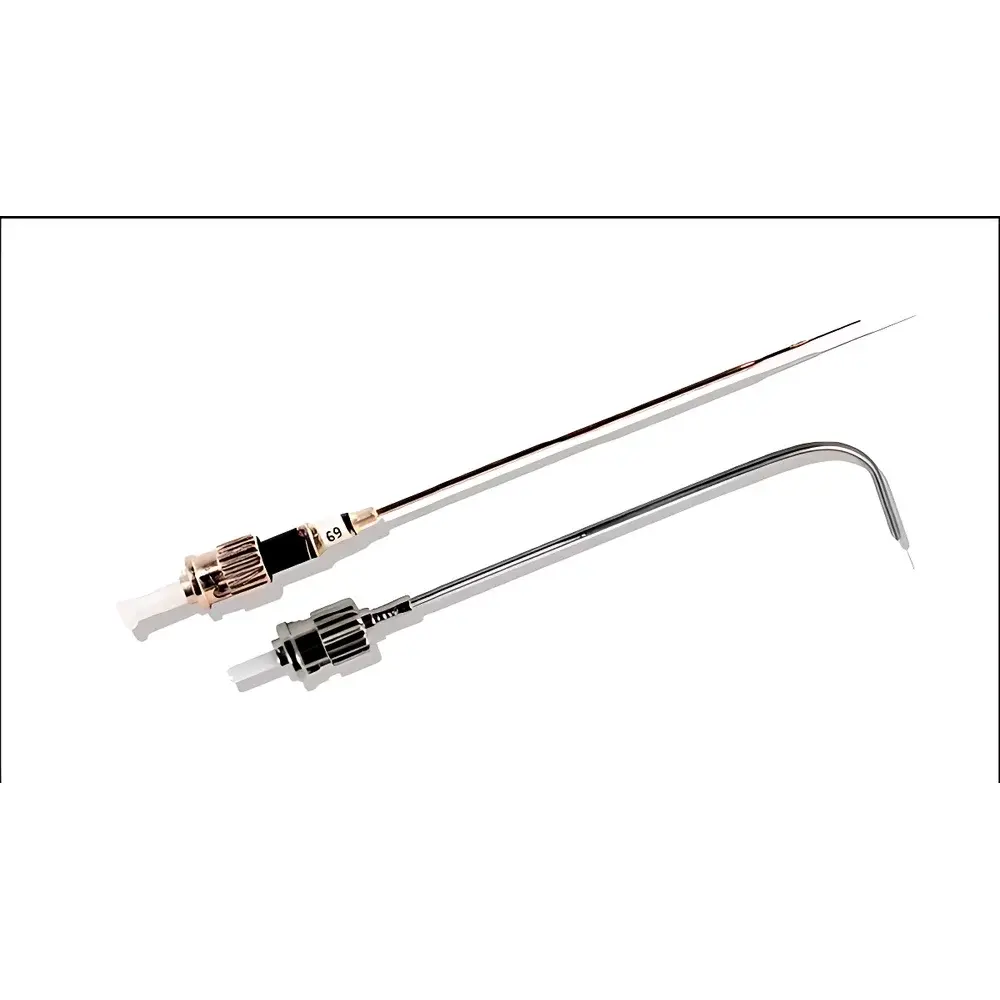
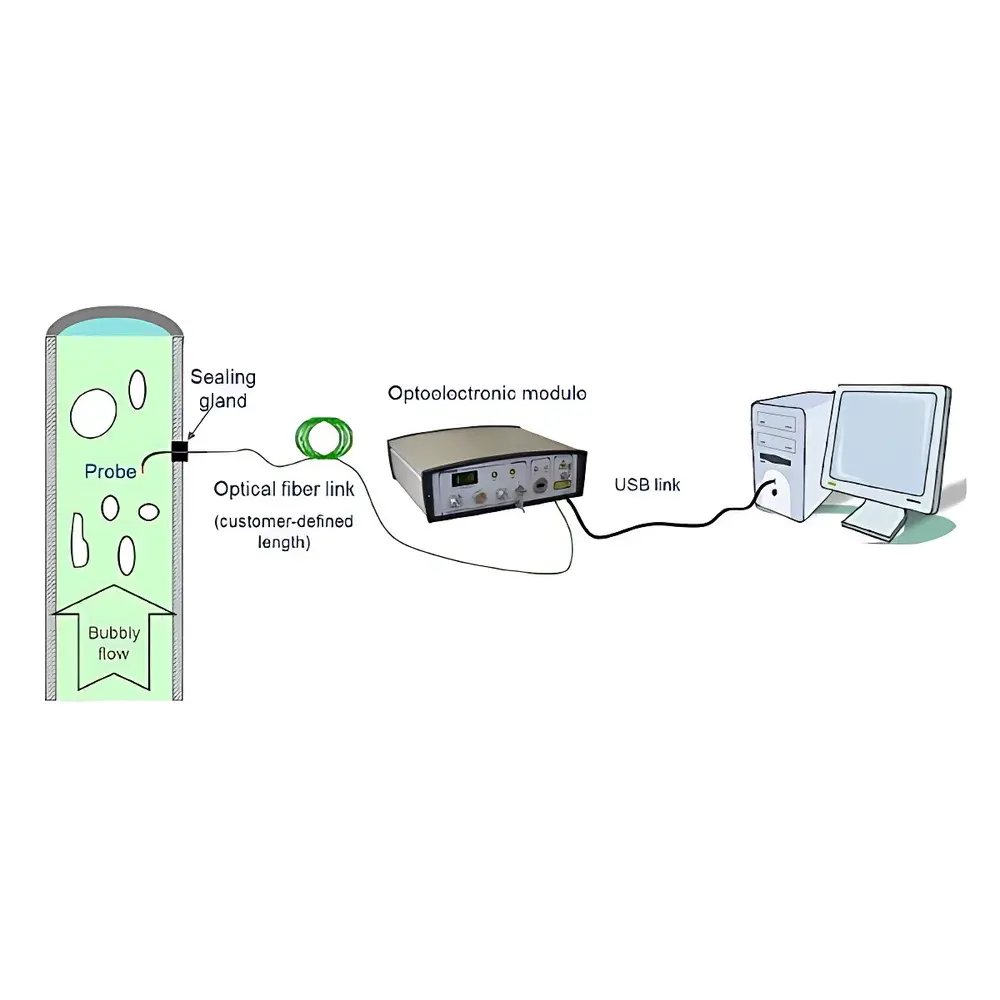
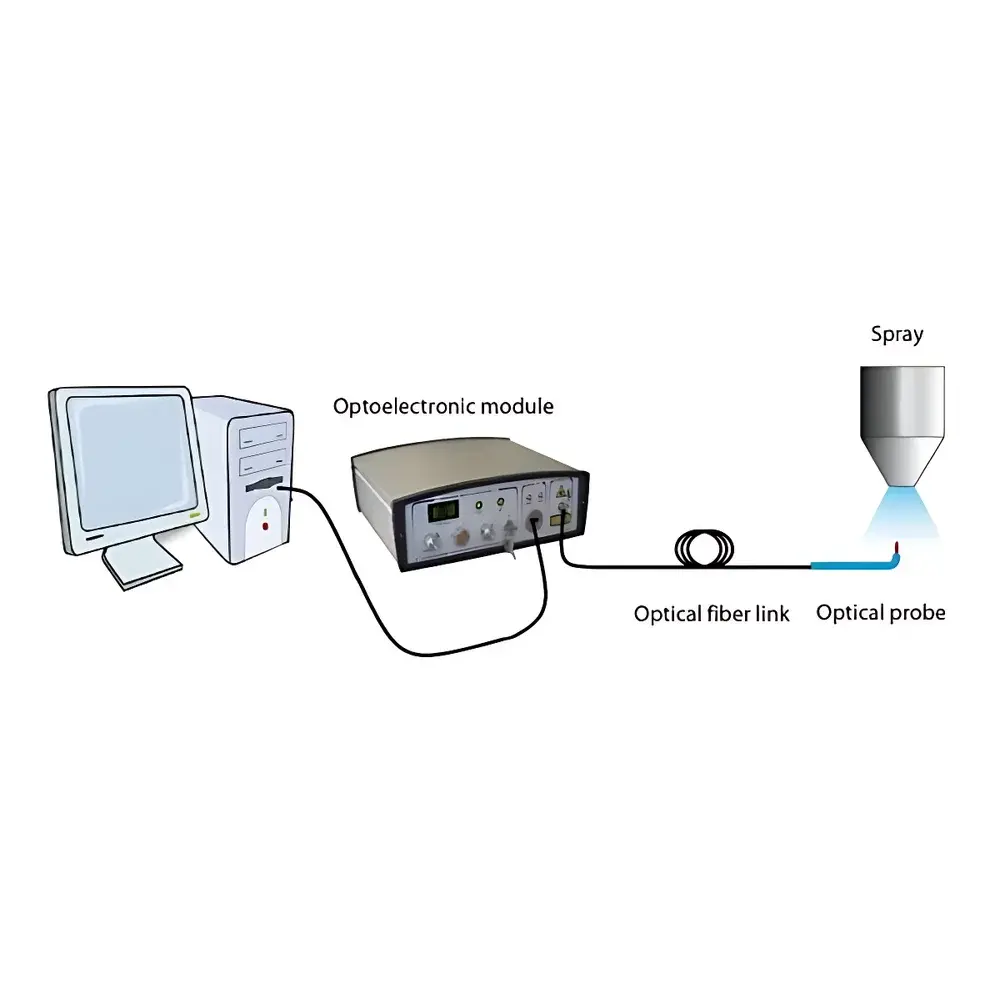
The A2 Photonic Sensors B/S POP Fluid Void Fraction Monitor is a specialized single-optical-probe instrument engineered for real-time, in-situ characterization of gas–liquid two-phase flows—particularly bubbly flow regimes and spray systems. It operates on the principle of internal back-reflection photometry: a collimated laser beam is coupled into a sapphire-tipped optical probe, where light reflects internally at the solid–fluid interface without requiring transmission through the flowing medium. This design eliminates dependence on fluid optical transparency, bubble refractive index, or geometric assumptions beyond spherical symmetry—and enables robust operation in opaque, highly scattering, or optically dense media (e.g., slurries, emulsions, high-void-fraction sprays). Unlike conventional imaging or conductivity-based methods, the B/S POP delivers localized, point-wise measurements of void fraction, bubble velocity, and chord length distribution—each derived from statistically significant temporal signal signatures captured at kHz sampling rates. The system is calibrated for bubble diameters ≥500 µm; sub-millimeter resolution requires complementary instrumentation (e.g., high-speed shadowgraphy or phase-Doppler anemometry), which A2PS supports via application-specific system integration.
Key Features
- Single-point, non-intrusive optical probe with sapphire sensing tip rated for temperatures up to 250 °C and pressures up to 200 bar
- Internal back-reflection detection geometry—no reliance on fluid transmissivity or bubble shape uniformity
- Real-time acquisition of three primary parameters: local void fraction (φ), bubble axial velocity (Vb), and chord length distribution (CLD)
- Operational flow velocity range: 0.1–25 m/s (extendable to 40 m/s with optional high-bandwidth electronics)
- Probe diameter as small as 3.2 mm—minimizing flow disturbance and enabling installation in compact or high-turbulence zones
- Ruggedized stainless-steel housing compliant with IP67 and ATEX Zone 1/21 certification for hazardous environments
Sample Compatibility & Compliance
The B/S POP is validated for use across industrial and research-grade gas–liquid systems—including vertical/horizontal pipes, risers, nozzles, and spray chambers. It accommodates Newtonian and non-Newtonian liquids (e.g., water, glycerol–water mixtures, crude oil, polymer solutions) and gases (air, nitrogen, CO2, steam). Measurement integrity is maintained under conditions of high particle loading (up to 30 vol% suspended solids), elevated temperature (≤250 °C), and pressure (≤200 bar). The system adheres to ISO 5167 (flow measurement standards), ASTM D975 (fuel spray characterization), and IEC 61508 (functional safety for measurement devices). Data traceability meets GLP and GMP requirements when configured with audit-trail-enabled software modules compliant with FDA 21 CFR Part 11.
Software & Data Management
Acquisition and analysis are performed using A2PS’s proprietary POP-Analyzer Suite, a Windows-based application supporting synchronized multi-channel data logging, real-time spectral filtering, and automated chord-to-diameter conversion assuming spherical bubbles (via Rosin–Rammler or log-normal fitting). Raw time-series signals (photodiode voltage vs. time) are stored in HDF5 format for post-processing interoperability with MATLAB, Python (NumPy/Pandas), or LabVIEW. Export options include CSV, Excel, and XML with metadata tags (timestamp, probe ID, calibration coefficients, environmental conditions). Optional cloud synchronization enables remote monitoring and cross-site comparative analysis for process validation studies.
Applications
- Nuclear reactor thermal-hydraulics: void fraction mapping in boiling channels and emergency core cooling systems
- Chemical process engineering: quantification of mass transfer efficiency in bubble column reactors and stirred tanks
- Oil & gas production: slug flow diagnostics in multiphase pipelines and downhole gas–liquid ratio (GLR) estimation
- Aerospace propulsion: spray breakup characterization in liquid rocket injectors and fuel atomizers
- Pharmaceutical manufacturing: monitoring of gas-sparged bioreactors and lyophilization chamber vapor flow dynamics
- Environmental engineering: air–water interface studies in wastewater aeration basins and flue gas desulfurization scrubbers
FAQ
What is the minimum detectable bubble size?
The B/S POP is optimized for bubbles ≥500 µm in equivalent spherical diameter. Smaller features require complementary techniques such as high-speed imaging or PDPA.
Can the probe be used in conductive or corrosive fluids?
Yes—the sapphire tip and Hastelloy C-276 wetted materials ensure compatibility with aggressive media including seawater, HCl solutions, and sour gas condensates.
Is calibration required between installations?
Factory calibration is traceable to NIST standards; field verification uses certified glass microspheres or known-velocity air–water test loops. No user recalibration is needed under stable thermal–mechanical conditions.
How is data synchronized with external sensors (e.g., pressure transducers, thermocouples)?
The system provides TTL trigger I/O and IEEE 1588 PTP support for sub-millisecond time alignment across distributed sensor networks.
Does the software support automated report generation for regulatory submissions?
Yes—customizable templates generate PDF reports with embedded raw data, statistical summaries, uncertainty budgets, and electronic signatures per 21 CFR Part 11 requirements.