
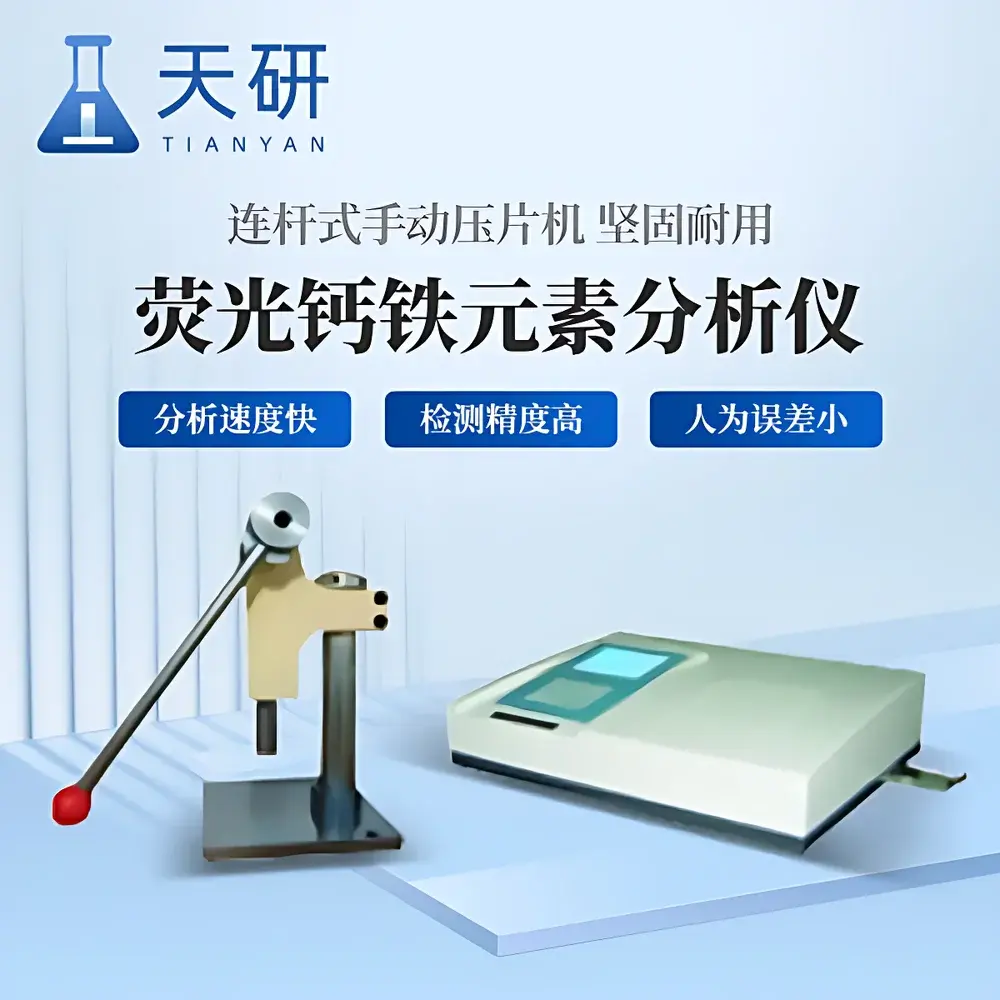
Fluorescence Calcium and Iron Elemental Analyzer TY-Ca08 by Tianyan
| Key | Brand: Tianyan (Shandong Tianyan Instrument Co., Ltd.) |
|---|---|
| Model | TY-Ca08 |
| Origin | Shandong, China |
| Manufacturer Type | Direct Manufacturer |
| Power Supply | AC 220 V, 50 Hz |
| Operating Temperature Range | 5–40 °C |
| Power Consumption | ≤30 W |
| Dimensions (W×D×H) | 468 × 368 × 136 mm |
| Weight | 13.8 kg |
| Analysis Time | 15 × n seconds (n ∈ ℕ) |
| recommended default | 30 s |
| CaO Quantification Range | 0.1–100 wt% |
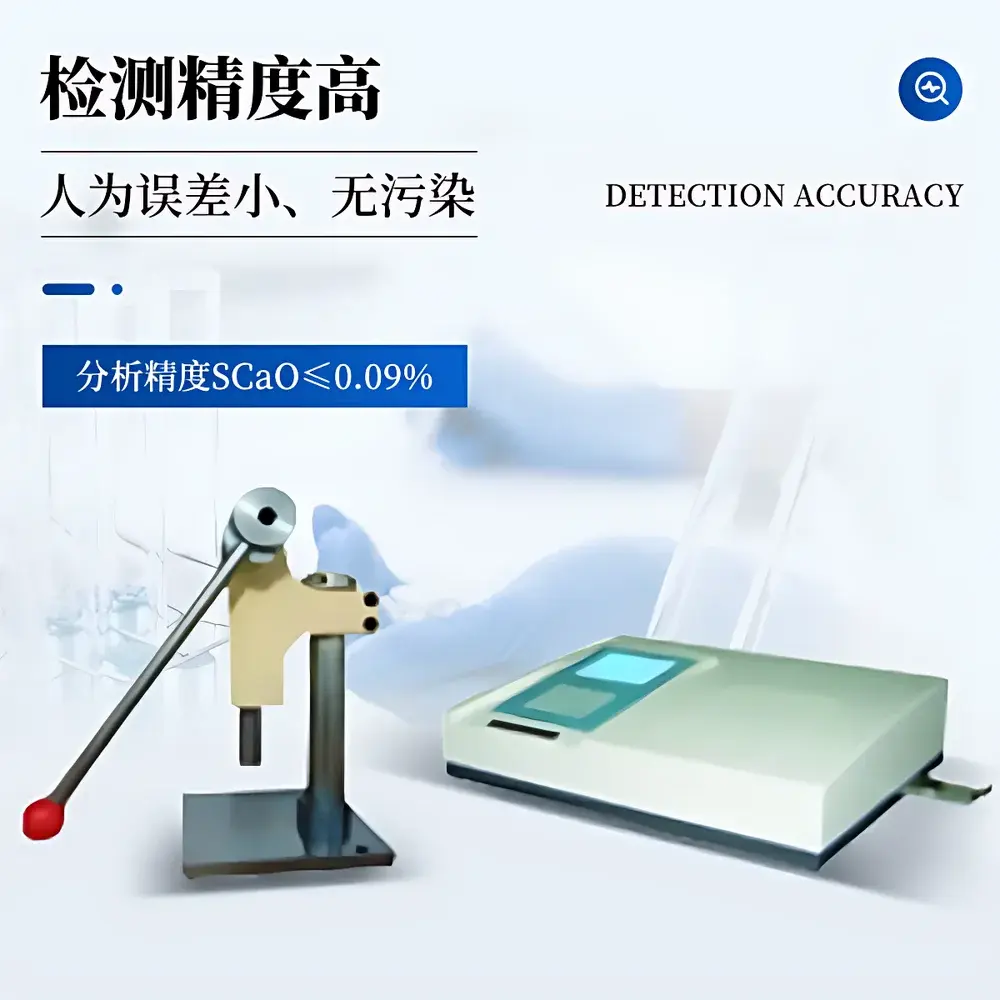
| CaO Precision (Standard Deviation) | ≤0.09% |
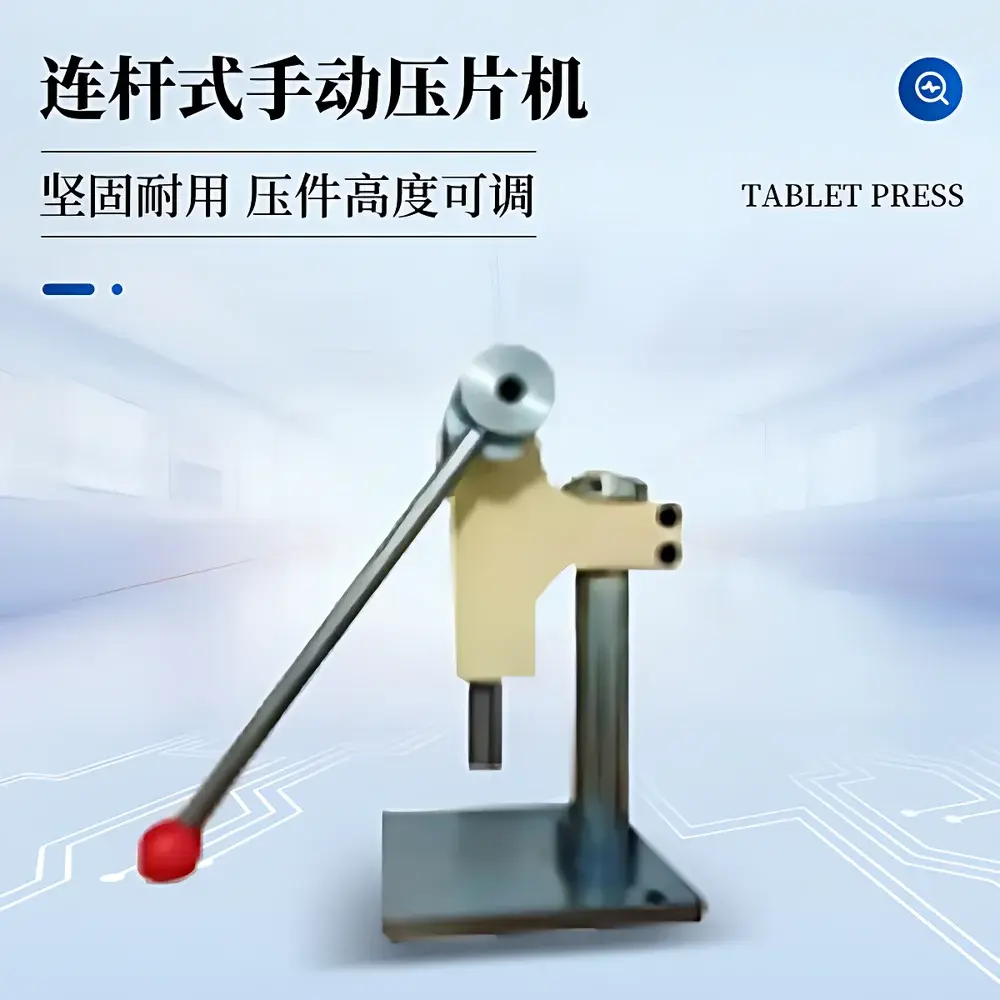
| Sample Preparation | Manual toggle-type tablet press with adjustable die cavity height |
| Compliance | Designed for routine industrial QA/QC per ISO 29581-1 (cement), ASTM C114 (standard test methods for chemical analysis of hydraulic cement) |
Overview
The Tianyan TY-Ca08 Fluorescence Calcium and Iron Elemental Analyzer is a benchtop energy-dispersive X-ray fluorescence (EDXRF) spectrometer engineered for rapid, non-destructive quantification of calcium (Ca) and iron (Fe) — primarily as CaO and Fe2O3 — in powdered industrial materials. It operates on the fundamental principle of EDXRF: primary X-rays excite inner-shell electrons in sample atoms; upon electron relaxation, characteristic secondary X-rays are emitted at energies unique to each element. The detector collects these emissions, and integrated spectral deconvolution algorithms convert intensity ratios into quantitative oxide concentrations. Unlike wavelength-dispersive systems, the TY-Ca08 employs a compact, low-power X-ray tube and Si-PIN semiconductor detector optimized for mid-Z elements, delivering sufficient resolution for Ca (3.69 keV) and Fe (6.40 keV) without cryogenic cooling. Its design prioritizes robustness, operational simplicity, and repeatability in factory-floor or quality control laboratory environments where high-throughput screening of raw materials — especially limestone, coal ash, cement clinker, slag, and gypsum — is required.
Key Features
- Optimized EDXRF architecture with stable micro-focus X-ray source and thermoelectrically cooled Si-PIN detector for consistent peak resolution and background suppression.
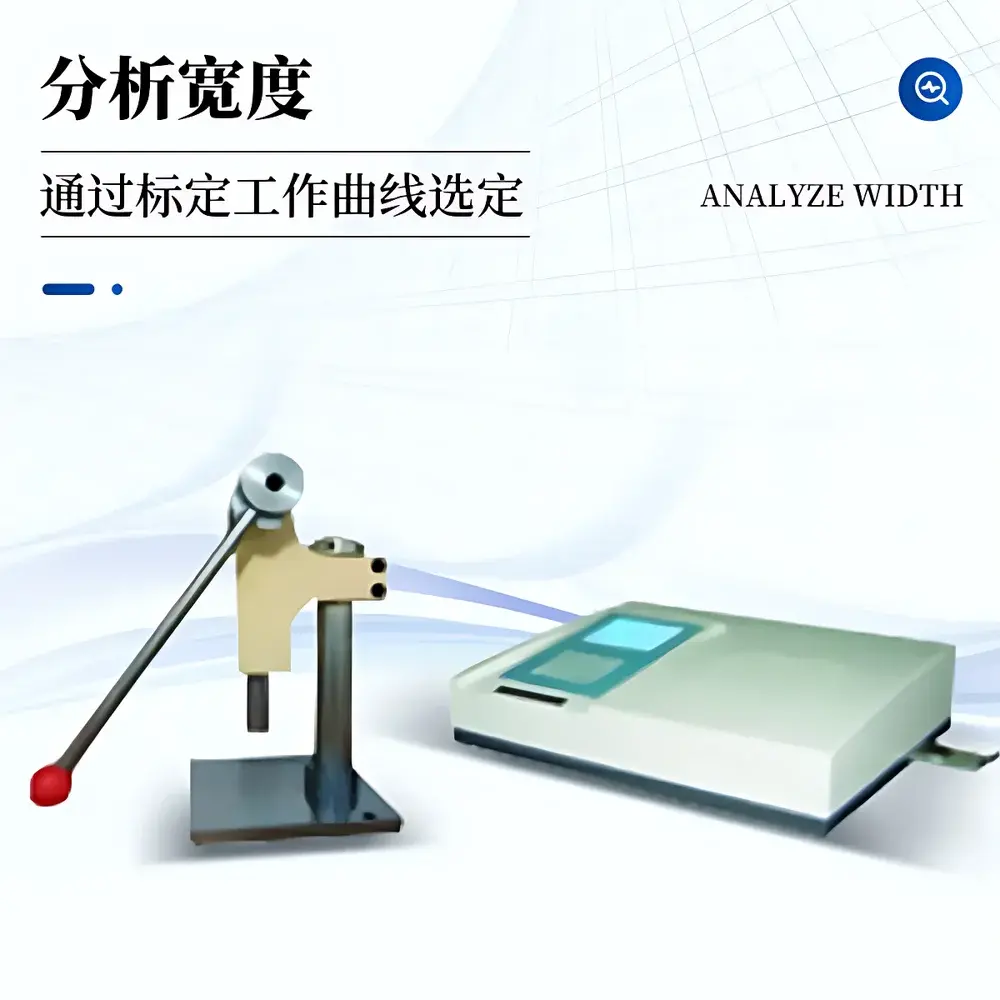
- User-defined calibration curves: Pre-loaded or custom-built working curves allow precise quantification across the full CaO range (0.1–100 wt%), accommodating diverse matrix effects in heterogeneous samples.
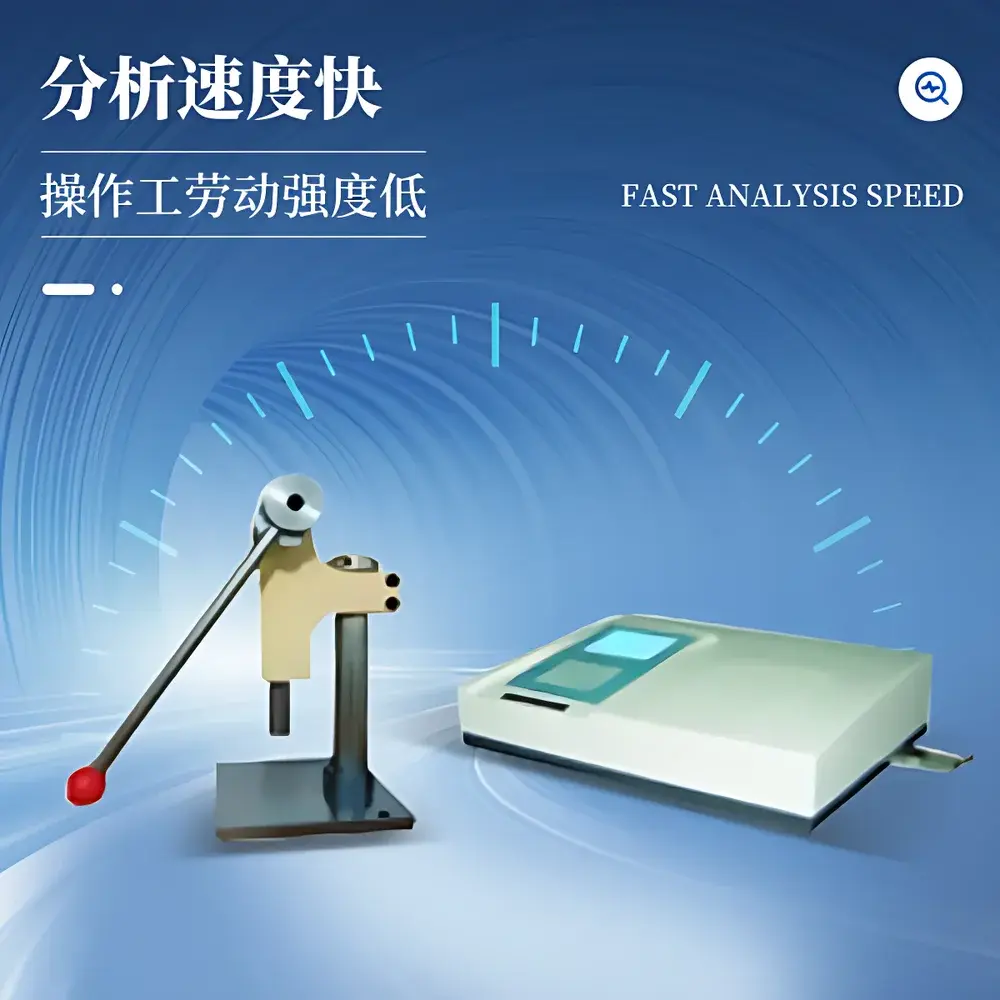
- Programmable analysis duration: Total measurement time is configurable in 15-second increments (e.g., 15 s, 30 s, 45 s), enabling trade-offs between precision and throughput; 30 s is empirically validated for optimal signal-to-noise ratio under typical sample mass and homogeneity conditions.
- Integrated manual toggle press: Rigid lever-action tablet press ensures reproducible pellet density (critical for XRF matrix uniformity), with continuously adjustable die height to accommodate varying powder volumes and binder ratios.
- Low thermal drift design: Electronics and optical path are thermally stabilized to maintain calibration integrity across ambient temperatures from 5 °C to 40 °C — eliminating need for climate-controlled rooms in most industrial settings.
- Energy-efficient operation: Total system power draw ≤30 W supports continuous deployment on standard lab circuits without dedicated line conditioning.
Sample Compatibility & Compliance
The TY-Ca08 accepts pressed pellets (typically 32 mm diameter, 4–6 mm thickness) prepared from dried, homogenized powders — including coal ash, limestone fines, cement raw meal, blast furnace slag, and desulfurization gypsum. Sample preparation follows ISO 29581-1 (cement) and ASTM C114 (hydraulic cement analysis) guidelines for grinding, drying, and pelletizing. While not certified to IEC 61000-4 electromagnetic compatibility standards, its shielding meets Class B limits for industrial environments. The instrument’s analytical protocol supports GLP-aligned documentation when paired with external LIMS; audit trails for calibration updates, measurement logs, and operator IDs can be exported in CSV format for regulatory review (e.g., internal QA audits per ISO/IEC 17025).
Software & Data Management
Bundled Windows-based acquisition software provides real-time spectrum visualization, automatic peak identification, and iterative least-squares fitting for overlapping Ca/Fe lines. Calibration management includes multi-point standardization, drift correction using reference blanks, and uncertainty estimation per ISO 11097. All measurement data — spectra, quantitative results, acquisition parameters, and operator metadata — are stored in a structured SQLite database. Export options include CSV, PDF reports (with embedded spectra), and XML for integration with enterprise quality systems. No cloud connectivity or remote access functionality is implemented, preserving data sovereignty and aligning with on-premise IT security policies common in manufacturing facilities.
Applications
- Routine CaO/Fe2O3 verification in cement kiln feed and finished clinker to ensure burnability and phase composition.
- Coal ash characterization for utility boiler feedstock blending and slagging/fouling prediction.
- Quality gate-check of limestone and dolomite additives used in flue gas desulfurization (FGD) systems.
- Process control monitoring of iron ore concentrates and sinter return fines in metallurgical plants.
- Educational use in materials science laboratories for hands-on XRF methodology instruction and matrix effect studies.
FAQ
Does the TY-Ca08 require liquid nitrogen or Peltier cooling for the detector?
No. It uses a thermoelectrically cooled Si-PIN detector, eliminating consumables and enabling immediate startup.
Can it quantify elements other than Ca and Fe?
The factory calibration targets CaO and Fe2O3. With appropriate reference standards and re-calibration, it can quantify other mid-Z elements (e.g., Si, Al, S, K) — though accuracy depends on spectral interference and matrix matching.
What sample preparation accessories are included?
The system ships with a manual toggle press, standard 32-mm dies, a calibrated weight set, and polyethylene sample cups. Grinding mills and drying ovens are not included.
Is compliance with FDA 21 CFR Part 11 supported?
No. The software does not provide electronic signatures, audit trail encryption, or role-based access control required for Part 11 compliance; it is intended for industrial QC, not regulated pharmaceutical or biotech applications.
How often must calibration be verified?
Daily verification using a certified control sample is recommended; full recalibration is advised every 30 days or after hardware maintenance, per ISO/IEC 17025 clause 7.7.




