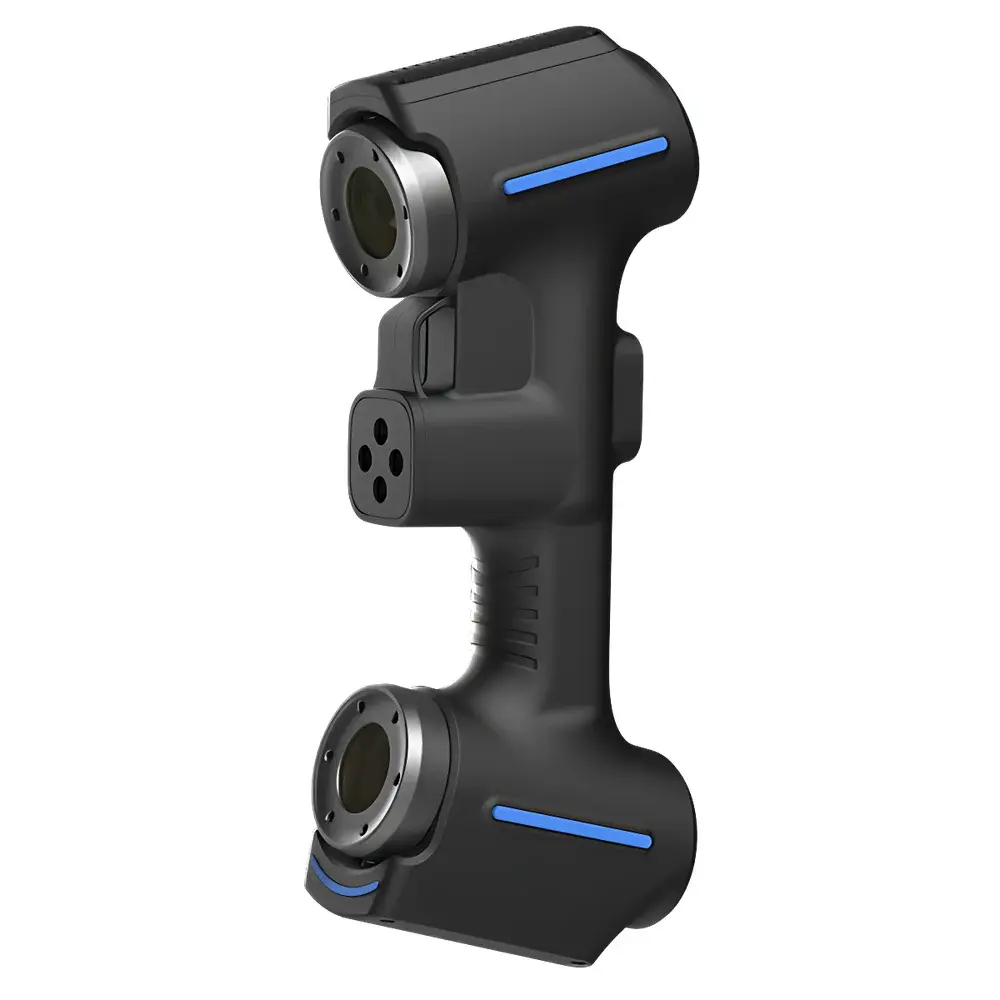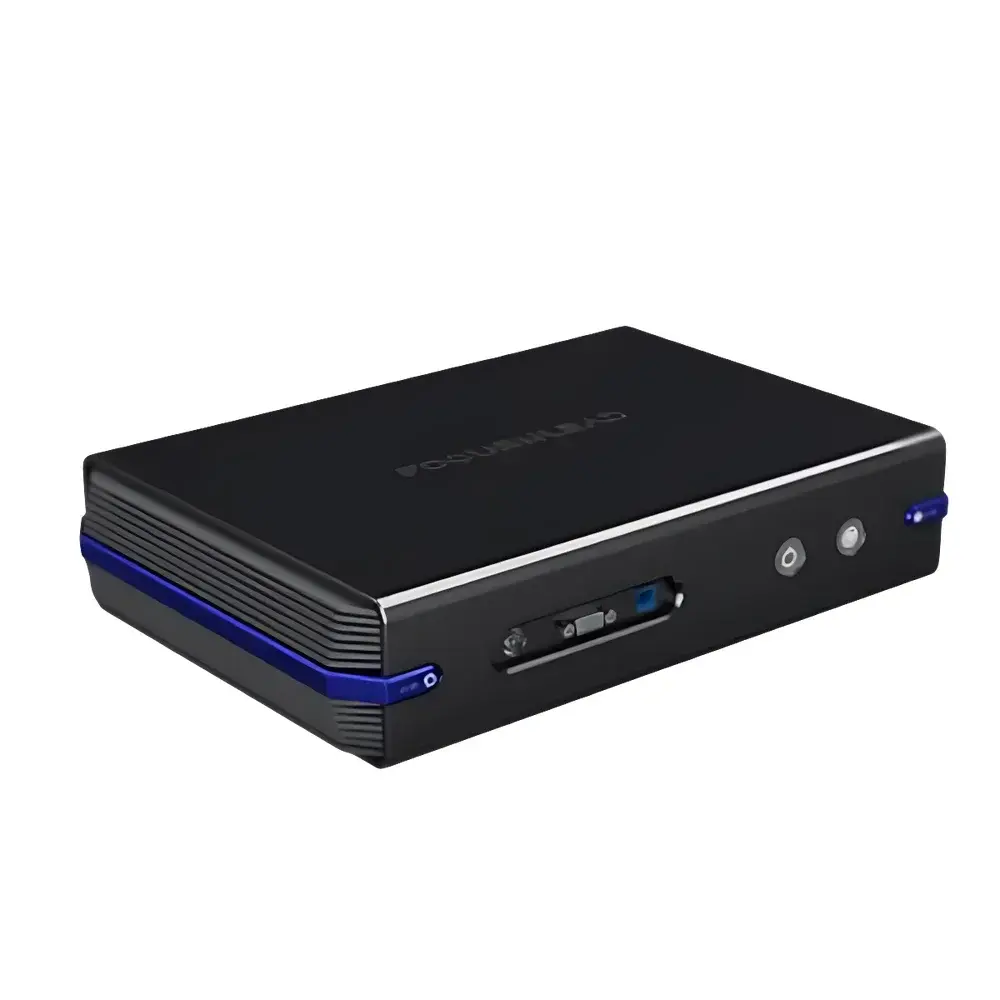
Focusnlead MDI-20M11 Micro-Probe Laser Interferometer
| Brand | Focusnlead |
|---|---|
| Origin | Shenzhen, China |
| Manufacturer Type | OEM Manufacturer |
| Country of Origin | China |
| Model | MDI-20M11 |
| Pricing | Upon Request |
| Measurement Axes | Single-Axis (Triggered) |
| Accuracy | 10 nm + 3×10⁻⁷L |
| Resolution | 0.1 nm |
| Maximum Velocity | 2 m/s |
| Measurement Range | 0–3 m |
| Probe Diameter | as small as Φ3.4 mm × 20 mm |
| Probe Types | Focused, Collimated, Long-Range Fiber-Coupled Options |
| Environmental Compatibility | UHV-Compatible Versions Available |
| Calibration Traceability | NIM (National Institute of Metrology, China) and Defense Class-I Metrology Stations |
Overview
The Focusnlead MDI-20M11 Micro-Probe Laser Interferometer is a fully indigenous, single-axis triggered interferometric displacement measurement system engineered for sub-nanometer metrology in demanding industrial and scientific environments. Based on heterodyne laser interferometry with stabilized He–Ne laser source and high-fidelity phase-quadrature detection, the MDI-20M11 delivers traceable displacement measurements with resolution down to 0.1 nm and linearity uncertainty specified as 10 nm + 3×10⁻⁷L (where L is measured distance in meters). Its optical architecture employs polarization-maintaining single-mode fiber coupling to a miniature probe head—enabling non-contact, drift-free position feedback without mechanical loading or thermal perturbation. The system’s core design philosophy emphasizes metrological integrity: all critical optical paths are thermally compensated, and phase interpolation electronics operate under real-time clock synchronization to ensure temporal coherence across high-speed acquisition (up to 2 m/s). Unlike conventional bulk-optic interferometers, the MDI-20M11 integrates the interferometric reference and measurement beams within a compact, field-deployable fiber-optic probe—making it suitable for integration into vacuum chambers, cryogenic stages, and multi-axis nanopositioning platforms where space, mass, and environmental constraints preclude traditional setups.
Key Features
- Sub-atomic resolution: 0.1 nm displacement resolution via 4× digital quadrature interpolation and low-noise analog front-end
- Compact micro-probe form factor: Minimum probe dimensions of Φ3.4 mm × 20 mm; optimized for embedded OEM integration
- Fiber-coupled architecture: Polarization-maintaining single-mode fiber delivery enables flexible routing, vibration isolation, and compatibility with UHV (<10⁻⁹ mbar) and cleanroom environments
- High dynamic performance: Real-time linear displacement tracking at up to 2 m/s with ≤100 ns trigger latency (TTL/RS-422)
- Traceable calibration: Fully validated against national primary standards at NIM (China National Institute of Metrology) and certified by Defense Class-I Metrology Stations per JJG 702–2022
- Modular configuration support: Compatible with triggered single-axis, synchronized multi-axis (e.g., 4-axis coordinated motion), and independent multi-axis (e.g., 3-axis decoupled operation) topologies
Sample Compatibility & Compliance
The MDI-20M11 is designed for reflective surfaces with R > 5% (632.8 nm), including polished metals, dielectric-coated mirrors, and silicon wafers. It complies with ISO 230-2:2023 (Test Code for Machine Tools – Part 2: Determination of Accuracy and Repeatability of Positioning Numerically Controlled Axes) and supports implementation under ISO/IEC 17025:2017 accredited calibration workflows. For regulated environments—including semiconductor fab tool qualification and aerospace actuator validation—the system supports audit-ready data logging with timestamped metadata, enabling compliance with FDA 21 CFR Part 11 (electronic records/signatures) when deployed with compliant host software. Vacuum-rated probe variants meet ASTM E595 outgassing requirements and are qualified for use in synchrotron beamline instrumentation and space-qualified mechanisms.
Software & Data Management
The MDI-20M11 interfaces via USB 3.0 and RS-422 with cross-platform SDKs (C/C++, Python, LabVIEW, MATLAB) supporting deterministic real-time data streaming at ≥10 kHz sample rate. Firmware includes built-in linearization compensation tables, thermal drift correction coefficients (based on integrated NTC sensor), and configurable trigger edge detection. Raw phase data is output in IEEE 754 double-precision format with nanosecond-resolution timestamps. All measurement sessions generate structured JSON logs containing instrument ID, firmware version, environmental sensor readings (temperature, humidity), and full traceability metadata—facilitating GLP/GMP-aligned documentation and automated report generation per ISO/IEC 17025 clause 7.8.
Applications
- Semiconductor manufacturing: In situ calibration of piezo-driven wafer stages, overlay error mapping, and stepper alignment verification
- Precision machine tools: Real-time volumetric error compensation using multi-probe network configurations
- Advanced photonics: Active stabilization of interferometric optical benches and cavity length control in ultra-stable lasers
- Nanoscale metrology labs: Reference-grade calibration of capacitive and inductive displacement sensors (per ISO 18282)
- Synchrotron and FEL facilities: Beamline mirror positioning feedback under high-radiation, high-vacuum conditions
- Aerospace & defense: Inertial sensor characterization, gimbal axis metrology, and thermal distortion monitoring of composite structures
FAQ
What is the maximum measurable distance with the standard MDI-20M11 configuration?
The standard configuration supports up to 3 m of unambiguous linear displacement measurement; extended-range variants (up to 10 m) are available upon request with collimated probe optics.
Is the micro-probe compatible with ultra-high vacuum environments?
Yes—UHV-compatible probe variants (CF-40 flange mount, outgassing <1×10⁻¹² Pa·m³/s per ASTM E595) are offered with bake-out capability up to 150 °C.
How is measurement traceability ensured for regulatory audits?
Each unit ships with a NIM-traceable calibration certificate referencing national length standards; on-site recalibration services include full uncertainty budget reporting per GUM (JCGM 100:2008).
Can multiple MDI-20M11 units be synchronized for multi-axis motion analysis?
Yes—via external TTL trigger distribution or IEEE 1588 PTPv2 time synchronization; jitter <50 ns between axes enables coherent 3D trajectory reconstruction.
Does the system support real-time closed-loop control integration?
Yes—low-latency analog voltage output (±10 V, 16-bit) and digital position stream (USB/RS-422) enable direct integration with PID controllers and motion PLCs.