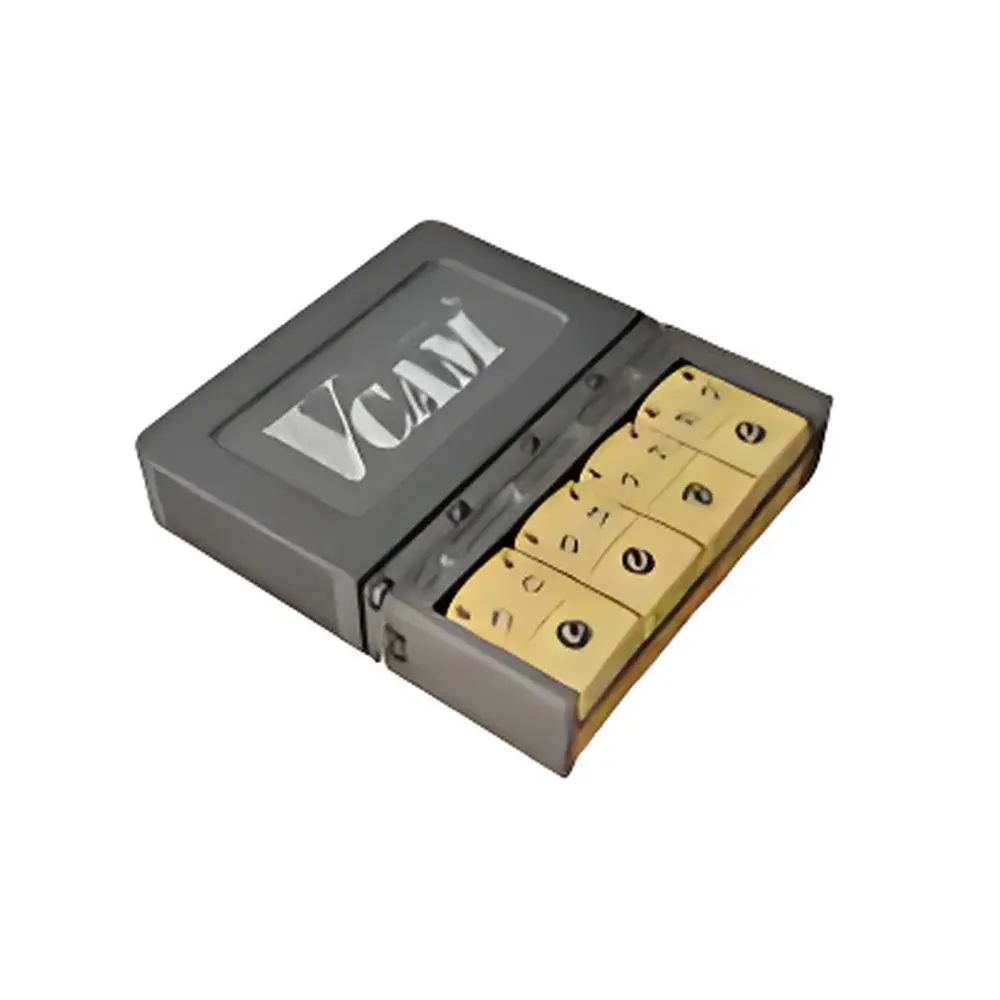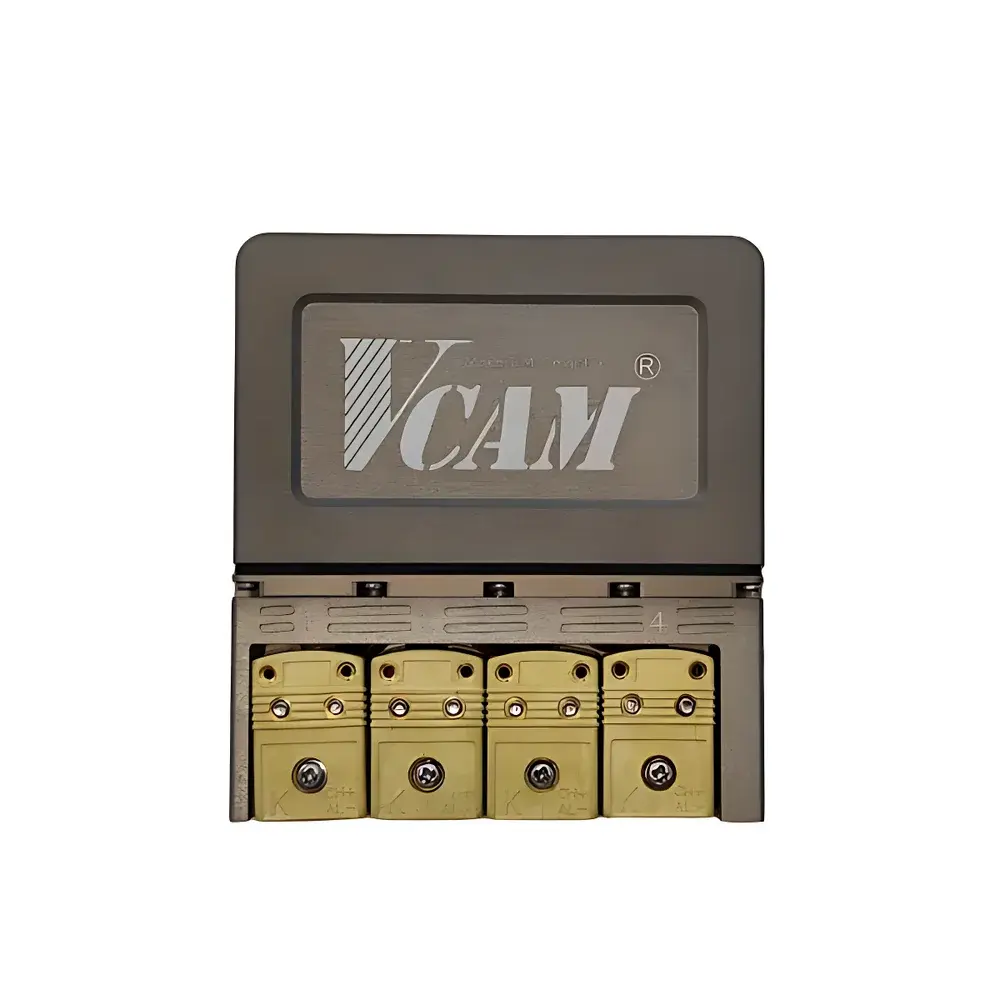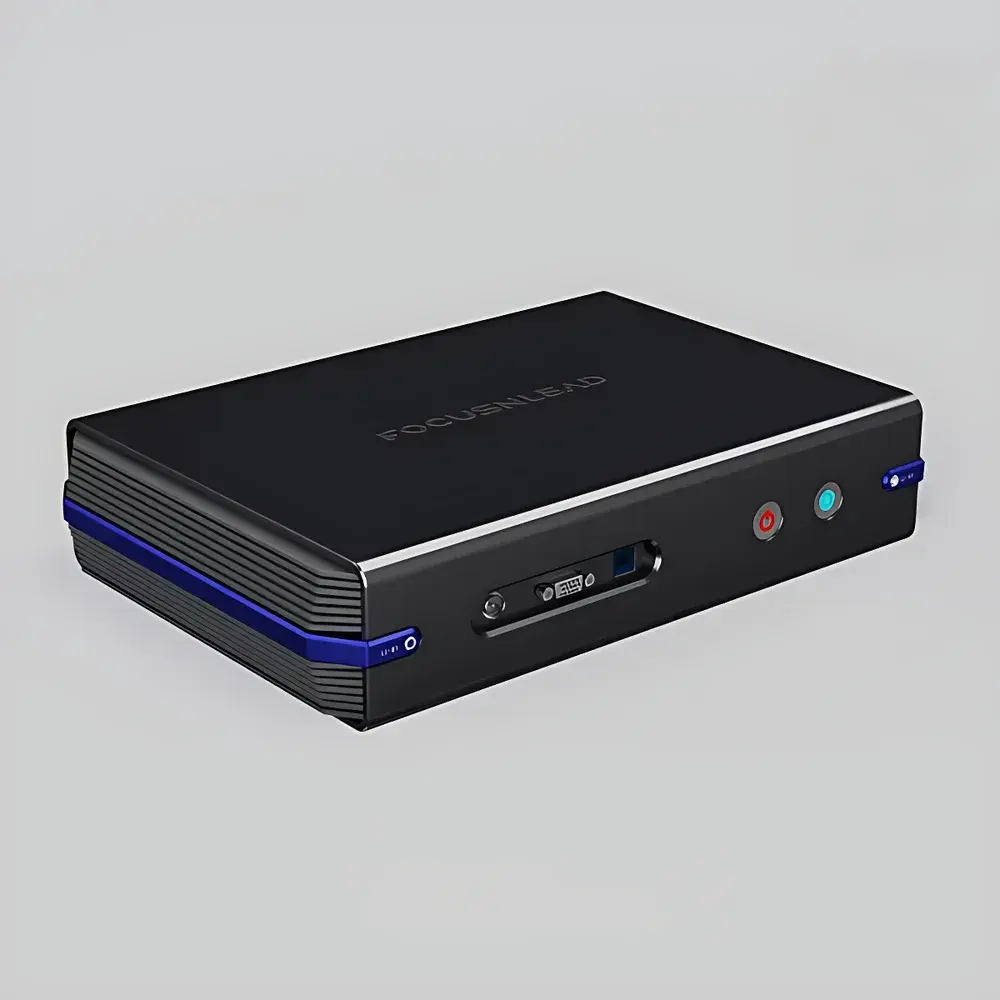
Focusnlead Micro-Probe Laser Interferometer
| Brand | Focusnlead |
|---|---|
| Origin | Shenzhen, China |
| Manufacturer Type | Original Equipment Manufacturer (OEM) |
| Product Category | Domestic High-Precision Laser Interferometer |
| Model | Micro-Probe Laser Interferometer |
| Pricing | Available Upon Request |
Overview
The Focusnlead Micro-Probe Laser Interferometer is a fully domestically developed, high-accuracy displacement measurement system engineered for sub-nanometer metrology in demanding industrial and research environments. Based on foundational optical metrology expertise from the Harbin Institute of Technology’s Ultra-Precision Optoelectronic Instrumentation Research Center, this interferometer implements heterodyne laser interferometry with stabilized He–Ne laser sources and quadrature detection architecture to deliver traceable, high-fidelity linear displacement data. Its core design emphasizes metrological integrity—measurements are directly traceable to the SI meter via calibration against national primary standards, validated by China’s National Institute of Metrology (NIM) and Class-I Defense Metrology Stations. The system supports single-axis up to quad-axis synchronous measurement configurations, enabling coordinated multi-degree-of-freedom motion analysis without cross-axis crosstalk. Unlike conventional bulk-head interferometers, its fiber-coupled micro-probe architecture decouples the optical head from the laser source, minimizing thermal drift and mechanical coupling—critical for integration into vacuum chambers, cryogenic stages, or compact motion platforms.
Key Features
- Fiber-integrated micro-probe design with minimum probe dimensions of Φ3.4 mm × 20 mm—enabling installation in space-constrained systems including vacuum-compatible and ultra-high-precision positioning stages.
- Sub-atomic resolution: 0.1 nm interpolation resolution with ≤±1 nm linearity error over full range (0–3 m), compliant with ISO 230-2:2014 test procedures for position accuracy verification.
- High-dynamic capability: Real-time displacement capture at up to 2 m/s velocity, supporting both continuous scanning and triggered step-and-settle measurements.
- Modular axis configuration: Available in trigger-synchronized single-axis, mechanically coupled multi-axis (e.g., 4-axis synchronized), and independently operated multi-axis (e.g., 3-axis decoupled) variants—facilitating flexible OEM integration and system-level calibration workflows.
- Optical probe variants include focusing-type, collimated-beam, and extended-range configurations—each optimized for specific beam delivery requirements, working distance constraints, and environmental conditions (e.g., UHV-rated versions with metal-sealed fiber feedthroughs).
Sample Compatibility & Compliance
The instrument is compatible with standard retroreflector targets (corner cubes, plane mirrors, and cat’s-eye retroreflectors) as well as custom-mounted reference surfaces. Probe mounting interfaces adhere to ISO 10360-2 mechanical tolerancing standards for coordinate measuring machine (CMM) accessories. All calibration reports include uncertainty budgets evaluated per GUM (JCGM 100:2008) and are issued with NIM-traceable certificates. The system meets electromagnetic compatibility requirements per GB/T 18268.1–2010 (IEC 61326-1:2012) and operates within temperature stability ranges of 15–25 °C (±0.5 °C/h) for certified metrological performance. For regulated environments, firmware supports audit-trail logging and user-access controls aligned with GLP/GMP documentation practices.
Software & Data Management
The proprietary Focusnlead Interferometry Suite provides real-time acquisition, live Lissajous visualization, and post-processing tools for velocity profiling, harmonic distortion analysis, and Abbe error compensation. Raw quadrature signals are streamed at 10 MHz sampling rate via PCIe or USB 3.2 Gen 2 interface. Software exports time-stamped displacement data in HDF5 and CSV formats, with metadata fields compliant with FAIR principles (Findable, Accessible, Interoperable, Reusable). Optional API support (C/C++, Python, LabVIEW) enables integration into automated calibration sequences and digital twin frameworks. Firmware updates follow secure signed-package protocols, and all configuration changes are logged with timestamp, operator ID, and checksum verification—supporting FDA 21 CFR Part 11 compliance when deployed in regulated manufacturing settings.
Applications
- Precision motion systems: Real-time position feedback for air-bearing stages, piezo-driven nanopositioners, and direct-drive linear motors in semiconductor lithography equipment and mask alignment platforms.
- Metrology & calibration: Acceptance testing of CMMs and laser trackers; calibration of capacitive/inductive displacement sensors; verification of stage repeatability per ISO 230-2 Annex B.
- Advanced manufacturing: In-process validation of machine tool volumetric accuracy; thermal drift compensation during CNC machining; optical component alignment in photolithography steppers and EUV mirror assembly.
- Academic & fundamental research: Nanopositioning validation in AFM/STM setups; beamline mirror stabilization in synchrotron facilities; microactuator characterization under controlled vacuum or low-temperature conditions.
FAQ
Is the measurement resolution of 0.1 nm verified under environmental control conditions?
Yes—the specified resolution is achieved under laboratory conditions meeting ISO 554:1976 (standard atmosphere: 20 ± 0.5 °C, 45–55% RH) and requires active temperature stabilization of the interferometer baseplate and retroreflector mount.
Can the micro-probe be integrated into ultra-high vacuum (UHV) systems?
Yes—UHV-compatible probe variants are available with stainless-steel housings, ceramic feedthroughs, and bake-out rated to 150 °C; optical fiber termination uses metal-sealed SMA905 connectors compliant with ASTM E2202-02.
Does the system support synchronization with external triggers or motion controllers?
Yes—TTL-compatible trigger input/output ports enable hardware-level synchronization with PLCs, motion controllers (e.g., Delta Tau PMAC), and data acquisition systems for deterministic timing in closed-loop control applications.
How is traceability to national standards documented?
Each delivered unit includes a factory calibration certificate referencing NIM Certificate No. [redacted for privacy], with measurement uncertainty expanded to k=2 (95% confidence) per ISO/IEC 17025:2017 requirements.
What software development resources are provided for custom integration?
A comprehensive SDK—including header files, dynamic libraries, example code (C++, Python), and NI LabVIEW VIs—is supplied with full documentation and version-controlled release notes via secure customer portal access.