
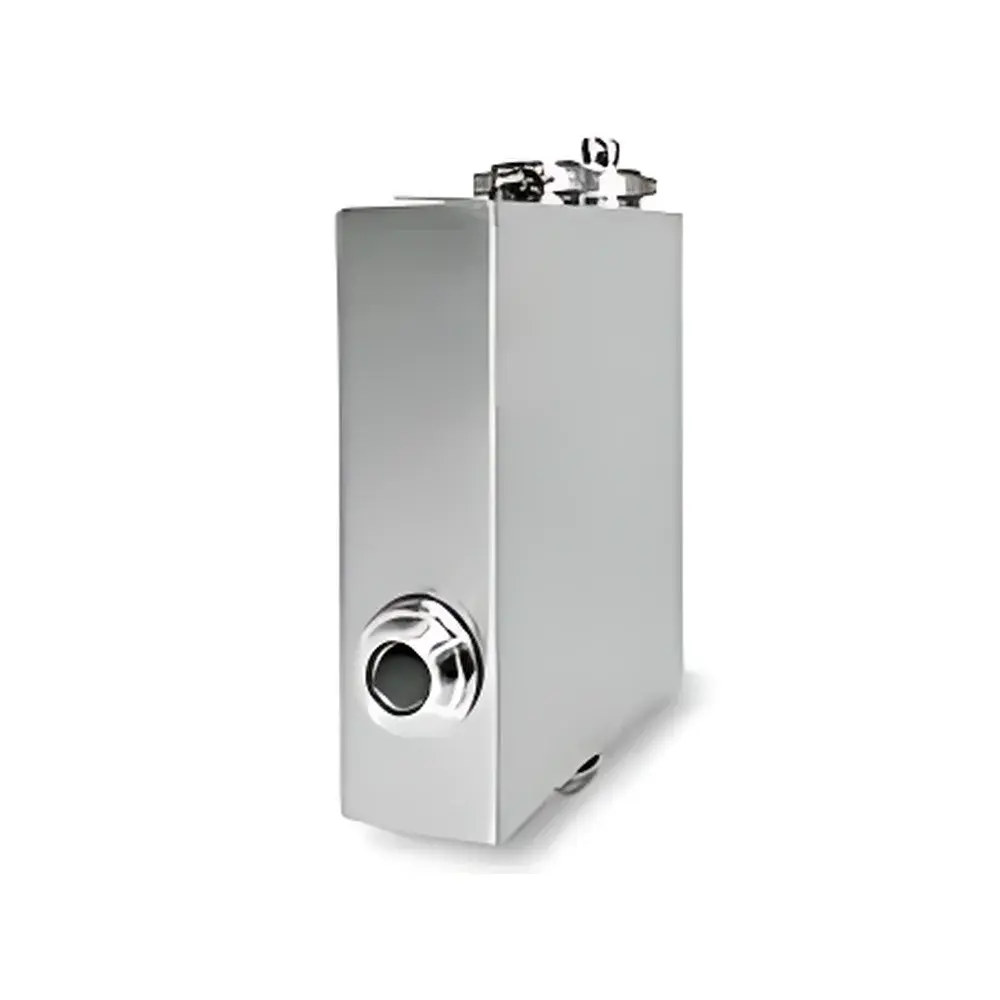
FOSS ProFoss™ 2 Online Feed Analyzer
| Brand | FOSS |
|---|---|
| Origin | Denmark |
| Model | ProFoss™ 2 Online Feed Analyzer |
| Instrument Type | Online Near-Infrared Spectrometer |
| Optical Principle | Grating-based non-scanning diode array detector |
| Wavelength Range | 1100–1650 nm |
| Analysis Speed | Real-time |
| average analysis time per result | 2–3 seconds |
| Sampling Interval | Real-time |
| Measurement Mode | NIR transmission/reflection (process-integrated) |
| Chemometrics Software | ISIscan NOVA™ Instrument Control Software |
| Sample Interface | Direct-coupled flow-through window, no bypass required |
Overview
The FOSS ProFoss™ 2 Online Feed Analyzer is an industrial-grade, process-integrated near-infrared (NIR) spectrometer engineered for continuous, real-time compositional monitoring of feed materials during production. Operating on a fixed grating optical architecture with a high-stability diode detector array (DDA), the system delivers robust spectral acquisition without mechanical scanning—ensuring long-term repeatability and minimal maintenance in demanding feed manufacturing environments. Unlike laboratory-based or at-line NIR systems, the ProFoss™ 2 is designed for permanent installation directly into material flow paths—including raw material inlets, mixer discharge chutes, post-dryer conveyors, and final product load-out points—enabling true closed-loop process control. Its 1100–1650 nm spectral range targets fundamental overtones and combination bands of C–H, N–H, and O–H bonds, making it highly sensitive to moisture, crude protein, total fat, and fiber content across diverse feed matrices.
Key Features
- Process-integrated optical interface: Stainless-steel flow-through window mounted directly onto conveyor belts, screw feeders, or pneumatic transfer lines—eliminating sample diversion, bypass loops, or manual intervention.
- Non-scanning diode array design: No moving parts in the optical path ensures high reliability, low drift, and immunity to vibration typical in feed mills.
- Real-time analytics engine: Delivers quantitative results every 2–3 seconds with synchronized timestamping, enabling dynamic process adjustment within operational control limits.
- Ruggedized industrial enclosure: IP65-rated housing with temperature-stabilized optics suitable for ambient conditions ranging from 5°C to 45°C and relative humidity up to 90% non-condensing.
- Calibration portability: Transferable chemometric models (developed in ISIscan NOVA™) maintain accuracy across instruments and production sites when validated against reference wet chemistry (e.g., AOAC 984.13, AOAC 992.15).
Sample Compatibility & Compliance
The ProFoss™ 2 supports homogeneous and heterogeneous feed streams—including mash, pellets, crumbles, extrudates, and liquid slurries—across species-specific formulations (poultry, swine, aquaculture, ruminant, and pet food). It accommodates particle size distributions typical of commercial feed (10 µm–8 mm) without preprocessing. All calibrations are developed and validated in accordance with ISO 12099:2017 (Animal feeding stuffs — Guidance on the application of near infrared spectroscopy) and aligned with AOAC Official Methods of Analysis for feed proximate analysis. The system supports audit-ready data integrity practices compliant with FDA 21 CFR Part 11 requirements when deployed with appropriate electronic signature and audit trail configurations in ISIscan NOVA™.
Software & Data Management
ISIscan NOVA™ serves as the embedded instrument control and chemometrics platform. It provides full lifecycle management of calibration models—from development (using PLS regression, spectral preprocessing, outlier detection) to deployment, monitoring (bias/drift tracking), and periodic revalidation. Raw spectra, prediction results, confidence metrics (SEP, R², bias), and metadata (timestamp, operator ID, batch tag) are stored in a structured SQLite database. OPC UA and Modbus TCP interfaces enable seamless integration with DCS, MES, and ERP systems (e.g., Siemens PCS7, Rockwell FactoryTalk, SAP). All user actions—including method changes, calibration updates, and result overrides—are logged with immutable timestamps and operator credentials to satisfy GLP/GMP documentation requirements.
Applications
- Moisture optimization in pelleting: Tightening moisture tolerance to ±0.5% reduces steam consumption and die wear while minimizing fines generation.
- Protein balancing in mixer discharge: Enables immediate correction of amino acid profile deviations before heat treatment, preserving labile nutrients.
- Fat inclusion verification post-blending: Confirms lipid homogeneity and detects oil segregation in high-fat premixes.
- Final product release assurance: Replaces offline QC sampling for routine compliance checks against contractual specifications (e.g., EU Regulation (EC) No 767/2009).
- Raw material verification at intake: Rapid screening of incoming soybean meal, corn gluten, fishmeal, and DDGS for authenticity and adulteration risk.
FAQ
Can the ProFoss™ 2 be installed on existing production lines without major retrofitting?
Yes—the modular mounting kit allows direct flange or clamp-on integration to standard 6″–12″ diameter conveyors, gravity chutes, or pneumatic ducts. No plant shutdown is required beyond standard lockout/tagout procedures.
How frequently must calibration models be updated?
Model stability is typically verified quarterly using control samples and reference methods; full recalibration is recommended annually or after major formulation changes, raw material supplier shifts, or equipment maintenance affecting particle size distribution.
Does the system support multi-component simultaneous prediction?
Yes—each spectrum yields concurrent, independent predictions for moisture, crude protein, total fat, crude fiber, ash, and starch, all traceable to primary reference methods.
Is remote diagnostics and software update capability available?
Yes—ISIscan NOVA™ includes secure TLS-encrypted remote access for FOSS-certified service engineers, enabling firmware updates, spectral health checks, and model diagnostics without on-site visits.
What validation documentation is provided upon commissioning?
A complete IQ/OQ package is delivered, including installation checklist, optical alignment report, linearity verification across full measurement range, repeatability testing (n ≥ 10 under identical conditions), and correlation statistics against certified reference laboratories (e.g., AOAC-accredited labs).
Related Products





