
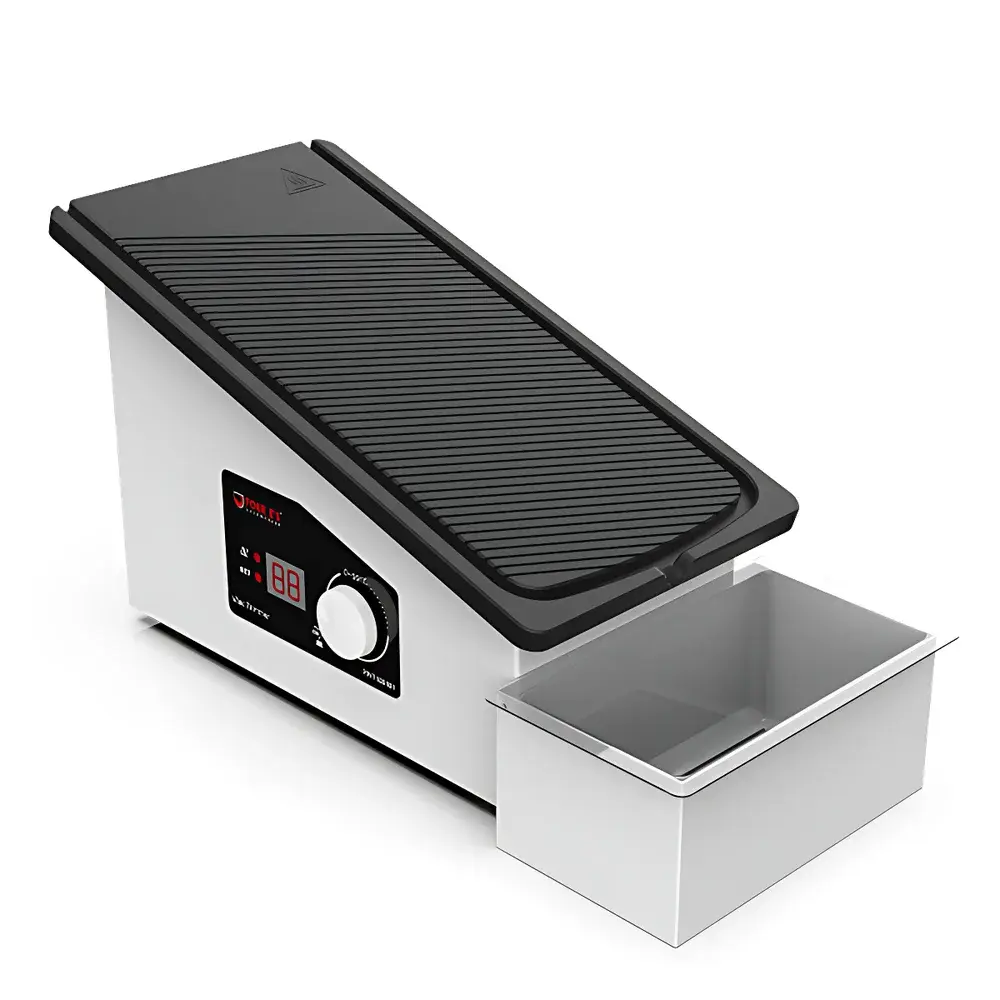
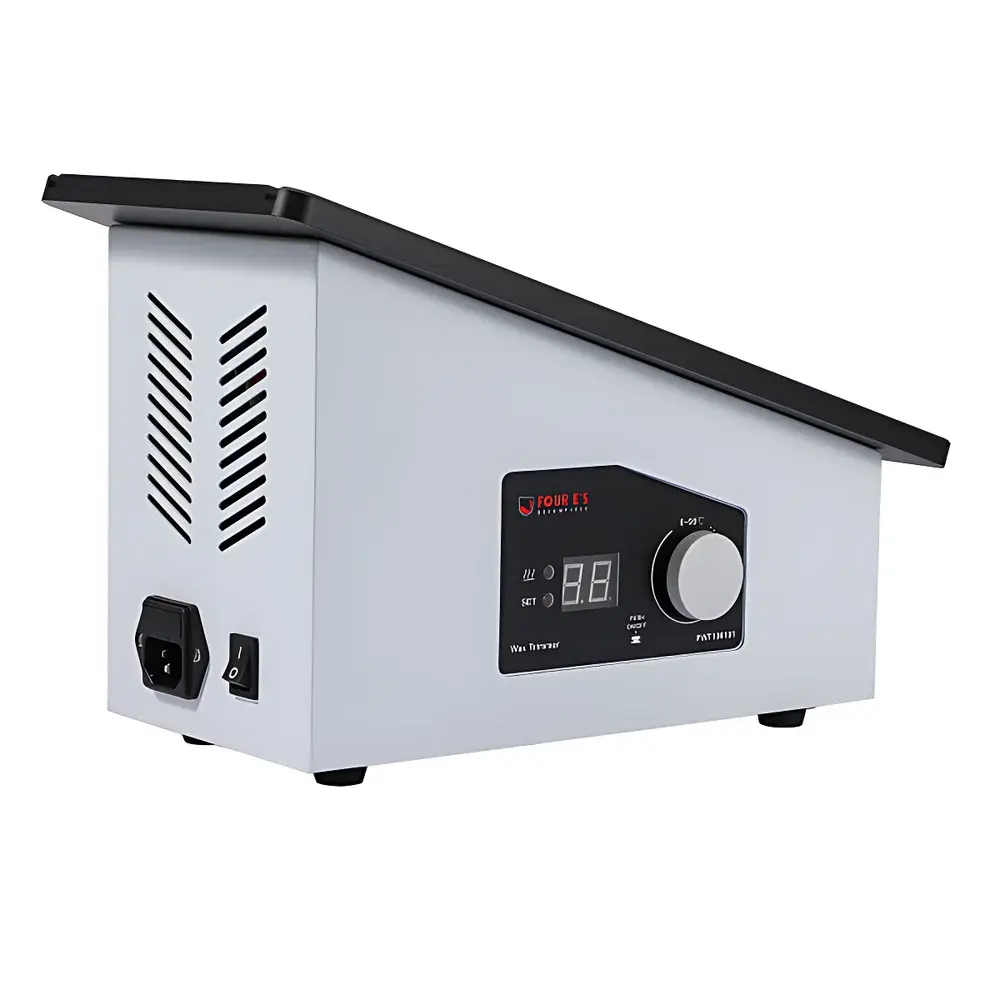
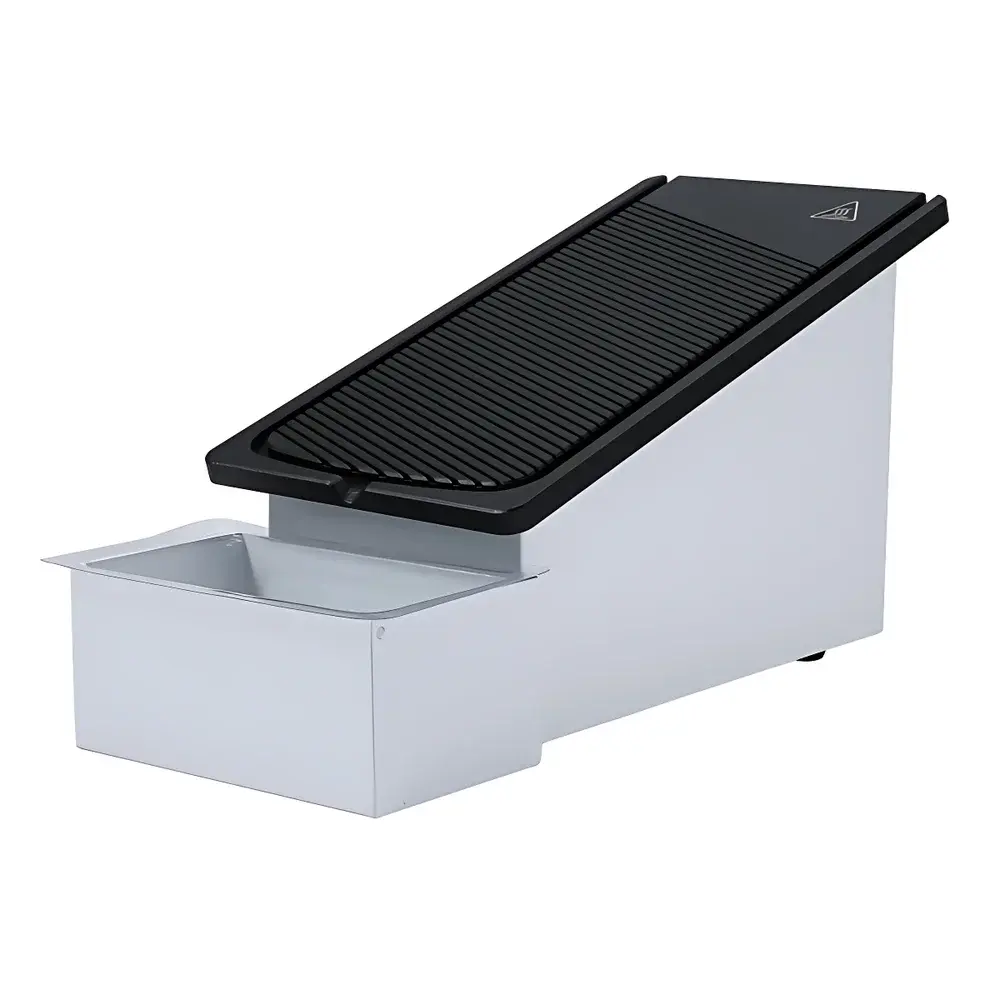
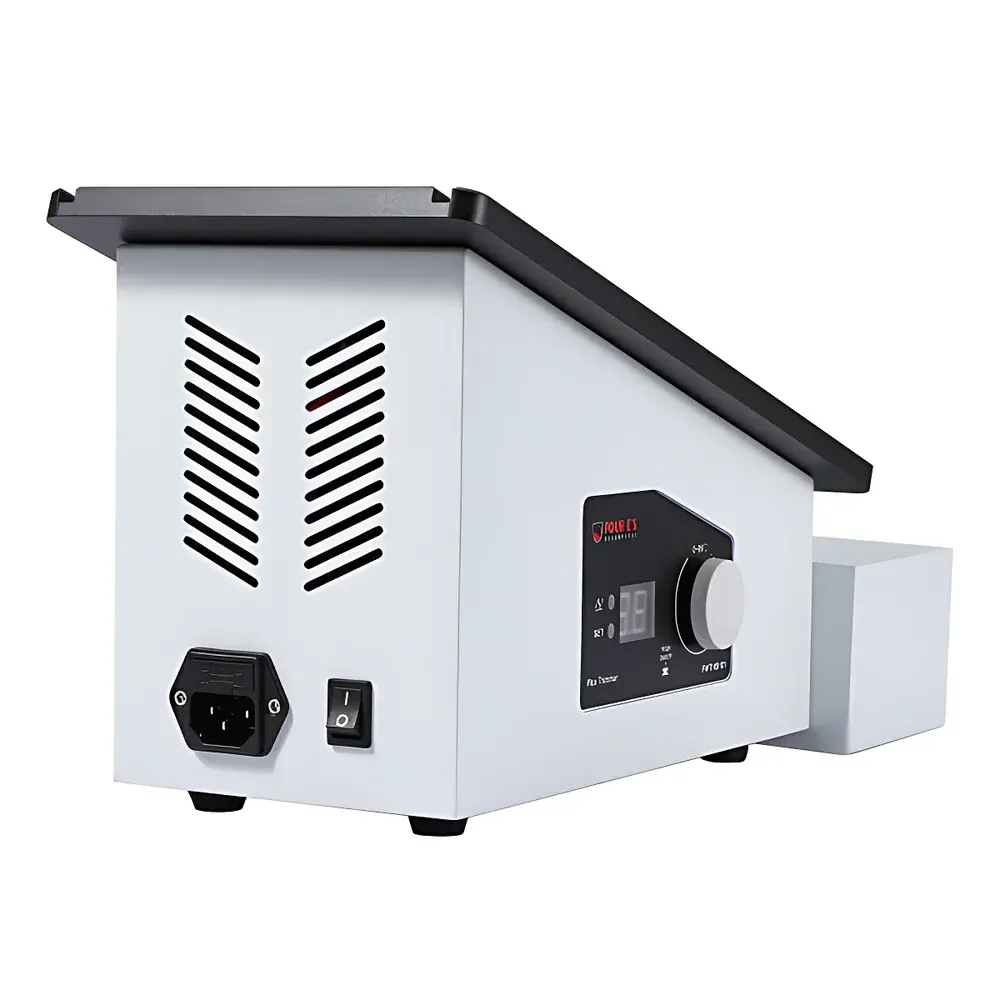
FOUR E’S SCIENTIFIC PWT100101 Paraffin Trimming Station
| Brand | FOUR E'S SCIENTIFIC |
|---|---|
| Origin | Guangdong, China |
| Manufacturer Type | Direct Manufacturer |
| Country of Origin | China |
| Model | PWT100101 |
| Temperature Range | Ambient to 99°C (adjustable in 1°C increments) |
| Temperature Accuracy | ±1°C |
| Warm-up Time | 5–10 min to max temperature |
| Operating Duration | Up to 8 hours continuous |
| Working Surface | Large grooved heated platform |
| Wax Collection | Magnetic detachable drip tray with disposable liner |
| Safety Features | Auto power-resume after outage, over-temperature cutoff |
Overview
The FOUR E’S SCIENTIFIC PWT100101 Paraffin Trimming Station is a precision-engineered thermal workstation designed for routine histopathology laboratories requiring consistent, controlled removal of excess paraffin from tissue-embedded cassettes prior to microtomy. Unlike manual scraping or ambient-temperature trimming methods—which risk tissue damage, inconsistent wax removal, and operator fatigue—the PWT100101 employs uniform conductive heating across a grooved stainless-steel surface to soften peripheral paraffin without compromising tissue integrity. The device operates on the principle of selective thermal softening: by maintaining precise temperature control within the optimal paraffin viscosity range (typically 55–75°C), it enables clean, directional flow of molten wax away from cassette edges into a dedicated collection system. This thermal conditioning step directly supports downstream sectioning quality—reducing chatter, knife marks, and ribbon fragmentation during cryostat or rotary microtome operation. Its compact footprint and integrated safety architecture make it suitable for ISO 15189-accredited pathology labs, GLP-compliant research facilities, and high-throughput diagnostic centers where reproducibility and workflow continuity are critical.
Key Features
- Digitally controlled heating system with LED display and intuitive rotary encoder for real-time temperature adjustment from ambient to 99°C in 1°C increments
- High-uniformity heated platform featuring precision-machined grooves that guide molten paraffin toward the drip tray, minimizing surface residue and cross-contamination
- Magnetic quick-release drip tray with FDA-compliant disposable polypropylene liners—enabling rapid tray exchange and eliminating solvent-based cleaning cycles
- Thermal stability verified at ±1°C across full operating range, validated per ASTM E220 calibration protocol for laboratory thermal devices
- Auto-recovery function resumes pre-interruption settings following power loss, supporting uninterrupted batch processing in multi-shift environments
- Independent over-temperature protection circuit (independent of main controller) deactivates heating elements if surface temperature exceeds 105°C
- Robust aluminum alloy housing with non-slip silicone feet; CE-marked electrical design compliant with IEC 61010-1 for laboratory equipment safety
Sample Compatibility & Compliance
The PWT100101 accommodates standard histology cassettes (e.g., Leica, Sakura, Thermo Fisher formats) up to 40 × 30 mm in dimension, including plastic, metal, and reusable polymer variants. It is compatible with both conventional paraffin (melting point ~56–58°C) and low-melting-point formulations (e.g., 52°C paraffin used in delicate neural or embryonic tissues). The device meets essential requirements for use in CLIA-certified laboratories and supports documentation traceability under CAP checklist ANP.42300 (equipment maintenance logs) and ANP.42400 (temperature verification records). While not an analytical instrument subject to USP <1058>, its temperature control performance aligns with the verification criteria outlined in ISO/IEC 17025:2017 Clause 6.4.7 for ancillary equipment influencing measurement uncertainty.
Software & Data Management
The PWT100101 is a standalone hardware device with no embedded firmware or network connectivity. Temperature setpoints and operational status are managed exclusively via front-panel interface—eliminating cybersecurity vulnerabilities associated with IoT-enabled lab instruments. All calibration and verification data (e.g., NIST-traceable thermometer readings, warm-up time logs, and drift assessments) are maintained manually in laboratory notebooks or LIMS-integrated electronic records per 21 CFR Part 11 Annex 11 principles. Optional calibration certificates (traceable to CNAS-accredited labs) can be provided upon request to support internal audit readiness.
Applications
- Routine trimming of paraffin-embedded tissue cassettes in clinical pathology labs prior to microtomy
- Preparation of specimens for immunohistochemistry (IHC) and in situ hybridization (ISH), where clean block faces reduce antibody nonspecific binding
- Quality assurance workflows in biobanking facilities handling archival FFPE tissue collections
- Research histology cores supporting translational oncology studies requiring high-fidelity section morphology
- Training environments for histotechnician certification programs (e.g., ASCP HTL/HT credentials)
FAQ
What is the recommended operating temperature for standard paraffin-embedded cassettes?
For most routine FFPE tissues using standard paraffin (mp 56–58°C), we recommend 62–68°C. This range ensures sufficient wax fluidity while preventing thermal degradation of antigen epitopes.
Can the PWT100101 be used with low-melting-point paraffin (e.g., 52°C formulations)?
Yes—its fine-resolution temperature control allows stable operation as low as ambient +2°C, making it suitable for temperature-sensitive applications such as pediatric or neural tissue embedding.
Is the drip tray autoclavable?
No—the magnetic base tray is designed for ambient-temperature cleaning only; disposable liners are intended for single-use to maintain contamination control.
Does the unit require annual recalibration?
While not mandated by regulation, FOUR E’S SCIENTIFIC recommends verifying temperature accuracy semiannually using a NIST-traceable digital thermometer per internal SOP-EMB-017.
How does the groove pattern improve trimming efficiency compared to flat-surface heaters?
The radial groove geometry reduces surface tension effects and promotes laminar wax flow toward the tray center—cutting average cleanup time per cassette by approximately 40% versus ungrooved platforms, as documented in independent lab validation reports (Ref: FES-TN-2023-089).





