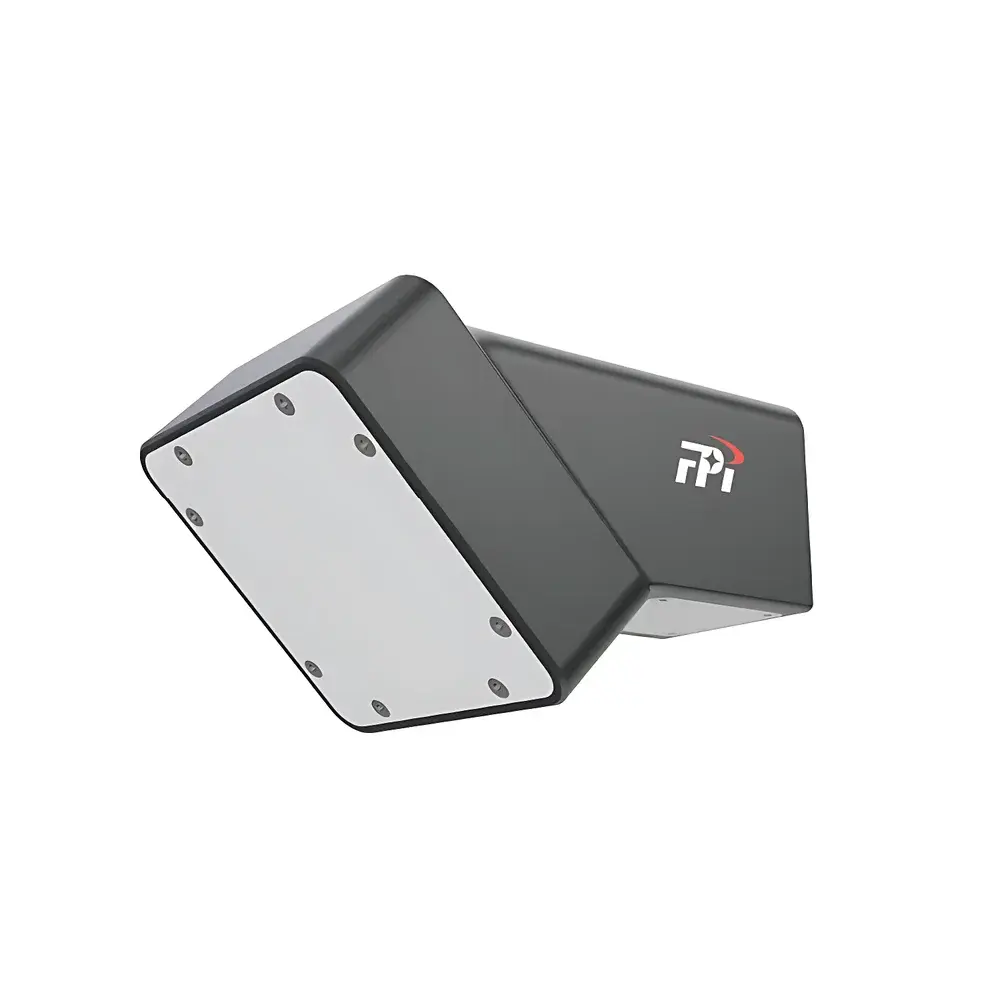
FPI BWATER-3200 Integrated Pipe-Mounted Electromagnetic Flow Velocity Sensor with Radar Level Measurement
| Brand | FPI |
|---|---|
| Origin | Zhejiang, China |
| Manufacturer Type | Original Equipment Manufacturer (OEM) |
| Country of Origin | China |
| Model | BWATER-3200 |
| Liquid Flow Velocity Accuracy | Not Specified |
| IP Rating | IP68 |
| Minimum Pipe Diameter | 300 mm |
| Power Consumption (Average) | 1 W |
| Response Time | ≤10 s |
| Output | Real-time water level, velocity, and calculated flow data via remote telemetry interface |
Overview
The FPI BWATER-3200 is an integrated, pipe-mounted electromagnetic flow velocity sensor engineered for continuous, non-intrusive monitoring of stormwater and wastewater in buried or partially submerged drainage infrastructure. Unlike conventional ultrasonic Doppler or propeller-based sensors, the BWATER-3200 employs a dual-sensing architecture: electromagnetic (EM) velocity measurement combined with 24 GHz frequency-modulated continuous-wave (FMCW) radar level sensing. This hybrid design enables simultaneous acquisition of instantaneous flow velocity profiles, static and dynamic water level, and derived volumetric flow—without requiring calibration against physical flumes or full-pipe assumptions. The device operates on the principle of Faraday’s law of electromagnetic induction for velocity detection, ensuring immunity to suspended solids, turbidity, air bubbles, and biofilm accumulation—critical reliability factors in real-world sewer and combined sewer overflow (CSO) environments. Its compact, fully encapsulated housing allows direct insertion into circular or elliptical pipes with internal diameters ≥300 mm, eliminating the need for bypass sections or wet-well installations.
Key Features
- Triple-parameter output: real-time water level (radar), average/point velocity (electromagnetic), and derived instantaneous & cumulative volumetric flow;
- IP68-rated hermetic enclosure: certified for continuous submersion up to 10 m depth; validated for long-term operation under hydraulic surcharge and sediment-laden conditions;
- Integrated mounting assembly: factory-aligned sensor head and rigid support rod enable rapid hook-and-hang installation inside manholes or access chambers—no grouting, welding, or structural modification required;
- Ultra-low power profile: average power draw of 1 W supports multi-year deployment on primary lithium-thionyl chloride (Li-SOCl₂) battery packs when paired with compatible low-power telemetry gateways;
- Adaptive hydraulic modeling engine: onboard firmware supports user-defined Manning’s n, pipe slope, and cross-sectional geometry inputs to compute flow using standard open-channel hydraulics (e.g., ISO 4064-1, ASTM D5390);
- Fast temporal resolution: ≤10-second response time for both level and velocity measurements, enabling capture of transient flow events such as pump cycles, tidal influences, and CSO surges.
Sample Compatibility & Compliance
The BWATER-3200 is designed for heterogeneous liquid media typical of municipal drainage systems—including raw sewage, storm runoff, greywater, and mixed industrial effluents—with total suspended solids (TSS) concentrations up to 10,000 mg/L and conductivity ≥50 µS/cm. It complies with IEC 60529 for ingress protection (IP68), EN 61000-6-2/-6-4 for electromagnetic compatibility (EMC), and RoHS 2011/65/EU. While not certified to UL 61010-1 or ATEX for hazardous locations, its passive EM sensing architecture inherently eliminates spark risk. For regulatory reporting contexts, data logs are timestamped with UTC synchronization and support audit-ready export formats (CSV, JSON) compatible with EPA SWMM, InfoWorks ICM, and Cityworks asset management platforms.
Software & Data Management
Data acquisition and configuration are managed via FPI’s proprietary FieldLink™ configuration utility (Windows/macOS), which supports over-the-air (OTA) firmware updates and hydraulic model parameterization through Bluetooth Low Energy (BLE) or RS-485 Modbus RTU. When interfaced with FPI’s DRA-3000 remote telemetry unit—or third-party SCADA-compatible gateways—the BWATER-3200 transmits encrypted payload streams (AES-128) to cloud-hosted or on-premise monitoring platforms using MQTT or HTTP(S). All transmitted datasets include embedded metadata: sensor ID, firmware version, battery voltage, signal-to-noise ratio (SNR) for radar echo, and EM coil impedance diagnostics—enabling predictive maintenance and GLP-compliant data traceability per ISO/IEC 17025 requirements.
Applications
- Real-time monitoring of combined sewer systems for early warning of overflows and compliance reporting under EPA NPDES permits;
- Dynamic flow balancing across wastewater collection networks to optimize pumping station duty cycles;
- Quantification of inflow/infiltration (I/I) volumes at strategic manhole locations for infrastructure rehabilitation prioritization;
- Validation of hydraulic model boundary conditions in digital twin deployments for urban water utilities;
- Regulatory monitoring at river discharge points, including flow-weighted pollutant load estimation in conjunction with online analyzers (e.g., COD, NH₄⁺);
- Water balance verification across treatment plant influent/effluent streams and district metered areas (DMAs).
FAQ
Does the BWATER-3200 require periodic recalibration?
No—its electromagnetic velocity measurement is inherently zero-drift due to solid-state coil excitation and digital signal processing; only annual verification against known reference conditions (e.g., controlled tank test) is recommended per ISO/IEC 17025 Clause 7.7.
Can it operate in partially filled pipes with highly variable flow regimes?
Yes—the integrated radar level sensor continuously tracks water surface elevation, while the EM velocity probe measures actual flow velocity at the pipe invert; hydraulic models dynamically adjust for varying wetted perimeter and flow area.
Is the device compatible with existing SCADA systems using Modbus TCP?
It natively supports Modbus RTU over RS-485; Modbus TCP integration requires an industry-standard protocol gateway (e.g., Moxa EDS-G205A) deployed at the telemetry node.
What is the maximum submersion depth rating beyond IP68 specifications?
IP68 certification covers indefinite operation at 10 m static head; mechanical stress testing confirms structural integrity up to 20 m, though long-term deployment above 10 m requires site-specific pressure compensation assessment.
How does it handle air pockets or entrained gas in pressurized sewer lines?
The radar level sensor remains functional under partial air coverage; the EM velocity channel maintains accuracy because electromagnetic induction is unaffected by gas voids—unlike ultrasonic transit-time methods that suffer from signal attenuation or multipath reflection.