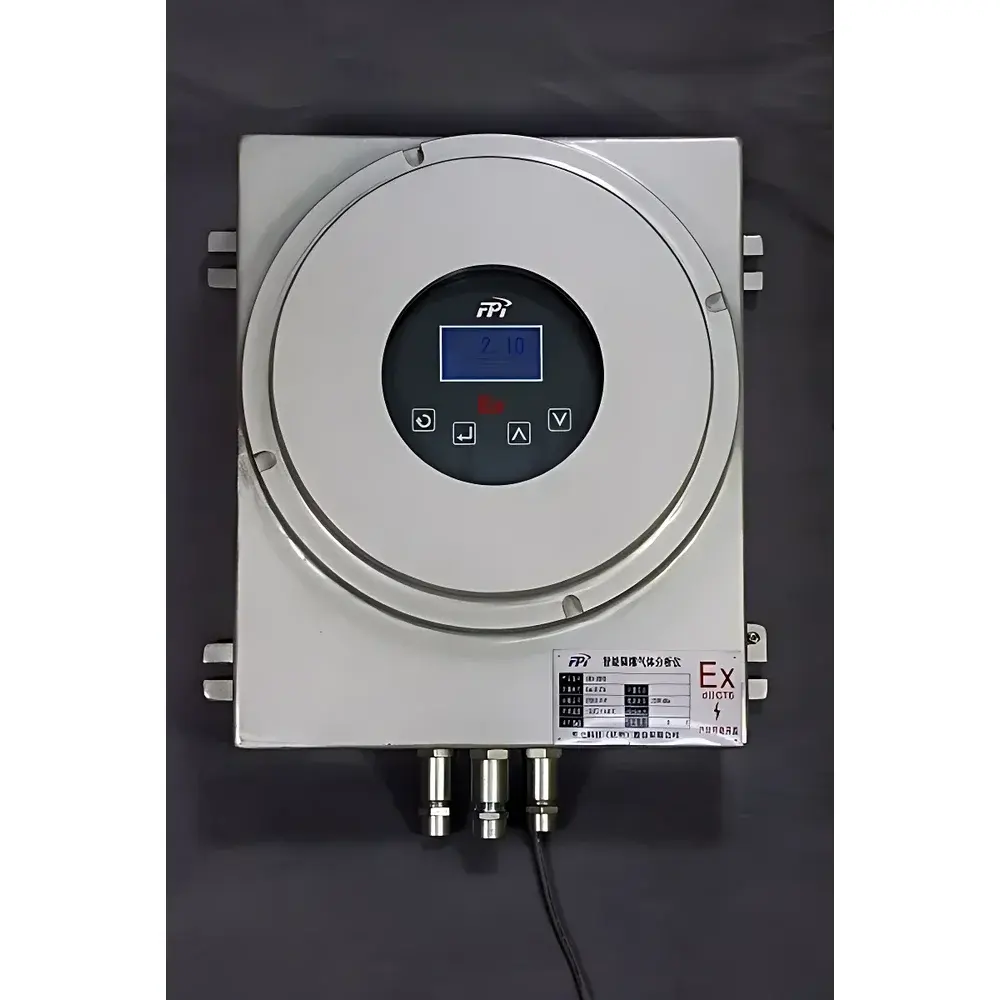
FPI GRD-3000 Explosion-Proof Thermal Conductivity Gas Analyzer
| Brand | FPI |
|---|---|
| Origin | Zhejiang, China |
| Manufacturer Type | Original Equipment Manufacturer (OEM) |
| Country of Origin | China |
| Model | GRD-3000 |
| Pricing | Upon Request |
Overview
The FPI GRD-3000 Explosion-Proof Thermal Conductivity Gas Analyzer is a fixed-process analytical instrument engineered for continuous, real-time measurement of binary or quasi-binary gas mixtures—particularly where one component exhibits significantly higher thermal conductivity than the background matrix (e.g., H₂ in N₂, He in air, or CH₄ in CO₂). It operates on the fundamental principle of thermal conductivity differential: as the concentration of the target gas changes within the sample stream, the overall thermal conductivity of the mixture shifts proportionally. This variation is detected by a precision micro-flow thermal conductivity sensor employing dual Wheatstone bridge architecture with active background gas compensation. The analyzer is certified for use in hazardous locations classified under IEC 60079-0, -1, and -11, meeting Ex d IIB T6 Gb and Ex tb IIIC T80°C Db protection levels—suitable for Zone 1 and Zone 2 areas where flammable gases, vapors, or combustible dusts may be present.
Key Features
- Explosion-proof design compliant with international hazardous area standards: Ex d IIB T6 Gb (gas) and Ex tb IIIC T80°C Db (dust), enabling safe deployment in petrochemical, refining, fertilizer, and hydrogen production facilities.
- High-stability micro-flow thermal conductivity sensor with glass-sealed, corrosion-resistant sensing elements—optimized for long-term exposure to aggressive process environments including trace moisture, acidic or alkaline contaminants.
- Dual-bridge compensation architecture minimizes drift caused by ambient temperature fluctuations and carrier gas composition variance, ensuring measurement repeatability better than ±0.5% FS over 30 days without recalibration.
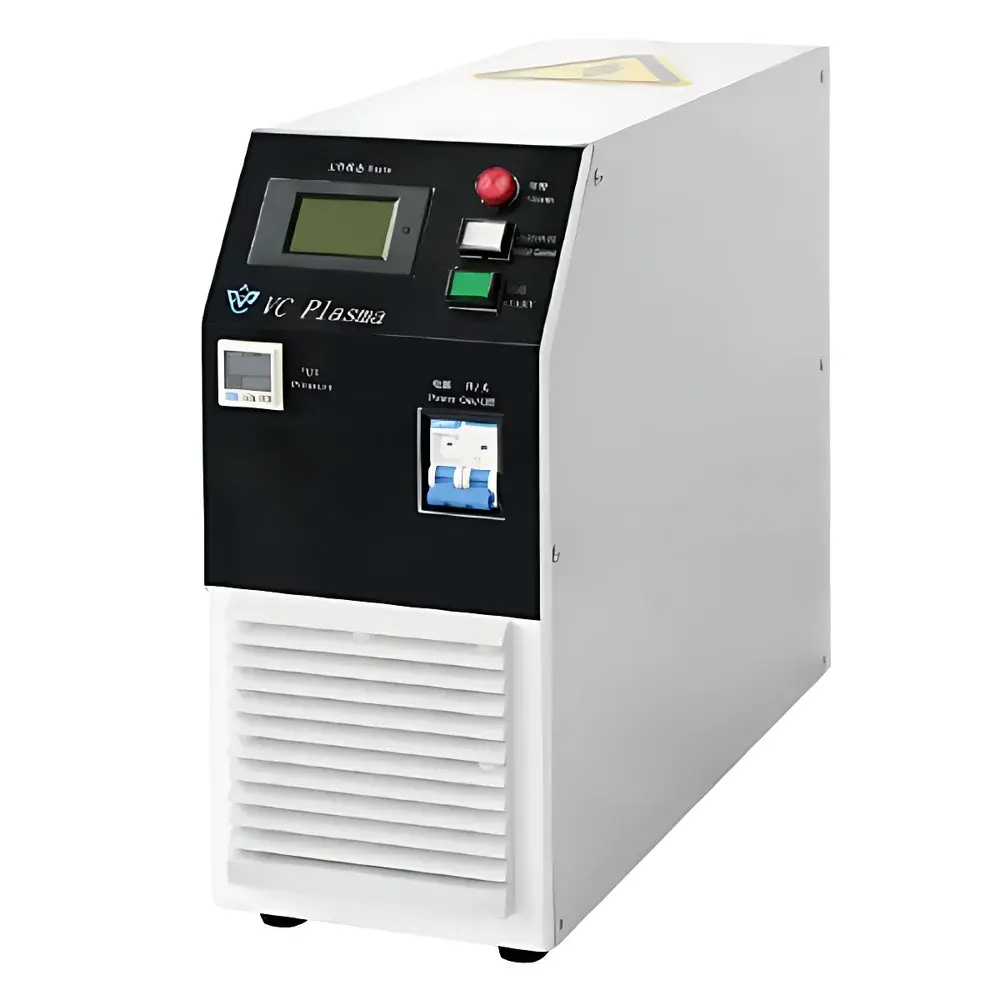
- Integrated controller and detector housed in a single IP66-rated, stainless-steel cabinet—designed for direct field mounting with minimal external infrastructure requirements.
- Large backlit dot-matrix LCD display supporting full Chinese menu navigation; simultaneous real-time readout of measured gas concentration (% vol), system status, date/time stamp, and alarm states.
- Configurable high/low limit alarms with relay dry-contact outputs (SPDT, 250 VAC/3 A), plus fully isolated 4–20 mA or 0–10 mA analog output with HART® protocol support for integration into DCS/SCADA systems.
- Onboard data logging with timestamped storage (up to 30 days at 1-minute intervals); historical records accessible via front-panel interface or exported via optional RS-485 Modbus RTU communication.
Sample Compatibility & Compliance
The GRD-3000 is optimized for clean, dry, non-condensing gas streams with low particulate loading (<1 µm filtration recommended upstream). Typical applications include H₂ purity monitoring in ammonia synthesis loops, O₂ detection in inert blanketing systems, CO/CO₂ ratio analysis in syngas streams, and He leak detection in vacuum chambers. It is not suitable for corrosive, polymerizing, or heavily contaminated samples without appropriate pre-conditioning (e.g., heated sample lines, coalescing filters, or catalytic scrubbers). The analyzer conforms to electromagnetic compatibility (EMC) per IEC 61326-1 and functional safety guidelines aligned with IEC 61508 SIL 2 for basic process control functions. Documentation supports audit readiness for ISO 9001, ISO 14001, and OHSAS 18001 frameworks.
Software & Data Management
No external PC software is required for routine operation; all configuration, calibration, and diagnostics are executed via intuitive on-device menu navigation. The embedded firmware includes password-protected access levels (Operator, Engineer, Administrator) and audit-trail logging of critical events—including parameter changes, alarm activations, and zero/span adjustments. Data export is supported via RS-485 serial interface using standard Modbus RTU register mapping. For enterprise-level integration, optional gateway modules enable MQTT or OPC UA connectivity to cloud-based asset performance management (APM) platforms. Calibration history and diagnostic logs comply with GLP/GMP record retention expectations, though the device does not implement FDA 21 CFR Part 11 electronic signature functionality natively.
Applications
- Hydrogen purity verification in PEM electrolyzer and fuel cell feed streams
- Oxygen monitoring in nitrogen-purged reactors and storage vessels
- Methane concentration tracking in biogas upgrading and landfill gas conditioning
- Helium content analysis in mixed-gas welding supplies and semiconductor purge lines
- Carbon monoxide detection in coal gasification off-gas and reformer tail gas
- Process safety interlocks in flare gas recovery and vent header monitoring
FAQ
What gas combinations can the GRD-3000 accurately measure?
It is validated for binary or dominant-component mixtures where the target gas has thermal conductivity at least 3× higher or lower than the balance gas (e.g., H₂/N₂, He/air, NH₃/H₂O vapor-free air). Accuracy degrades in multi-component mixtures with overlapping thermal conductivities.
Is field calibration possible without specialized equipment?
Yes—zero calibration uses certified zero gas (e.g., pure N₂ for H₂ analysis); span calibration requires a certified span gas of known concentration. Both procedures are guided step-by-step on the LCD interface.
Can the analyzer operate continuously in ambient temperatures up to 60°C?
The electronics cabinet is rated for –20°C to +60°C ambient operation; however, sensor housing must remain below 50°C for optimal stability—external sunshades or cooling jackets are recommended in high-heat installations.
Does it support intrinsically safe (IS) installation in addition to flameproof (Ex d)?
No—the GRD-3000 is exclusively designed and certified for flameproof (Ex d) enclosure protection. For IS applications, consult FPI’s GAD series with associated safety barriers.
What maintenance intervals are recommended for routine operation?
Sensor element replacement is advised every 24 months under normal conditions; filter cartridges require inspection every 3 months and replacement if pressure drop exceeds 10 kPa. Full system verification (zero/span check) is recommended quarterly.