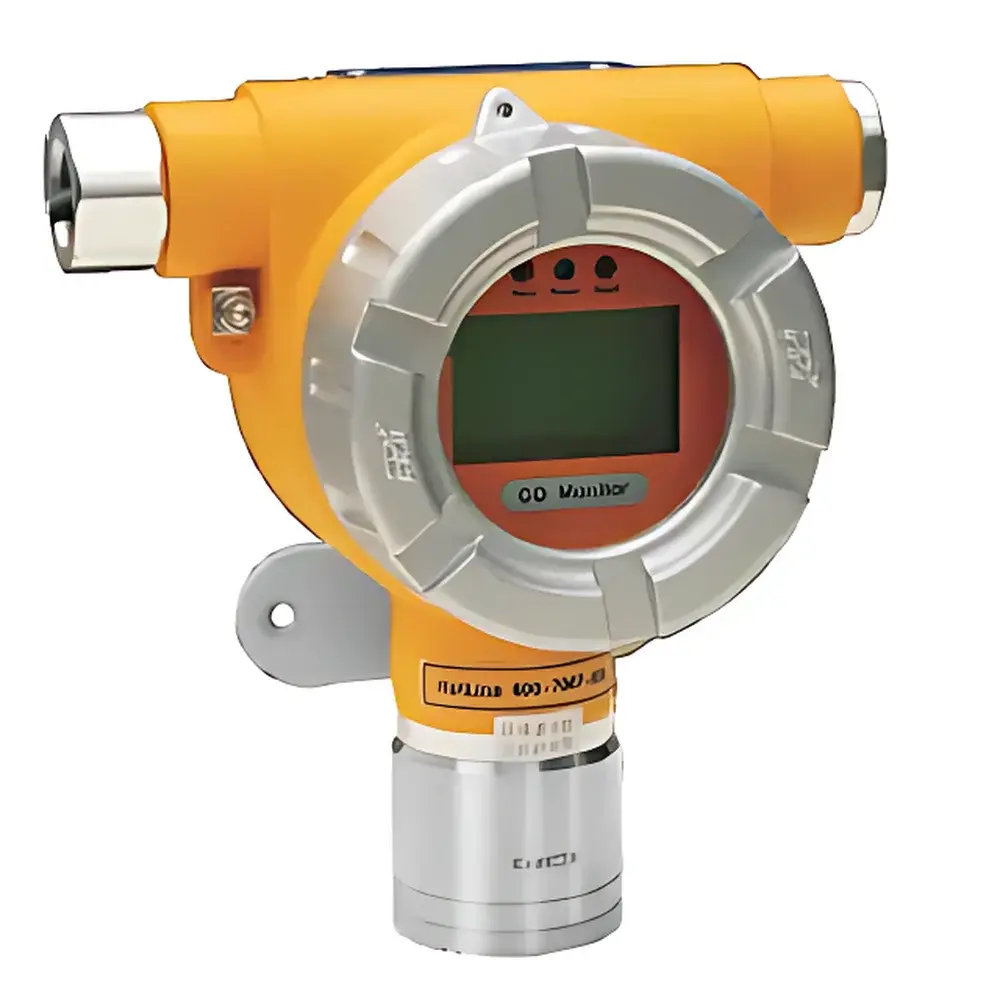
FPI GT-1020-TF Fixed Toxic Gas Detector with Explosion-Proof Enclosure
| Brand | FPI |
|---|---|
| Origin | Zhejiang, China |
| Manufacturer Type | Manufacturer |
| Country of Origin | China |
| Model | GT-1020-TF |
| Pricing | Upon Request |
| Certification | Ex d IIB T6 Gb |
| Hazardous Area Classification | Zone 1 & Zone 2 |
| Sensor Technology | Electrochemical (Imported) |
| Output Signal | 4–20 mA / RS485 |
| Alarm | Integrated Visual-Audible Alarm |
| Environmental Protection | IP66 |
| Compensation | Built-in Temperature & Concentration Compensation |
| Enclosure Material | Stainless Steel with Multi-Layer Corrosion Protection |
| Remote Operation | Infrared Bidirectional Handheld Remote (Display Enabled, No-Open-Box Configuration) |
Overview
The FPI GT-1020-TF is a fixed-point, intrinsically robust toxic gas detection instrument engineered for continuous, real-time monitoring of hazardous gas concentrations in industrial process environments. Designed in strict compliance with IEC 60079-0 and IEC 60079-1 standards, the unit features an Ex d IIB T6 Gb flameproof enclosure—certified for safe operation in Zone 1 and Zone 2 classified hazardous areas where flammable gases or vapors may be present under normal or fault conditions. Its core sensing principle relies on high-selectivity electrochemical transduction, utilizing imported electrochemical sensor elements optimized for linear response, low cross-sensitivity, and long-term baseline stability across target toxic species including carbon monoxide (CO), hydrogen sulfide (H₂S), chlorine (Cl₂), ammonia (NH₃), sulfur dioxide (SO₂), nitrogen dioxide (NO₂), and phosphine (PH₃). The detector operates on a 24 VDC power supply and delivers analog (4–20 mA) and digital (RS485 Modbus RTU) output signals for seamless integration into distributed control systems (DCS), programmable logic controllers (PLC), or centralized safety instrumented systems (SIS).
Key Features
- Explosion-proof housing certified to Ex d IIB T6 Gb per EN/IEC 60079-1, enabling deployment in petrochemical, refining, chemical synthesis, and pharmaceutical manufacturing facilities governed by ATEX and IECEx directives.
- Multi-layer corrosion-resistant enclosure fabricated from 316 stainless steel, treated via electrophoretic coating and passivation processes—ensuring durability in high-humidity, saline, or acidic ambient conditions typical of offshore platforms and wastewater treatment plants.
- Infrared bidirectional remote controller with integrated OLED display allows full parameter configuration, zero/span calibration, alarm threshold adjustment, and diagnostic status review without opening the explosion-proof cover—reducing maintenance downtime and eliminating ignition risk during field servicing.
- Built-in dual compensation algorithm corrects for ambient temperature drift and concentration-dependent nonlinearity, improving measurement repeatability to ±2% FS over –20 °C to +50 °C operating range.
- Integrated visual-audible alarm assembly (110 dB audible tone, high-intensity LED strobe) meets IEC 61000-4-2/4-3 EMC immunity requirements and provides immediate local hazard indication independent of host system communication.
- IP66-rated ingress protection ensures resistance to dust ingress and powerful water jets—validated per IEC 60529—making it suitable for outdoor mounting and washdown environments.
Sample Compatibility & Compliance
The GT-1020-TF supports detection of a broad spectrum of electrochemically active toxic gases at parts-per-million (ppm) resolution. Sensor modules are field-replaceable and pre-calibrated; each carries traceable NIST-traceable calibration documentation. The device conforms to ISO 10156 for gas group classification, EN 45544-1 for workplace exposure monitoring performance, and GB 12358–2006 (Chinese national standard for fixed gas detectors). It supports functional safety applications aligned with SIL 2 per IEC 61508 when integrated into a certified safety loop. Documentation packages include Factory Acceptance Test (FAT) reports, EC-Type Examination Certificates, and hazardous area installation guidance compliant with IEC 60079-14.
Software & Data Management
Configuration and diagnostics are managed via FPI’s proprietary PC-based GasVision™ Utility software (Windows 10/11 compatible), which supports firmware updates, event log export (CSV), calibration history archiving, and audit trail generation. All configuration changes—including alarm setpoints, damping time, and sensor zero offset—are timestamped and user-logged, satisfying GLP/GMP data integrity requirements under FDA 21 CFR Part 11 when deployed in regulated pharmaceutical or biotech facilities. Optional cloud connectivity (via FPI Edge Gateway) enables remote monitoring, predictive maintenance alerts, and centralized fleet management across multi-site operations.
Applications
- Petrochemical refineries: H₂S monitoring in amine units, sour water strippers, and flare gas systems.
- Chlor-alkali plants: Cl₂ leak detection in electrolysis cell rooms and storage areas.
- Water/wastewater treatment: NH₃ and Cl₂ monitoring in disinfection and odor control zones.
- Pharmaceutical clean utilities: CO detection in boiler rooms and NO₂ monitoring in nitration process exhaust ducts.
- Underground mining ventilation shafts: Real-time CO and H₂S surveillance with redundant alarm staging.
- Enclosed cargo holds and tank farms: Continuous vapor-phase toxicity assessment prior to confined space entry.
FAQ
What hazardous area classifications does the GT-1020-TF support?
It is certified for use in Zone 1 and Zone 2 explosive atmospheres per IEC 60079-1 (Ex d IIB T6 Gb), covering gas groups IIA, IIB, and IIC with maximum surface temperature ≤85 °C.
Can the sensor be calibrated without opening the enclosure?
Yes—full zero/span calibration, alarm verification, and sensitivity testing are supported via the infrared bidirectional remote controller with live display feedback.
Is the device compliant with FDA 21 CFR Part 11 for electronic records?
When used with GasVision™ software and enabled audit trail logging, it meets Part 11 requirements for electronic signatures, record retention, and change control in regulated life science environments.
What is the expected service life of the electrochemical sensor?
Typical operational lifespan is 24–36 months depending on exposure profile; sensors feature embedded lifetime counters and automatic end-of-life warnings via Modbus register polling.
Does the unit support HART protocol?
No—output options are limited to 4–20 mA analog with digital superimposition disabled; RS485 Modbus RTU is the sole digital interface.