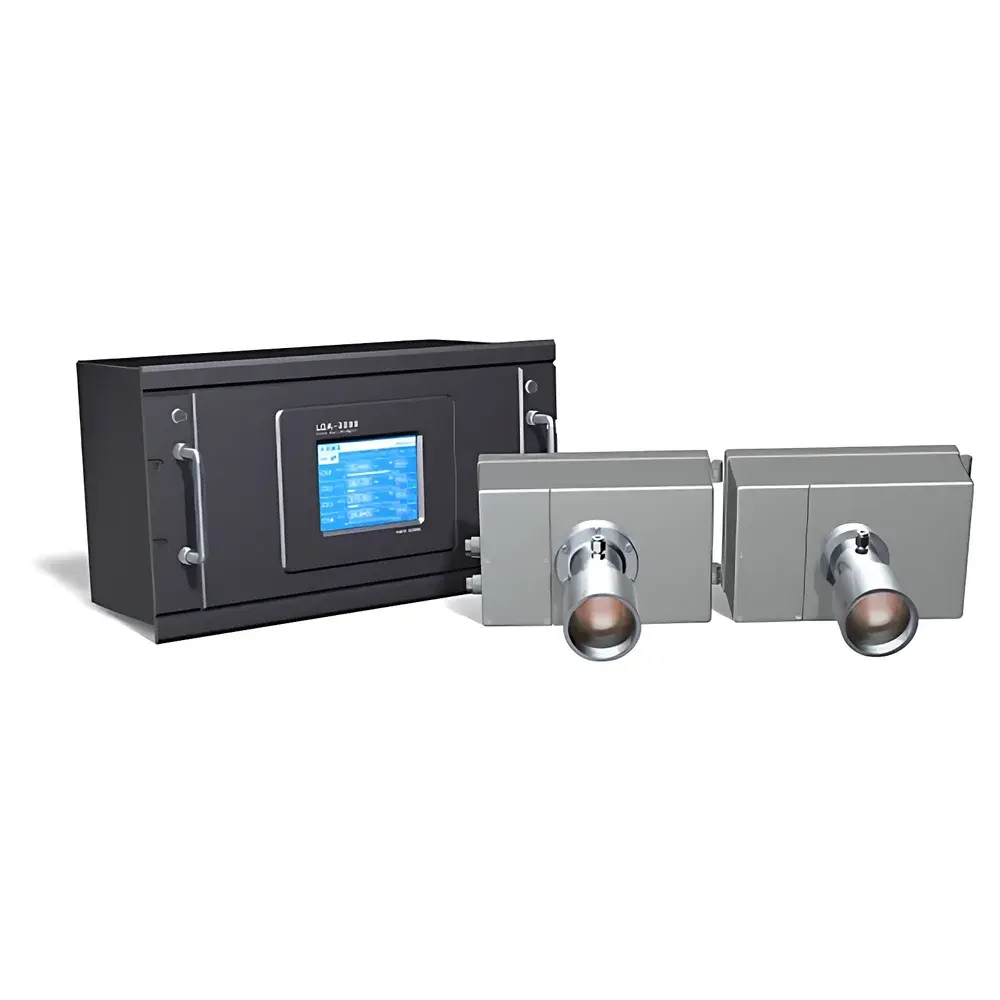
FPI LGA-3000 Distributed Laser Gas Analyzer
| Brand | FPI |
|---|---|
| Origin | Zhejiang, China |
| Manufacturer Type | Original Equipment Manufacturer (OEM) |
| Product Category | Domestic |
| Model | LGA-3000 Distributed |
| Pricing | Available Upon Request |
Overview
The FPI LGA-3000 Distributed Laser Gas Analyzer is an industrial-grade online gas monitoring system engineered for continuous, real-time multi-point concentration measurement of target gases in harsh process environments. It operates on the principle of Tunable Diode Laser Absorption Spectroscopy (TDLAS), a well-established trace-gas detection technique that leverages the unique near-infrared absorption fingerprints of molecular species. Unlike conventional point-sampling analyzers, the LGA-3000 implements a true distributed architecture: a single central analyzer unit interfaces with multiple optical probe modules via fiber-optic links, enabling simultaneous measurements across up to 8 independent process locations—each with dedicated wavelength-specific laser diodes and photodetectors. This architecture eliminates the need for sample extraction, conditioning, or transport lines, thereby minimizing maintenance, response lag, and cross-contamination risk. The system is designed for long-term stability under ambient temperature fluctuations (−20 °C to +60 °C), vibration, and dust exposure typical of cement kilns, steel reheating furnaces, syngas pipelines, and waste incineration ducts.
Key Features
- Distributed optical topology: One central unit supports up to eight remote measurement points via armored single-mode fiber cables (up to 500 m per channel), reducing installation complexity and hardware redundancy.
- High-selectivity TDLAS detection: Utilizes wavelength modulation spectroscopy (WMS) with second-harmonic (2f) detection to suppress broadband interference and achieve sub-ppm detection limits for gases including CO, CO₂, CH₄, NH₃, H₂S, O₂, and H₂O vapor.
- Zero-drift optical design: Incorporates reference-cell-based wavelength locking and dual-beam intensity normalization to maintain calibration integrity over extended periods without manual intervention.
- Ruggedized field probes: IP66-rated stainless-steel housings with sapphire windows; optional air-purge or water-cooling interfaces for high-temperature (>200 °C) or particulate-laden applications.
- Integrated diagnostics: Real-time signal-to-noise ratio (SNR) monitoring, laser current/temperature tracking, and fiber-integrity alerts ensure operational transparency and predictive maintenance readiness.
Sample Compatibility & Compliance
The LGA-3000 is validated for in-situ measurement of hot, wet, and corrosive process streams without gas conditioning. It complies with IEC 61508 SIL2 functional safety requirements for use in safety-related loops when integrated with certified logic solvers. Measurement protocols align with ASTM D6522 (standard test method for determination of nitrogen oxides in gaseous fuels by laser absorption) and ISO 14064-1 (greenhouse gas quantification) for emissions reporting. All firmware and configuration data adhere to IEC 62443-3-3 cybersecurity guidelines. The system supports audit trails and electronic signature functionality required under FDA 21 CFR Part 11 when deployed in pharmaceutical or biotech manufacturing settings governed by GMP.
Software & Data Management
The embedded Linux-based controller runs FPI’s proprietary GasVision™ software suite, accessible via web browser or OPC UA server (compliant with IEC 62541). Configuration, calibration, and alarm thresholds are managed through role-based user accounts with password policies and session timeouts. Historical concentration data—including raw absorbance spectra, temperature-compensated concentration values, and diagnostic flags—is stored locally (8 GB internal flash) and synchronized to external SCADA or MES platforms using MQTT or Modbus TCP. Data export supports CSV and XML formats compatible with LIMS integration. Optional cloud gateway enables remote firmware updates and secure telemetry via TLS 1.2–encrypted HTTPS tunnels.
Applications
- Combustion optimization in thermal power plants: Real-time O₂ and CO feedback for closed-loop burner control, improving efficiency and reducing NOₓ formation.
- Carbon capture and storage (CCS) facilities: Monitoring CO₂ purity (>99.5%) and trace contaminants (H₂S, SO₂) at compression and injection stages.
- Chemical reactor off-gas monitoring: Quantifying unreacted monomers (e.g., ethylene, propylene) and byproducts in polymerization vent streams.
- Municipal solid waste incinerators: Continuous NH₃ slip measurement for selective non-catalytic reduction (SNCR) dosing control.
- Biogas upgrading plants: CH₄/CO₂ ratio tracking across membrane separation or pressure swing adsorption (PSA) units.
FAQ
What gases can the LGA-3000 measure simultaneously across different channels?
Each channel is pre-configured for one specific gas species. Up to eight channels may be deployed concurrently, each measuring a distinct gas (e.g., Channel 1: CO, Channel 2: O₂, Channel 3: NH₃)—not multiple gases per channel.
Is sample conditioning required before measurement?
No. The system performs in-situ, extractive-free analysis. Optical path design accommodates particulate loading up to ISO 12103-1 A4 test dust concentration (2 g/m³) without window fouling mitigation beyond standard purge air.
How often does the system require calibration verification?
Factory calibration remains stable for ≥12 months under normal operation. Annual verification using NIST-traceable gas standards is recommended per ISO/IEC 17025 quality management systems.
Can the LGA-3000 integrate with existing DCS systems?
Yes. Native support for Modbus TCP, Profibus DP, and OPC UA ensures seamless interoperability with major DCS vendors including Siemens Desigo, Honeywell Experion, and Yokogawa CENTUM VP.
What is the maximum allowable optical path length between the analyzer and remote probe?
Standard configuration supports 500 meters per fiber channel. Extended-range variants with low-loss fiber and amplified receivers are available for distances up to 2 km upon engineering review.