
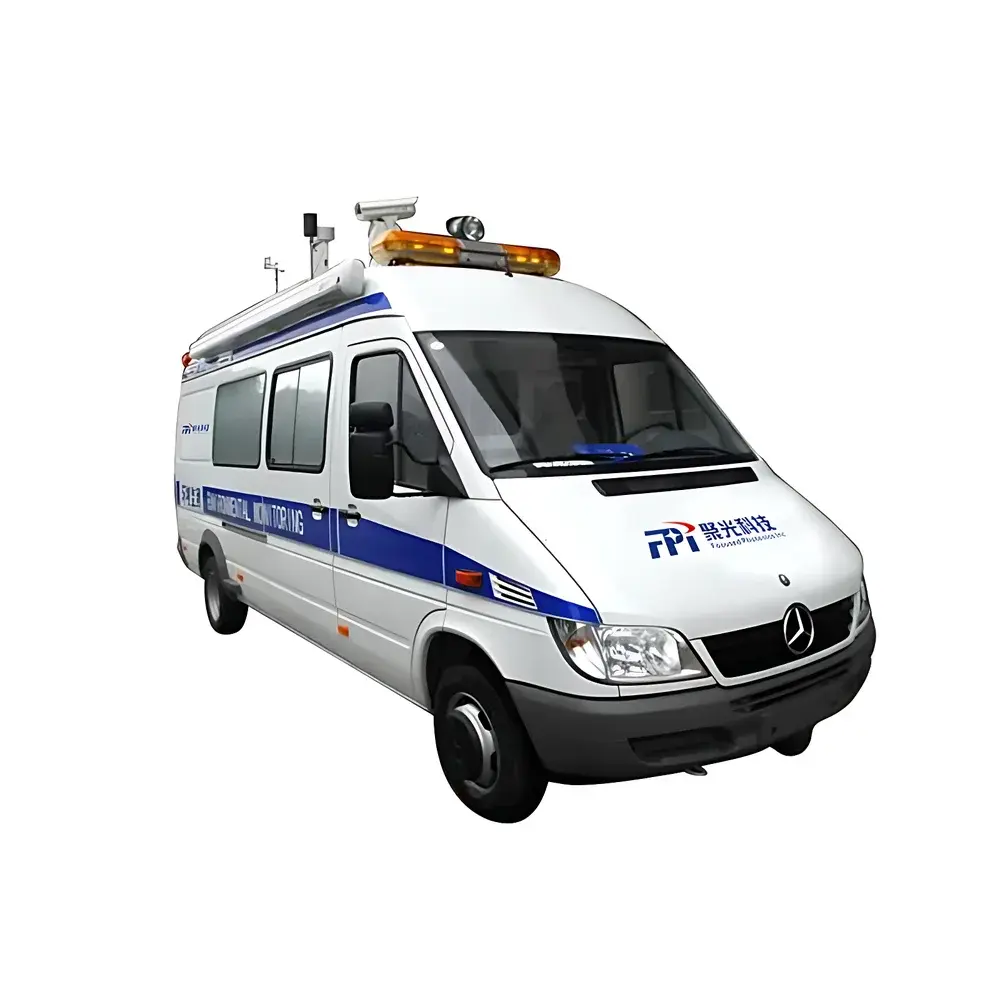
FPI Mobile Emergency Atmospheric Monitoring Vehicle
| Brand | FPI |
|---|---|
| Origin | Zhejiang, China |
| Manufacturer Type | Direct Manufacturer |
| Country of Origin | China |
| Model | Mobile Emergency Atmospheric Monitoring Vehicle |
| Pricing | Available Upon Request |
Overview
The FPI Mobile Emergency Atmospheric Monitoring Vehicle is a fully integrated, vehicle-mounted environmental laboratory engineered for rapid deployment in chemical spills, industrial accidents, natural disasters, and other time-critical air quality emergencies. Built on a reinforced chassis with ISO-compliant structural integrity, the system implements real-time, multi-parameter atmospheric analysis using standardized sampling protocols aligned with EPA Method TO-15, EN 14662, and ISO 16000-28. It operates as a self-contained mobile reference station—capable of delivering regulatory-grade data without reliance on fixed infrastructure—while maintaining full traceability under GLP and ISO/IEC 17025 quality frameworks. The vehicle integrates active sampling, conditioned sample transport, onboard calibration gas management, and meteorological co-location to ensure spatially resolved, temporally synchronized measurements of gaseous pollutants, particulate matter, and ambient conditions.
Key Features
- Modular roof-mounted sampling and meteorological mast—quick-release design enables tool-free installation or removal within 15 minutes; includes anti-rollover stabilization during mast elevation
- Positive-pressure cabin with HEPA-filtered air supply, climate control (18–28 °C operational range), and emergency decontamination suite (eyewash station, chemical-resistant washbasin, and sealed PPE storage)
- Dual redundant power architecture: primary vehicle alternator + 3 kVA uninterruptible power supply (UPS) with 60-minute runtime at full load; optional solar-assisted auxiliary battery bank
- Integrated water management: potable water tank (40 L), wastewater holding tank (30 L), and gravity-fed drainage interface compliant with EPA SPCC requirements
- Real-time telemetry via dual-mode communication: GPRS/4G LTE cellular uplink with fallback to RS-232 serial interface for SCADA integration; GPS module supports NMEA 0183 output and GIS georeferencing at ≤3 m CEP accuracy
- Onboard computing: ruggedized industrial laptop with pre-installed FPI AirData Suite v4.2—supporting automated QA/QC flagging, audit trail logging per FDA 21 CFR Part 11, and export to CSV, NetCDF, and EPA AQS-compatible formats
Sample Compatibility & Compliance
The vehicle accommodates diverse sampling methodologies across gaseous, particulate, and radiological domains. Gaseous analytes—including SO2, NO, NO2, O3, CO, H2S, NH3, Cl2, HF, HCl, VOCs (via PID/FID), and semi-volatiles (e.g., benzene, toluene, styrene)—are quantified using EPA-certified electrochemical, UV photometric, chemiluminescent, and flame ionization detection principles. PM10 and TSP are measured gravimetrically and via beta attenuation (β-ATM), traceable to NIST SRM 1648a. Meteorological parameters (pressure, temperature, relative humidity, wind speed/direction) conform to WMO Guide to Instruments and Observing Methods (WMO-No. 8). All onboard instruments meet CE marking requirements, RoHS compliance, and IEC 61000-4 electromagnetic immunity standards. Optional radiation modules support χ/γ dose rate measurement per IEC 60846-1, with α/β surface contamination detection meeting ISO 7503-1.
Software & Data Management
FPI AirData Suite provides centralized acquisition, visualization, and reporting across all connected sensors. The software enforces instrument-specific calibration schedules, automatically logs zero/span checks, and maintains tamper-evident audit trails with user authentication and role-based access control. Raw sensor outputs are time-stamped with microsecond precision using GPS-synchronized PPS signals. Data archiving complies with ISO/IEC 17025 Clause 7.5.2—ensuring retention of raw files, processed datasets, metadata, and QA records for ≥7 years. Remote diagnostics, firmware updates, and secure data push to cloud platforms (AWS IoT Core or private MQTT broker) are supported. Export modules generate reports compliant with China’s HJ 630-2011, EU Directive 2008/50/EC Annex IX, and US EPA Air Quality System (AQS) submission templates.
Applications
- Rapid response to hazardous material releases (HAZWOPER Level II/III incidents)
- Temporary monitoring during construction, demolition, or remediation activities requiring baseline and impact assessment
- Supplemental verification of stationary network data during high-pollution episodes or model validation campaigns
- Border and port-of-entry screening for illicit chemical transport or fugitive emissions
- Post-disaster air quality triage following wildfires, floods, or industrial explosions
- Mobile source emission profiling along transportation corridors using synchronized GPS-tagged plume mapping
FAQ
What regulatory standards does the vehicle’s data output satisfy?
Data meets reporting requirements for China’s Ambient Air Quality Standards (GB 3095-2012), EU Ambient Air Quality Directives, and U.S. NAAQS implementation guidance—provided instruments are operated and maintained per manufacturer specifications and applicable method validations.
Can the vehicle operate autonomously for extended unattended periods?
Yes—when equipped with extended battery banks and satellite uplink, it supports 72-hour continuous operation with remote health monitoring, though routine calibration and filter changes require manual intervention every 48–72 hours.
Is third-party instrument integration supported?
All analog (4–20 mA, 0–10 V) and digital (RS-485 Modbus RTU, NMEA 0183) interfaces are exposed via terminal blocks and documented in the Integration Handbook; custom drivers for proprietary protocols can be developed under NDA.
How is data security and chain-of-custody ensured?
Full disk encryption (AES-256), TLS 1.3 for wireless transmission, electronic signatures, and immutable audit logs fulfill GDPR Article 32 and HIPAA Security Rule technical safeguards for environmental health data.
What training and documentation are provided?
FPI delivers on-site operator certification (8-hour course), bilingual SOPs (English/Chinese), instrument-specific maintenance manuals, and annual refresher webinars—all traceable to ISO/IEC 17025 Clause 6.2.2 competency requirements.
Related Products







