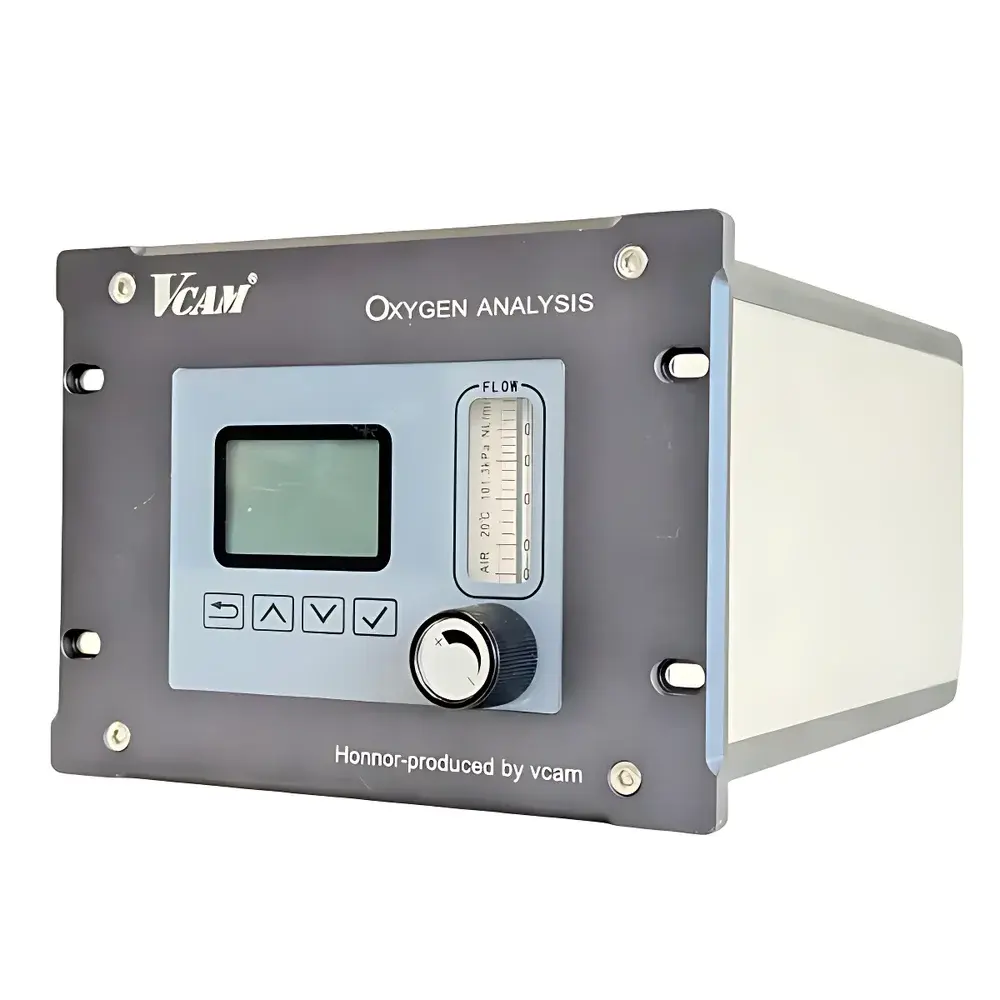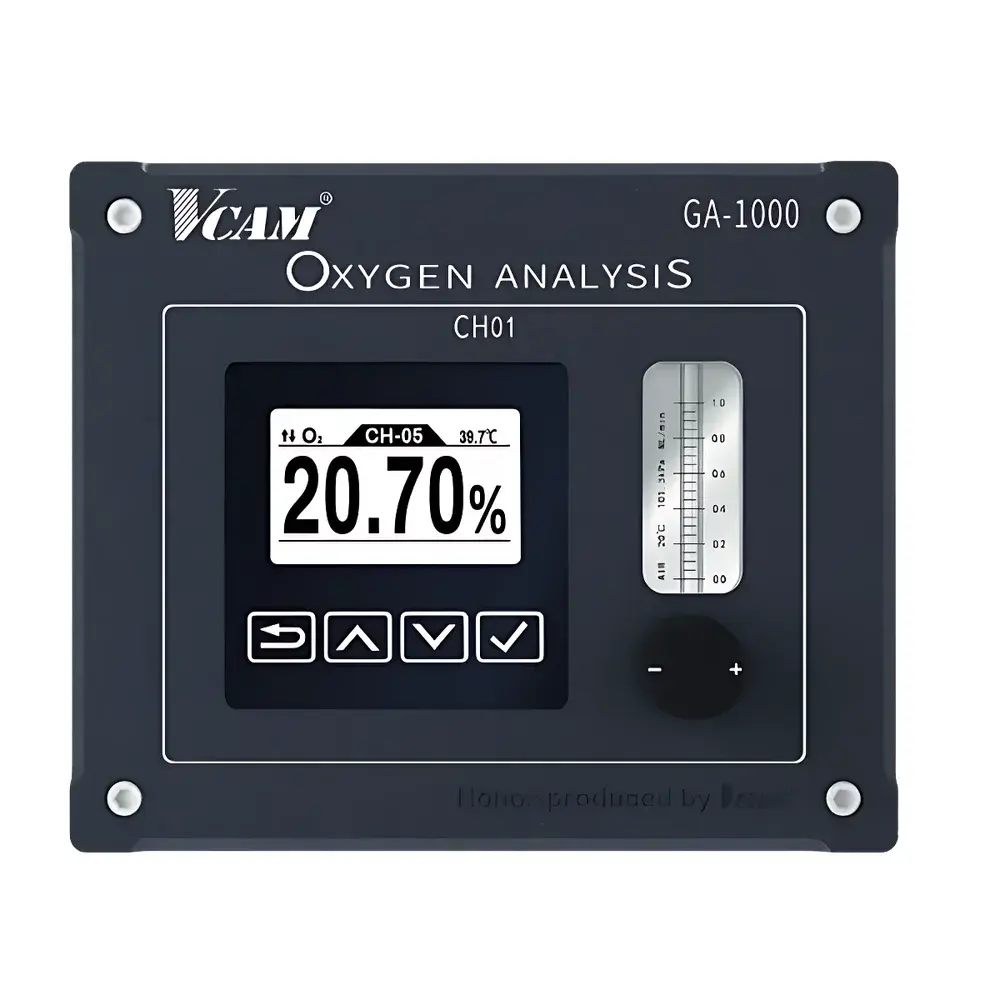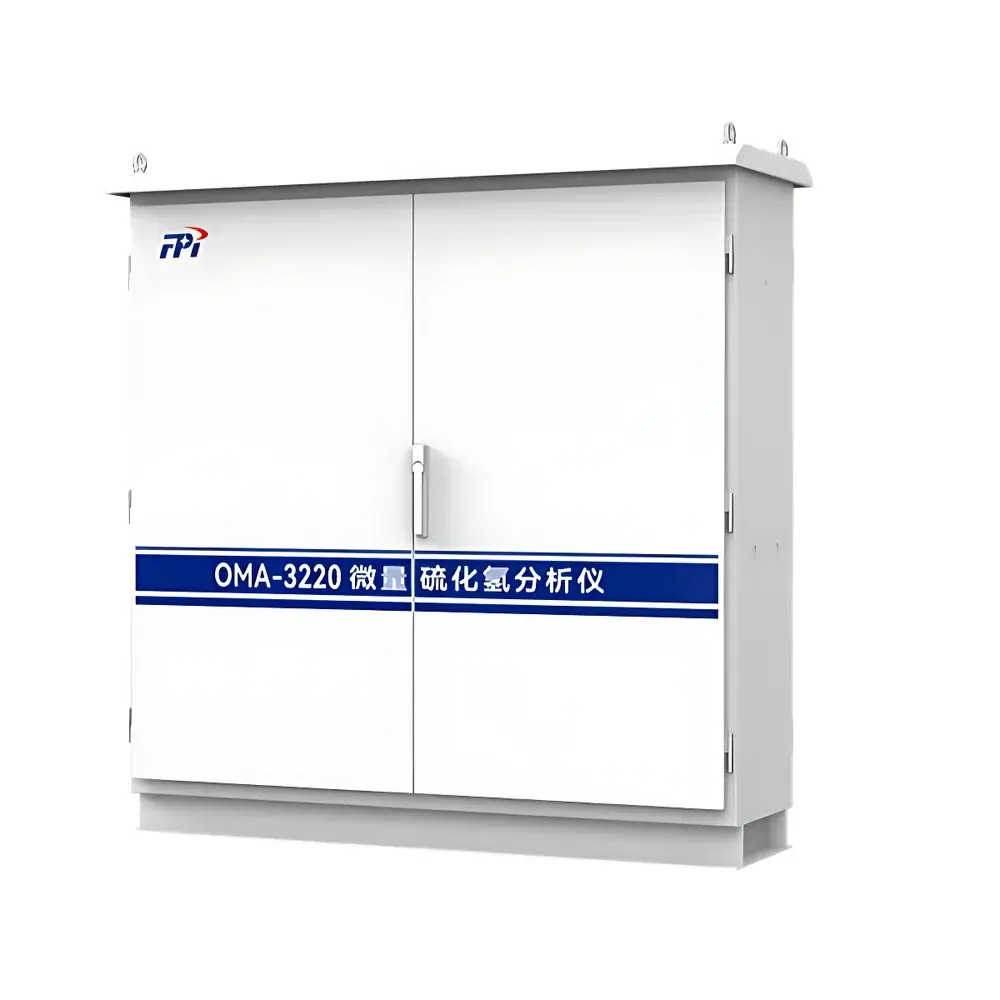
FPI OMA-3220 UV-Based Trace Hydrogen Sulfide Online Gas Analyzer
| Brand | FPI |
|---|---|
| Origin | Zhejiang, China |
| Manufacturer | FPI (Hangzhou) Co., Ltd. |
| Model | OMA-3220 |
| Type | UV Absorption Spectrophotometric Analyzer |
| Detection Principle | Ultraviolet Differential Optical Absorption Spectroscopy (UV-DOAS) |
| Measurement Range | Sub-ppm to low-ppm H₂S |
| Detection Limit | < 10 ppb (typical, dependent on path length and optics) |
| Light Source | Pulsed Xenon Flash Lamp |
| Design | Solid-state, module-based, no moving parts |
| Calibration | Automated zero/span and self-diagnostic cycle |
| Compliance | Designed for continuous industrial process monitoring per IEC 61511 functional safety guidelines (SIL2-capable architecture), compatible with ISO 8573-1 compressed air purity class monitoring workflows |
Overview
The FPI OMA-3220 UV-Based Trace Hydrogen Sulfide Online Gas Analyzer is an industrial-grade, in-situ gas analysis system engineered for continuous, real-time quantification of hydrogen sulfide (H₂S) at trace concentrations in process gas streams. It employs ultraviolet differential optical absorption spectroscopy (UV-DOAS), a well-established physical measurement principle that exploits the unique electronic absorption signature of H₂S in the 200–220 nm spectral region. Unlike electrochemical or metal oxide semiconductor sensors—whose performance degrades under high humidity, hydrocarbon interference, or sulfur poisoning—the OMA-3220 relies on non-contact, optical path-based detection, ensuring long-term stability and immunity to catalytic surface fouling. Its optical architecture features a temperature-stabilized, pulsed xenon flash lamp as the broadband UV source and a high-resolution CCD spectrometer with thermoelectric cooling, enabling precise spectral acquisition and robust baseline correction. The analyzer is designed for permanent installation in hazardous area Zone 2/Class I Div 2 environments (with appropriate enclosure), supporting uninterrupted operation in refinery off-gas lines, syngas purification units, natural gas sweetening trains, and coal-to-chemical process vents.
Key Features
- UV-DOAS core technology delivering sub-ppb-level detection limits (typically <10 ppb H₂S at 1 m path length), validated against NIST-traceable calibration standards;
- Full-spectrum acquisition (200–220 nm) coupled with multivariate chemometric algorithms (e.g., partial least squares regression) to resolve H₂S signals in presence of common interferents including SO₂, NO₂, aromatic hydrocarbons, and water vapor;
- Integrated auto-zeroing via nitrogen-purged reference channel and automated span verification using certified H₂S standard gas pulses (optional external calibrator interface supported);
- Modular, solid-state construction with no mechanical choppers, rotating filters, or flow-dependent sensing elements—minimizing drift and eliminating scheduled optical alignment;
- Ruggedized optical bench with fused silica windows, IP65-rated housing, and operating temperature range of −20 °C to +50 °C ambient;
- Dual analog outputs (4–20 mA isolated), Modbus RTU/TCP, and Ethernet/IP protocol support for seamless integration into DCS, PLC, and MES platforms.
Sample Compatibility & Compliance
The OMA-3220 is optimized for dry or moderately humid (dew point ≤ −20 °C) process gases with particulate loading < 1 mg/m³. Sample conditioning—when required—is implemented externally via heated sample line, coalescing filter, and permeation dryer (not included). The analyzer complies with electromagnetic compatibility requirements per EN 61326-1 and safety standards per EN 61010-1. Its architecture supports audit-ready data integrity protocols: all calibration events, zero checks, and diagnostic logs are time-stamped, user-identifiable, and stored locally with 30-day circular buffer—fully aligned with ALCOA+ principles for regulated industries. While not intrinsically safe, it meets ATEX/IECEx mounting requirements when installed in approved enclosures, and its software architecture accommodates 21 CFR Part 11-compliant electronic signatures when deployed with FPI’s optional secure firmware package.
Software & Data Management
The embedded Linux-based firmware provides a web-accessible HMI (HTTP/HTTPS) for configuration, diagnostics, and real-time trend visualization. Historical data export supports CSV and OPC UA formats. Optional FPI Insight™ cloud platform enables remote fleet monitoring, predictive maintenance alerts (e.g., lamp intensity decay rate tracking), and cross-site benchmarking. All raw spectra, processed concentration values, and system health metrics are timestamped with microsecond precision and retain full traceability to factory calibration certificates. Audit trails include operator login/logout, parameter changes, and forced calibration actions—enabling compliance with GLP and GMP documentation requirements in petrochemical QA/QC laboratories.
Applications
- Real-time H₂S monitoring in amine regenerator overheads and Claus plant feed streams for sulfur recovery optimization;
- Trace sulfide detection in polymer-grade ethylene and propylene feedstocks per ASTM D6420 specifications;
- Continuous compliance verification against EPA Method 15/EN 14791 for flare gas and vent emissions reporting;
- In-line verification of H₂S removal efficiency in activated carbon or zinc oxide guard beds;
- Process safety interlock signaling in biogas upgrading systems where H₂S corrosion thresholds must be maintained below 4 ppm.
FAQ
What is the recommended sample gas pressure and flow rate for optimal OMA-3220 performance?
Nominal inlet pressure: 100–150 kPa (abs); flow rate: 0.5–2.0 L/min, with laminar flow profile and minimal pulsation. Back-pressure regulation is advised for high-pressure process taps.
Can the OMA-3220 measure H₂S in the presence of high CO₂ or H₂O vapor?
Yes—the chemometric algorithm is trained on multi-component gas matrices including up to 30% CO₂ and relative humidity up to 80% RH; spectral cross-talk is actively modeled and subtracted during real-time quantification.
Is field recalibration required, and how often?
Zero calibration is performed automatically every 24 hours; span verification is recommended quarterly using certified 1 ppm H₂S/N₂ standard gas; full factory recalibration is advised every 24 months or after optical window replacement.
Does the analyzer support integration with safety instrumented systems (SIS)?
Yes—via configurable 4–20 mA output with HART 7 or discrete relay outputs (optional), compliant with IEC 61511 for SIL2 loop implementation when used with certified logic solvers.
What maintenance tasks are required during routine operation?
Annual inspection of optical windows for contamination; biannual verification of purge gas integrity (if used); no lamp or detector replacement is needed within first 5 years under typical duty cycles (lamp lifetime > 2 × 10⁹ flashes).