
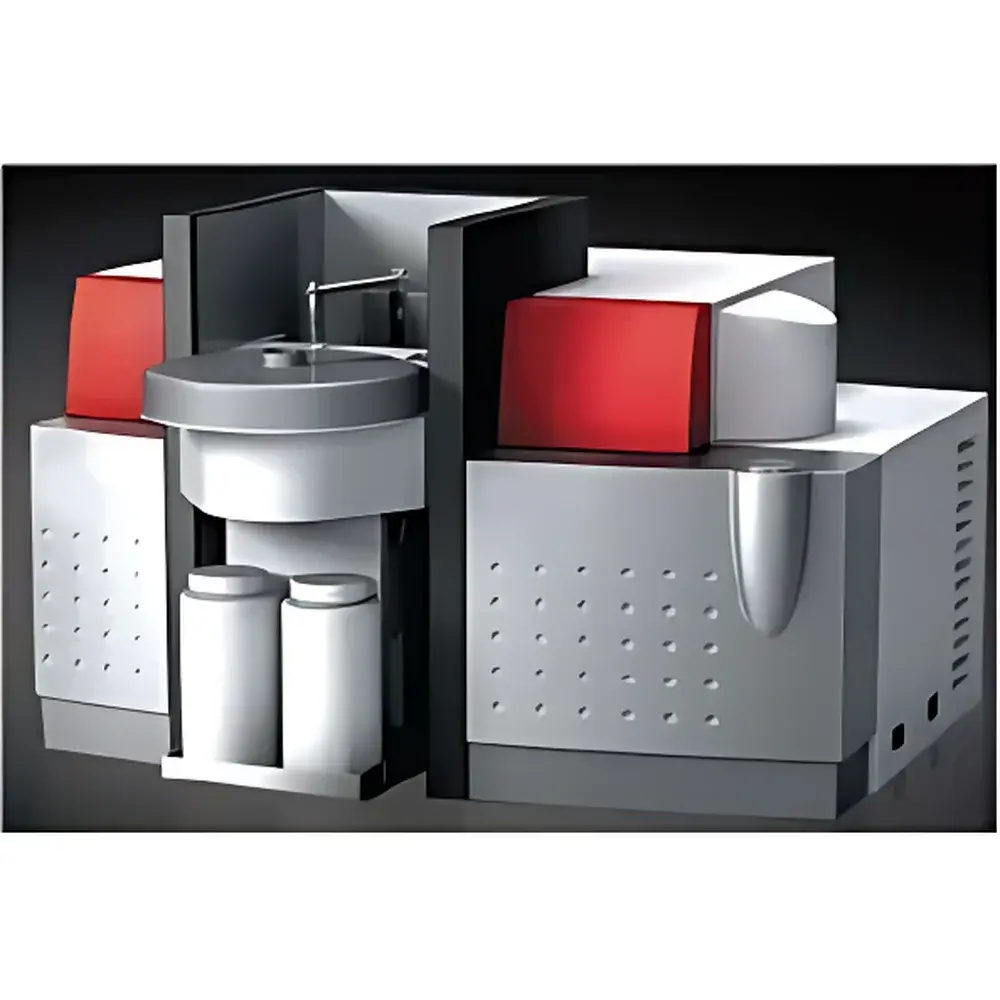
FPI SP-3800 Series Atomic Absorption Spectrometer
| Brand | FPI |
|---|---|
| Origin | Zhejiang, China |
| Manufacturer Type | Original Equipment Manufacturer (OEM) |
| Product Category | Domestic |
| Model | SP-3800 Series |
| Pricing | Upon Request |
Overview
The FPI SP-3800 Series Atomic Absorption Spectrometer is a dual-mode analytical instrument engineered for quantitative elemental analysis in trace and ultra-trace concentration ranges (sub-ppb to ppm). It operates on the fundamental principle of atomic absorption spectroscopy (AAS), wherein ground-state free atoms in a flame or graphite furnace absorb characteristic radiation from a hollow cathode lamp (HCL) or electrodeless discharge lamp (EDL). The magnitude of absorbance—measured at element-specific wavelengths across the 190–900 nm spectral range—is directly proportional to analyte concentration via the Beer–Lambert law. The SP-3800 integrates a fully corrected achromatic optical system with high-fidelity wavelength isolation, enabling stable baseline performance and minimal stray light interference. Its dual-path design supports independent flame AAS (FAAS) and graphite furnace AAS (GFAAS) operation without mechanical realignment, ensuring long-term photometric reproducibility and minimizing downtime during method switching.
Key Features
- Full-spectrum achromatic optical system with <1200 lines/mm holographic grating and <0.15 nm spectral bandwidth, optimized for signal-to-noise ratio and peak resolution.
- Dual background correction architecture: Deuterium lamp (D₂) correction with automatic optical energy balancing (±0.5% intensity stability) and self-reversal (SR) background correction with intelligent dynamic balance—capable of correcting up to 85× absorbance (1.0 Abs) in GFAAS mode.
- Dedicated flame and graphite furnace atomization modules with thermally isolated mounting and active cooling to suppress thermal drift.
- Integrated graphite furnace autosampler with 87-position sample tray; accommodates standard 2 mL vials and 6 mL reagent vials for matrix modifiers.
- Precision syringe-based liquid handling: 500 µL glass syringe with programmable aspiration/injection volume (1–100 µL), volumetric accuracy ±0.2 µL, and multi-step injection protocols including thermal injection, repeated micro-injection for analyte enrichment, and air-gap isolation between samples.
- Automated matrix modifier addition, standard curve generation (linear/non-linear), intelligent dilution series, and post-run furnace cleaning with integrated ashing and pyrolysis temperature ramping.
Sample Compatibility & Compliance
The SP-3800 supports aqueous, acidic (HNO₃/HCl ≤5%), and organic-solvent-diluted matrices following validated sample preparation protocols. Flame mode is suitable for elements with moderate volatility (e.g., Ca, Mg, Fe, Cu, Zn), while graphite furnace enables determination of refractory elements (e.g., As, Cd, Pb, Se, Cr) in complex biological, environmental, and food matrices. The system complies with ISO/IEC 17025:2017 requirements for analytical competence and supports audit-ready data integrity under GLP and GMP environments. Software logging meets FDA 21 CFR Part 11 criteria for electronic records and signatures when configured with user access control, audit trail, and secure archive export.
Software & Data Management
Win-AAS workstation software runs natively on Windows 10/11 (64-bit) and provides full instrument control, method development, and quantitative reporting. It implements six calibration algorithms—including linear, quadratic, cubic, log-log, spline, and weighted least-squares regression—as well as standard addition and interpolation methods. Statistical output includes mean absorbance/concentration, standard deviation (SD), relative standard deviation (RSD %), detection limit estimation (3σ), and confidence intervals. All parameter configurations, sequence logs, raw spectra, and processed results are stored in a structured SQLite database with timestamped metadata and operator ID linkage. Export formats include CSV, PDF reports, and XML-compliant analytical data interchange (ADIF) for LIMS integration.
Applications
The SP-3800 is routinely deployed in environmental testing laboratories for heavy metal monitoring in drinking water (EPA Method 7000B), soil leachates (TCLP), and wastewater effluents; in clinical labs for serum/urine trace element profiling (e.g., Zn, Cu, Fe in nutritional assessment); in food safety programs for contaminant screening (Cd in rice, Pb in spices per ISO 11885); and in metallurgical QC for alloy composition verification. Optional hydride generation accessories extend capability to volatile species (As, Sb, Bi, Sn, Te, Se, Ge) per ASTM D6720 and ISO 15586 methodologies.
FAQ
Does the SP-3800 support regulatory compliance for pharmaceutical QC?
Yes—when operated with validated methods and enabled audit trail features, it fulfills ICH Q2(R2) analytical procedure validation requirements and supports 21 CFR Part 11–compliant workflows.
Can the instrument switch between flame and graphite furnace modes during a single run?
No—mode selection is fixed per analytical sequence; however, hardware isolation ensures no cross-contamination or optical recalibration is required between sessions.
Is remote diagnostics or firmware update supported?
Firmware updates are performed locally via USB or network transfer; remote diagnostic support is available through FPI’s authorized service portal with prior customer consent and encrypted session protocols.
What maintenance intervals are recommended for the graphite furnace and autosampler?
Graphite tube replacement is advised every 200–500 firings depending on matrix load; autosampler syringe seals require inspection every 1,000 injections, and furnace platform alignment should be verified quarterly using NIST-traceable reference standards.
Are application notes or method templates provided for common regulatory tests?
Yes—FPI supplies pre-validated method files for EPA 7000B, ISO 11885, GB/T 5009.12–2017, and USP /, including instrument parameters, calibration sequences, and QC acceptance criteria.



