
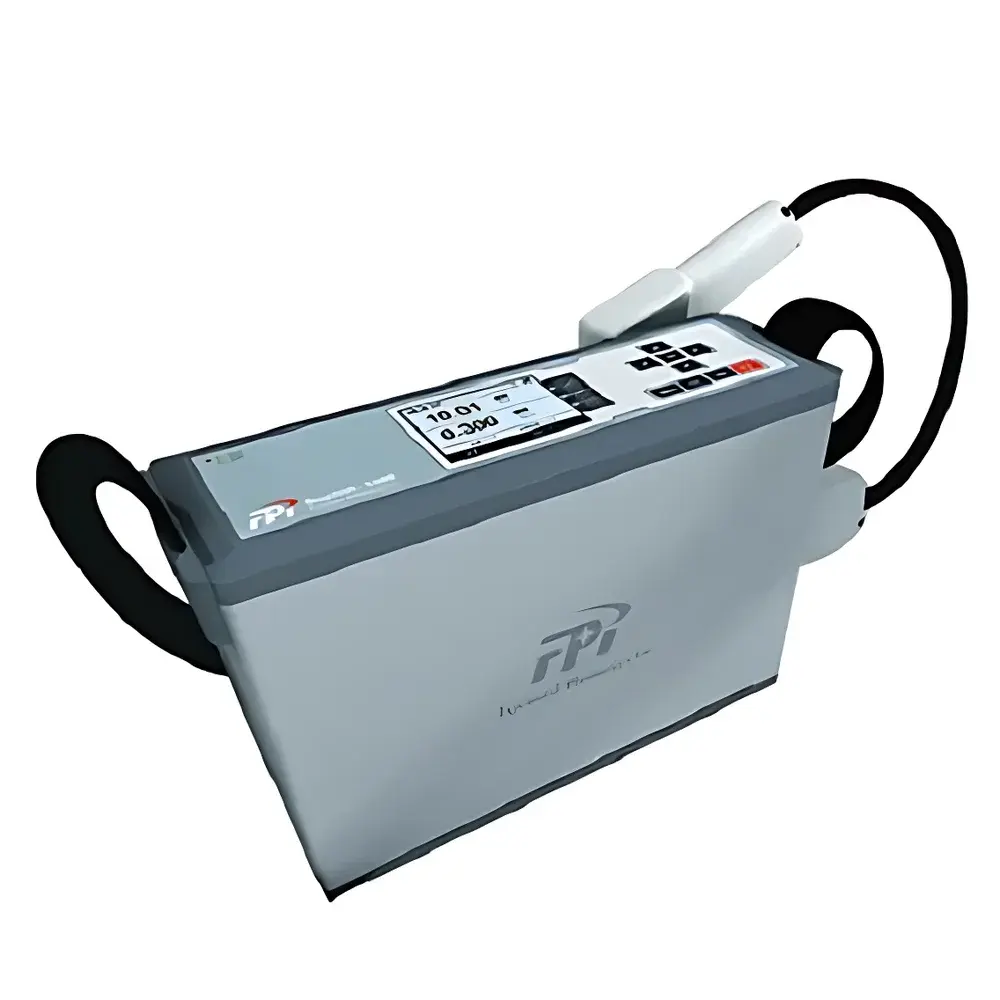
FPI SupNIR-1500 Portable Near-Infrared Spectrometer
| Brand | FPI |
|---|---|
| Origin | Beijing, China |
| Manufacturer Type | Original Equipment Manufacturer (OEM) |
| Country of Origin | China |
| Model | SupNIR-1500 |
| Pricing | Available Upon Request |
Overview
The FPI SupNIR-1500 Portable Near-Infrared Spectrometer is an engineered solution for field-deployable, non-destructive chemical and physical property analysis. Based on diffuse reflectance and transmission spectroscopy in the short-wave near-infrared (SW-NIR) region, it operates on the principle that molecular overtones and combination vibrations—particularly those involving C–H, N–H, and O–H bonds—exhibit characteristic absorption features between 1000 nm and 1800 nm. The instrument integrates a holographic digital grating monochromator with a thermoelectrically cooled (TEC) indium gallium arsenide (InGaAs) photodetector, ensuring thermal stability and signal reproducibility under variable ambient conditions. Its compact, battery-powered architecture enables operation in laboratories, production floors, farms, warehouses, and mobile testing units—without dependency on fixed infrastructure or external power sources.
Key Features
- Optical configuration: Holographic digital grating spectrometer coupled with TEC-stabilized InGaAs detector (operating temperature maintained at –5 °C ± 0.2 °C)
- Spectral range: 1000–1800 nm with nominal resolution ≤ 10 nm (FWHM), optimized for robust chemometric modeling
- Modular probe interface supporting interchangeable contact and non-contact probes for both diffuse reflectance and transmittance measurements
- Integrated rechargeable Li-ion battery providing ≥ 6 hours of continuous operation under typical measurement duty cycles
- Onboard 32 GB internal storage, high-resolution color LCD display (800 × 480), and intuitive touchscreen GUI for standalone calibration deployment and result visualization
- Ruggedized magnesium alloy housing rated IP54 for dust and splash resistance; operating temperature range: 0–40 °C
Sample Compatibility & Compliance
The SupNIR-1500 accommodates heterogeneous sample forms—including granular solids, powders, tablets, pastes, gels, and low-turbidity liquids—without preprocessing or reagent addition. Its modular probe system supports fiber-optic reflectance probes (e.g., bifurcated 6 + 1 bundle), immersion transmittance probes, and integrating sphere attachments to ensure consistent pathlength and illumination geometry across diverse matrices. The instrument complies with IEC 61326-1:2013 for electromagnetic compatibility in industrial environments and meets CE marking requirements for safety and radio emissions. While not certified for GMP-regulated release testing, its data acquisition architecture supports audit-trail-capable software integration (via RIMP) aligned with GLP documentation practices and FDA 21 CFR Part 11 principles when deployed with validated computer systems.
Software & Data Management
The SupNIR-1500 operates natively via embedded firmware for rapid prediction execution using preloaded PLS, PCR, or SVM regression models. For method development and validation, it interfaces with the RIMP (Remote Instrument Management Platform) software suite running on Windows-based PCs. RIMP provides full spectral preprocessing (Savitzky–Golay smoothing, SNV, MSC, derivatives), multivariate calibration tools, cross-validation diagnostics, outlier detection, and model version control. All raw spectra, metadata (time stamp, GPS coordinates if enabled via optional module), and prediction logs are stored in HDF5 format—ensuring interoperability with MATLAB, Python (h5py), and industry-standard chemometrics platforms such as Unscrambler X and Pirouette. Export options include CSV, XML, and PDF reports compliant with internal QA documentation workflows.
Applications
- Agricultural science: Rapid quantification of moisture, protein, starch, and oil content in cereal grains, oilseeds, and forage crops during breeding trials and harvest assessment
- Pharmaceutical QA/QC: Identification of excipient blends, verification of tablet coating uniformity, and real-time monitoring of granule drying endpoints
- Food safety & quality: Detection of adulteration (e.g., melamine in milk powder), authentication of origin (e.g., olive oil varietals), and shelf-life prediction based on lipid oxidation markers
- Textile and polymer analysis: Fiber type identification (cotton vs. polyester vs. nylon), moisture regain measurement, and additive concentration profiling in synthetic filaments
- Chemical manufacturing: In-line verification of solvent composition, catalyst loading, and reaction conversion in batch and semi-batch processes
FAQ
What spectral resolution does the SupNIR-1500 achieve across its 1000–1800 nm range?
The instrument delivers a nominal optical resolution of ≤ 10 nm (FWHM) across the full spectral window, sufficient for resolving key functional group absorptions relevant to routine quantitative analysis.
Can the SupNIR-1500 be used for regulatory submissions under FDA or EMA guidelines?
While the hardware meets general EMC and safety standards, formal regulatory acceptance requires full system validation—including IQ/OQ/PQ protocols, model robustness testing, and software audit trail implementation—performed by the end user or qualified third party.
Is spectral library sharing supported between multiple SupNIR-1500 units?
Yes. Calibration models and spectral libraries generated in RIMP can be exported as encrypted .rmp files and deployed across networked instruments, enabling standardized analytical methods across distributed sites.
Does the device support GPS-tagged spectral acquisition for field mapping applications?
GPS functionality is available as an optional add-on module; when installed, geotagged spectra are embedded with WGS84 coordinates and timestamp metadata in the native HDF5 container.
What is the recommended maintenance interval for the InGaAs detector’s TEC cooling system?
No scheduled maintenance is required for the solid-state TEC assembly; however, annual verification of baseline thermal stability (±0.2 °C drift over 8 h) is advised as part of preventive calibration checks.




