
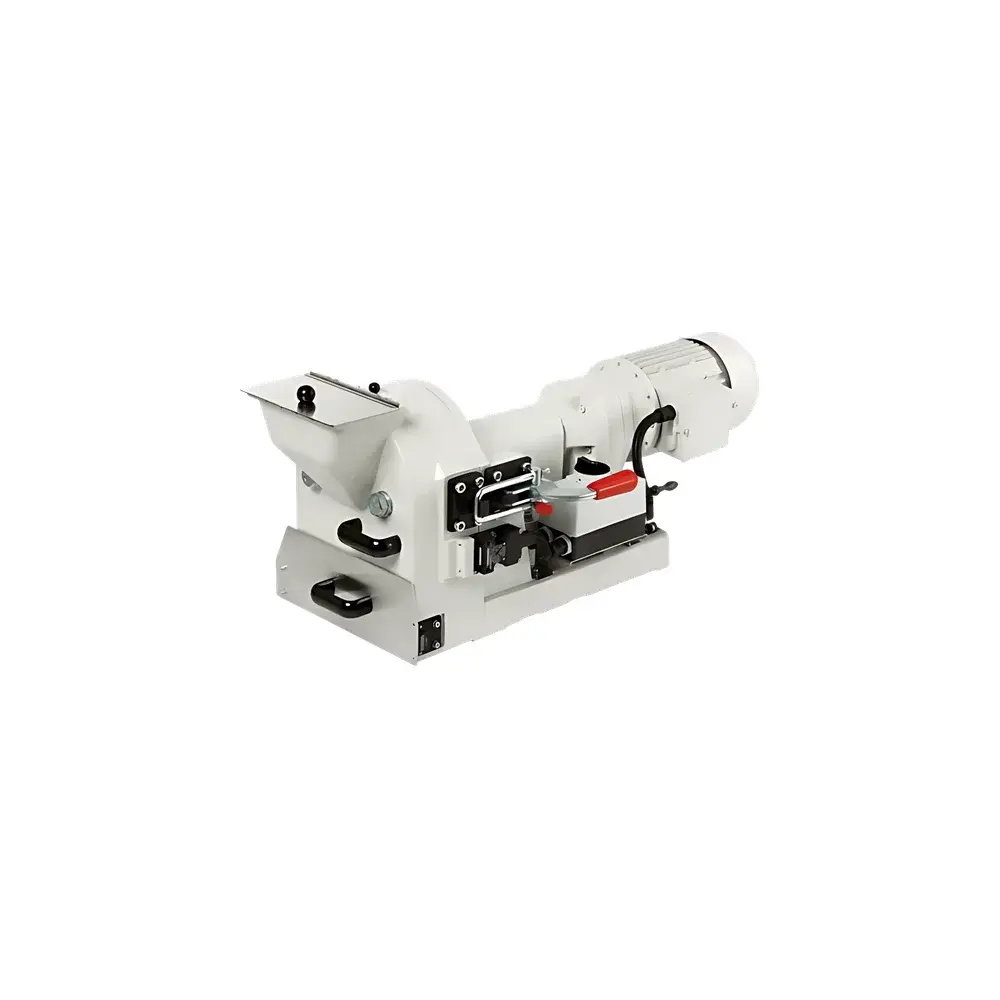
FRITSCH PULVERISETTE 13 Classic Disc Mill
| Brand | FRITSCH |
|---|---|
| Origin | Germany |
| Model | PULVERISETTE 13 Classic |
| Maximum Feed Size | < 20 mm |
| Throughput | up to 150 kg/h |
| Final Particle Size Range | 0.1 – 12 mm (adjustable) |
| Disc Rotation Speed | 440 rpm |
| Electrical Supply | 400 V / 3~ / 50–60 Hz |
| Power Consumption | 1830 W |
| Net Weight | 140 kg |
| Gross Weight | 170 kg |
| Dimensions (W × H × L) | 44 × 87 × 40 cm |
| Grinding Disc Materials | Stainless Steel, Manganese Steel, Tungsten Carbide, Zirconia Oxide |
Overview
The FRITSCH PULVERISETTE 13 Classic Disc Mill is a robust, precision-engineered laboratory disc mill designed for coarse to medium-fine size reduction of brittle, fibrous, and moderately hard materials. Operating on the principle of shear and compressive forces generated between two counter-rotating or opposed rotating discs — one stationary and one driven — the instrument delivers consistent particle size distribution through controlled mechanical impact and friction. Unlike high-speed rotor mills or planetary ball mills, the PULVERISETTE 13 employs a fixed-gap disc geometry that enables reproducible, scalable comminution without significant heat generation or sample contamination from excessive attrition. Its design prioritizes operational safety, long-term mechanical stability, and compliance with European machinery directives (2006/42/EC), making it suitable for routine QC laboratories, R&D facilities, and pre-processing workflows in geology, metallurgy, cement, ceramics, and environmental sample preparation.
Key Features
- Adjustable grinding gap mechanism enabling precise control over final particle size (0.1–12 mm), calibrated via micrometer-scale positioning for repeatable process parameters.
- Reversible motor rotation functionality — automatically alternating disc rotation direction after predefined operating intervals — significantly extends disc service life by distributing wear evenly across both disc surfaces.
- Modular disc assembly compatible with four certified grinding materials: stainless steel (for general-purpose use), manganese steel (enhanced toughness for abrasive minerals), tungsten carbide (extreme wear resistance), and zirconia oxide (non-metallic, chemically inert grinding for trace-metal-sensitive applications).
- Integrated dust extraction interface compliant with EN 60335-1 and ISO 16000-7 standards; seamlessly connects to standard laboratory vacuum or central dust collection systems to maintain operator exposure below OEL (Occupational Exposure Limit) thresholds.
- Stainless-steel housing with IP54-rated enclosure and emergency stop circuitry; meets CE marking requirements for industrial laboratory environments under GLP and ISO/IEC 17025-accredited operations.
Sample Compatibility & Compliance
The PULVERISETTE 13 handles dry, free-flowing, non-sticky samples including ores, slag, limestone, coal, clinker, gypsum, soil aggregates, and ceramic raw materials. It is not intended for wet, oily, elastic, or thermolabile substances. When paired with the FRITSCH P-1 Jaw Crusher as a front-end stage, the system achieves sequential size reduction from >50 mm feed down to ≤1 mm output — satisfying ASTM C110, ISO 679, and EN 196-1 sample preparation protocols for cement and building material testing. All disc materials are certified according to DIN EN 10088-1 (stainless steels), ISO 4527 (tungsten carbide), and ISO 13356 (zirconia), ensuring traceability and material conformity documentation per EU Regulation (EC) No 765/2008.
Software & Data Management
While the PULVERISETTE 13 Classic operates as a stand-alone electromechanical unit without embedded digital control, its mechanical repeatability supports full integration into automated lab workflows. Users may log operational parameters (e.g., run time, disc material, gap setting, feed batch ID) manually or via external LIMS-compatible spreadsheets aligned with ISO/IEC 17025 clause 7.5.2 (control of equipment records). Optional FRITSCH LabSuite™ data acquisition modules (sold separately) enable timestamped torque monitoring, rotational speed verification, and cycle counting — supporting audit-ready documentation for FDA 21 CFR Part 11-compliant environments when deployed with electronic signature-enabled validation packages.
Applications
- Preparation of homogenized reference samples for XRF, XRD, and ICP-OES analysis in geochemical and metallurgical labs.
- Routine particle size reduction prior to sieve analysis (ASTM D6913) or laser diffraction (ISO 13320) measurement.
- Standardized comminution of cement clinker and blended cements per EN 196-1 Annex A for strength testing.
- Production of representative sub-samples from bulk mineral shipments for assay validation and quality certification.
- Research-scale milling of construction aggregates to evaluate grading curves and binder compatibility in asphalt and concrete formulation.
FAQ
Can the PULVERISETTE 13 be used for cryogenic grinding?
No — the instrument is designed exclusively for ambient-temperature dry grinding; no liquid nitrogen jacketing or low-temperature motor rating is provided.
Is calibration required before first use?
Yes — initial gap calibration using the supplied gauge blocks and micrometer scale must be performed per FRITSCH Operation Manual Section 4.2 to ensure dimensional accuracy and inter-laboratory comparability.
What maintenance intervals are recommended?
Lubrication of the main drive bearings every 500 operating hours; inspection of disc surface integrity and fastener torque every 1000 hours; full mechanical alignment check annually or after 2000 kg cumulative throughput.
Does FRITSCH provide GMP-compliant documentation packages?
Yes — upon request, IQ/OQ documentation templates, material certificates for grinding components, and FAT/SAT reports are available for regulated pharmaceutical and food-grade applications.



