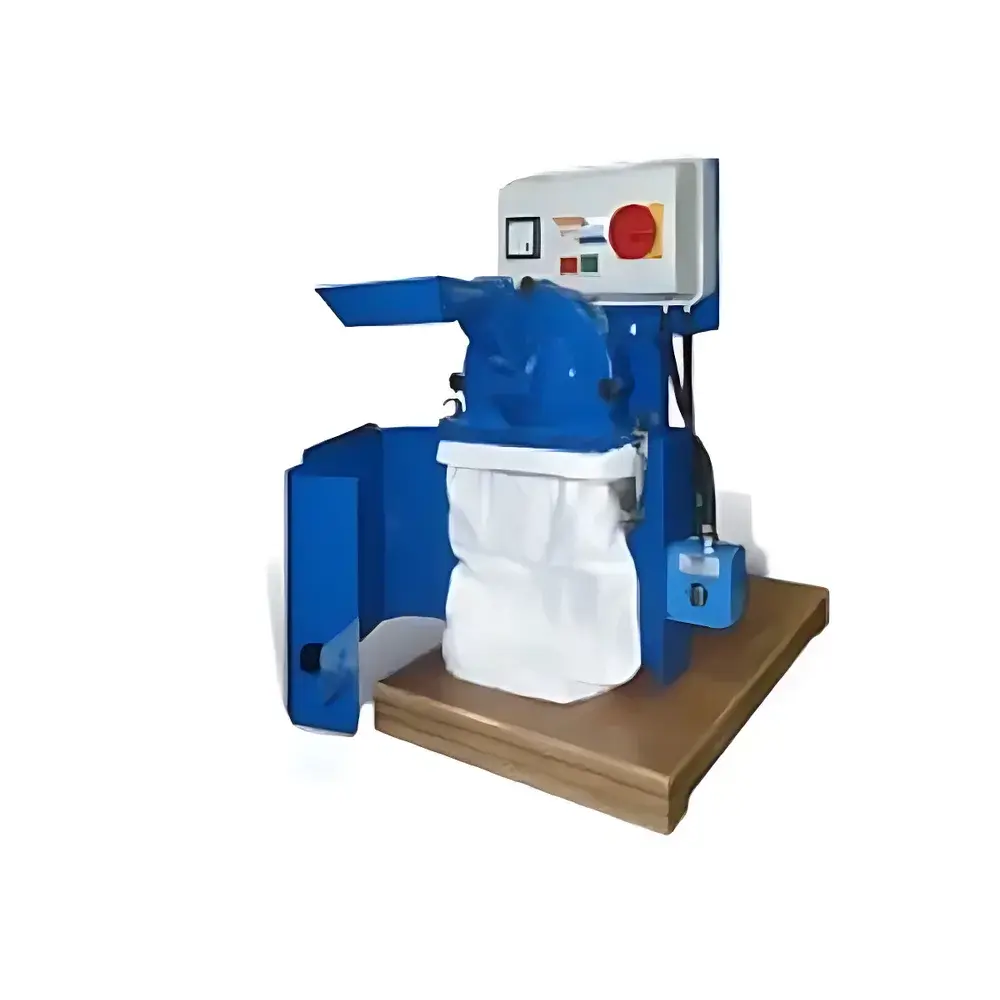
FT2 Hammer Mill / Powder Mixer
| Brand | Armfield |
|---|---|
| Origin | United Kingdom |
| Model | FT2 |
| Type | Benchtop Hammer Mill with Replaceable Perforated Screens |
| Screen Options | 8 interchangeable perforated plates (standard aperture range: 0.5 mm to 6.0 mm) |
| Drive System | Single-phase induction motor with thermal overload protection |
| Safety Compliance | CE-marked, conforms to EN 61000-6-3 (EMC) and EN 61000-6-2 (immunity) |
| Construction | Stainless steel grinding chamber and feed hopper, anodized aluminum housing |
| Cleaning | Tool-free disassembly of rotor assembly, screen retention ring, and hopper for full-access cleaning |
| Power Supply | 230 V AC, 50 Hz, 1.1 kW |
Overview
The Armfield FT2 Hammer Mill / Powder Mixer is a benchtop laboratory-scale comminution and homogenization instrument engineered for reproducible particle size reduction and dry powder blending in food science, cereal chemistry, and quality control laboratories. Operating on the principle of high-speed impact milling, the FT2 utilizes a horizontally mounted, dynamically balanced rotor fitted with hardened steel hammers that rotate at fixed speed (typically 3,000 rpm under standard configuration) within a stainless steel grinding chamber. Material fed through the top hopper undergoes successive collisions with the hammers and chamber walls, followed by size classification via gravity-assisted passage through one of eight user-selectable perforated screens. This design ensures consistent throughput and narrow particle size distribution—critical for standardized flour testing protocols such as those defined in ISO 21415-1 (cereal and cereal products — determination of particle size distribution) and AACC Method 26-50A (Farinograph sample preparation). Unlike continuous industrial hammer mills, the FT2 integrates controlled batch operation with rapid changeover capability, supporting method validation and small-batch R&D without cross-contamination risk.
Key Features
- Eight interchangeable perforated screens (apertures from 0.5 mm to 6.0 mm), enabling precise control over final particle size and facilitating method transfer across analytical workflows.
- Fully tool-free disassembly: rotor shaft, hammer carrier, screen retention ring, and feed hopper detach without wrenches or torque tools—reducing cleaning time and minimizing operator exposure to sharp edges.
- Stainless steel grinding chamber and hopper meet FDA 21 CFR Part 117 (Current Good Manufacturing Practice in Manufacturing, Packing, or Holding Human Food) requirements for food contact surfaces.
- Integrated thermal overload protection prevents motor damage during extended operation or accidental feed blockage.
- CE-marked construction compliant with EU Machinery Directive 2006/42/EC and electromagnetic compatibility standards EN 61000-6-2 and EN 61000-6-3.
- Benchtop footprint (W × D × H: 320 × 410 × 540 mm) optimized for integration into ISO/IEC 17025-accredited laboratory workspaces with limited floor area.
Sample Compatibility & Compliance
The FT2 accommodates dry, free-flowing granular and milled materials including wheat flour, durum semolina, rice bran, malted barley, and dehydrated vegetable powders. It is unsuitable for fibrous, oily, or hygroscopic samples without prior conditioning. All wetted components are fabricated from AISI 304 stainless steel (EN 10088-1), passivated per ASTM A967, and validated for repeated cleaning with alkaline detergent solutions and hot water sanitization (≥82 °C). The unit supports GLP-compliant documentation when paired with Armfield’s optional digital logbook module (sold separately), which records screen selection, run duration, and operator ID—traceable to audit trails required under ISO/IEC 17025 clause 7.7 and FDA 21 CFR Part 11 electronic record provisions.
Software & Data Management
The FT2 operates as a standalone mechanical system with no embedded firmware or proprietary software. However, its deterministic operational parameters—screen type, feed mass (recommended 100–500 g per batch), and nominal run time (15–60 s)—are fully documented in the Armfield FT2 User Manual (Revision 4.2, 2023), which includes calibration procedures for screen aperture verification using certified gauge pins (ISO 6507-1). For laboratories implementing LIMS integration, raw output data (e.g., screen used, batch weight, elapsed time) may be manually entered or imported via CSV templates compatible with LabWare LIMS v11+, Thermo Fisher SampleManager, or Agilent OpenLab ECM.
Applications
- Preparation of standardized flour samples for farinograph, extensograph, and alveograph testing per ICC Standard Methods No. 115/1 and AACC International Approved Methods.
- Particle size distribution analysis of breakfast cereals and snack food ingredients prior to extrusion or baking trials.
- Homogenization of composite spice blends where uniform dispersion of low-dose actives (e.g., antioxidants, vitamins) is essential.
- Grinding of reference materials for proficiency testing schemes administered by FAPAS and AOAC INTERNATIONAL.
- Rapid prototyping of alternative grain formulations (e.g., gluten-free flours, legume-based composites) requiring controlled particle morphology.
FAQ
Is the FT2 suitable for grinding heat-sensitive ingredients?
No—the FT2 generates localized frictional heating during operation. For thermolabile compounds (e.g., enzymes, probiotics), cryogenic milling or jet milling alternatives are recommended.
Can the FT2 be used for wet milling or slurry processing?
No—it is strictly designed for dry, free-flowing powders. Introduction of moisture will cause screen clogging and rotor imbalance.
What maintenance schedule is recommended for routine use?
Inspect hammer wear every 50 operating hours; replace hammers when edge radius exceeds 0.3 mm per ISO 8503-2 visual comparator. Lubricate rotor bearings annually using ISO VG 68 synthetic grease.
Does Armfield provide IQ/OQ documentation for GMP environments?
Yes—Factory Acceptance Test (FAT) reports and Installation Qualification (IQ) templates are available upon request. Operational Qualification (OQ) protocols must be developed in-house per user-specific process parameters and regulatory jurisdiction.