
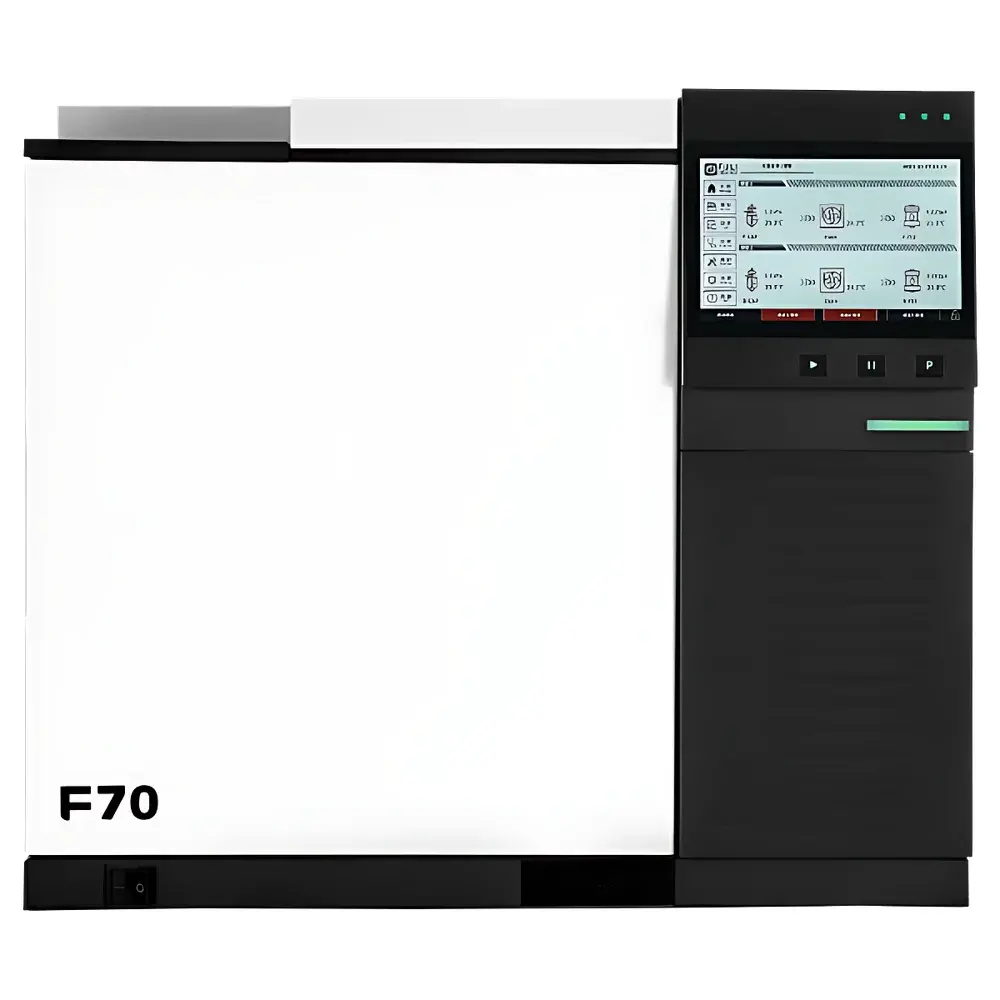
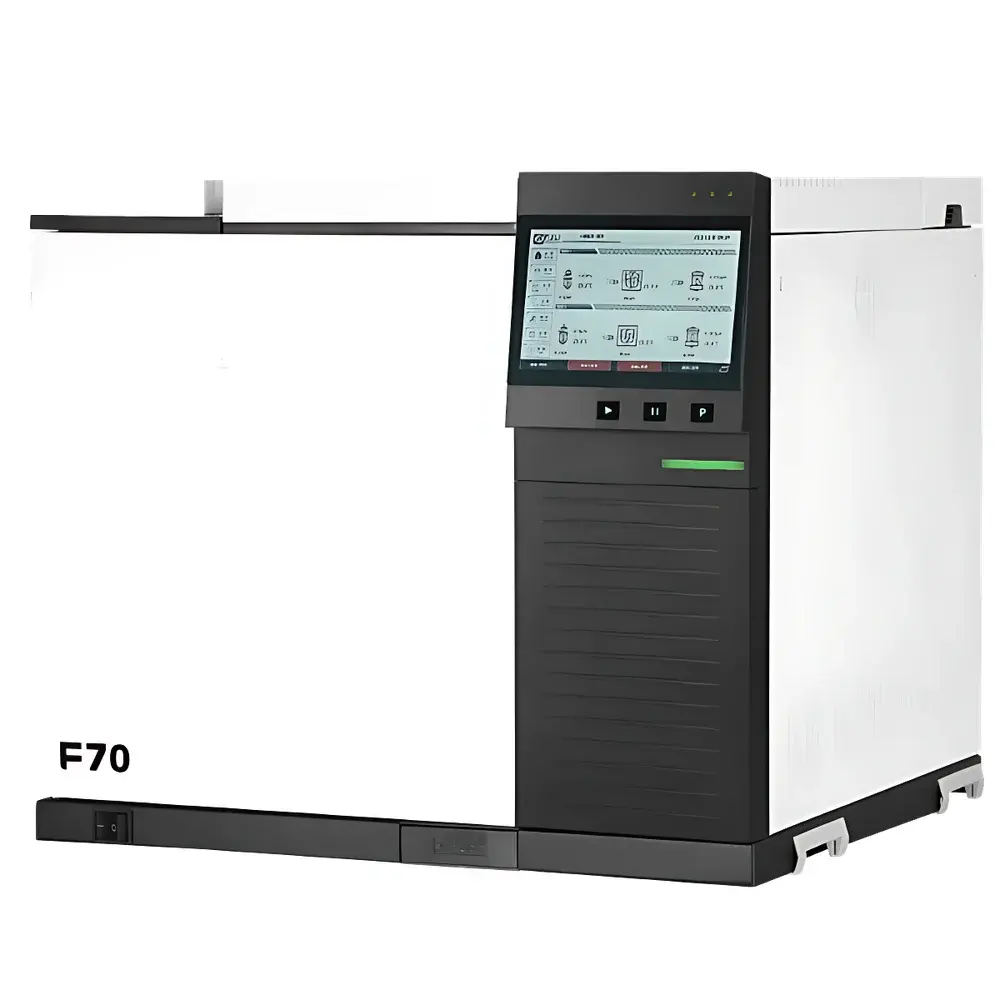
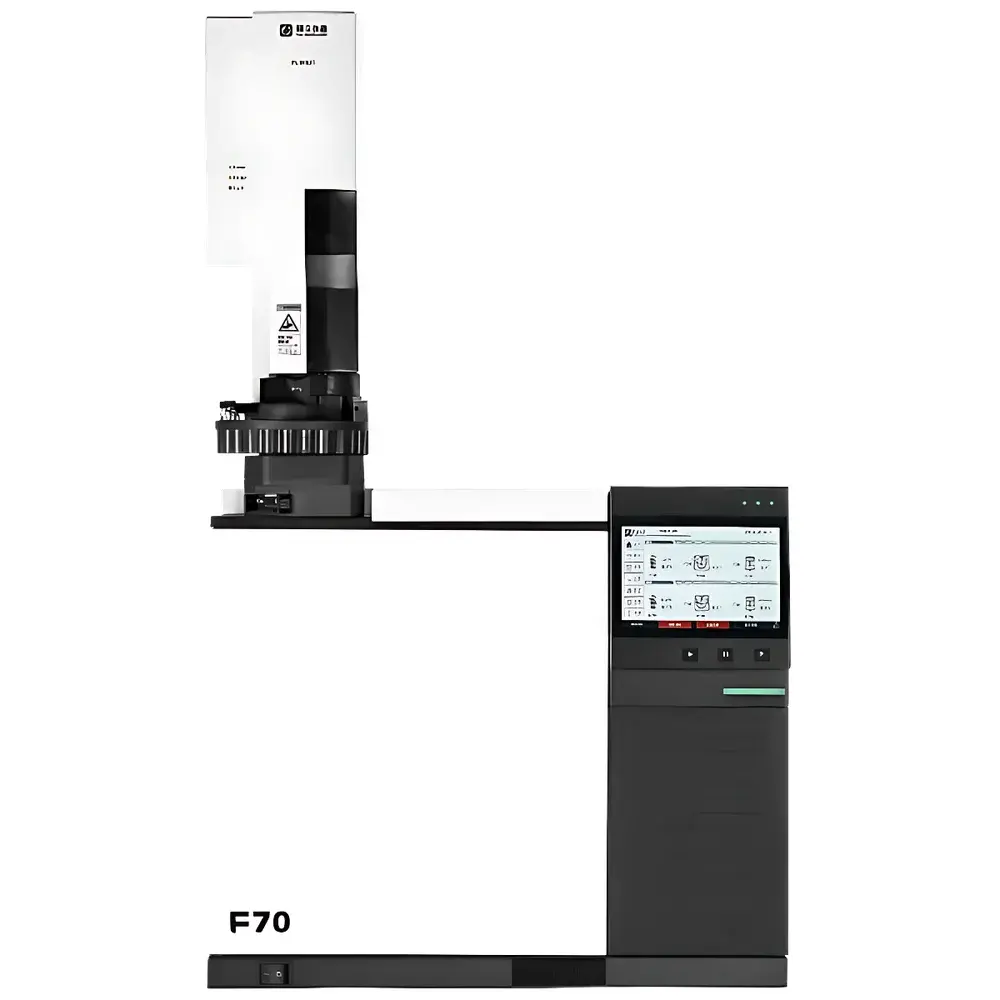
Fuli F70 Gas Chromatograph
| Brand | Fuli |
|---|---|
| Origin | Zhejiang, China |
| Manufacturer Type | Original Equipment Manufacturer (OEM) |
| Product Category | Domestic |
| Model | F70 |
| Instrument Type | Laboratory Gas Chromatograph |
| Application Scope | General-Purpose Analysis |
| Control Architecture | Dual-AFC (Carrier Gas & Detector Auxiliary Gas) or Full-AFC Mode |
| Detection Systems | FID, FPD (Wide-Range Configurable) |
| Injection Options | Multiple Configurable Inlet Types |
| Software Platforms | FL97Plus, MyLab Chromatography Data Systems (CDS) |
| Compliance Framework | Designed for GLP/GMP-aligned workflows with audit trail-ready CDS options |
| Human-Machine Interface | 7-inch capacitive touchscreen with real-time multi-channel status visualization |
| Maintenance Intelligence | Consumables tracking (septa, liner, split cold trap), usage-based alerts, and automated leak-check protocol |
Overview
The Fuli F70 Gas Chromatograph is a laboratory-grade, general-purpose analytical instrument engineered for precision, operational flexibility, and long-term reliability in routine and method-developed chromatographic separations. Based on the proven architecture of the GC97 series, the F70 integrates advanced pneumatic control systems rooted in modern gas chromatography fundamentals—specifically, the principles of carrier gas linear velocity optimization, retention time reproducibility, and detector response linearity under controlled flow dynamics. It employs capillary column separation coupled with flame ionization detection (FID) and flame photometric detection (FPD) as standard configurable options, supporting both isothermal and temperature-programmed oven operation. The system is designed for compliance-critical environments where trace-level quantification, method transferability, and instrument qualification (IQ/OQ/PQ) are integral to daily laboratory practice.
Key Features
- Dual-Mode AFC Pneumatic Control System: Independent Active Flow Control (AFC) modules govern both carrier gas (for column elution) and detector auxiliary gases (e.g., air/H2 for FID), enabling simultaneous regulation of flow rate, pressure, and linear velocity—critical for retention time stability and method robustness.
- Multi-Parameter Gas Regulation Modes: Supports constant flow, constant pressure, constant linear velocity, and programmable ramping profiles for both flow and pressure—facilitating method optimization across diverse column dimensions and stationary phases.
- Modular Detector Architecture: Wide-dynamic-range FID and FPD detectors feature optimized jet design, low-noise electronics, and thermal stabilization for enhanced signal-to-noise ratio and extended linear response (up to 107 for FID).
- Configurable Inlet Systems: Compatible with split/splitless injectors, PTV (programmed temperature vaporizing), and direct capillary interfaces—enabling adaptation to volatile, semi-volatile, thermally labile, or high-boiling analytes.
- 7-Inch Capacitive Touchscreen Interface: Real-time visualization of oven temperature, detector status, inlet pressures, flow rates, and active method parameters—designed for intuitive navigation without external PC dependency during acquisition.
- Intelligent Consumables Management: Tracks cumulative usage of septa, liners, and split cold traps; supports user-defined thresholds for replacement scheduling and logs maintenance events with timestamps for GLP traceability.
Sample Compatibility & Compliance
The F70 accommodates liquid, gaseous, and headspace-derived samples across environmental, pharmaceutical, petrochemical, food safety, and forensic applications. Its pneumatic and thermal design conforms to ISO/IEC 17025 requirements for calibration traceability and method validation. When paired with FL97Plus or MyLab CDS software, the system supports 21 CFR Part 11-compliant electronic signatures, audit trails, user access controls, and data integrity safeguards—making it suitable for regulated QC/QA laboratories operating under GMP or GLP frameworks. Column oven temperature range (ambient +5 °C to 400 °C) and ramp rates (0.1–60 °C/min) meet ASTM D3606, USP , and EN 14084 method specifications.
Software & Data Management
Two validated chromatography data systems are offered: FL97Plus (Windows-based, tailored for method development and regulatory reporting) and MyLab (cloud-capable, lightweight interface for teaching labs and high-throughput screening). Both platforms provide peak integration with baseline correction algorithms, retention time locking, library search (NIST-compatible), calibration curve generation (linear/non-linear), and report templates exportable to PDF, CSV, or XML. Raw data files adhere to ANDI/MSD format standards. Audit trail functionality records all user actions—including method edits, integration parameter changes, and result approvals—with immutable timestamps and operator IDs.
Applications
- Residual solvent analysis in pharmaceutical intermediates (ICH Q3C)
- VOC profiling in indoor air and drinking water (EPA Method 8260D)
- Fatty acid methyl ester (FAME) analysis in biodiesel (ASTM D6751)
- Pesticide residue screening in fruits and vegetables (EN 15662)
- Hydrocarbon group-type analysis in lubricants and fuels (ASTM D5186)
- Essential oil composition fingerprinting using chiral or polar columns
FAQ
Does the F70 support method transfer from legacy GC systems?
Yes—the F70’s AFC-controlled flow and temperature programming logic aligns with industry-standard GC method definitions, enabling straightforward migration of methods developed on Agilent, Shimadzu, or Thermo platforms with minor retention time recalibration.
Is remote monitoring and control possible?
When connected to a local network and configured with MyLab CDS, the F70 supports secure remote access via browser-based interface for real-time status checks and scheduled run initiation.
What validation documentation is provided?
Fuli supplies Factory Acceptance Test (FAT) reports, IQ/OQ protocols, and electronic calibration certificates traceable to NIM (National Institute of Metrology, China) standards.
Can the F70 be integrated into LIMS environments?
Both FL97Plus and MyLab support ASTM E1384-compliant data export and optional OPC UA connectivity for bidirectional LIMS integration.
What is the typical service interval for preventive maintenance?
Under standard usage (≤8 hrs/day, ambient lab conditions), recommended PM intervals are every 6 months—covering inlet cleaning, detector optimization, leak verification, and firmware updates.
Related Products




