
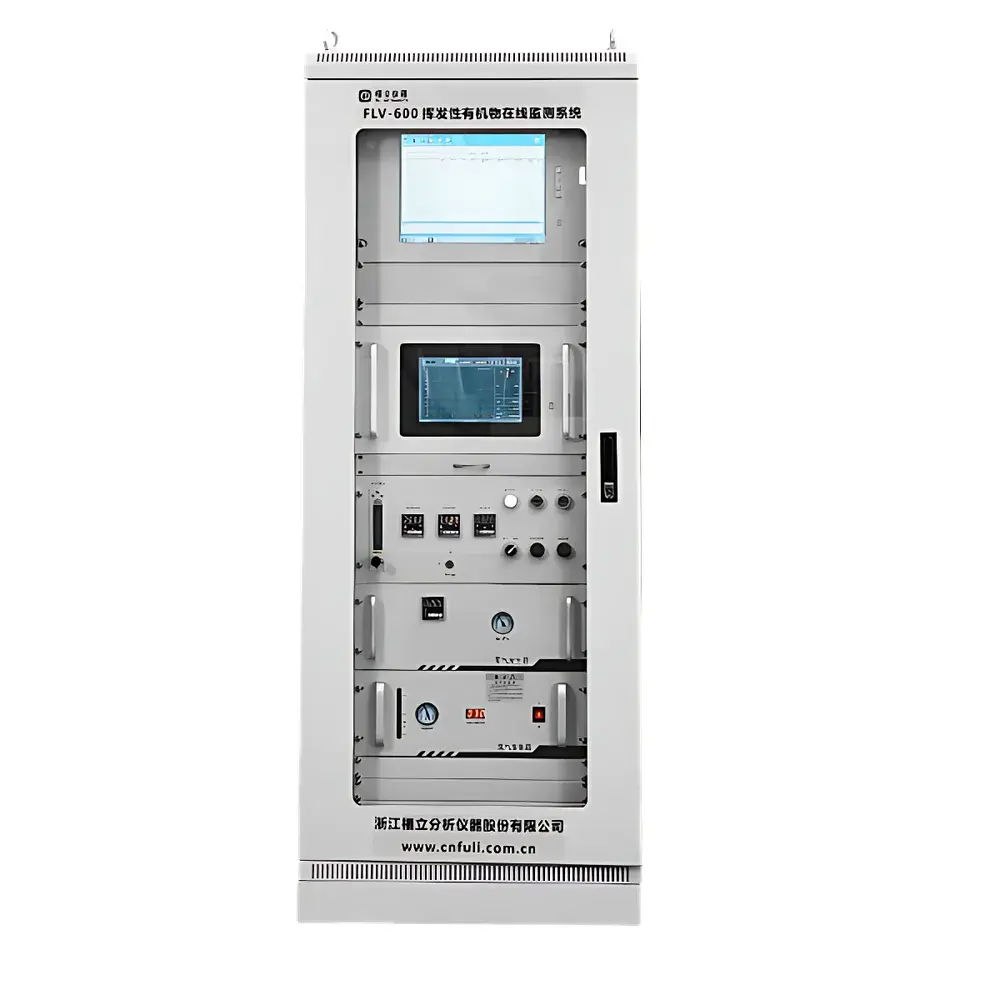
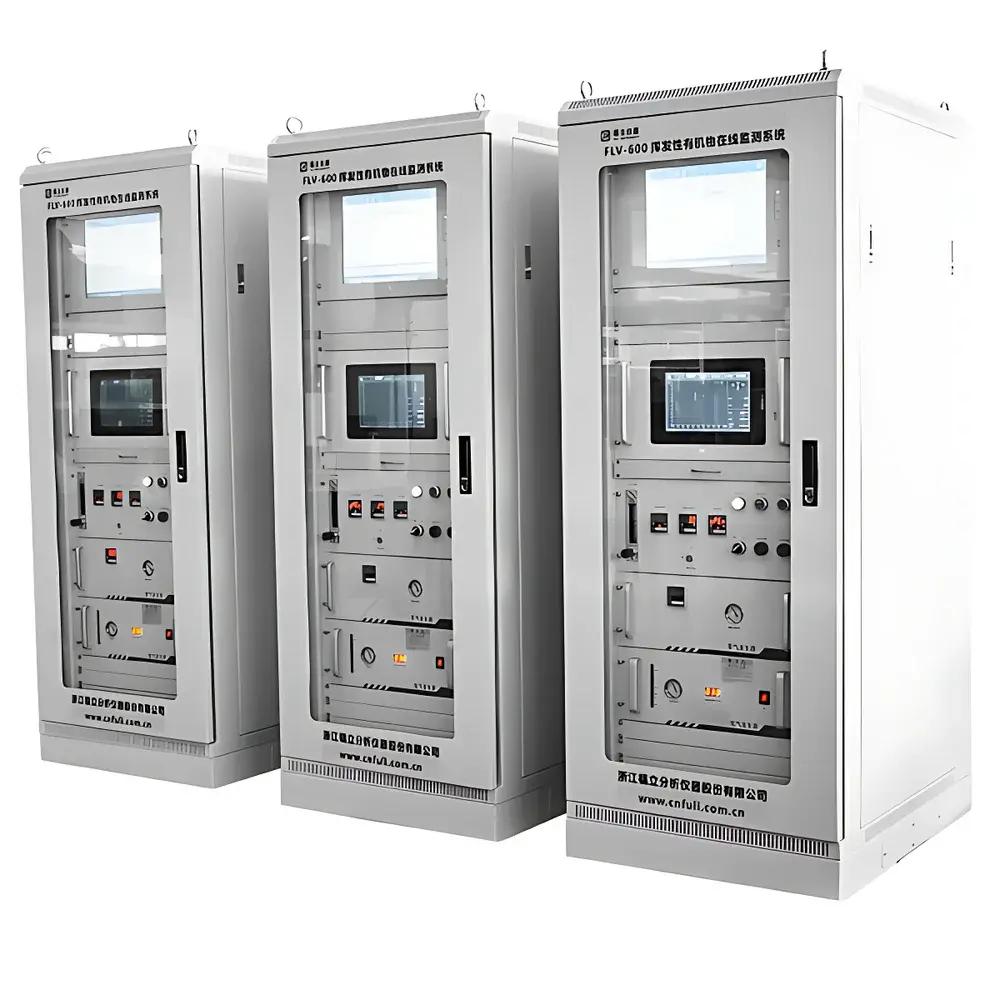
Fulit FLV 600 Online VOCs Monitoring System with GC-FID
| Brand | Fulit |
|---|---|
| Origin | Zhejiang, China |
| Manufacturer Type | Manufacturer |
| Country of Origin | Domestic (China) |
| Model | FLV 600 |
| Detection Principle | Flame Ionization Detection (FID) |
| Instrument Type | Online Analyzer |
| Configuration | Multi-component VOCs Analyzer |
Overview
The Fulit FLV 600 Online VOCs Monitoring System is an industrial-grade, continuous emissions monitoring system (CEMS) engineered for real-time quantification of volatile organic compounds (VOCs) from stationary emission sources. It implements a high-temperature extractive sampling methodology—maintaining the entire gas path at elevated temperatures (typically ≥180 °C) to prevent condensation and adsorption losses—and couples it with gas chromatography–flame ionization detection (GC-FID), a reference-grade analytical technique standardized under EPA Method 25A, ASTM D6348, and Chinese regulatory protocols including HJ 38–2017, HJ 604–2017, and HJ 1013–2018. The system delivers simultaneous, speciated analysis of methane (CH₄), non-methane hydrocarbons (NMHC), and aromatic compounds (e.g., benzene, toluene, ethylbenzene, xylenes), supporting compliance reporting for environmental regulators and internal process control.
Key Features
- Third-generation electronic pressure control (EPC) technology, developed in-house by Fulit, ensures precise carrier gas flow regulation across temperature gradients—enhancing chromatographic resolution, retention time stability, and long-term method reproducibility.
- Integrated industrial all-in-one controller running LoongOS-5.0—a Linux-based, embedded operating system purpose-built for analytical instrumentation—eliminates licensing dependencies and offers deterministic real-time performance with hardened cybersecurity architecture.
- Five independently programmable temperature zones: heated probe, heated sample line, heated valve box, column oven with rapid-cool rear door, and FID detector—all configurable for ramp-and-hold or multi-step thermal programs per regulatory method requirements.
- FID detector with wide dynamic range (typically 10⁷ linear response), auto-ignition sequence, flame-out detection with automatic shutdown, and low-noise signal amplification—designed for robust operation in fluctuating stack conditions.
- Heated sampling train with triple-stage particulate and moisture filtration (stainless steel sintered filter, PTFE membrane, and chemical scrubber), eliminating cold spots and minimizing maintenance intervals.
- Native communication suite: dual Ethernet (10/100BASE-TX), 4G LTE modem, Wi-Fi 802.11n, RS232/RS485/RS422 serial interfaces, and analog 4–20 mA output—enabling seamless integration into SCADA, DCS, and EMS platforms.
Sample Compatibility & Compliance
The FLV 600 is validated for use with flue gases containing particulate loadings ≤100 mg/m³ and moisture content ≤20 vol% (non-condensing). Its heated sampling architecture accommodates complex matrices from chemical manufacturing, pharmaceutical production, coating operations, and waste incineration. Regulatory alignment includes full support for China’s HJ 212–2017 data transmission protocol, as well as optional Modbus/TCP and Modbus-RTU implementations for international facility integration. Data integrity complies with GLP/GMP principles: audit-trail-enabled user authentication (operator/admin/maintenance roles), timestamped run logs, and tamper-resistant MariaDB storage retaining ≥12 months of quantitative results and optional raw chromatograms.
Software & Data Management
The embedded workstation software provides intuitive touch-driven workflow navigation on a 10.1″ capacitive display. It supports method setup, calibration management (multi-point linear/nonlinear), peak integration with customizable baselines, and automated report generation (PDF/CSV) per HJ 75–2017 format. Database persistence uses ACID-compliant MariaDB; encrypted backups can be scheduled to external USB media or network shares. Remote diagnostics and firmware updates are supported via secure HTTPS tunneling. Optional electronic signature functionality satisfies 21 CFR Part 11 readiness when configured with PKI-based certificate authentication.
Applications
- Continuous compliance monitoring of NMHC and BTEX emissions at thermal oxidizers, catalytic converters, and regenerative thermal oxidizers (RTOs).
- Process optimization in solvent recovery units and distillation columns through real-time VOC speciation feedback.
- Leak detection and repair (LDAR) program support via periodic grab-sampling mode with pre-configured method templates.
- Stack testing verification and QA/QC for third-party environmental laboratories requiring traceable, auditable chromatographic data.
- Integration into corporate EHS dashboards for centralized emissions visualization, trend analysis, and deviation alerting.
FAQ
What regulatory standards does the FLV 600 meet for online VOCs monitoring?
It conforms to HJ 38–2017 (methane/NMHC), HJ 604–2017 (total VOCs), and HJ 1013–2018 (aromatics), and supports method validation per ISO 16000-6 and EPA TO-17 where applicable.
Can the system operate unattended for extended periods?
Yes—the hardware architecture includes watchdog timers, power-fail recovery, automatic FID re-ignition after interruption, and self-diagnostic routines that log fault conditions without operator intervention.
Is raw chromatographic data exportable for third-party review?
Yes—raw .CDF or .DX files (including detector voltage traces and timing metadata) can be exported via USB or network share, preserving full analytical provenance.
What maintenance intervals are recommended for routine operation?
Filter replacement every 3 months under typical industrial conditions; FID jet cleaning and detector alignment annually; GC column replacement every 18–24 months depending on matrix severity.
Does the system support remote calibration verification?
Yes—via built-in span-check functionality using certified gas standards; automated calibration event logging is included in the audit trail.







