
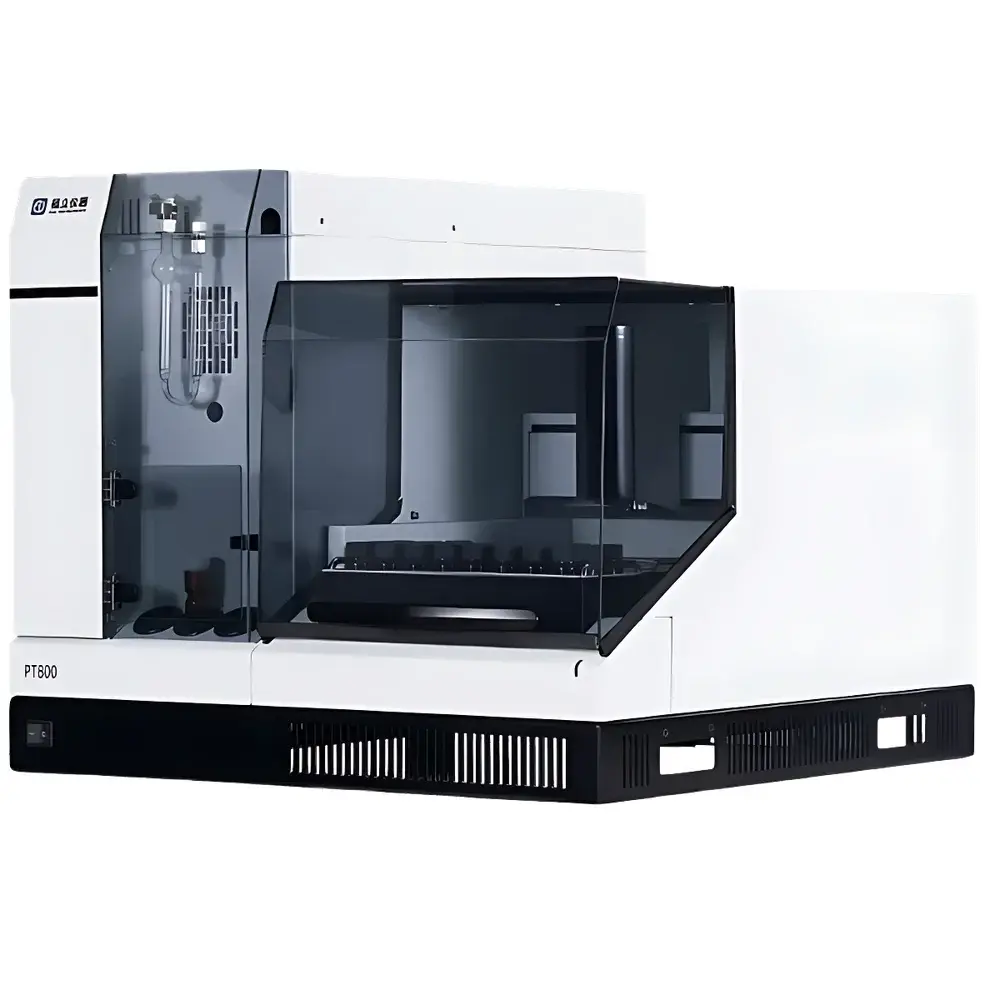
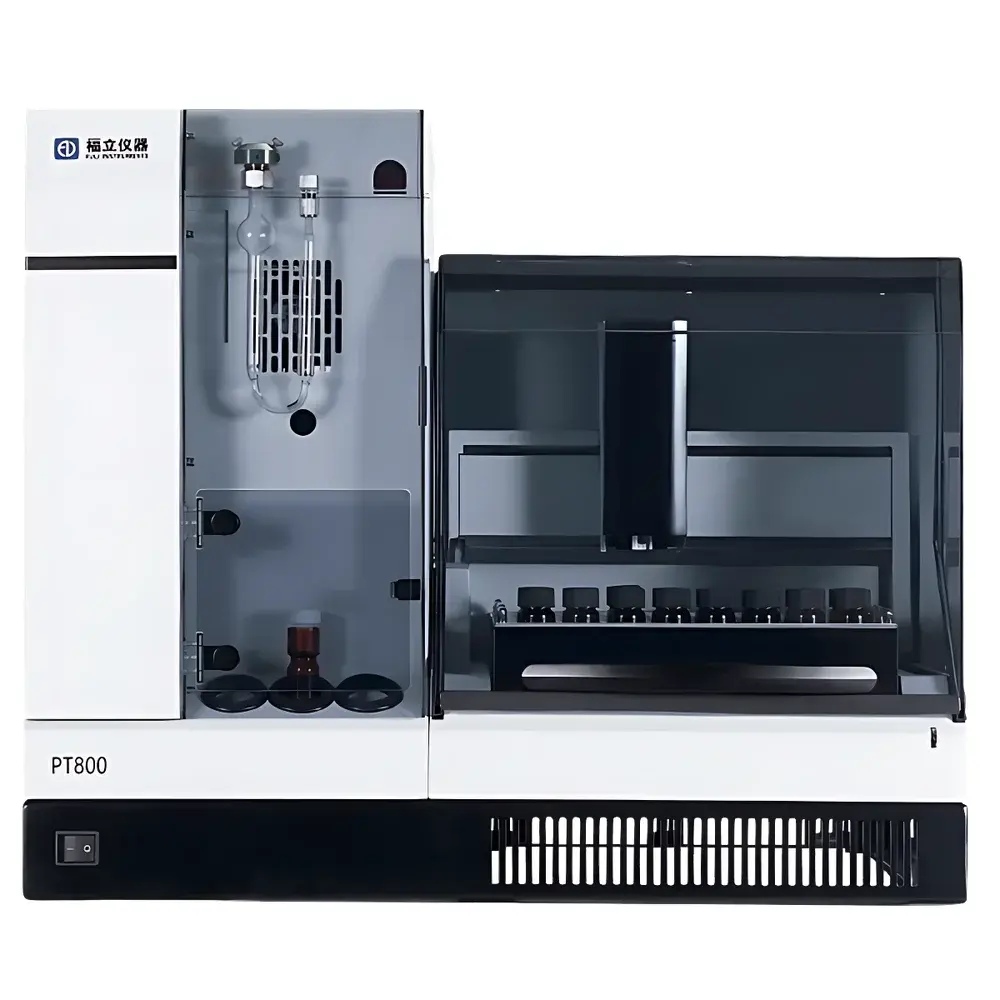
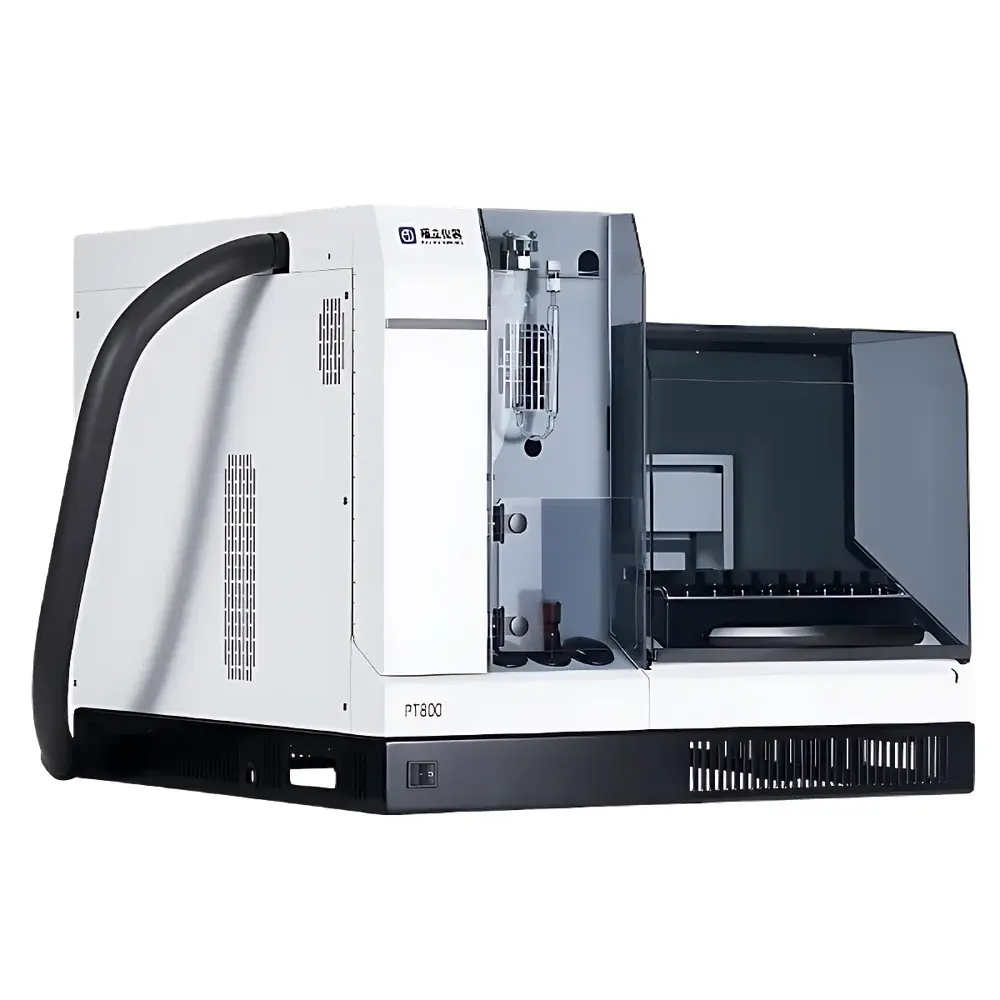
Fulit PT800 Fully Automated Purge and Trap Concentrator
| Brand | Fulit |
|---|---|
| Origin | Zhejiang, China |
| Manufacturer Type | Manufacturer |
| Product Category | Domestic |
| Model | PT800 |
| Instrument Type | Multifunctional Autosampler |
| Flow Control Precision | ±0.001 psi (EPC) |
| Sample Capacity | 96-position water/soil dual-mode autosampler |
| Trapping System | High-efficiency U-shaped trap with integrated spiral water removal |
| Sample Preservation | Optional refrigerated sample tray (4–10 °C) |
| System Inertness | Fully passivated flow path (inertized valves, tubing, and fittings) |
| Cleaning Protocol | Hot water and methanol purge cycles |
| Stirring | Integrated magnetic stirring for soil matrix enhancement |
| Software Interface | Modular workstation with guided workflow buttons |
| Compliance Support | Audit-trail ready |
Overview
The Fulit PT800 Fully Automated Purge and Trap Concentrator is an engineered solution for the quantitative preconcentration of volatile organic compounds (VOCs) from aqueous and solid environmental matrices prior to gas chromatographic analysis. Based on the standardized purge-and-trap principle—where inert gas continuously sweeps VOCs from a heated, agitated sample into a cryogenically cooled or ambient-temperature sorbent trap—the PT800 delivers precise, reproducible analyte enrichment with minimized breakthrough and carryover. Its architecture integrates electronic pressure control (EPC) technology with fully inertized fluidic pathways, enabling trace-level detection (sub-ng/L in water, sub-µg/kg in soil) while maintaining long-term system stability across extended unattended operation. Designed explicitly for compliance-driven laboratories, the PT800 supports method validation per EPA Methods 502.2, 524.4, 624, and ISO 15681-2, serving as a critical front-end component in regulatory environmental testing workflows.
Key Features
- Fully automated 96-position dual-mode autosampler accommodating both liquid (vial-based) and solid (tenax-packed vial or micro-vial) samples without hardware reconfiguration
- EPC-controlled gas flow with ±0.001 psi precision across purge, desorb, bake, and trap conditioning steps—ensuring method robustness and inter-laboratory comparability
- U-shaped high-capacity trap with proprietary thermal desorption geometry, optimized for simultaneous VOC retention and selective water/methanol rejection
- Integrated spiral water management system reducing moisture load to GC inlet by >95%, minimizing column degradation and detector saturation
- Onboard magnetic stirring module with programmable speed and duration for enhanced VOC release from heterogeneous soil matrices
- Optional refrigerated sample tray (4–10 °C) preserving thermolabile analytes during extended queue times—critical for batched wastewater or field-collected soil analysis
- Hot water and methanol solvent purge capability for routine system cleaning, validated to achieve <0.1 ng carryover for chlorinated solvents and BTEX compounds
Sample Compatibility & Compliance
The PT800 accepts standard 40-mL VOC vials (with septa), 22-mL EPA-compliant soil vials, and custom micro-vials for low-volume solid-phase extraction eluates. Its modular sample introduction design accommodates variable headspace volumes and matrix viscosities without recalibration. All wetted surfaces—including valves, transfer lines, and trap housing—are chemically passivated using SilcoNert®-equivalent coating, ensuring compatibility with aggressive solvents and acidic/basic extracts. The system meets hardware and software prerequisites for GLP and GMP environments: full audit trail logging, user access levels, electronic signature support (when configured with 21 CFR Part 11-compliant firmware), and raw method parameter archiving. It is routinely deployed in laboratories accredited to ISO/IEC 17025 and aligned with ASTM D3690, USP , and EU Directive 2008/105/EC monitoring protocols.
Software & Data Management
The PT800 operates via a Windows-based workstation featuring a task-oriented interface with context-sensitive guidance. Method setup includes step-by-step wizards for purge time, trap desorption ramp, GC trigger synchronization, and internal standard addition timing. All method parameters are stored as encrypted XML files with version timestamps and user attribution. Real-time system diagnostics display EPC pressure traces, trap temperature profiles, and valve actuation logs—exportable in CSV for QA review. Data output conforms to AIA (.cdf) format for seamless integration with major GC and GC-MS data systems (e.g., Thermo Chromeleon, Agilent OpenLab, Waters Empower). Optional network deployment enables centralized instrument monitoring and remote method push across multi-system labs.
Applications
- Regulatory compliance testing of drinking water, groundwater, and wastewater for EPA priority pollutants (e.g., vinyl chloride, benzene, chloroform)
- Soil vapor intrusion assessment and contaminated site characterization per ASTM D6828 and D7659
- Pharmaceutical residual solvent analysis (ICH Q3C) in active pharmaceutical ingredients (APIs) and excipients
- Food and beverage screening for off-flavor compounds (e.g., geosmin, 2-methylisoborneol) and packaging migrants
- Forensic toxicology workflows requiring ultra-low-level detection of accelerants and ignitable liquids
FAQ
What sample matrices does the PT800 support out of the box?
Aqueous samples (40-mL VOC vials) and solid-phase soil/sediment samples (22-mL EPA vials) are natively supported. No mechanical modification is required to switch between modes.
Can the PT800 be integrated with third-party GC or GC-MS systems?
Yes—via standard TTL/RS232/USB triggers and configurable GC start delay settings. Hardware synchronization modules are available for Agilent, Thermo, Shimadzu, and PerkinElmer platforms.
How does the system handle moisture interference during thermal desorption?
The integrated spiral water removal system condenses and separates bulk water vapor upstream of the trap, while the U-shaped trap’s hydrophobic sorbent layer minimizes co-desorption of residual moisture into the GC column.
Is method validation documentation provided?
Fulit supplies IQ/OQ protocol templates, performance verification checklists (including blank, spike recovery, and carryover tests), and calibration certificate traceability to NIST standards.
What maintenance intervals are recommended for routine operation?
Trap replacement every 500 injections; valve seal inspection every 1,000 runs; full inert surface re-passivation recommended annually or after exposure to highly corrosive matrices.





