
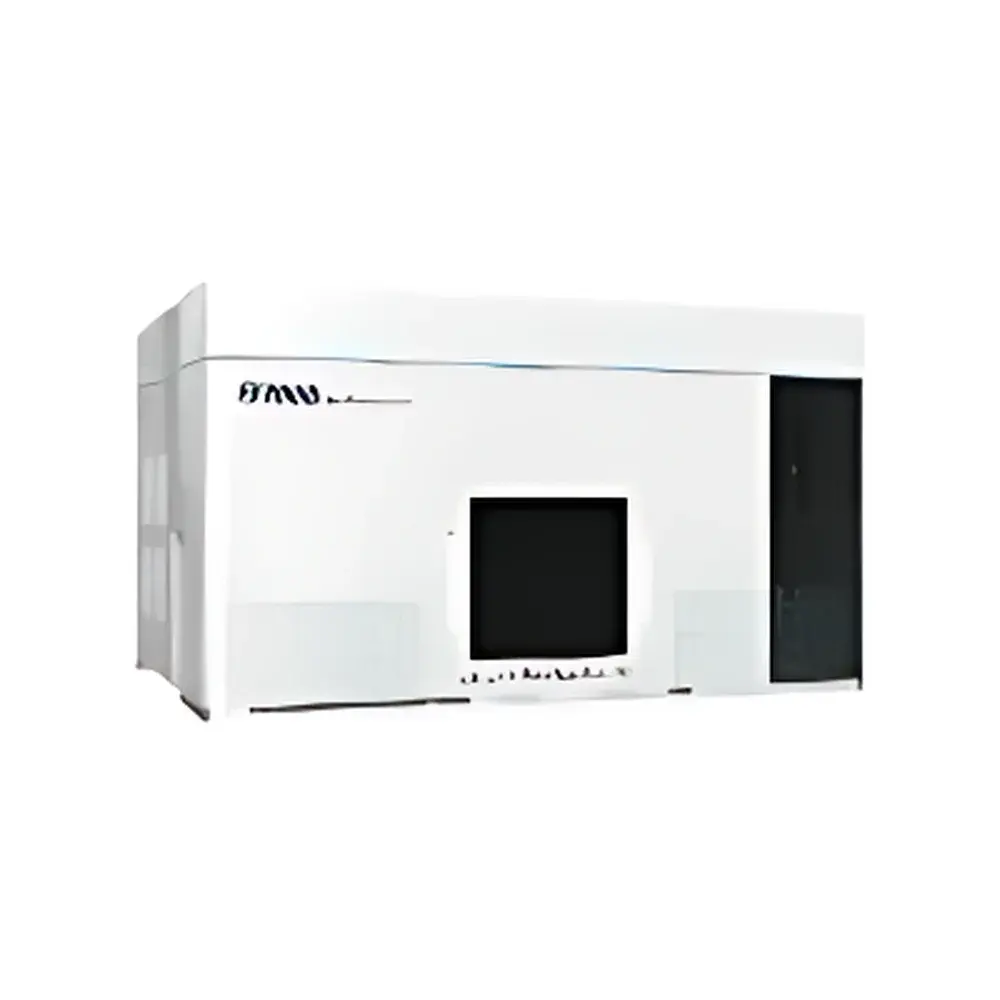
FuTech SN415 Nanoscale Flow Cytometer and Cell Sorter
| Brand | FuTech |
|---|---|
| Origin | Shanghai, China |
| Manufacturer Type | Original Equipment Manufacturer (OEM) |
| Product Category | Domestic |
| Model | SN415 |
| Pricing | Upon Request |
| Technology Platform | Nanoscale Flow Cytometry |
| Instrument Type | High-Parameter Flow Cytometer with Sorting Capability |
| Intended Use | Research-Only |
| Laser Configuration | Up to 4 Lasers |
| Detection Channels | 2 Scatter (FSC/SSC) + Up to 13 Fluorescence Parameters |
| Acquisition Rate | 10,000 Events per Second |
| Compensation | Automated and Manual Compensation Support |
| Nozzle Sizes | 70 µm, 85 µm, 100 µm, 130 µm |
| Sorting Capability | Yes |
| Sorting Throughput | 10,000 Events per Second |
| Sorting Output | 4-Way Sorting |
| Voltage Adjustment Required | Yes |
Overview
The FuTech SN415 Nanoscale Flow Cytometer and Cell Sorter is an engineered platform designed for high-resolution detection and precision sorting of sub-micron biological particles—including extracellular vesicles (EVs), viral vectors, liposomes, polymeric nanoparticles, and synthetic nanocarriers—within the 50 nm to 3 µm diameter range. Unlike conventional flow cytometers optimized for cells (>5 µm), the SN415 leverages enhanced light-scattering sensitivity, low-noise photodetection, and optimized hydrodynamic focusing to resolve nanoparticle heterogeneity based on size, refractive index, surface antigen expression, and fluorescent labeling density. Its measurement principle integrates forward scatter (FSC) calibrated against polystyrene and silica nanobead standards, side scatter (SSC) optimized for low-angle Mie scattering, and multi-laser excitation (up to four independent wavelengths) enabling simultaneous interrogation of up to 13 fluorescence parameters. This architecture supports rigorous biophysical characterization essential for translational nanomedicine research, including EV phenotyping, AAV titer validation, and nanoparticle batch consistency assessment under GLP-aligned workflows.
Key Features
- Sub-100 nm detection capability validated using NIST-traceable 50–100 nm silica and carboxylated polystyrene reference beads
- Modular laser configuration supporting 405 nm, 488 nm, 561 nm, and 640 nm excitation sources with individually adjustable power and alignment
- Real-time automated quality control (QC) routines: integrated fluidic stability monitoring, sheath pressure calibration, and side-stream position auto-alignment
- Dual-mode sorting: electrostatic deflection (4-way) for high-purity subpopulation isolation and uncharged “drop-to-tube” mode for maximal viability preservation in sensitive applications (e.g., functional EV assays or primary cell transduction)
- Interchangeable nozzle system (70 µm–130 µm) enabling optimization across particle size, viscosity, and required resolution—validated for use with serum-containing media and viscous polymer solutions
- Biosafety-compliant mechanical design: compact footprint (W × D × H: 65 × 72 × 58 cm) compatible with Class II biological safety cabinets; aerosol containment verified per ISO 14644-1 Class 5 cleanroom protocols
Sample Compatibility & Compliance
The SN415 accommodates diverse sample matrices without pre-filtration or ultracentrifugation, including plasma-derived EV isolates, clarified lentiviral supernatants, PEG-precipitated exosome fractions, and synthetic lipid nanoparticle (LNP) dispersions. Sample introduction supports direct loading from 1.5 mL microcentrifuge tubes, 5 mL polystyrene FACS tubes, 15 mL conical tubes, and 96-well plates via optional plate-handling module. All fluidic pathways employ medical-grade silicone and fluoropolymer tubing compliant with USP Class VI and ISO 10993-5 standards. The instrument’s firmware and data acquisition software meet requirements for audit trail generation, electronic signature support, and data integrity per FDA 21 CFR Part 11 Annex 11 guidelines—enabling use in regulated preclinical development environments where traceability and reproducibility are mandated.
Software & Data Management
FuTech FlowSuite v3.2 provides a unified interface for acquisition, compensation matrix construction (spillover-based and machine-learning-assisted), dimensionality reduction (t-SNE and UMAP integration), and gating strategy export. Raw FCS 3.1 files are generated with embedded metadata (laser power, PMT voltage, threshold settings, nozzle ID, QC pass/fail flags). Batch processing pipelines support automated bead-based size calibration across multiple runs, enabling longitudinal comparison of EV size distribution shifts in longitudinal disease models. Export options include CSV (event-level), PNG/SVG (publication-ready plots), and HDF5 (for downstream AI training). All software modules undergo annual third-party verification for numerical accuracy and computational reproducibility (NIST SP 800-148 compliance).
Applications
- Extracellular vesicle subtyping: discrimination of CD63+/CD81+/CD9+ exosome subsets from larger microvesicles and apoptotic bodies in biofluids
- Viral vector characterization: quantification of intact vs. empty AAV capsids using SYTO RNASelect and Alexa Fluor 488-anti-capsid staining
- Nanoparticle drug delivery: co-detection of payload fluorescence (e.g., Cy5-siRNA) and surface ligand binding (e.g., FITC-anti-PEG) to assess formulation homogeneity
- Single-vesicle proteomics: sorting of immunocaptured EV populations into low-binding tubes for subsequent mass spectrometry analysis
- CRISPR-LNP functional screening: high-throughput sorting of transfected cells based on Cas9-RNP delivery efficiency and editing reporter expression
FAQ
What is the minimum detectable particle size under standard operating conditions?
The SN415 achieves consistent detection of 50 nm polystyrene nanoparticles at signal-to-noise ratios ≥3:1 using optimized FSC optics and background-subtracted acquisition. Detection limit varies with refractive index; silica nanoparticles of equivalent size yield higher scatter intensity.
Does the system support spectral unmixing for highly multiplexed panels?
Yes—FlowSuite v3.2 includes a spectral library builder and linear unmixing engine compatible with custom fluorophore spectra measured on the instrument itself or imported from manufacturer-provided databases (e.g., Thermo Fisher SpectraViewer).
Can sorting purity be validated post-sort without re-analysis?
Each sort job generates a real-time purity report based on pre-sort gate fidelity and post-sort event recovery statistics. Optional on-instrument re-acquisition mode allows immediate purity verification using internal QC beads without sample transfer.
Is remote operation supported for core facility deployment?
The system supports secure TLS 1.2–encrypted remote desktop access via institutional VPN; all user sessions are logged with IP address, timestamp, and action-level granularity for compliance auditing.





