
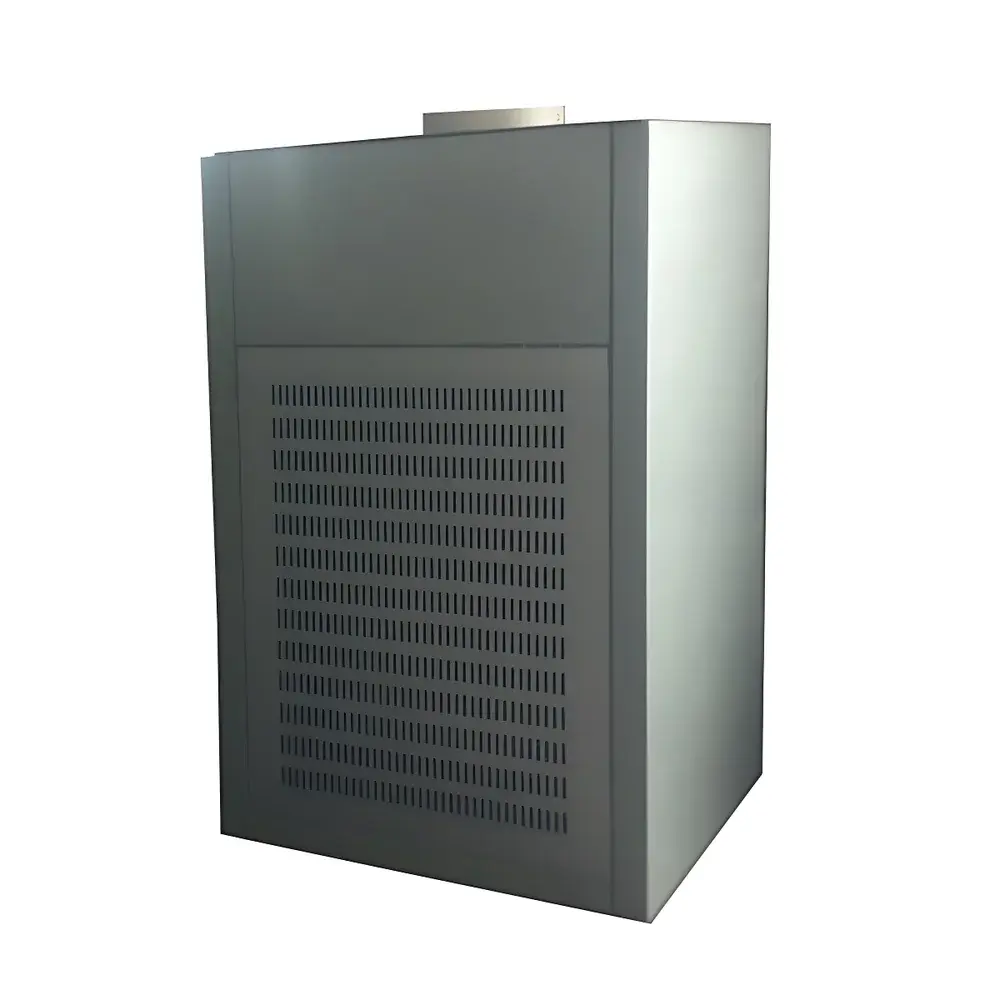
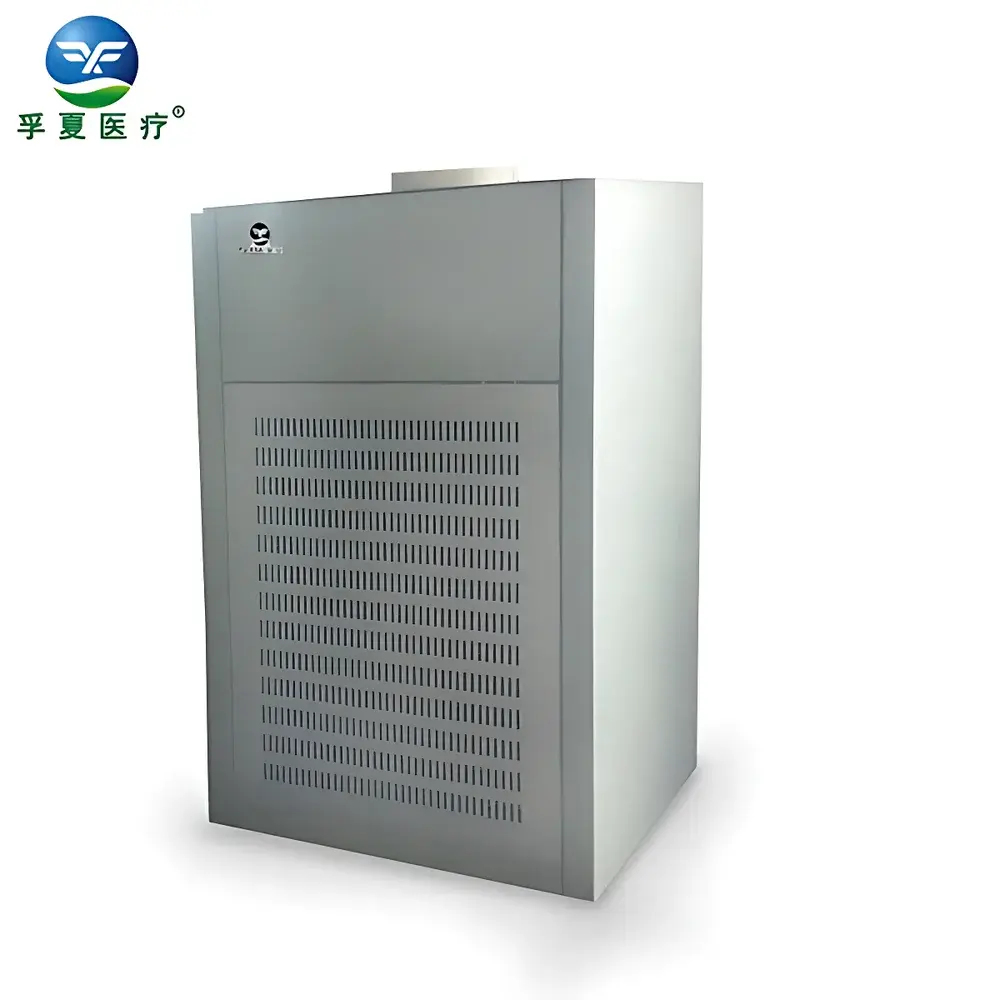
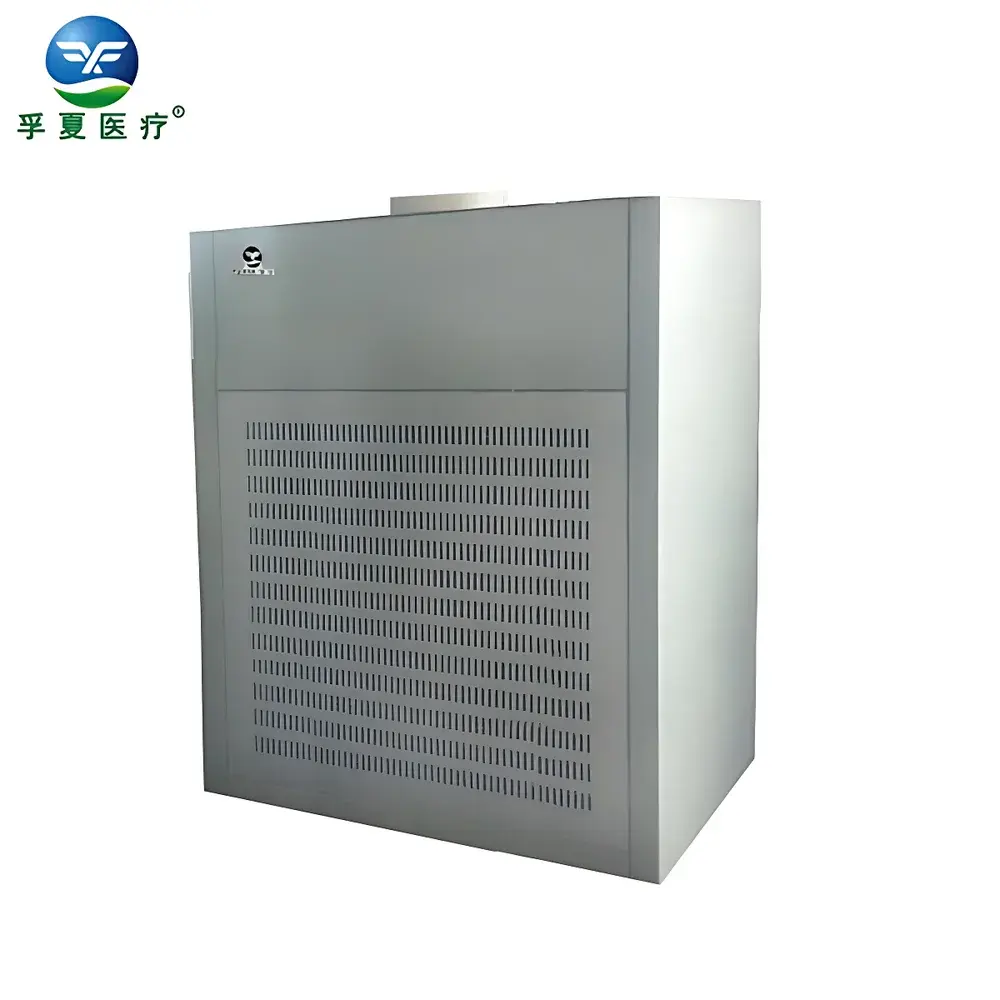
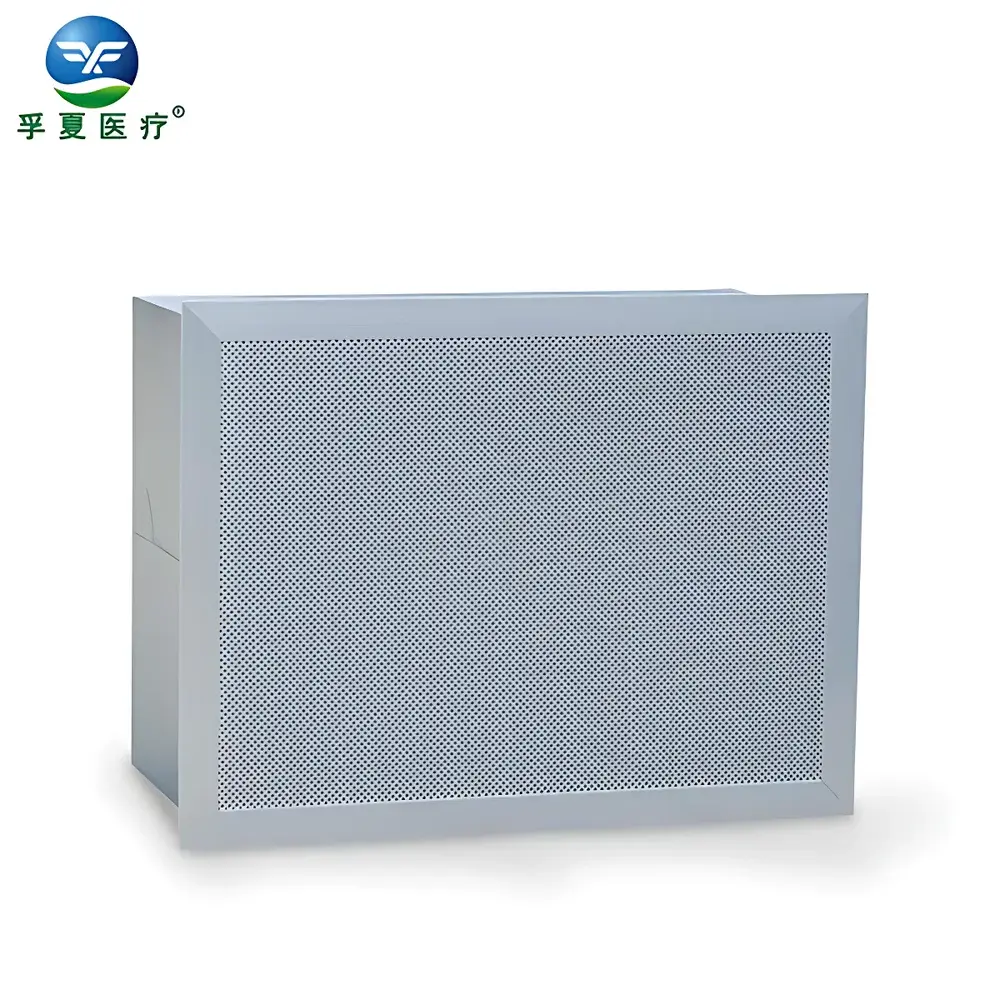
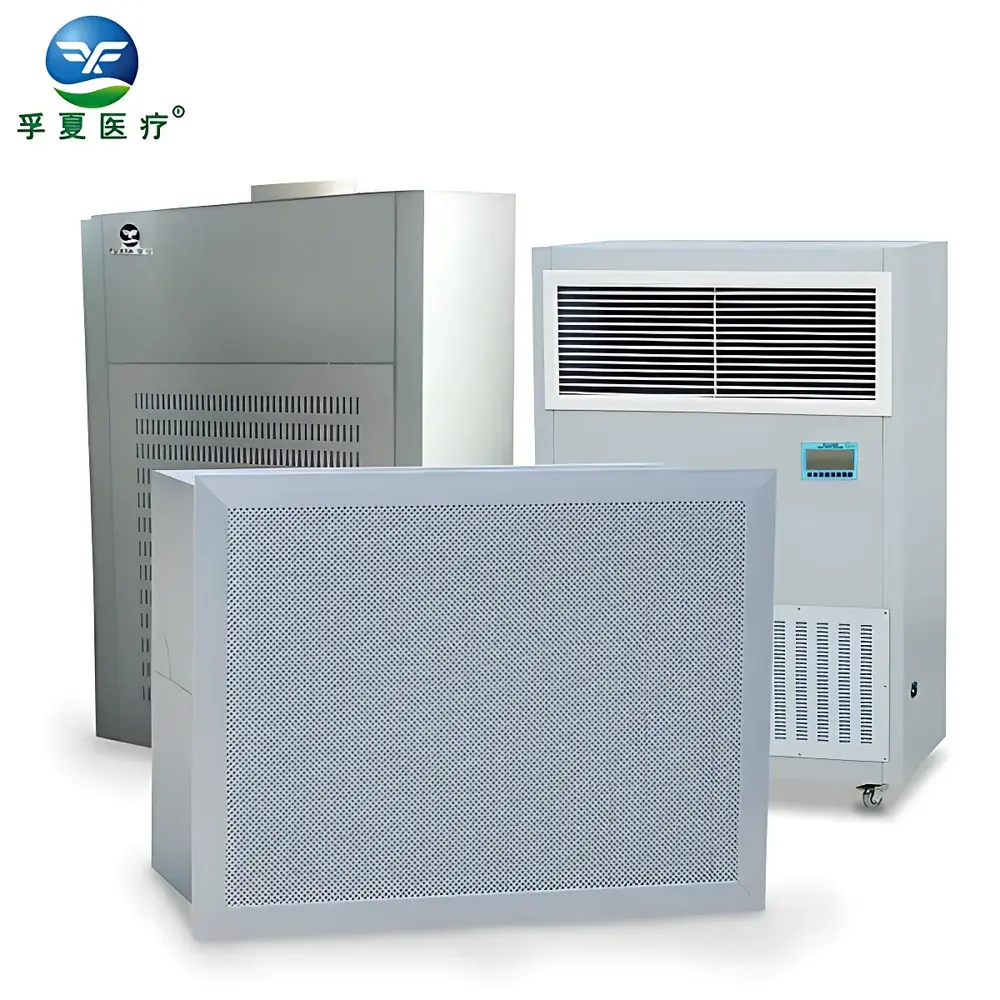
FUXIA SW-CJ-2K Wall-Mounted Air Self-Purifier
| Brand | FUXIA |
|---|---|
| Origin | Zhejiang, China |
| Manufacturer Type | Authorized Distributor |
| Country of Origin | China |
| Model | SW-CJ-2K |
| Instrument Type | Filter-Based Air Purifier |
| Recommended Coverage Area | 25 m² |
| Noise Level | <60 dB(A) |
| Airflow Velocity | 0.3–0.6 m/s |
| Cleanliness Class | ISO Class 5 (100-level) |
| Dimensions (W×D×H) | 800 × 350 × 880 mm |
| Power Supply | AC 220 V, 50 Hz |
| Power Consumption | 150 W/h |
| Airflow Capacity | 1000 m³/h (dual-fan configuration) |
| UV-C Germicidal Lamp | Integrated |
| Control Interface | Digital display with programmable timer (1–6 time slots), IR remote & manual operation |
| Duct Requirement | 160 mm PVC duct connection required |
Overview
The FUXIA SW-CJ-2K Wall-Mounted Air Self-Purifier is an engineered solution for localized air quality control in controlled laboratory and cleanroom-adjacent environments. Designed to meet ISO 14644-1 Class 5 (formerly “100-level”) airborne particle concentration requirements at the outlet—≤3.5 particles ≥0.5 µm per liter—the unit operates on a recirculating filtration principle combining high-efficiency particulate air (HEPA) filtration with integrated germicidal ultraviolet irradiation (UV-C, 254 nm). Unlike standalone portable purifiers, the SW-CJ-2K is architecturally integrated into wall-mounted infrastructure, requiring connection to a 160 mm diameter PVC duct system for return-air intake. Its dual-fan configuration delivers a rated airflow capacity of 1000 m³/h, enabling dynamic air exchange in spaces up to 25 m² while maintaining laminar flow characteristics across defined work zones. The unit is intended for use in non-sterile but particle-sensitive applications—including analytical instrument rooms, sample preparation areas, QC laboratories, and cleanroom retrofit projects—where continuous, low-intervention air purification is required without full cleanroom construction.
Key Features
- ISO Class 5-compliant output: Achieves ≤3.5 particles/ℓ (≥0.5 µm) at the supply outlet under calibrated operating conditions.
- Dual-fan HEPA recirculation system: Provides 1000 m³/h total airflow with adjustable velocity (0.3–0.6 m/s) across two speed settings.
- Integrated UV-C germicidal lamp: 254 nm wavelength lamp installed within the air path ensures inactivation of airborne microorganisms during circulation.
- Programmable digital controller: Supports up to six independent daily time slots; enables unattended scheduled disinfection cycles with automatic start/stop.
- Dual-mode operation: Full functionality via front-panel buttons or infrared remote control; status feedback via LCD display.
- Self-diagnostic firmware: Real-time error detection, fault code display, and audible alarm for filter saturation, fan failure, or lamp malfunction.
- Low-noise engineering: Acoustic output maintained below 60 dB(A) at 1 m distance—suitable for quiet laboratory environments.
- Modular duct interface: Standardized 160 mm PVC duct coupling supports flexible return-air routing (single- or multi-point configurations) to optimize air uniformity and coverage span.
Sample Compatibility & Compliance
The SW-CJ-2K is not designed for direct contact with hazardous vapors, corrosive gases, or explosive atmospheres. It is compatible with ambient indoor air containing non-aggressive particulates (e.g., dust, skin flakes, pollen, fungal spores) and common microbial aerosols. While not certified to UL 867 or IEC 60335-2-69 as a medical device, its UV-C lamp output and HEPA retention efficiency align with general hygiene practices referenced in ISO 14644-1, ISO 14698-1 (biocontamination control), and USP <797> environmental monitoring guidance for non-sterile compounding areas. No regulatory claim is made for sterilization or decontamination of surfaces or equipment; its function remains strictly airborne particle and viable microorganism reduction via continuous recirculation.
Software & Data Management
The SW-CJ-2K operates via embedded microcontroller firmware with no external software dependency. All operational parameters—including runtime, active schedule, fan speed, and lamp status—are retained in non-volatile memory. The system logs cumulative operating hours and records fault events with timestamped codes accessible via the LCD interface. Though not compliant with FDA 21 CFR Part 11 or equipped with network connectivity, its programmable timer and self-diagnostics support GLP-aligned maintenance tracking when paired with lab logbooks or CMMS entries. Routine validation (e.g., airflow uniformity mapping, particle count verification at outlet) is recommended per ISO 14644-3 and documented annually.
Applications
- Supplemental air purification in analytical labs housing HPLC, GC, or mass spectrometry systems where particulate interference may affect detector sensitivity or column longevity.
- Environmental conditioning of sample weighing rooms and formulation booths in pharmaceutical QC laboratories.
- Retrofit air quality enhancement in aging facilities lacking full cleanroom HVAC infrastructure.
- Localized protection in biosafety cabinet anterooms or instrument calibration suites requiring stable, low-particulate ambient conditions.
- Supporting ISO/IEC 17025-accredited testing environments where documented air cleanliness contributes to measurement uncertainty budgets.
FAQ
Does the SW-CJ-2K meet ISO 14644-1 Class 5 certification standards?
It achieves outlet particle concentrations consistent with ISO Class 5 under validated installation and maintenance conditions, but formal certification requires third-party testing per ISO 14644-3 protocols.
Can the unit operate without duct connection?
No. The 160 mm PVC duct is mandatory for return-air intake; free-standing or recirculation-only operation is not supported.
Is the UV-C lamp replaceable, and what is its service life?
Yes—the lamp is user-replaceable with standard G25T8-type UV-C tubes; typical rated life is 5,000–8,000 hours depending on cycling frequency.
What maintenance intervals are recommended?
HEPA filter replacement every 6–12 months (depending on ambient dust load); pre-filter cleaning every 2 weeks; UV lamp replacement annually or after 5,000 h.
Is the unit suitable for use in explosion-proof environments?
No. It lacks ATEX, IECEx, or NEC Class I/II certification and must not be installed in hazardous locations.



