
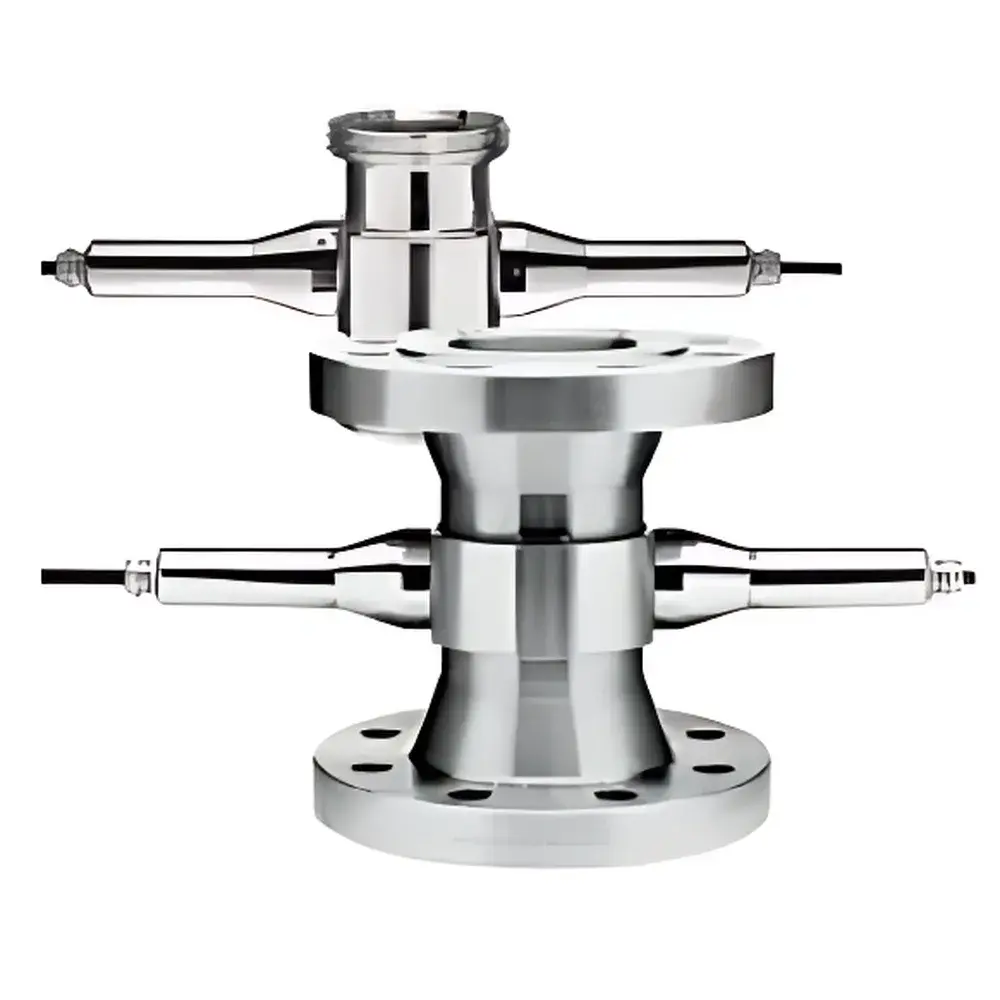
GALVANIC MoniSpec Colorimeter
| Brand | GALVANIC |
|---|---|
| Origin | USA |
| Model | MoniSpec Colorimeter |
| Optical Principle | Dual-channel absorbance and turbidity detection with 12° forward scatter or 90° side scatter geometry |
| Wavelength Range | 380–1100 nm (xenon lamp) |
| Measurement Range | 0–0.1 AU to 0–5 AU |
| IP Rating | IP65 / NEMA 4X |
| Hazardous Area Certification | ATEX Ex d IIC/T6 (Zone 1 & 2 not applicable) |
| Flow Cell Materials | Stainless steel (optional Ti, PTFE) |
| Window Material | Sapphire (optional borosilicate glass, PMMA) |
| Seal Material | FKM (optional FFKM, EPDM, silicone) |
| Process Connections | DIN, ANSI, NPT |
| Max Sensors per Transmitter | 4 |
| Output Units | NTU, JTU, AU, EBC, ppm, g/L, %TS, Hazen, ASTM, Saybolt |
| Data Logging | 8,000 points with backup restore |
| Communication | RS-232C / RS-485 (Modbus RTU) |
| Cleaning | CIP-compatible, optional spray nozzle |
| Calibration/Maintenance Interval | Up to 24 months (application-dependent) |
Overview
The GALVANIC MoniSpec Colorimeter is an industrial-grade, in-line optical analyzer engineered for continuous, real-time measurement of color, turbidity, and absorbance in liquid process streams. It operates on a dual-channel photometric principle: one channel measures transmitted light intensity (absorbance), while the second detects scattered light at either a 12° forward-scatter or 90° side-scatter angle—enabling simultaneous quantification of both dissolved chromophores and suspended particulates. The instrument utilizes a stabilized xenon lamp (380–1100 nm) with integrated thermal management to ensure spectral stability over its typical two-year service life. Designed for harsh production environments, the MoniSpec features a fully sealed optical head rated IP65/NEMA 4X, corrosion-resistant wetted materials—including sapphire observation windows and stainless-steel flow cells—and compliance with ATEX Ex d IIC/T6 for safe deployment outside Zone 1 and Zone 2 hazardous areas. Its modular architecture supports up to four independent sensor inputs per transmitter, making it suitable for multi-point monitoring in breweries, pharmaceutical water systems, chemical synthesis lines, and wastewater treatment plants.
Key Features
- Dual-mode optical detection: configurable 12° forward scatter (optimized for low-turbidity, high-absorbance applications) or 90° side scatter (ideal for ISO 7027-compliant turbidity measurement)
- Factory-calibrated xenon light source with spectral output traceable to NIST standards; no user-replaceable lamps required during routine operation
- Robust flow cell design with maintenance-free optical path; cleaning intervals extended up to 24 months depending on process fouling propensity
- Material options compliant with USP Class VI, FDA 21 CFR Part 11, and EHEDG guidelines—including titanium and PTFE-wetted components for aggressive media
- Intuitive menu-driven interface with embedded help system and multilingual support (English, German, Spanish, French)
- Two independent, programmable CIP cycles with adjustable duration, frequency, and rinse fluid selection
- Linearization algorithms applied in real time to compensate for non-linear detector response across wide dynamic ranges (0–0.1 AU to 0–5 AU)
Sample Compatibility & Compliance
The MoniSpec accommodates a broad range of aqueous and organic process liquids—including purified water (PW), water-for-injection (WFI), beer, syrup, caustic solutions, and polymer emulsions. Its sapphire window withstands abrasion and chemical attack in high-velocity or particulate-laden flows, while optional FFKM seals provide compatibility with oxidizing agents and high-temperature steam sterilization (SIP). The device meets ISO 7027 for turbidity, ASTM D1209/D5390 for platinum-cobalt (Hazen) color, and ASTM D1500 for Saybolt color. All firmware and configuration data adhere to ALCOA+ principles, supporting audit trails, electronic signatures, and secure user access levels required under GMP/GLP and FDA 21 CFR Part 11 environments.
Software & Data Management
Configuration and diagnostics are performed via USB, RS-232C, or RS-485 Modbus RTU interfaces using GALVANIC’s proprietary MoniSoft Suite—a Windows-based application supporting remote commissioning, trend analysis, and alarm threshold definition. The built-in data logger stores up to 8,000 timestamped measurements per sensor channel, with automatic backup to external USB drives. Logged datasets include raw photodiode voltages, compensated absorbance values, scatter ratios, temperature compensation flags, and diagnostic status codes (e.g., lamp aging index, window fouling alert). Export formats include CSV and XML, compatible with LIMS, SCADA, and MES platforms. Optional panel-mounted PC integration enables local HMI functionality with real-time dashboards and historical overlay plots.
Applications
- Beverage industry: real-time EBC color monitoring in wort and finished beer; turbidity control during filtration and stabilization
- Pharmaceutical manufacturing: TOC-free water quality verification; color consistency checks in active pharmaceutical ingredient (API) crystallization
- Chemical processing: endpoint detection in dye synthesis; catalyst concentration tracking via absorbance kinetics
- Environmental engineering: effluent color compliance (e.g., EPA Method 180.1); coagulant dosing optimization based on turbidity feedback
- Food & dairy: whey protein clarity assessment; caramel color standardization in sauces and syrups
FAQ
What is the recommended calibration frequency for the MoniSpec in GMP-regulated environments?
Calibration is typically performed at installation, after major maintenance, and annually as part of scheduled quality system audits—though extended intervals up to 24 months may be justified with documented risk assessment and trending data.
Can the MoniSpec operate in pressurized pipelines?
Yes; standard configurations support up to 10 bar (145 psi) at 60°C. Higher pressure ratings (up to 40 bar) are available with reinforced DIN/ANSI flange variants.
Is the instrument compatible with Profibus or Ethernet/IP protocols?
Native support is limited to Modbus RTU over RS-485; however, third-party protocol gateways certified for SIL2 can enable Profibus DP or EtherNet/IP integration.
How does the system handle air bubbles or entrained gas in the sample stream?
The optical housing incorporates hydrodynamic flow conditioning and bubble rejection geometry; optional ultrasonic degassing modules are available for highly aerated applications.
Does the data logger retain measurements during power loss?
Yes—the internal flash memory is non-volatile, and all logged entries include UTC timestamps synchronized via optional NTP client mode.




