
Gas-Pro Portable Electrochemical Multi-Gas Detector with PID and IR Sensors
| Brand | — |
|---|---|
| Origin | UK |
| Manufacturer Type | Authorized Distributor |
| Origin Category | Imported |
| Model | Gas-Pro |
| Pricing | Upon Request |
| Detection Principle | Electrochemical, Photoionization (PID), Infrared (IR) |
| Form Factor | Portable |
| Response Time (T90) | 2 s (electrochemical toxic gases), 20 s (CH₄), 10 s (O₂), 30 s (IR) |
| Repeatability | ±2% of reading (typical for H₂S, CO, SO₂, VOCs, combustibles) |
Overview
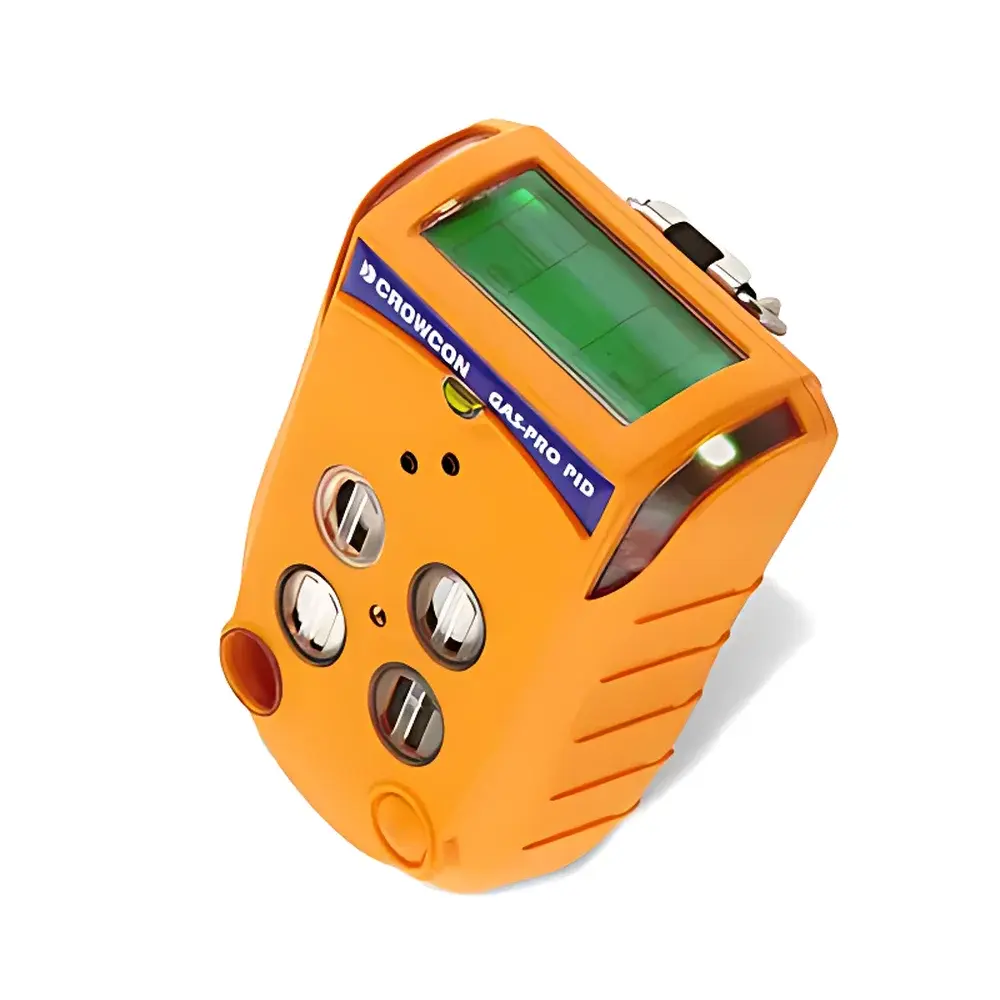
The Gas-Pro Portable Electrochemical Multi-Gas Detector is an intrinsically safe, field-deployable instrument engineered for simultaneous real-time detection of up to five hazardous gases in occupational and confined-space environments. It integrates three complementary sensing technologies—electrochemical cells for toxic gases (e.g., H₂S, CO, SO₂, Cl₂, NO₂), a 10.6 eV photoionization detector (PID) for broad-spectrum volatile organic compound (VOC) monitoring, and non-dispersive infrared (NDIR) sensors for hydrocarbon-specific quantification (e.g., CH₄, C₂H₆, C₃H₈). This tri-modal architecture enables reliable, selective, and cross-interference-resistant measurements across diverse industrial settings—including petrochemical facilities, wastewater treatment plants, utility infrastructure, and remediation sites. Designed to meet stringent international hazardous-area certification requirements (ATEX, IECEx, UL Class I Div 1), the Gas-Pro operates continuously under extreme ambient conditions (–20 °C to +55 °C) while maintaining measurement integrity and user safety.
Key Features
- Intrinsically safe construction certified to ATEX II 2 G Ex d ia IIC T4 Gb and IECEx Ex d ia IIC T4 Gb for use in Zone 1/Zone 2 explosive atmospheres
- Triple-sensor platform: electrochemical (toxic & O₂), PID (VOCs), and NDIR (hydrocarbons and CO₂)
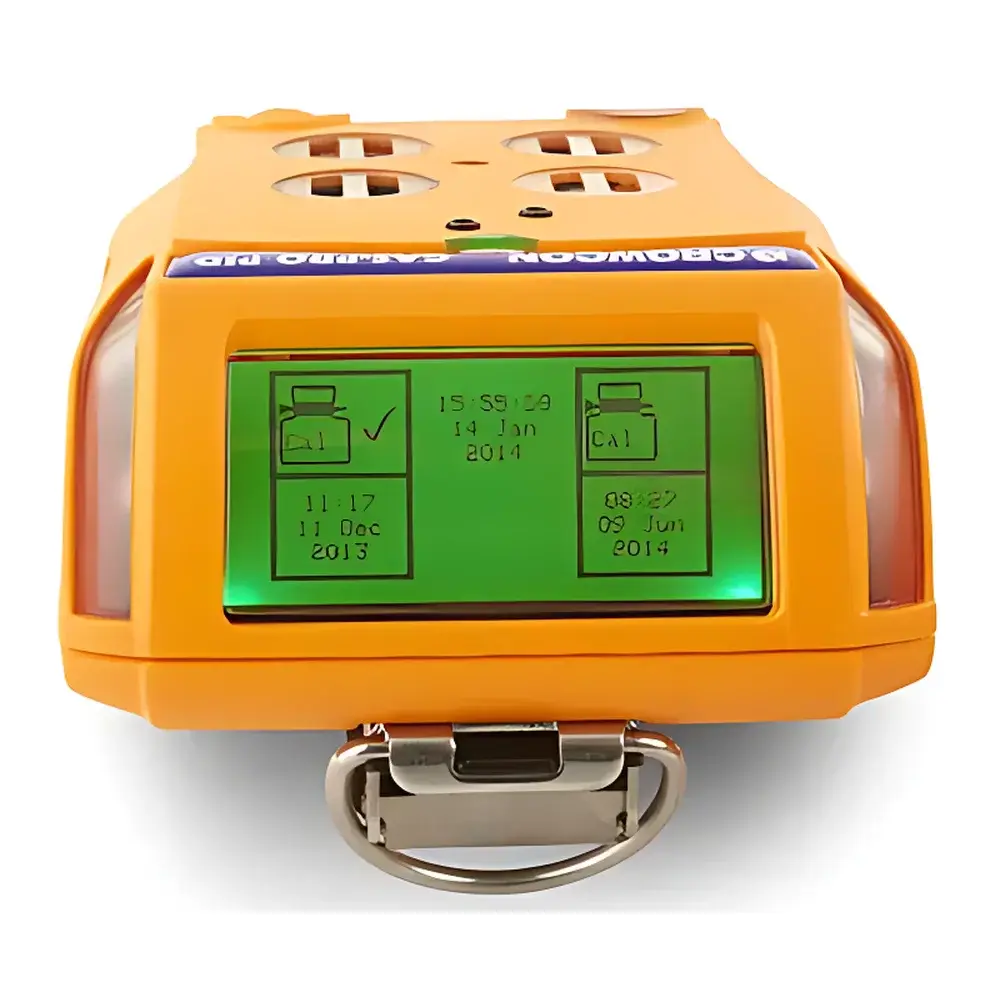
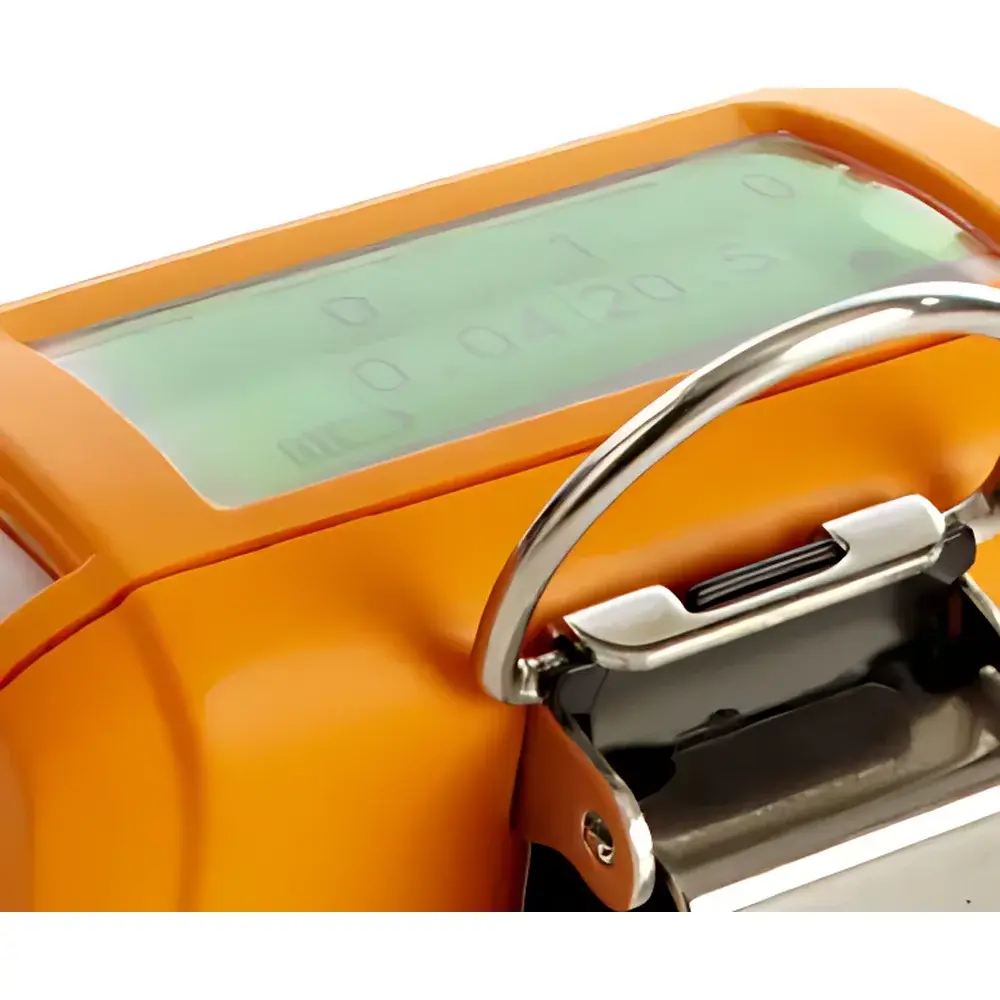
- Top-mounted dual-color backlit display (red/green) with intuitive icon-based interface and one-button navigation
- +ve Safety™ status indicator: real-time visual feedback via tri-color LED (green/yellow/red) aligned with exposure thresholds per OSHA/NIOSH guidelines
- Integrated sampling pump (optional) with flow-controlled diffusion or active aspiration (up to 0.5 L/min); compatible with telescopic probe (up to 1.2 m) and flow shroud accessories
- IP65/IP67-rated enclosure ensuring dust-tight operation and resistance to temporary immersion (1 m for 30 min)
- Rechargeable Li-ion battery providing ≥14 hours runtime (≥13 h with pump enabled); full charge in 7.5 h via USB, vehicle, or multi-bay dock
- Acoustic alarm (95 dB @ 30 cm; 98 dB in high-noise mode), dual-color flashing LEDs, and tactile vibration alert
Sample Compatibility & Compliance
The Gas-Pro supports detection of over 100 target analytes—including H₂S (0–100 ppm), CO (0–500 ppm), O₂ (0–25% vol), combustibles (0–100% LEL), SO₂ (0–20 ppm), NH₃ (0–100 ppm), Cl₂ (0–5 ppm), NO (0–100 ppm), NO₂ (0–20 ppm), O₃ (0–1 ppm), ClO₂ (0–1 ppm), CO₂ (0–5% vol), and VOCs (0–1000 ppm isobutylene-equivalent) via PID. All electrochemical sensors comply with EN 45544-1 and ISO 16814 for workplace air monitoring. PID response is calibrated using isobutylene with compound-specific correction factors (CFs) preloaded for >200 VOCs. NDIR channels adhere to ASTM D6245 for methane quantification in low-oxygen environments. Device firmware and data handling conform to FDA 21 CFR Part 11 requirements for audit trail, electronic signature, and data integrity when connected to compliant PC software.
Software & Data Management
The Gas-Pro logs measurement data at 10-second intervals, storing up to 45,000 records (125 hours) internally. Event logging captures >1,000 entries—including alarm triggers, calibration events, pump activation, power cycles, and TWA/STEL excursions—with timestamps and sensor-specific metadata. Data export is supported via USB interface to Windows-based Gas-Pro Manager software, enabling report generation (PDF/CSV), trend analysis, and compliance documentation aligned with OSHA 1910.120 and EU Directive 2017/164. Firmware updates, sensor configuration, and bump-test scheduling are managed through the same platform. All logged data includes immutable time stamps, operator ID fields, and checksum-verified integrity validation.
Applications
- Confined space entry monitoring (tanks, silos, manholes, tunnels) per OSHA 1910.146 and HSE GS5
- Petrochemical process safety: hydrocarbon leak detection, flare stack emissions verification, and sour gas screening
- Environmental site assessment: soil vapor intrusion (SVI) surveys, landfill gas monitoring, and brownfield remediation
- Industrial hygiene: VOC exposure assessment during painting, adhesive application, solvent cleaning, and coating operations
- Emergency response: HAZMAT incident triage, spill characterization, and post-event atmospheric clearance verification
- Municipal infrastructure: sewer network gas mapping, water treatment plant odor control, and biogas facility safety audits
FAQ
What gases can the Gas-Pro detect simultaneously?
It detects up to five gases concurrently—configurable from a library including H₂S, CO, O₂, combustibles (LEL), SO₂, NH₃, Cl₂, NO₂, CO₂, CH₄, and VOCs via PID.
How does the PID sensor differ from electrochemical detection?
The PID uses 10.6 eV UV light to ionize VOC molecules, generating current proportional to concentration; it offers broad-spectrum sensitivity but requires compound-specific correction factors, unlike electrochemical sensors optimized for selectivity toward individual toxic gases.
Is calibration traceable to national standards?
Yes—zero and span calibration utilizes NIST-traceable gas standards; certificate of calibration is provided with each unit and optional annual recalibration service.
Can the Gas-Pro operate in oxygen-deficient environments?
Yes—the NDIR hydrocarbon channel functions reliably down to 0% O₂, making it suitable for inerted tanks and anaerobic digester headspace monitoring.
What maintenance is required beyond routine bump testing?
Electrochemical sensors require replacement every 2–5 years depending on exposure history; PID lamps have a typical lifespan of 10,000 hours; IR sensors exceed 5 years. All modules are field-replaceable without tools.







