
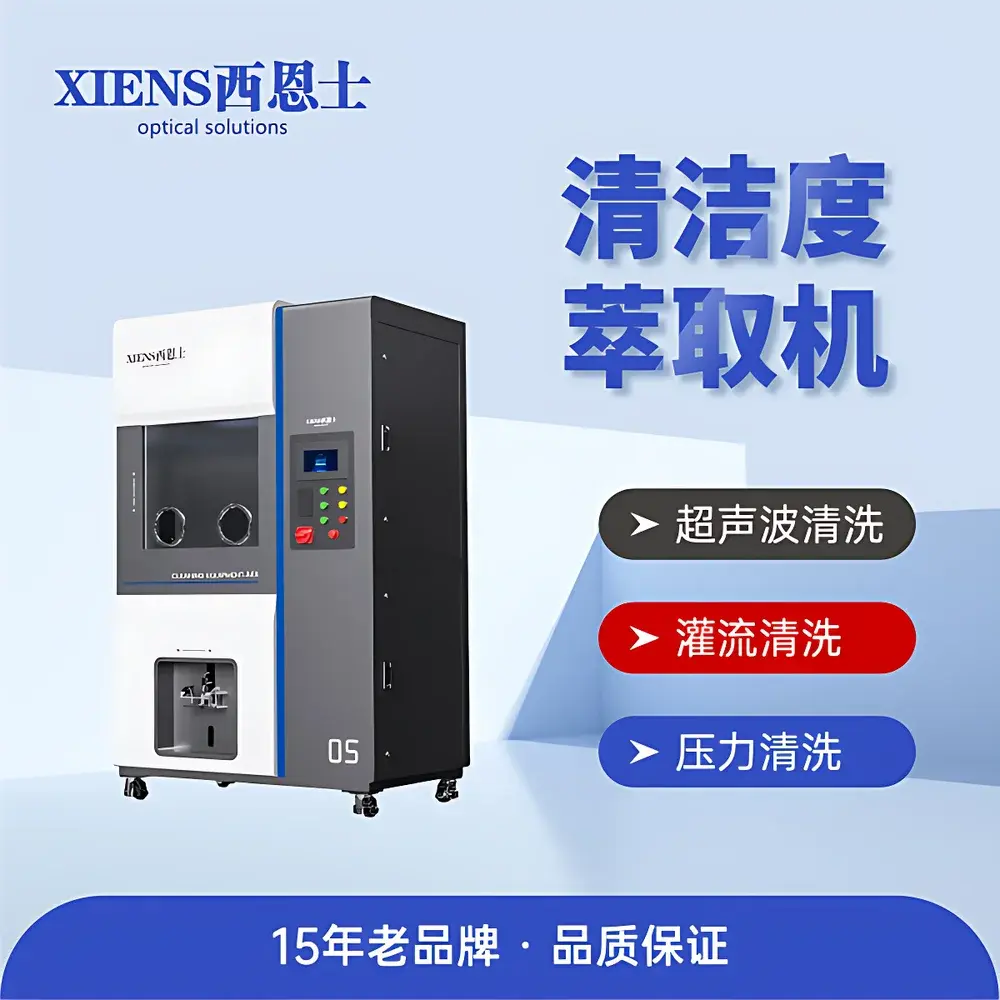
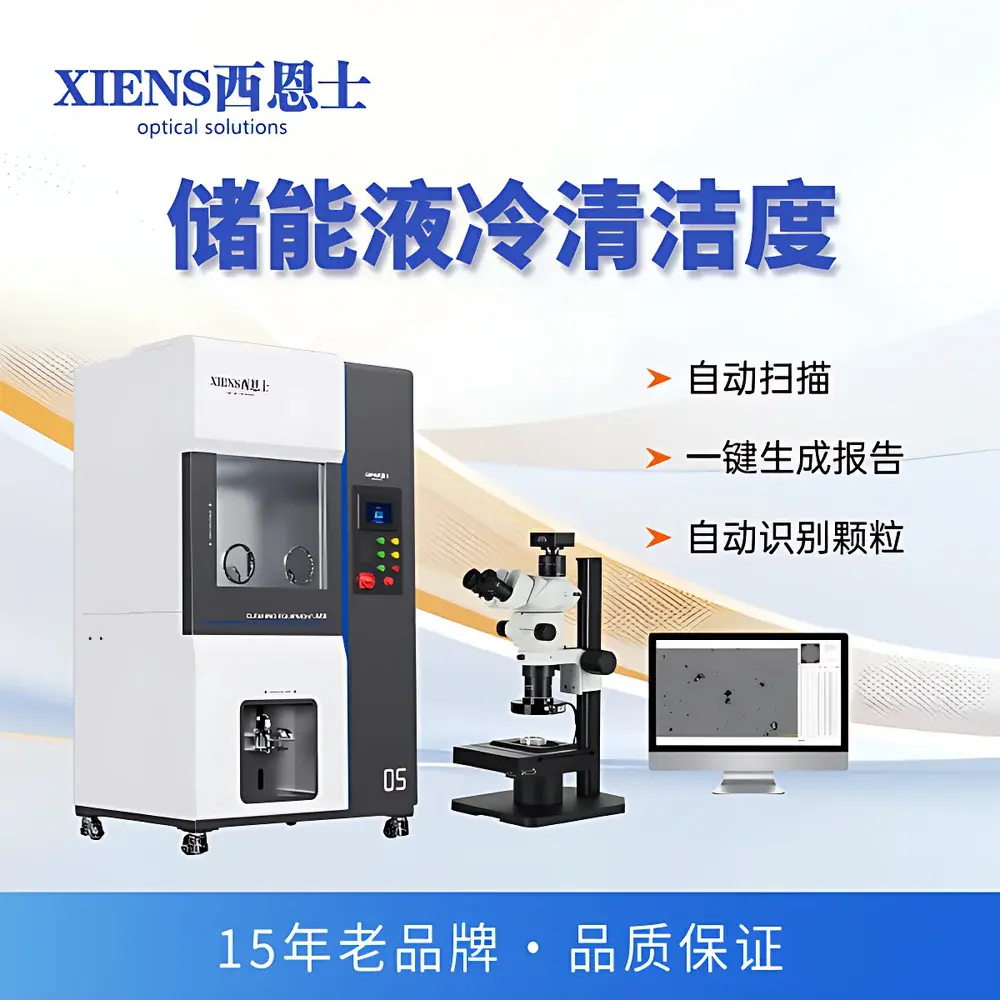
GB200 Liquid-Cooled Plate Cleanliness Extraction System – SIENCE CLS600P-MX Ultrasonic & Pressure-Assisted Particle Extraction Unit
| Brand | SIENCE |
|---|---|
| Origin | Jiangsu, China |
| Manufacturer Type | Authorized Distributor |
| Country of Origin | China |
| Model | CLS600P-MX |
| Price | USD 8,100 (FOB Jiangsu) |
| Chamber Dimensions | 600 × 600 × 800 mm (L×W×H) |
| Max Load Capacity | 50 kg (uniformly distributed) |
| Pressure Washing Range | 0.1–0.5 MPa |
| Ultrasonic Frequency | 40 kHz, adjustable power output |
| Flow Rate (Rinse Mode) | 1.0–5.5 L/min (with 2.5 mm nozzle) |
| Filtration Stages | Dual-stage absolute filtration — 0.2 µm (pre-wash supply) and 1.0 µm (post-extraction recirculation) |
| Filter Membrane Compatibility | Φ47–50 mm |
| Airflow Class | ISO Class 5 (100-grade) or ISO Class 6 (1,000-grade) laminar flow in wash chamber |
| Power Supply | AC 220 V, 50 Hz |
| Noise Level | <70 dB(A) |
| Net Weight | ~400 kg |
| Compliance Standards | VDA 19.1:2015, ISO 16232:2018, ASTM D7252, USP <788> (particle counting), GLP/GMP-aligned operational logging |
Overview
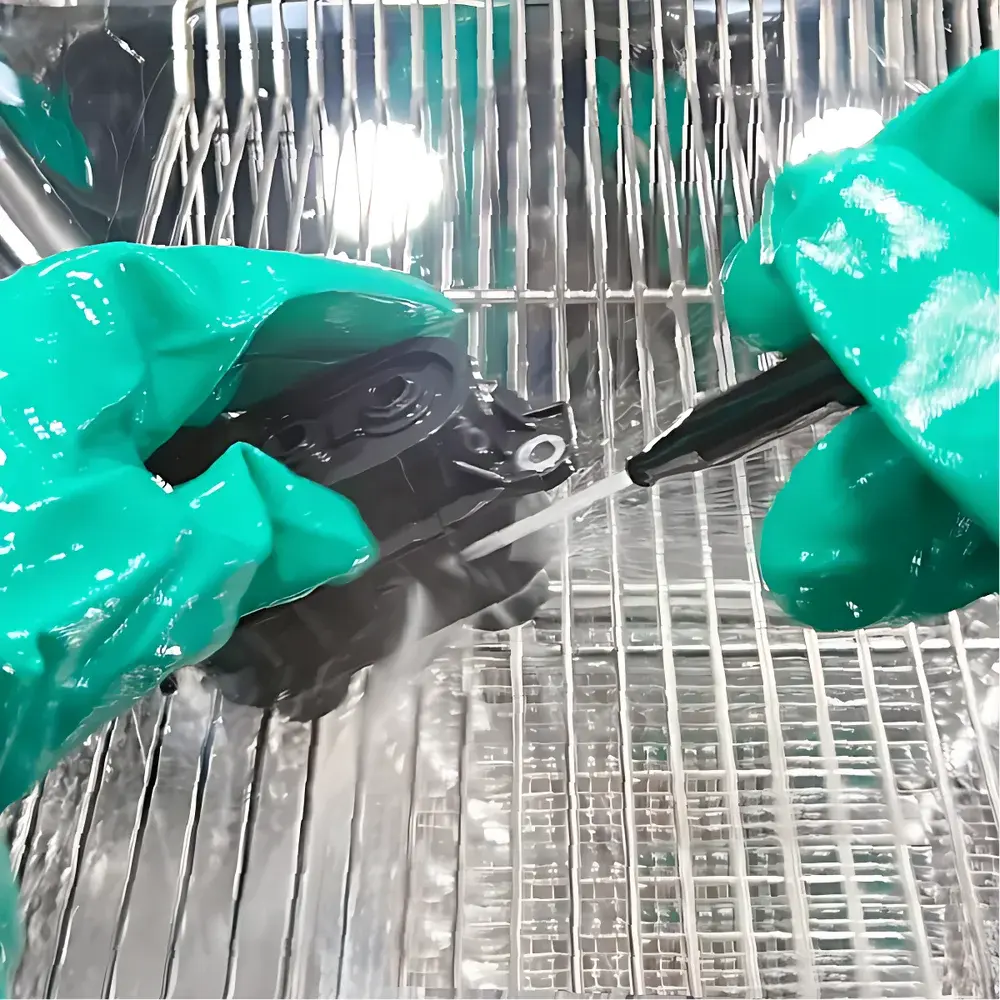
The GB200 Liquid-Cooled Plate Cleanliness Extraction System (SIENCE CLS600P-MX) is a fully integrated, standards-compliant particle extraction platform engineered for quantitative cleanliness analysis of precision-engineered components—particularly automotive, aerospace, and hydraulic system parts with complex geometries and internal passages. It implements a multi-modal extraction methodology combining controlled-pressure jet washing, programmable ultrasonic cavitation, turbulent-flow灌流 (flush) rinsing, and in-line membrane filtration to isolate and recover particulate contaminants from surfaces and internal cavities. Unlike conventional single-mode extractors, the GB200 employs synchronized fluid dynamics and real-time process control to minimize particle re-deposition, reduce solvent residence time, and ensure traceable, repeatable recovery efficiency across diverse substrate materials—including aluminum die-castings, stainless-steel valves, and polymer-coated assemblies. Its architecture adheres strictly to the physical sampling principles defined in VDA 19.1:2015 and ISO 16232:2018, particularly regarding flow regime validation (Re > 4000 for turbulent internal flushing), extraction volume calibration, and background contamination control.
Key Features
- ISO Class 5/6 laminar airflow enclosure with recirculating HEPA-filtered air supply—maintains ≤0.3 mg background particulate mass per extraction cycle, validated per ISO 14644-1.
- Dual-chamber modular design: independent pressure-wash and ultrasonic chambers (both 600 × 600 × 800 mm), each equipped with PLC-driven motion control, real-time pressure/flow monitoring, and auto-calibrated rinse volume tracking.
- Multi-parameter programmable extraction: pressure (0.1–0.5 MPa), flow rate (1.0–5.5 L/min), ultrasonic power (40 kHz, variable amplitude), duration (0.1–999 min), and rinse mode sequence—all stored as SOP-compliant method files.
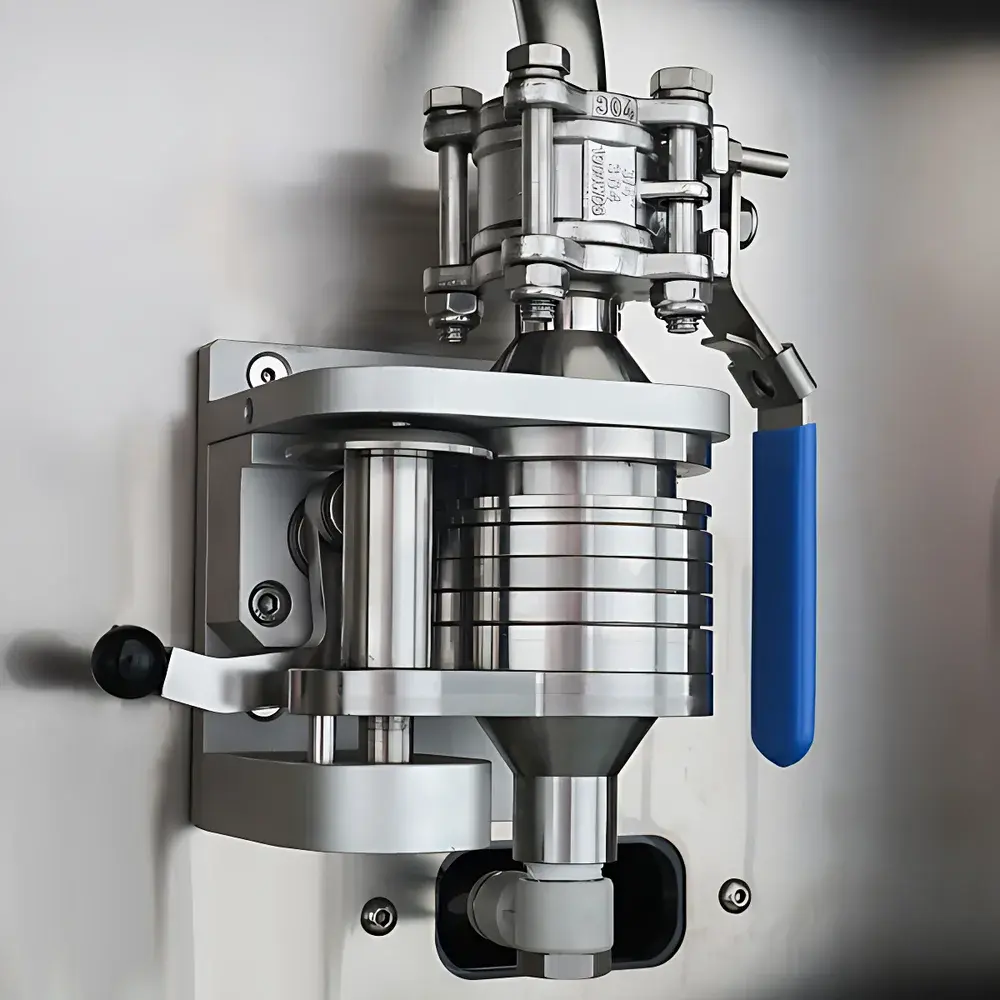
- In-line dual-stage absolute filtration: 0.2 µm pre-filter ensures contaminant-free wash medium delivery; 1.0 µm post-extraction filter captures particles ≥1.0 µm on standard Φ47–50 mm membranes without manual transfer.
- Self-cleaning pressure chamber: perimeter-mounted wide-angle nozzles perform automated wall rinsing prior to sample loading—eliminating cross-contamination between cycles.
- Integrated fluid management: 30 L sealed reservoir with level sensors, automatic fill/drain actuation, consumables lifecycle tracking (filter replacement alerts), and temperature-stable liquid handling (±0.5 °C).
- Industrial-grade safety interface: IP67-rated LED task lighting, explosion-proof electrical enclosure, motorized lift door with force-limited operation, and emergency stop with hardware interlock.
Sample Compatibility & Compliance
The GB200 accommodates components up to 50 kg with maximum dimensions of 600 × 600 × 800 mm—suitable for brake calipers, fuel injectors, transmission valve bodies, and EV battery cooling plates. Internal passage cleaning is supported via calibrated turbulent-flow flush (Re > 4000 confirmed by volumetric flow + hydraulic diameter calculation). All wetted surfaces are electropolished 304 stainless steel; gasket materials comply with FDA CFR 21 Part 177.2600 for indirect food contact. The system supports audit-ready documentation: timestamped parameter logs, operator ID tagging, method version control, and electronic signature capability aligned with FDA 21 CFR Part 11 requirements when paired with optional SIENCE LabLink software. Validation protocols include flow mapping (per ISO 16232 Annex C), background particle verification (per VDA 19.1 Section 5.2), and recovery efficiency testing using certified reference particles (e.g., NIST SRM 2800).
Software & Data Management
The embedded HMI runs on a deterministic real-time PLC kernel with 16 MB non-volatile memory for method storage and event logging. All operational parameters—including pressure transducer readings, ultrasonic current draw, flow meter pulses, and filter differential pressure—are sampled at 10 Hz and archived locally with UTC timestamps. Optional LabLink software enables remote configuration, CSV/Excel export of raw extraction data, statistical process control (SPC) charting (X̄-R, Cpk), and automated report generation compliant with AIAG CQI-11 and IATF 16949 Appendix B. Audit trails record user login/logout, method edits, alarm acknowledgments, and filter change events—with immutable hash-secured log entries. Data integrity safeguards include write-once storage mode and configurable retention policies (default: 12 months).
Applications
- Automotive: Cleanliness verification of high-pressure fuel rails, e-motor stator housings, and thermal management cold plates per VDA 19.1 Level 3–5 specifications.
- Aerospace: Particle extraction from turbine blade cooling channels and hydraulic manifold blocks under AS9100 Rev D requirements.
- Medical Devices: Residue validation for implant-grade titanium housings and drug delivery pump assemblies per ISO 13485 and USP <788>.
- Energy Storage: Quantitative assessment of metallic debris in EV battery coolant plates following ISO 16232-C and customer-specific OEM protocols (e.g., BMW GS 95024, VW TL 52327).
- Research & Development: Method development for novel coating systems, additive-manufactured lattice structures, and microfluidic device substrates where surface-bound particulates impact functional reliability.
FAQ
Does the GB200 support custom flow-path validation for proprietary component geometries?
Yes—users may input internal diameter, length, and nominal flow rate to calculate Reynolds number in real time; the system flags sub-turbulent conditions (< Re 4000) and recommends corrective adjustments.
Can the filtration system be upgraded to capture submicron particles?
The base configuration uses 1.0 µm absolute filters for compliance with ISO 16232-C; optional 0.45 µm and 0.22 µm filter cartridges are available for specialized applications requiring enhanced resolution.
Is the ultrasonic module calibrated traceably to national standards?
Ultrasonic power output is verified annually using a calibrated calorimetric probe (NIST-traceable); certificate of conformance is provided with each unit and included in the factory acceptance test (FAT) report.
How is solvent purity maintained during extended operation?
The dual-stage filtration loop—combined with scheduled 0.2 µm pre-filter replacement every 200 hours and continuous turbidity monitoring—ensures wash medium clarity remains within ISO 4406 14/12/10 limits throughout operational life.
Does the system meet cleanroom integration requirements?
Yes—the GB200 is designed for installation in ISO Class 7 (10,000-grade) environments; its exhaust is compatible with dedicated ducted ventilation, and all external surfaces meet ISO 14644-1 Class 5 wipe-test criteria.



