
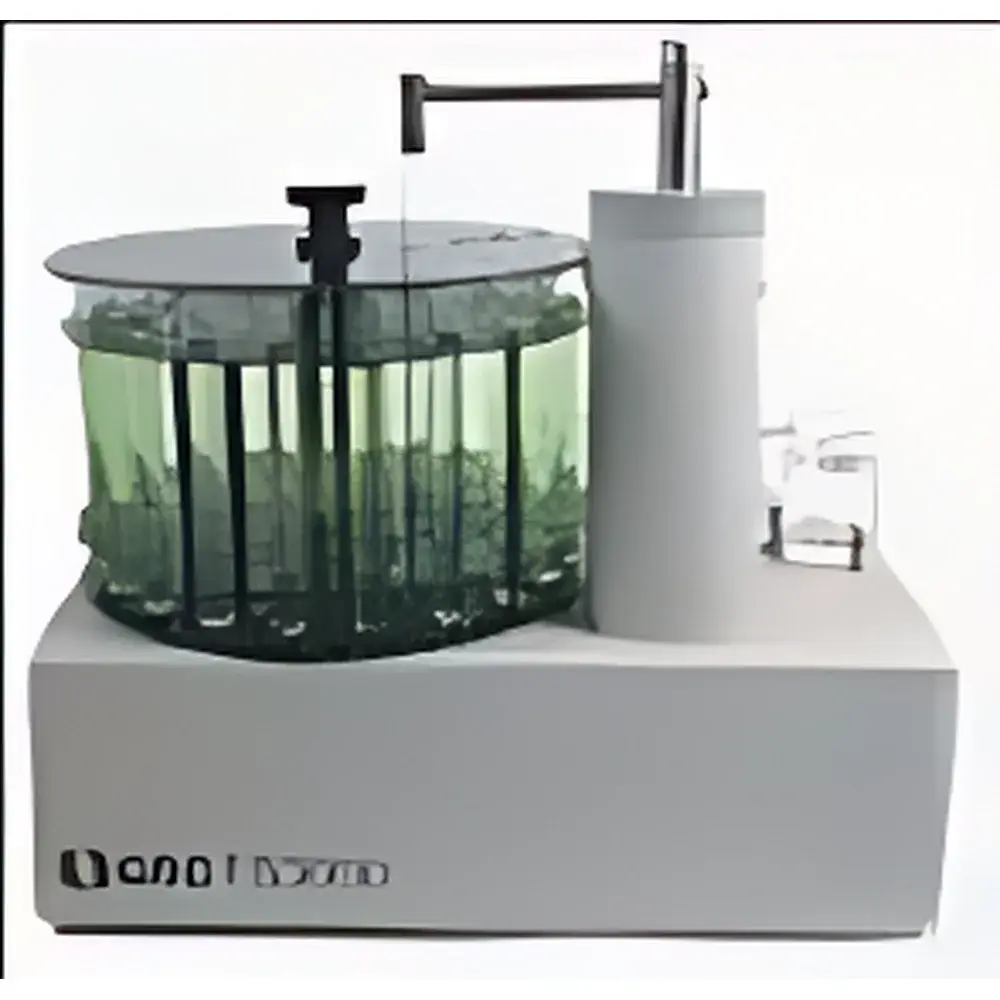
GBC FS3000 Automated Sample Introduction System
| Brand | GBC |
|---|---|
| Origin | Australia |
| Model | FS3000 |
| Sample Capacity | 10 calibration standards + 60 sample positions |
| Dedicated Vial Locations | rinse solution, blank solution, and recalibration standard |
| Programmable Parameters | measurement interval, pre-measurement delay, wash cycle duration, recalibration frequency, restandardization frequency, number of calibration standards, replicate count per sample, first/last sample position indexing |
| Distribution Status | Authorized International Distributor (Imported Equipment) |
Overview
The GBC FS3000 Automated Sample Introduction System is a precision-engineered autosampler designed specifically for integration with atomic absorption spectrometers (AAS), inductively coupled plasma optical emission spectrometers (ICP-OES), and other elemental analysis platforms requiring high-throughput, reproducible liquid sample introduction. Based on the principle of sequential, valve-driven peristaltic or syringe-pump-assisted aspiration and delivery, the FS3000 ensures consistent sample volume transfer, minimized carryover, and strict temporal control over analytical cycles—critical for compliance with GLP, ISO/IEC 17025, and USP requirements for trace metal quantification.
Key Features
- Modular 70-position carousel accommodating up to 10 calibration standards and 60 discrete sample vials in standardized 13 mm or 16 mm borosilicate glass or polypropylene tubes;
- Dedicated, physically isolated reservoirs for rinse solution (e.g., 2% HNO₃), procedural blank matrix, and primary recalibration standard—eliminating cross-contamination risks during routine operation;
- Fully programmable sequence logic supporting variable dwell times: user-defined pre-aspiration delay (0–300 s), measurement acquisition window (1–120 s), post-read rinse duration (1–180 s), and inter-sample purge intervals;
- Intelligent recalibration scheduling: automatic insertion of calibration verification checks at configurable intervals (e.g., every 10th sample, or after fixed time thresholds), with optional flagging of drift beyond ±3% relative standard deviation;
- Position-indexed sample handling: supports selective run initiation from any defined start position (e.g., “Sample #23”) through end position (e.g., “Sample #58”), enabling partial batch reanalysis without full queue reset;
- Non-volatile method storage: retains up to 99 distinct sampling protocols—including replicate counts (1–6 per vial), standard inclusion logic, and wash step sequencing—in onboard EEPROM memory;
- Rugged aluminum chassis with IP20-rated enclosure, compatible with laboratory ambient conditions (15–30 °C, <80% RH non-condensing) and integrated into GBC’s legacy AAS control architecture via RS-232 or optional USB-to-serial interface.
Sample Compatibility & Compliance
The FS3000 accepts aqueous, dilute acid-digested, and organic-solvent-based samples within viscosity limits typical for capillary-fed spectroscopic systems (<5 cP). It complies with IEC 61000-4 electromagnetic compatibility standards and meets mechanical safety requirements per EN 61010-1 for laboratory equipment. Its operational parameters align with ASTM D1976 (trace metals in water), ISO 11885 (water quality — determination of elements by ICP-OES), and EPA Method 200.7/200.8 validation frameworks. Audit trail functionality—including timestamped sequence logs, operator ID tagging (via host software), and error event capture—is available when paired with GBC’s WinLab32 or third-party LIMS-compliant drivers supporting ASTM E1384 data exchange syntax.
Software & Data Management
Control is executed via GBC’s native instrument software suite, which provides graphical sequence editor, real-time status monitoring (vial position, pump actuation, valve state), and automated QC reporting. Raw metadata—including sample ID, injection volume, rinse cycle count, and recalibration timestamp—is embedded in ASCII or CSV output files compliant with FDA 21 CFR Part 11 when used with validated electronic signature modules. The system supports bidirectional communication for method synchronization and supports audit-ready export of full run logs including failed aspiration events, timeout alerts, and positional error codes (e.g., “Vial Empty”, “Cartridge Jam”)
Applications
- Environmental testing laboratories performing routine multi-element analysis of surface water, wastewater, and soil digests;
- Clinical toxicology labs quantifying blood lead, urinary cadmium, and serum zinc under CLIA-certified workflows;
- Geochemical exploration programs requiring rapid screening of rock leachates and sediment extracts;
- Pharmaceutical excipient testing per ICH Q2(R2) guidelines for elemental impurities (Category 1 & 2 metals);
- Food safety surveillance applying AOAC 2013.06 for arsenic and mercury in rice and infant formula.
FAQ
Is the FS3000 compatible with non-GBC spectrometers?
Yes—when configured with analog TTL or RS-232 trigger interfaces, it supports synchronized operation with PerkinElmer, Thermo Fisher, and Agilent AAS/ICP systems via custom handshake protocols.
What maintenance intervals are recommended for the fluidic path?
Per GBC Technical Bulletin TB-FS3000-Rev4, the peristaltic pump tubing should be replaced every 6 months under continuous use; valve seals require inspection every 12 months or after 10,000 cycles.
Can the FS3000 perform internal standard addition automatically?
No—the system does not integrate an auxiliary reagent channel; internal standard spiking must be performed manually prior to vial loading or via upstream robotic liquid handlers.
Does it support barcode scanning for sample identification?
Not natively; however, third-party barcode readers may be interfaced through the host PC’s USB port and mapped to sample ID fields via WinLab32’s external data import module.
What is the maximum allowable sample volume per vial?
Standard configuration supports 1.5–4.0 mL vials; custom carriers for 15-mL conical tubes are available under GBC Part No. FS3000-CAR-15ML (lead time: 8 weeks).




