
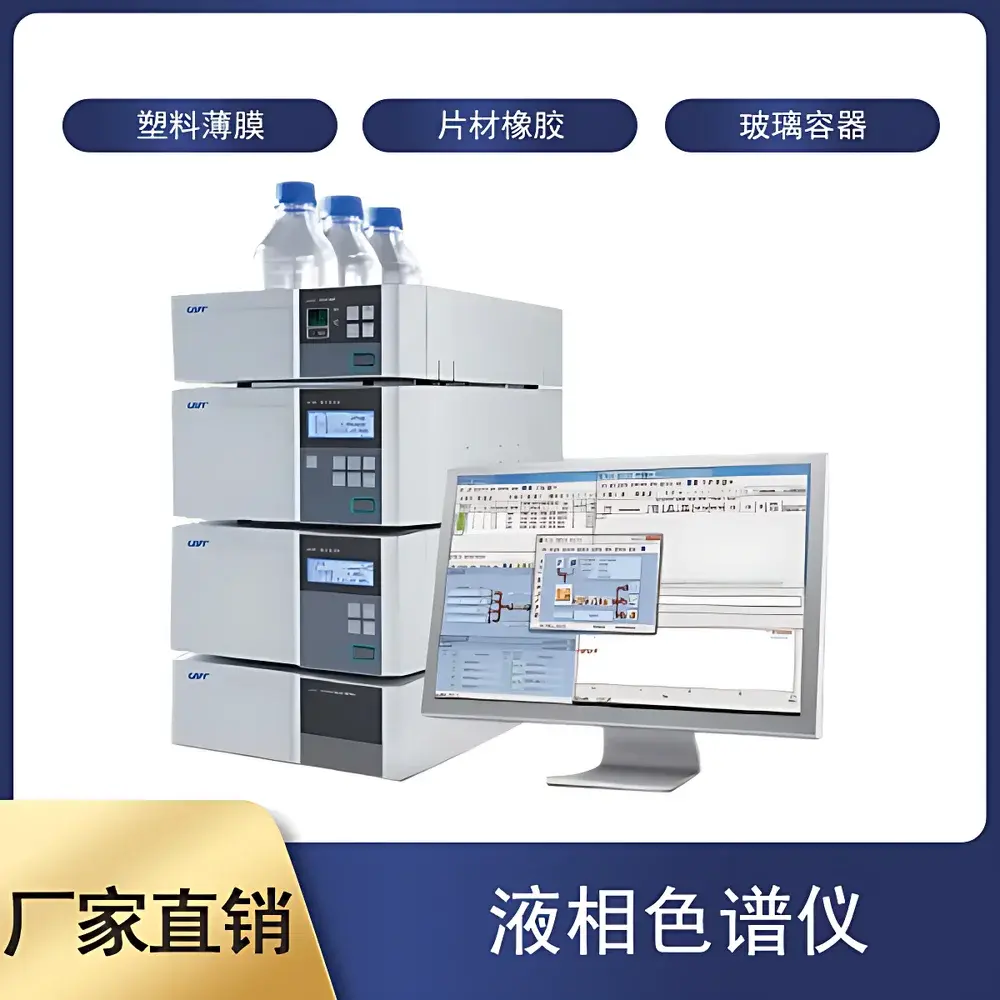
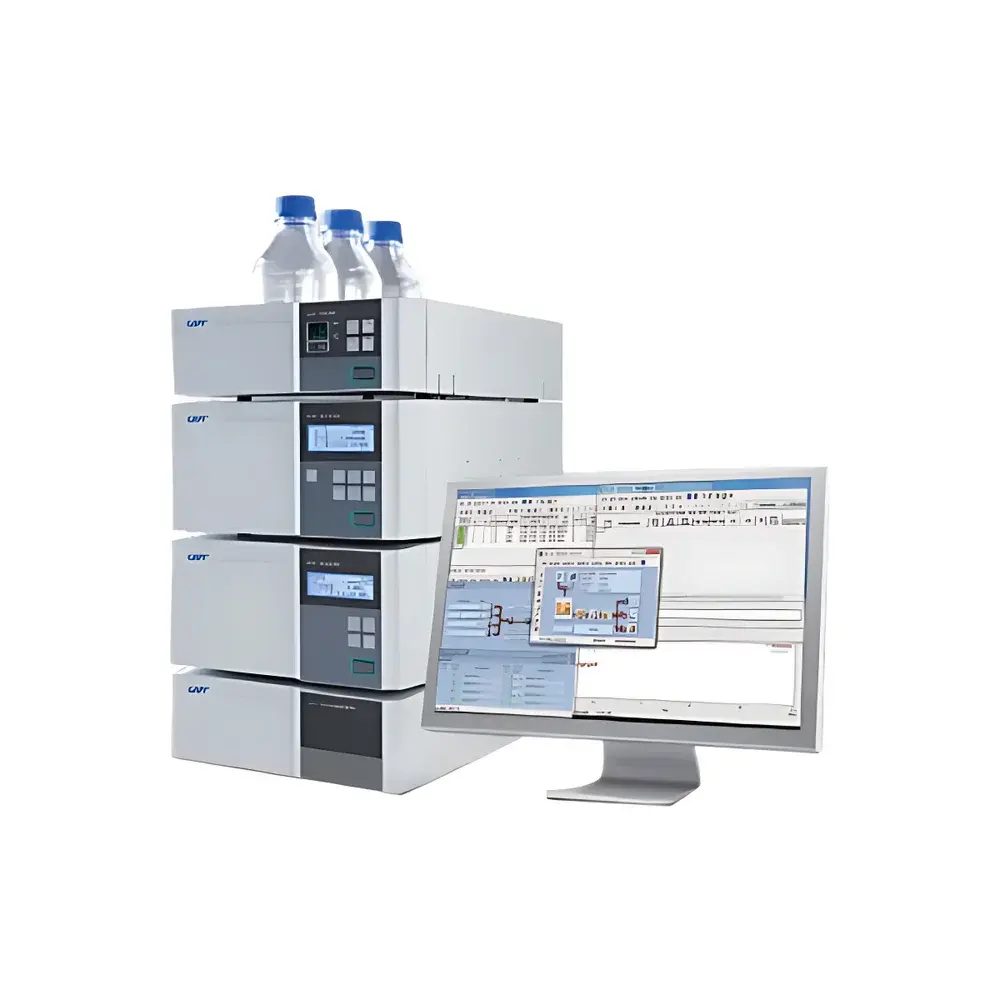
GBPI GB-LC01 High-Performance Liquid Chromatograph
| Brand | GBPI |
|---|---|
| Origin | Guangdong, China |
| Manufacturer Type | Direct Manufacturer |
| Category | Domestic HPLC System |
| Model | GB-LC01 |
| Price Range | USD 1,400 – 4,200 |
| Instrument Type | Laboratory-Scale Analytical & Semi-Preparative HPLC System |
| Primary Application Field | Food Safety & Quality Control |
Overview
The GBPI GB-LC01 is a modular, high-reliability high-performance liquid chromatography (HPLC) system engineered for precise separation, identification, and quantification of thermally labile, non-volatile, and high-molecular-weight compounds. It operates on the fundamental principle of partition chromatography: analytes in the sample matrix undergo repeated differential distribution between a mobile phase (liquid solvent gradient or isocratic eluent) and a stationary phase (packed capillary or analytical column), resulting in retention time-based separation. The system supports both analytical-scale quantitation and semi-preparative purification workflows, with full digital control architecture enabling seamless integration into regulated laboratory environments. Designed to comply with ISO/IEC 17025 requirements for testing laboratories and aligned with the technical framework of GB/T 16631–2008 (“General Principles of High-Performance Liquid Chromatography”), the GB-LC01 delivers robust performance for routine QC analysis in food safety laboratories—particularly for contaminants (e.g., pesticides, mycotoxins), additives (antioxidants, preservatives), nutrients (vitamins, amino acids), and process-related impurities (e.g., acrylamide, furan derivatives).
Key Features
- Modular dual-pump architecture: P100 high-pressure reciprocating dual-plunger pump with binary high-pressure mixing; flow range 0.001–9.999 mL/min, max pressure 42 MPa, flow accuracy ≤ ±0.3%, RSD < 0.06%.
- Intelligent autosampler (Arcus5): 0.1–20 µL programmable injection volume, cross-contamination minimized via optimized wash cycles and sapphire-piston metering pump (seal life > 1 million injections).
- Thermostatically controlled column oven (CO100): Air-circulation heating, temperature range RT+5°C to 80°C (±0.1°C stability), dual-column capacity (2 × 250 mm), digitally remote-controlled via workstation.
- Multi-detector compatibility: Standard UV-100 (D₂ lamp, 190–680 nm); optional UV-VIS100 (D₂ + W lamp, 190–900 nm), RI100 refractive index detector, or ELSD100 evaporative light-scattering detector.
- Human-centered hardware design: Corrosion-resistant chassis, tool-free lamp replacement module, auto-retracting plunger rods for seal maintenance, post-column wash function for buffer-compatible operation.
Sample Compatibility & Compliance
The GB-LC01 accommodates a broad spectrum of sample matrices common in food testing—including aqueous extracts, lipid-rich homogenates, protein-digested supernatants, and derivatized small molecules—without requiring extensive pre-treatment. Its detection flexibility supports analytes lacking chromophores (via RI or ELSD), thermally sensitive biomolecules (peptides, nucleotides), and high-boiling polar compounds (sugars, organic acids, surfactants). System validation documentation supports alignment with AOAC Official Methods®, FDA Bacteriological Analytical Manual (BAM) workflows, and ISO 22000–compliant food safety management systems. All firmware and data handling modules are structured to support audit trails and user-access controls consistent with GLP and GMP expectations, though native 21 CFR Part 11 compliance requires optional electronic signature and archiving modules.
Software & Data Management
The GB-LC01 operates via two-tier software options: Arcus5 Lite (streamlined interface for routine method execution) and Arcus5 Pro (full method development, sequence scheduling, peak integration, calibration curve generation, and report export in PDF/CSV/XLSX). Real-time bidirectional communication enables live monitoring of pump pressure, detector baseline, column temperature, and valve positions. Raw chromatographic data are stored in vendor-neutral .CDF format (compatible with OpenChrom and Chromeleon import), and all acquisition parameters—including gradient profiles, dwell volume compensation, and integration events—are fully traceable and versioned. Audit trail logs record user ID, timestamp, parameter changes, and data export actions—essential for internal quality audits and regulatory inspections.
Applications
This system is routinely deployed in food industry laboratories for: pesticide residue screening (organophosphates, carbamates) per EU MRL regulations; mycotoxin analysis (aflatoxins, ochratoxin A) using immunoaffinity cleanup–HPLC–fluorescence protocols; vitamin profiling (B-complex, C, E) in fortified beverages; detection of unauthorized dyes (Sudan I–IV, Rhodamine B); quantification of polyphenols and antioxidants (quercetin, catechins) in plant extracts; and verification of food authenticity (e.g., honey adulteration via sugar profile analysis). Its semi-preparative capability (LC-100HP, up to 40 mL/min, 25 MPa) further supports isolation of reference standards from natural sources.
FAQ
Is the GB-LC01 compliant with international pharmacopeial methods (e.g., USP, EP)?
Yes—the system’s hardware specifications and software architecture support implementation of USP , EP 2.2.46, and JP 6.03 chromatographic procedures when configured with appropriate columns, detectors, and validated methods.
Can the system be integrated into a LIMS environment?
Yes—via ODBC-compliant database export and ASCII log file generation; direct LIMS API integration requires custom middleware development through GBPI’s OEM support channel.
What is the expected lifetime of consumables under typical food QC usage?
UV lamp: ≥2,000 hours (D₂); pump seals: 3–5 years at ≤1 mL/min, pH 2–8 mobile phases; analytical columns: 500–2,000 injections depending on sample cleanliness and guard column use.
Does the system support gradient delay volume compensation?
Yes—Arcus5 Pro includes manual and automatic dwell volume measurement tools, enabling accurate gradient timing correction across flow rates and mixer configurations.
Are service and calibration certificates available internationally?
GBPI provides factory calibration reports (traceable to NIM, China) and offers certified field service through authorized regional partners in Southeast Asia, Middle East, and Latin America; CE marking applies to EU-distributed units only.
Related Products





